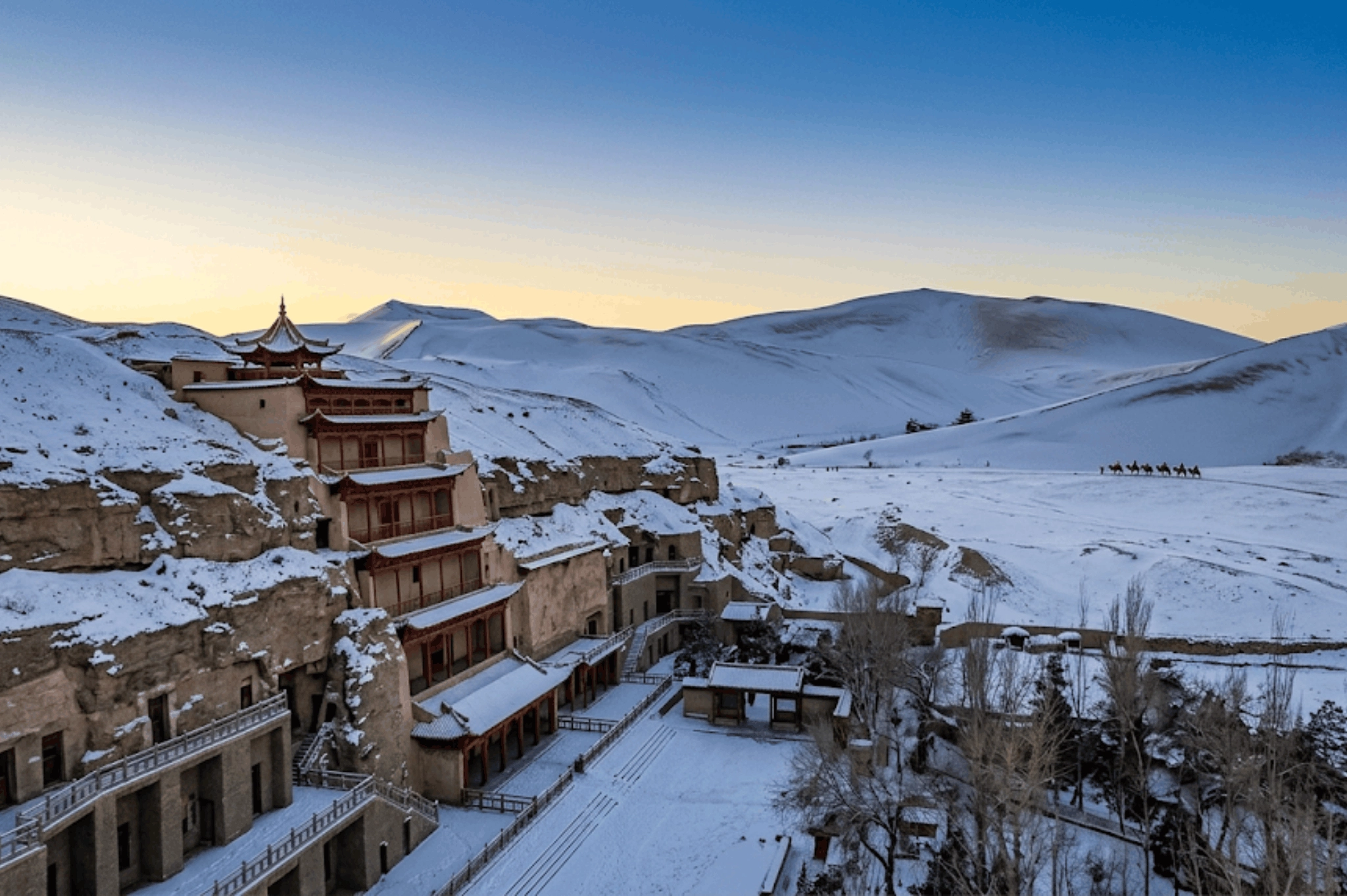
Ask almost any guidebook when to visit Gansu and it will point you firmly at the window between May and October. The grasslands are green, the deserts are warm, the days are long. It is sound advice — and it is also the reason that, from roughly early November to late March, one of the most spectacular corners of China quietly empties out.
The crowds that shuffle through the Mogao Caves in August are gone. The queue for a camel at the Mingsha dunes is gone. The hotel rates halve, the flights get cheap, and the light turns to that low, clean, gold-and-blue winter clarity that photographers chase. Winter in Gansu is not the consolation prize. For a certain kind of traveller — one who would rather have the Silk Road to themselves than share it — it is the main event. Here are nine reasons the off-season deserves a serious look, told honestly, cold bits and all.
The Zhangye Danxia Turns Into Something You'll Never See in Summer
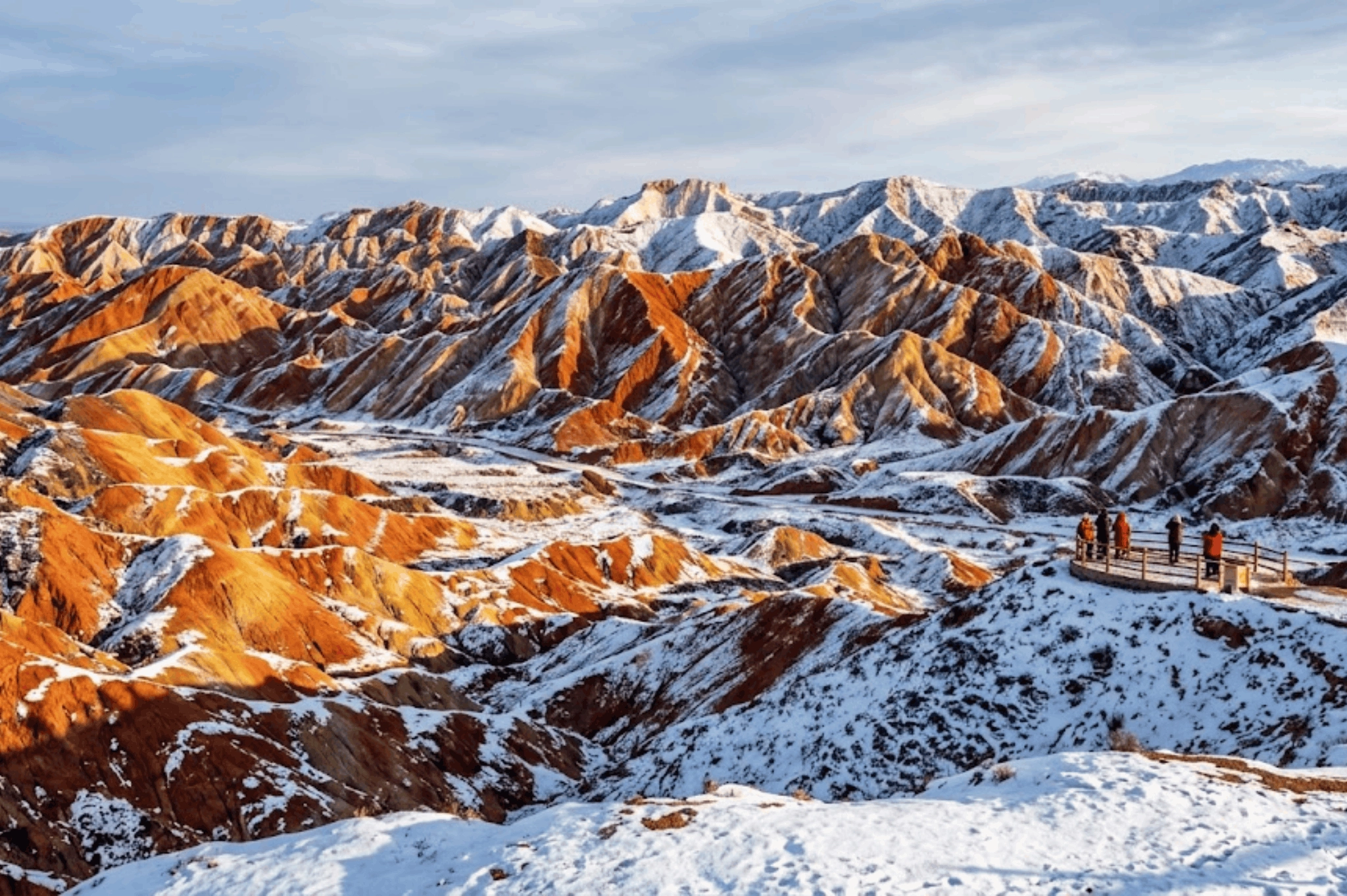
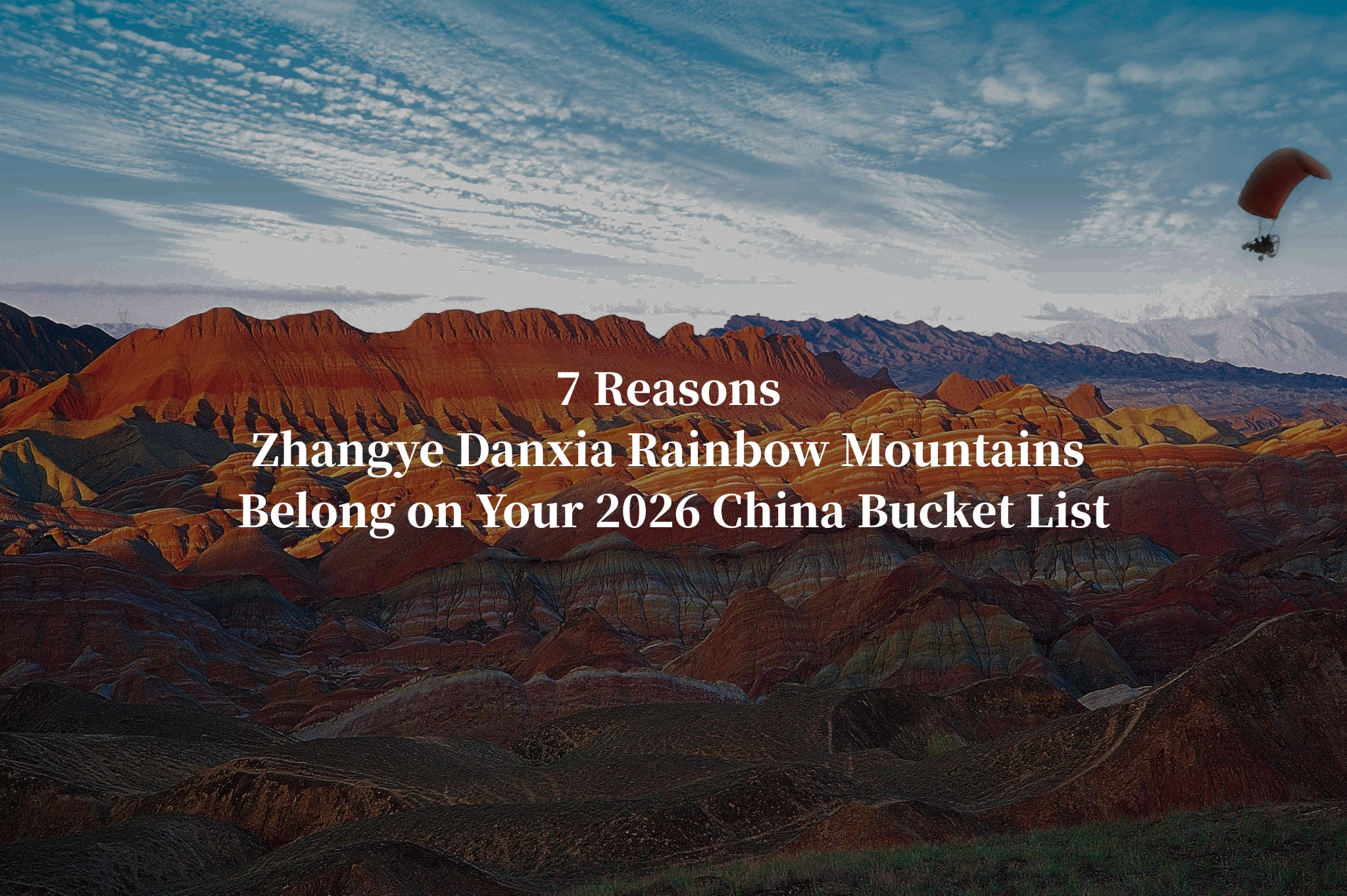
The Rainbow Mountains at Zhangye are famous for their bands of rust, ochre and sulphur-yellow rock. In summer they are vivid but crowded, and the midday sun flattens the colour. In winter, two things happen.
First, the low-angled sun of a short day rakes across the ridges morning and evening, deepening every stripe into something almost molten. Second — and this is the prize — when snow falls, the hills become a once-a-year sight: white powder caught in the folds between red and orange stripes, a landscape no amount of summer travel will ever show you. Snow here is occasional rather than guaranteed, so treat it as a bonus rather than a booking, but even without it a crisp, clear winter morning on the boardwalks, with hardly another soul in sight, is worth the cold hands. Dress for wind; the platforms are exposed.
A Mogao Caves Visit That Actually Feels Like a Private Audience
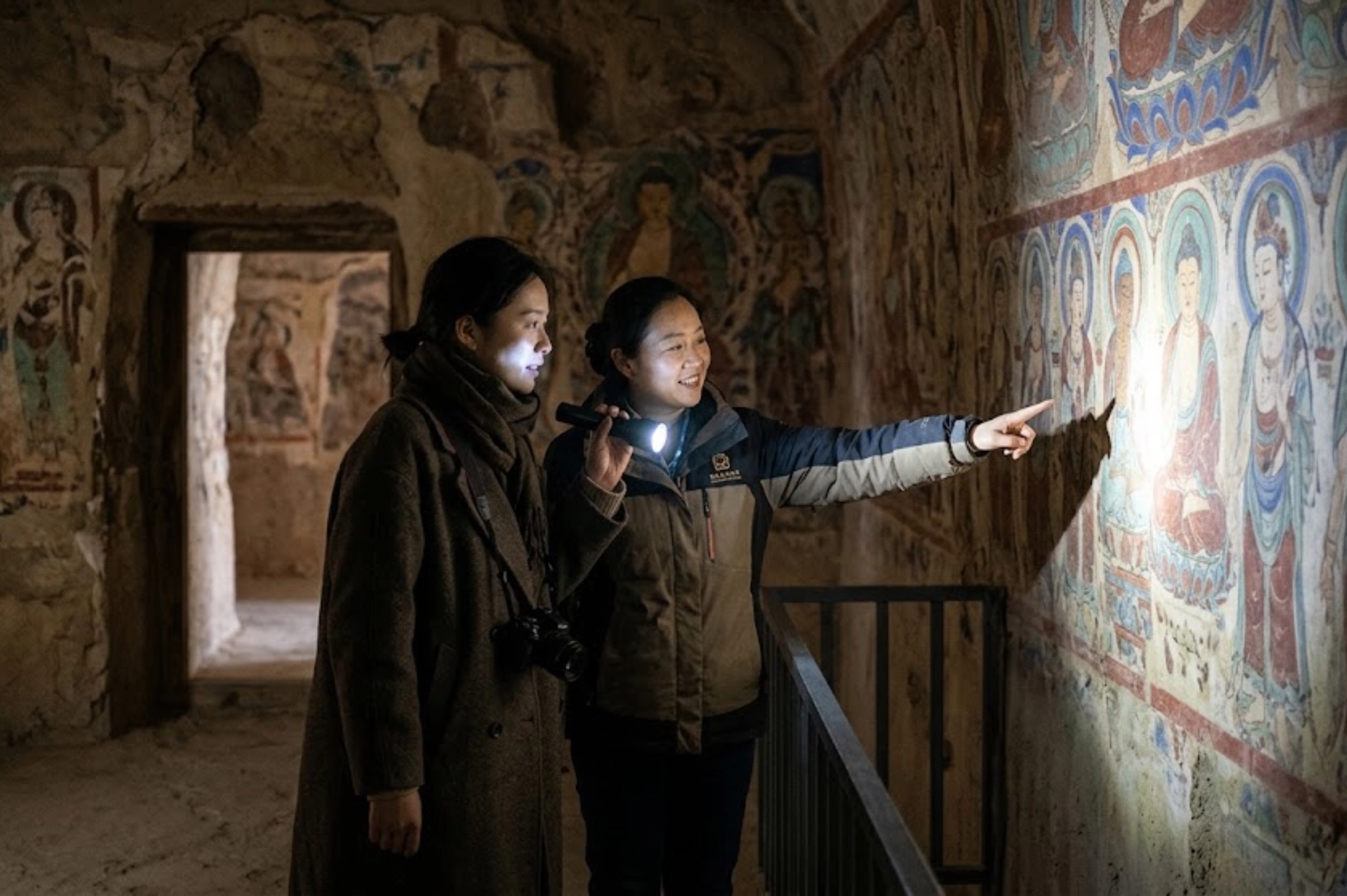
In peak season the Mogao Caves run on a tight, timed, high-volume system — a fixed number of grottoes, a guide moving briskly, a crowd pressing behind you. In the off-season the whole rhythm changes.
Visitor numbers drop steeply, the timed slots are easy to get, and guides, no longer herding a tide of people, tend to linger — opening a torch on a thousand-year-old mural and actually letting you look. Some winters, the Dunhuang Academy also opens a rotation of caves not shown in the busy months, precisely to reward the few who come. For anyone who travelled to Gansu above all for the art of the caves, the quiet of January is not a drawback. It is the single best reason to come then.
Crescent Lake and the Singing Dunes, Hushed and Frosted
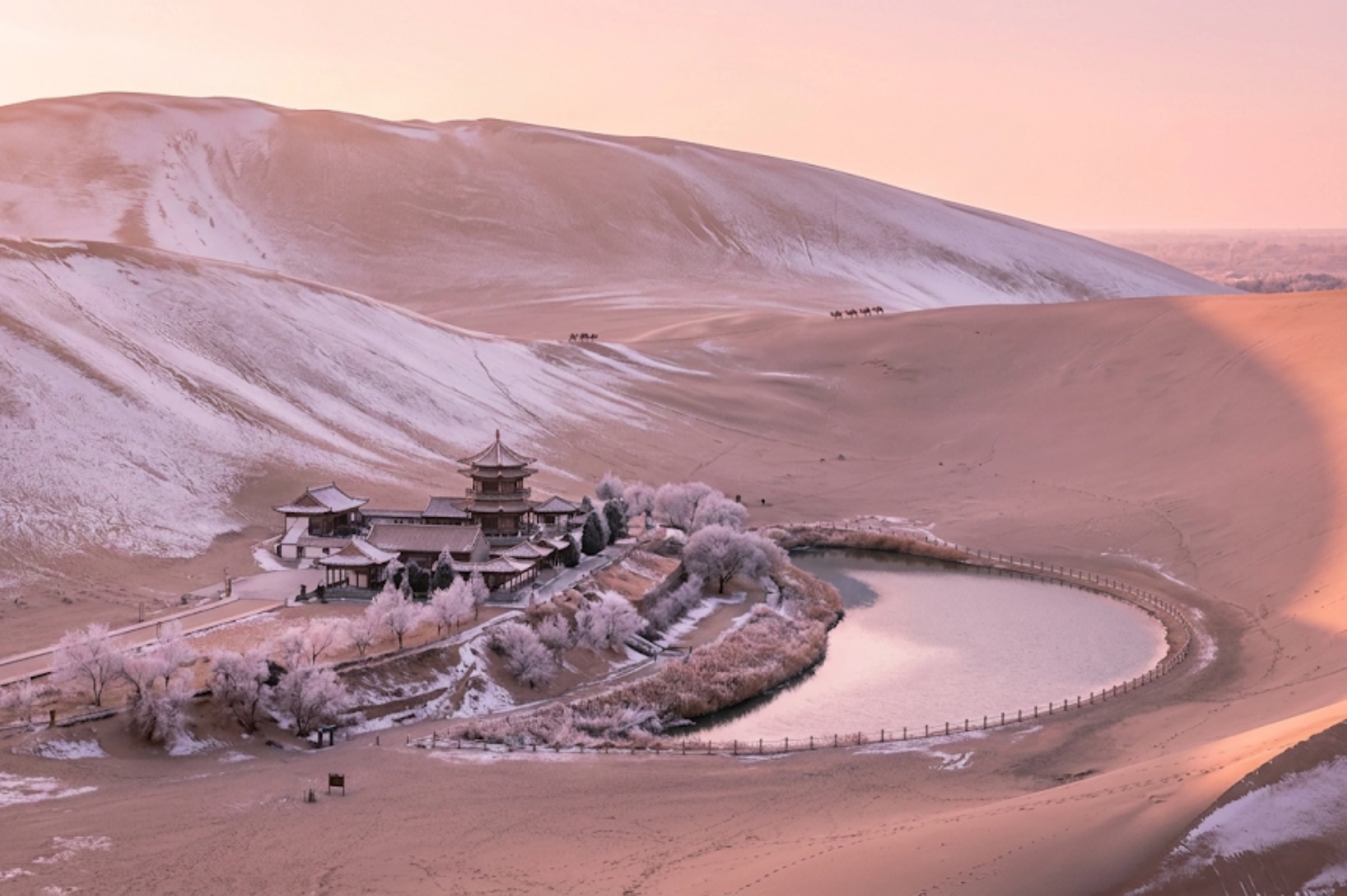
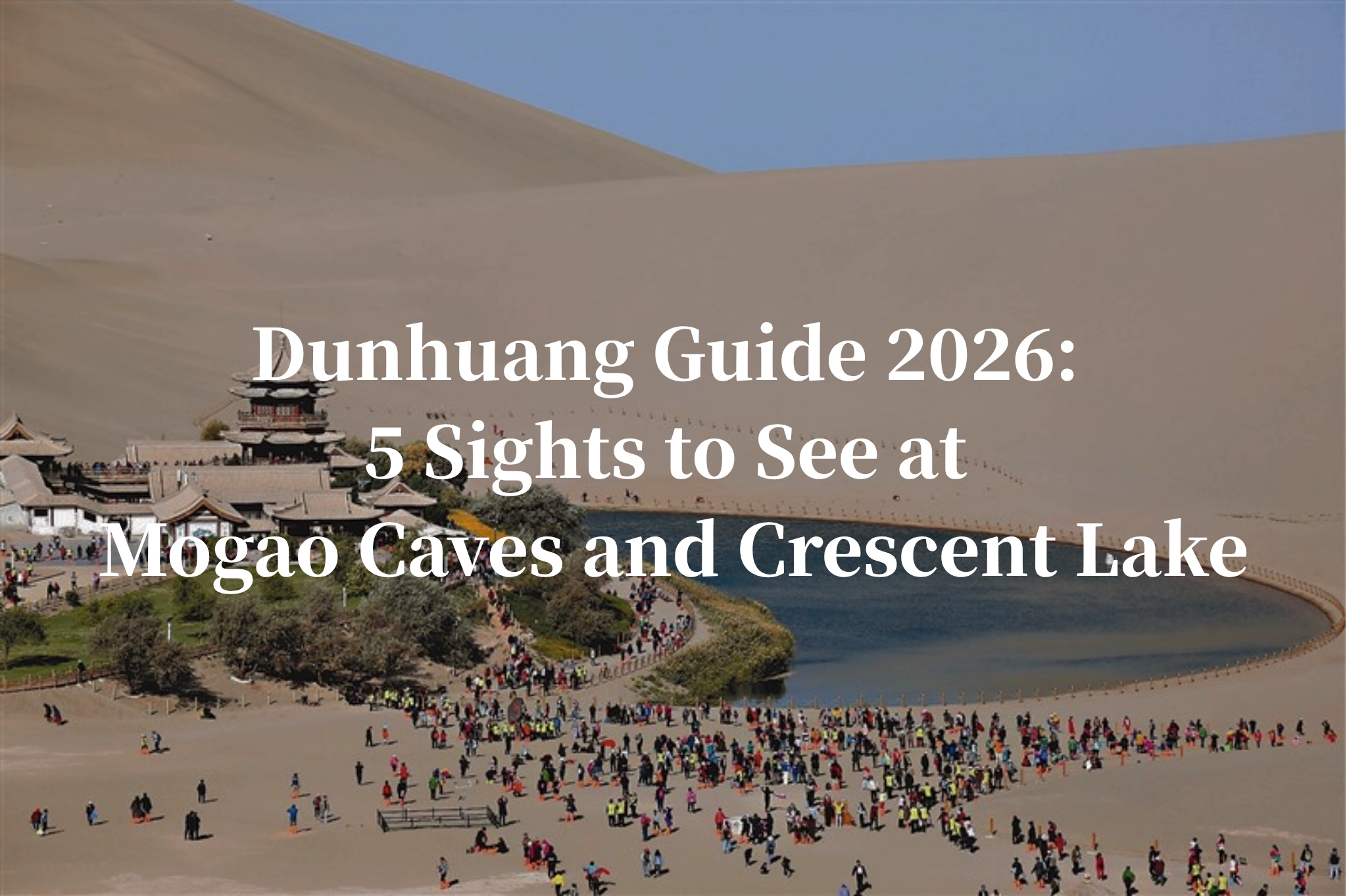
The Mingsha Shan ("Singing Sand") dunes and the Crescent Lake cradled among them are Dunhuang's postcard image. In summer they bustle with camel trains and paragliders.
In winter the whole amphitheatre of sand falls silent, the crowds thin to a scatter, and on the coldest mornings a thin rime of frost or a dusting of snow lies over the dune crests — sand and snow together, a combination that stops first-time visitors in their tracks. Camel rides still run on clear days; the animals, if anything, prefer the cold. Climb a ridge at sunset with the temperature dropping and the light going pink over the Gobi, and you will understand why some travelers say they only truly saw Dunhuang in winter.
Some of the Clearest Night Skies of the Entire Year
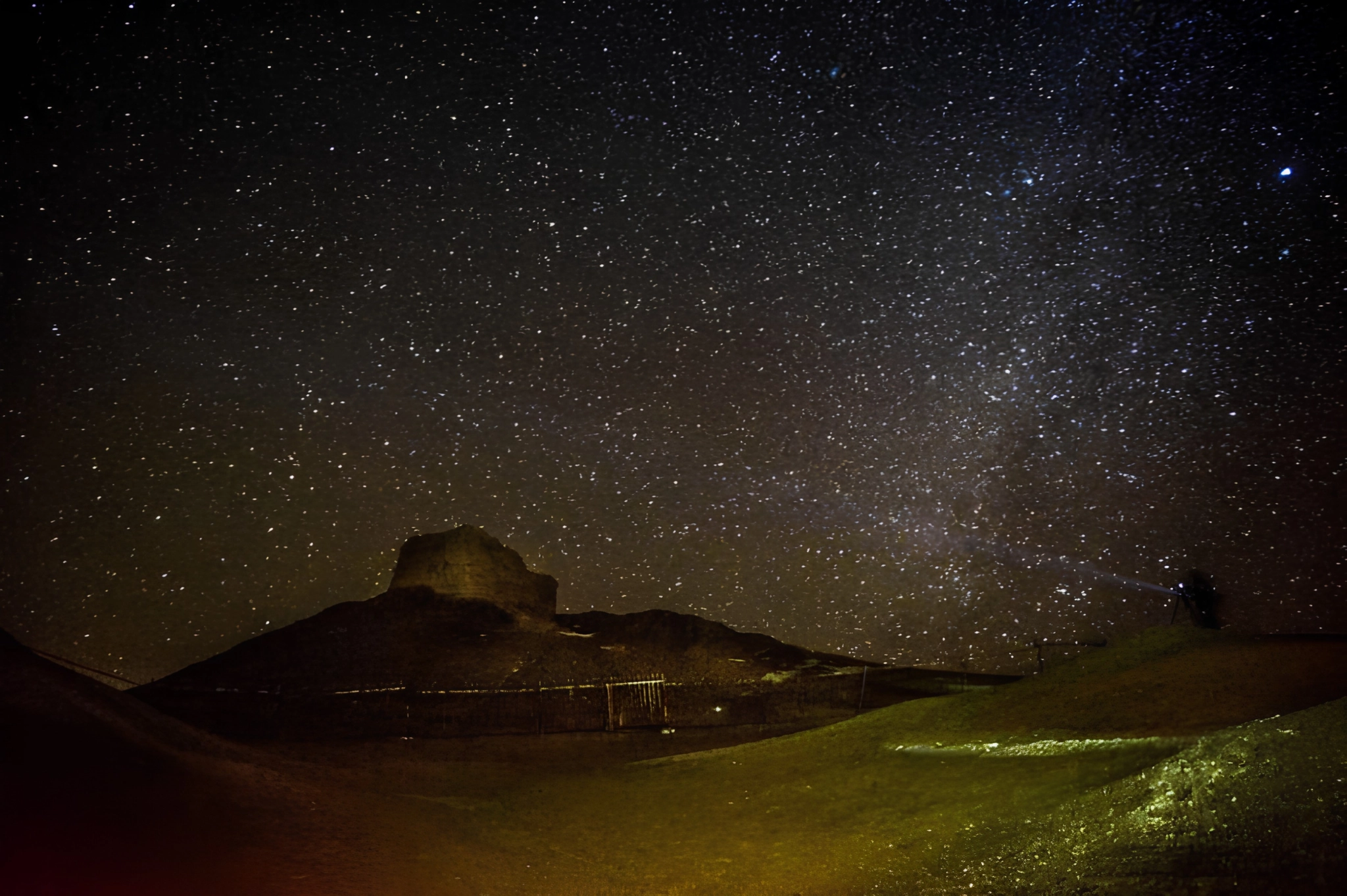
Winter air over the Gobi is exceptionally dry and stable, and the long nights start early. That combination makes the cold months some of the finest for stargazing in the Dunhuang desert.
Away from the town's glow, the Milky Way stands out hard and bright, and the thin, dustless atmosphere gives stars a steadiness you rarely get in the hazier warm season. Bundle up seriously — this is standing-still-in-the-dark cold — but a clear Gobi night in December, with Orion wheeling over the dunes, is one of the quiet glories of a Gansu winter.
You Will Pay a Fraction of the Peak-Season Price
Here is the practical heart of it. Gansu's tourism season is sharply peaked, so the off-season brings real, large savings.
Flights into Lanzhou and Dunhuang drop steeply; hotels that are fully booked and premium-priced in August sit half-empty and discount hard; and crucially, many major Gansu attractions cut ticket prices or waive them entirely in winter. Dunhuang in particular has run winter-and-spring promotions in recent years offering free or half-price entry to a cluster of its headline sites across the cold months, and similar off-season discounts appear across the province. The exact deals change year to year, so confirm close to travel — but the broad truth holds: a winter Silk Road trip can cost dramatically less than the identical route in summer, for arguably a better experience.
The Northwest's Food Is Built for the Cold
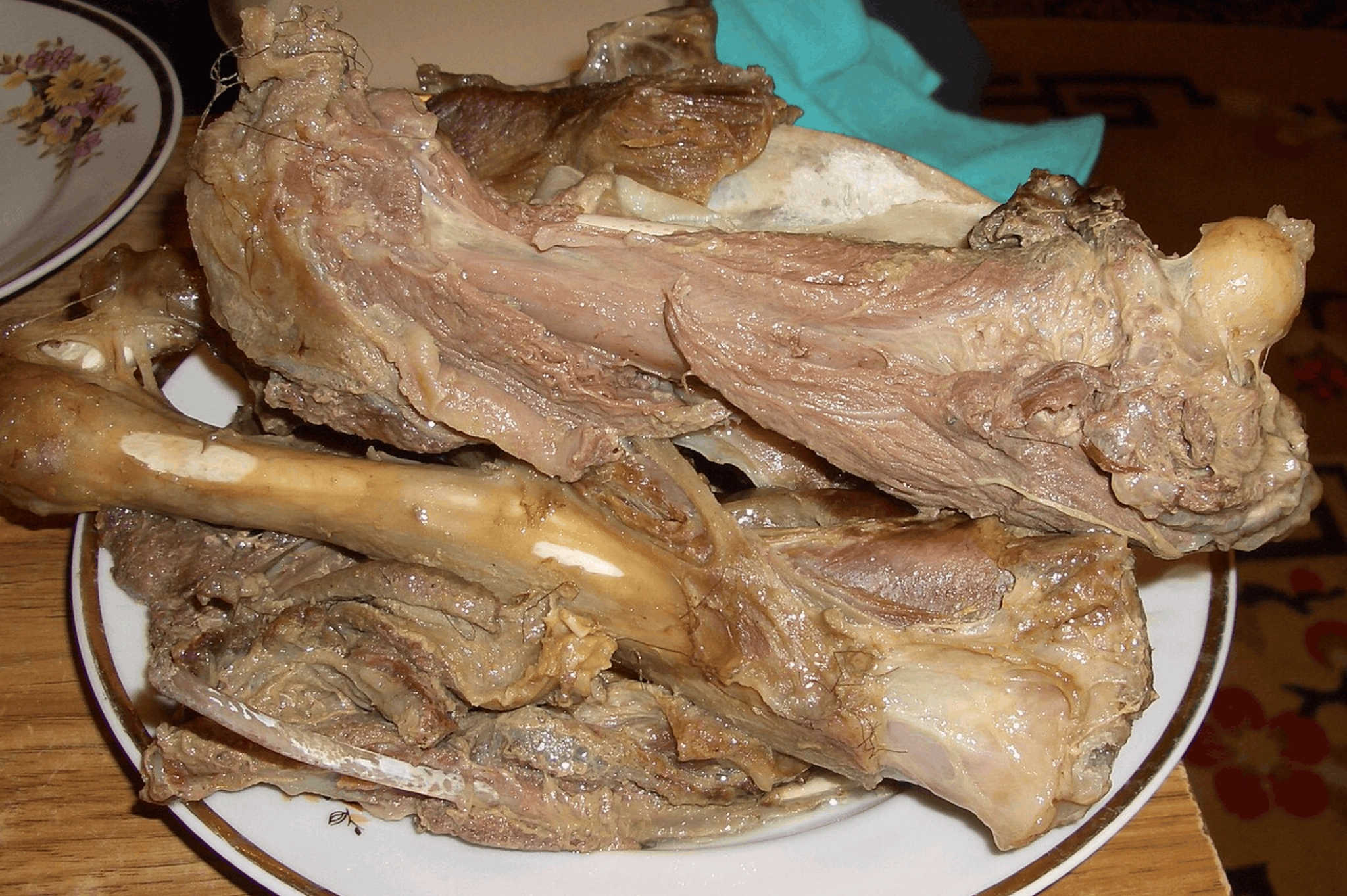
Gansu eats brilliantly in winter. This is a province of hand-grabbed lamb (手抓羊肉), steaming bowls of Lanzhou beef noodles that fog your glasses, lamb hotpot, and the warming "three-cannon" eight-treasure tea of the capital.
The Hui-Muslim kitchens of Lanzhou and Linxia are at their most comforting when it is freezing outside, and a long lunch of lamb and hot broth after a cold morning among the grottoes is one of the real pleasures of the season. Winter travel and northwest comfort food were, in a sense, made for each other.
If You Time It Right, You Catch the Silk Road at New Year
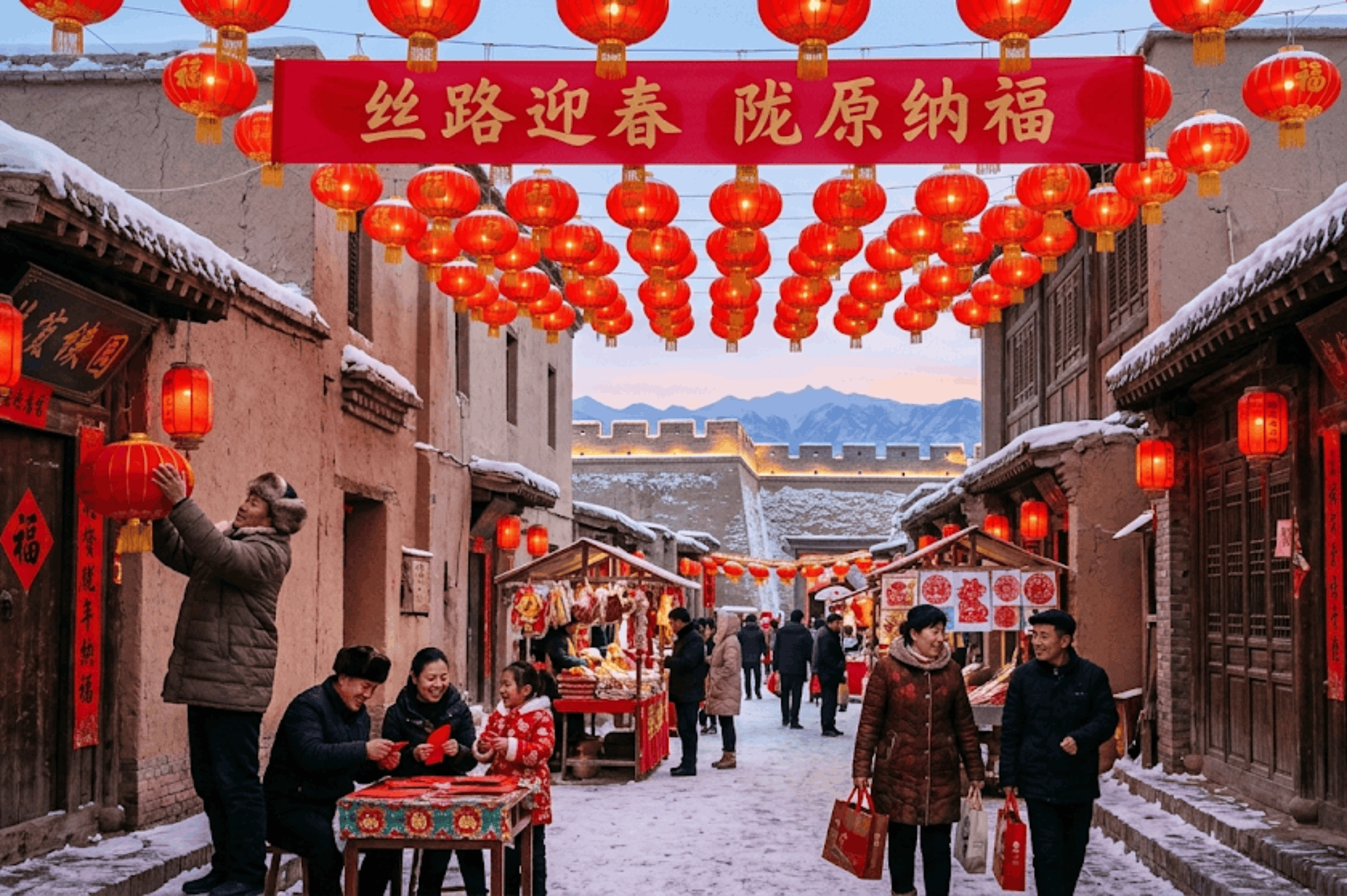
Travel in late January or February and you may land in the run-up to Spring Festival (Chinese New Year) — a layer most summer visitors never see.
Lantern displays, temple fairs, red couplets on every door, and the particular hospitality of the northwest in its biggest holiday. A caution comes with it: around the festival itself, trains and flights fill with Chinese travelers going home, and some small businesses close for the holiday, so this is the one window where a little extra planning (and booking transport early) pays off. Handled well, it turns a sightseeing trip into a cultural one.
The Trains Run All Winter — and They're a Joy in the Snow
Gansu's great modern convenience, the high-speed rail line threading the Hexi Corridor from Lanzhou toward Dunhuang, runs right through the winter, warm and punctual, gliding past snow-dusted Gobi and the distant white wall of the Qilian Mountains.
The great sights of the corridor — Wuwei, Zhangye, Jiayuguan, Dunhuang — remain fully connected. It is the remote, high-altitude detours that are the winter casualty, not the Silk Road's spine.
You See the Real Place, Not the Performance
Perhaps the deepest reason comes last. In peak season, a popular destination like Dunhuang can feel like it is performing for its visitors.
In winter, with the tour buses gone, the town goes back to being a town — people doing their shopping, kids on the way to school, steam rising off a noodle shop in the cold. You see the Silk Road as a living place in the north-western Chinese winter, not as a stage set. For travelers who prize that authenticity, the off-season gives it freely.
The Honest Caveats: What Winter Asks of You
None of this works if you arrive unprepared, so here is the straight talk.
- It is genuinely cold and dry. Expect daytime highs around freezing point and nights well below it: Dunhuang in December and January typically swings from roughly −10°C at night to a few degrees above zero by day, with Zhangye and Lanzhou similar, and biting wind the real enemy on exposed desert and Danxia platforms.
- Days are short — plan sightseeing for the generous midday light and don't over-pack the schedule.
- High-altitude grassland routes largely shut down: the Tibetan uplands of Gannan (Langmusi, Zhagana, the summer grasslands) are deep-winter territory best left for warmer months, so a winter trip naturally focuses on the lower, drier Hexi Corridor oasis cities, which is no hardship at all.
- And a few minor roads and village-run sites close seasonally. Pack a serious down jacket, thermal base layers, a windproof shell, gloves, a hat, and warm boots with grip, plus lip balm and heavy moisturiser for the desert dryness and a power bank (cold drains phone batteries fast).
Do that, and the cold becomes a backdrop rather than an obstacle.
The Shortcut: Why a Guided Winter Trip Makes Extra Sense in the Cold
In summer, Gansu is forgiving enough to improvise. In winter, the margins are thinner — shorter days, cold-weather timing, the question of which sites are open and which promotions apply this year, and the Spring Festival transport crunch.
This is precisely where a guided or agency-arranged winter itinerary earns its keep: a driver who knows which Danxia viewpoints catch the morning light, pre-booked Mogao slots, heated transport between oasis cities, hotels chosen for winter warmth, and a route built around the season's strengths rather than against its weaknesses. The cold stops being logistics you manage and becomes scenery you enjoy. For a first Silk Road winter, that is often the difference between a trip that fights the season and one that quietly makes the most of it.
The Bottom Line
Winter does not take away from Gansu, it reveals its essence. Snow in the folds of the Rainbow Mountains, a near-private hour among the Mogao murals, frost on the singing dunes, a hard-bright Gobi sky at night, lamb and hot broth against the cold, and all of it at a fraction of the summer price and the summer crowds.
The only thing the off-season asks is that you come prepared and plan a little more carefully than you would in June. Do that, and you will have seen a Silk Road that most travelers, chasing the green grasslands of summer, never even knew was there.