Carved into a stark red sandstone cliff in the Mutou Valley below the Flaming Mountains, about 45 kilometers northeast of Turpan, sits one of the most culturally profound yet historically tragic sites along the ancient Silk Road: the Bezeklik Thousand Buddha Caves (柏孜克里克千佛洞). Servicing as the royal Buddhist sanctuary for the ancient Gaochang Kingdom from the 5th to the 14th centuries, this grotto complex represents nearly a millennium of religious devotion, artistic evolution, and multicultural exchange.
The Legacy of the "Decorated House"
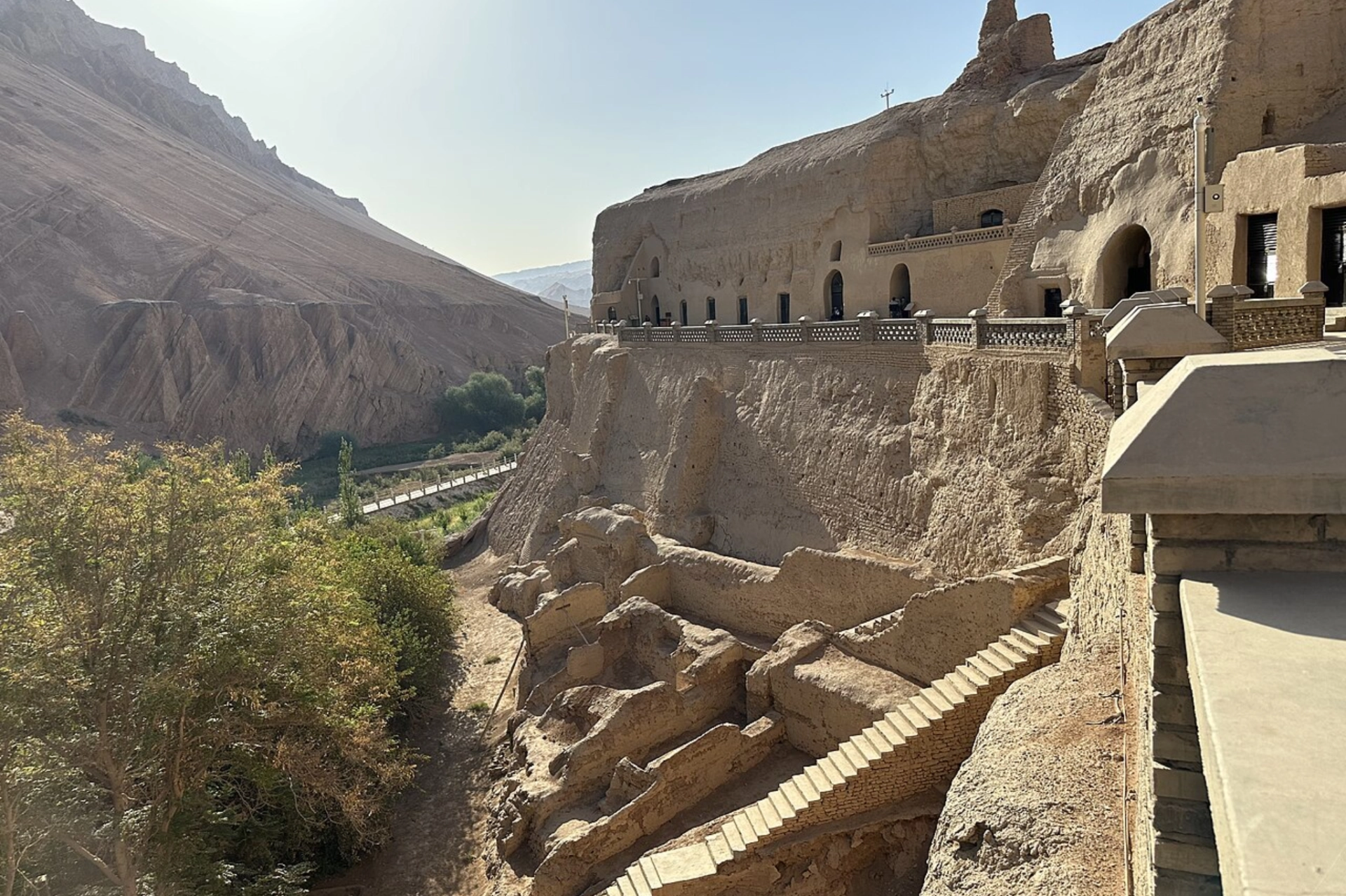
The word Bezeklik originates from the Uyghur language, roughly translating to "a place with paintings" or "decorated house." Set along the western cliff face of the Mutou Valley gorge, the complex originally comprised over 83 excavated caves. Today, 57 grottoes survive, with more than 40 containing remaining traces of ancient wall paintings that collectively span roughly 1,200 square meters.
Because Turpan functioned as a critical oasis junction on the northern branch of the Silk Road, the artwork at Bezeklik offers a rare visual record of converging civilisations across successive dynasties, including the Tang, Five Dynasties, Song, and Yuan periods:
- Gandharan and Indian Influences: Expressed through serene facial proportions, flowing drapery, and early Buddhist iconography.
- Persian and Central Asian Motifs: Reflected in the distinct attire, daggers, and physical features of international merchants and royal envoys depicted on the walls.
- Han Chinese Brushwork: Highlighted by fluid line work, landscape elements, and traditional color palettes.
- Uyghur Donor Portraits: Showcasing local Uyghur nobility in elaborate, richly patterned silk robes kneeling in prayer, alongside dramatic Praṇidhi scenes illustrating the Buddha's previous lives.
The Great Cutting: How 90% of the Murals Left Turpan
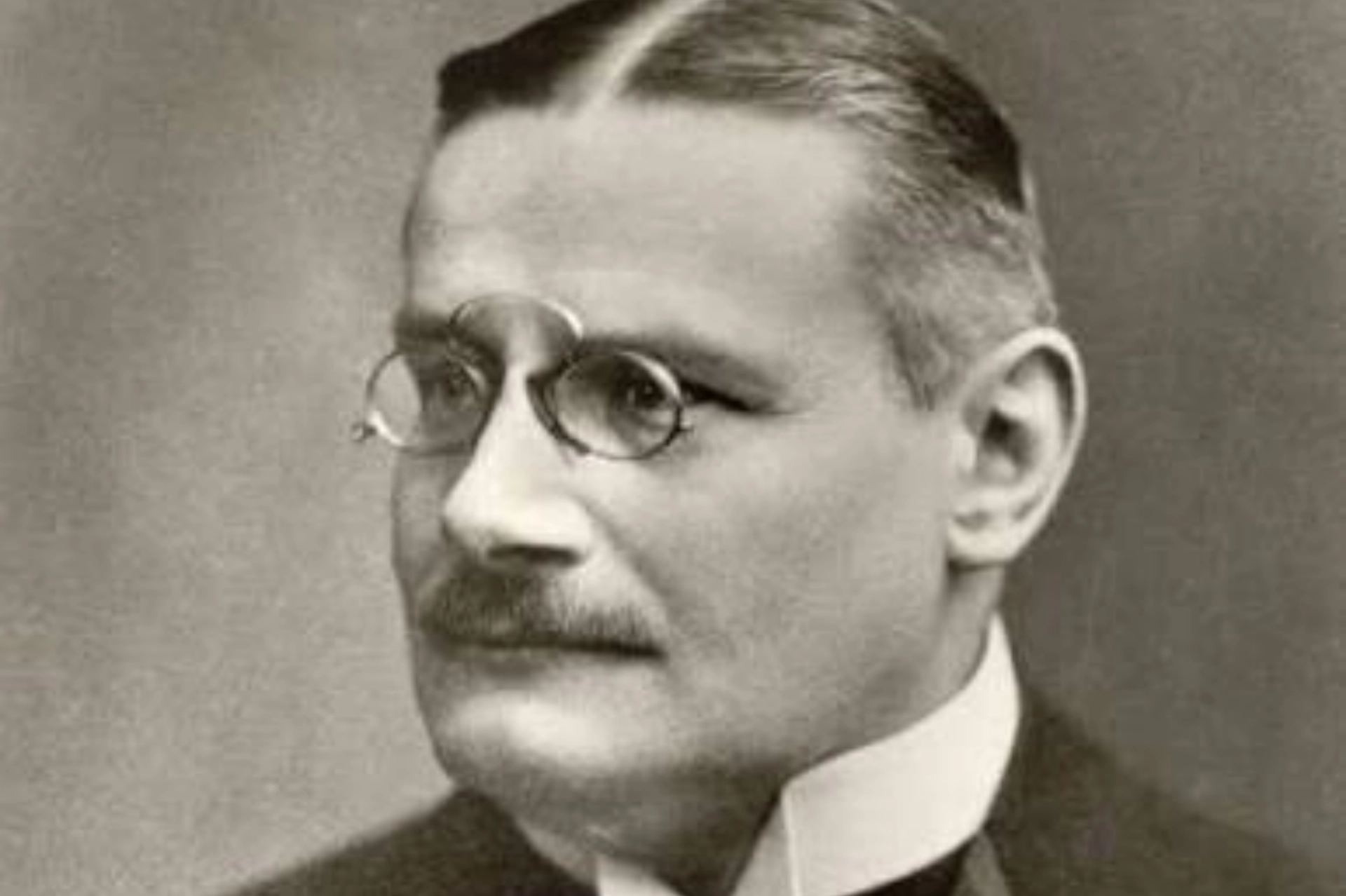
Standing inside the grottoes today, visitors are immediately struck by large, clean, rectangular scars where vibrant frescoes used to be. Between 1904 and 1913, multiple foreign scientific expeditions targeted the site during the height of early 20th-century Central Asian antiquities collection.
The most damaging of these was led by German explorer Albert von Le Coq in 1905. Using fox-tail saws, specialized knives, and padded transport crates, his team systematically removed the finest wall panels from the rock face, shipping them back to Europe. In total, foreign expeditions stripped an estimated 90% of Bezeklik's high-quality murals.
Many of these masterpieces were reassembled at the Museum of Indian Art (Museum für Indische Kunst) in Berlin. Tragically, because the largest mural panels were permanently cemented onto the museum walls, they could not be evacuated during World War II and were destroyed by Allied bombing runs. As a result, some of the absolute highest achievements of Silk Road Buddhist art exist today only in pre-war black-and-white photographs.
What to Expect at the Site Today
While much was lost, a visit to Bezeklik remains a powerful, essential stop on any Xinjiang itinerary.
- Surviving Frescoes: Several accessible caves retain remarkably vivid pigments, displaying celestial beings, guardians, and detailed floral borders that survived both early antiquarians and iconoclasm.
- The Empty Scars: The physical gaps in the rock walls serve as a poignant educational reminder of cultural heritage preservation and geopolitical history.
- Dramatic Natural Setting: The contrast between the emerald-green poplar trees lining the Mutou River below and the barren, fire-red cliffs of the Flaming Mountains above illustrates exactly why 5th-century monks selected this isolated gorge for retreat and contemplation.
Visitor Note: To protect the remaining fragile organic pigments from light degradation, photography inside the grottoes is strictly prohibited. Guests are welcome to photograph the exterior terraces, cliffside walkways, and surrounding canyon.
Planning Your Visit & Turpan Travel Circuit
Bezeklik is rarely visited in isolation; it functions best when paired with the broader network of archaeological sites across the Turpan Depression:
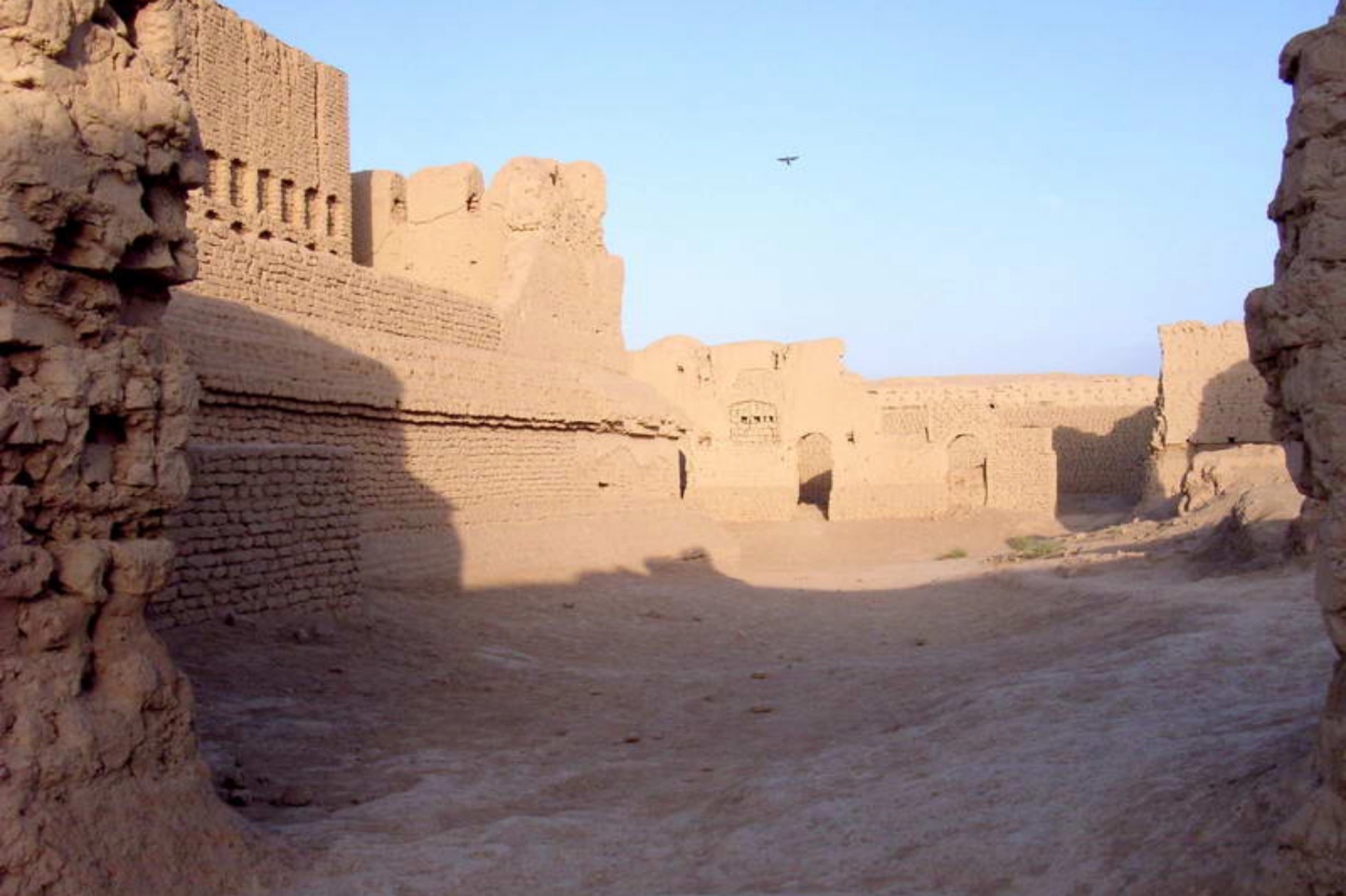
- Gaochang Ancient City (高昌故城): Located nearby, these vast adobe ruins represent the ancient capital city whose royalty and merchant class directly funded the construction of the Bezeklik caves.
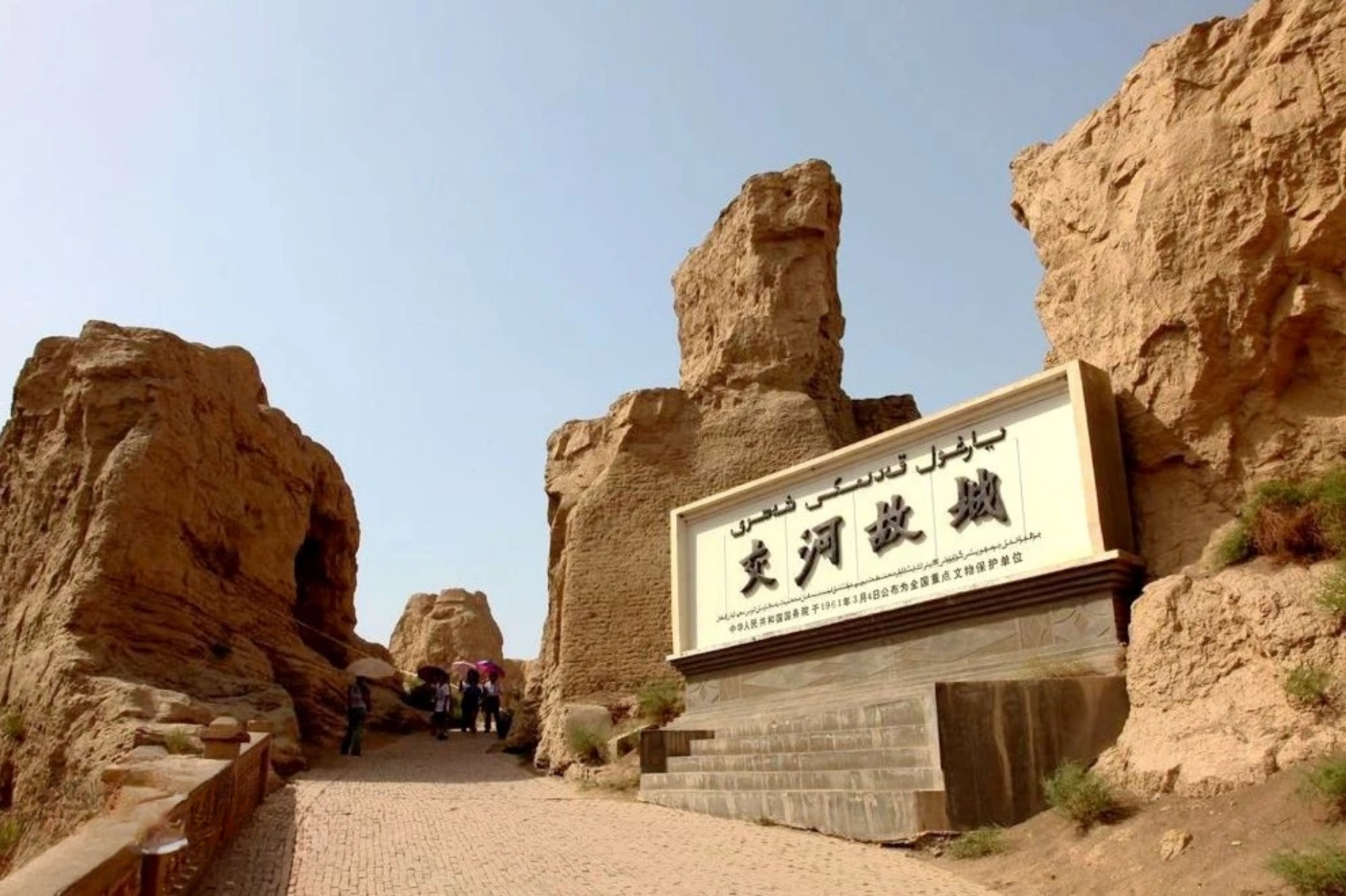
- Jiaohe Ancient City (交河故城): The world's largest, oldest, and best-preserved raw-earth excavated city, ideal for sunset exploration.
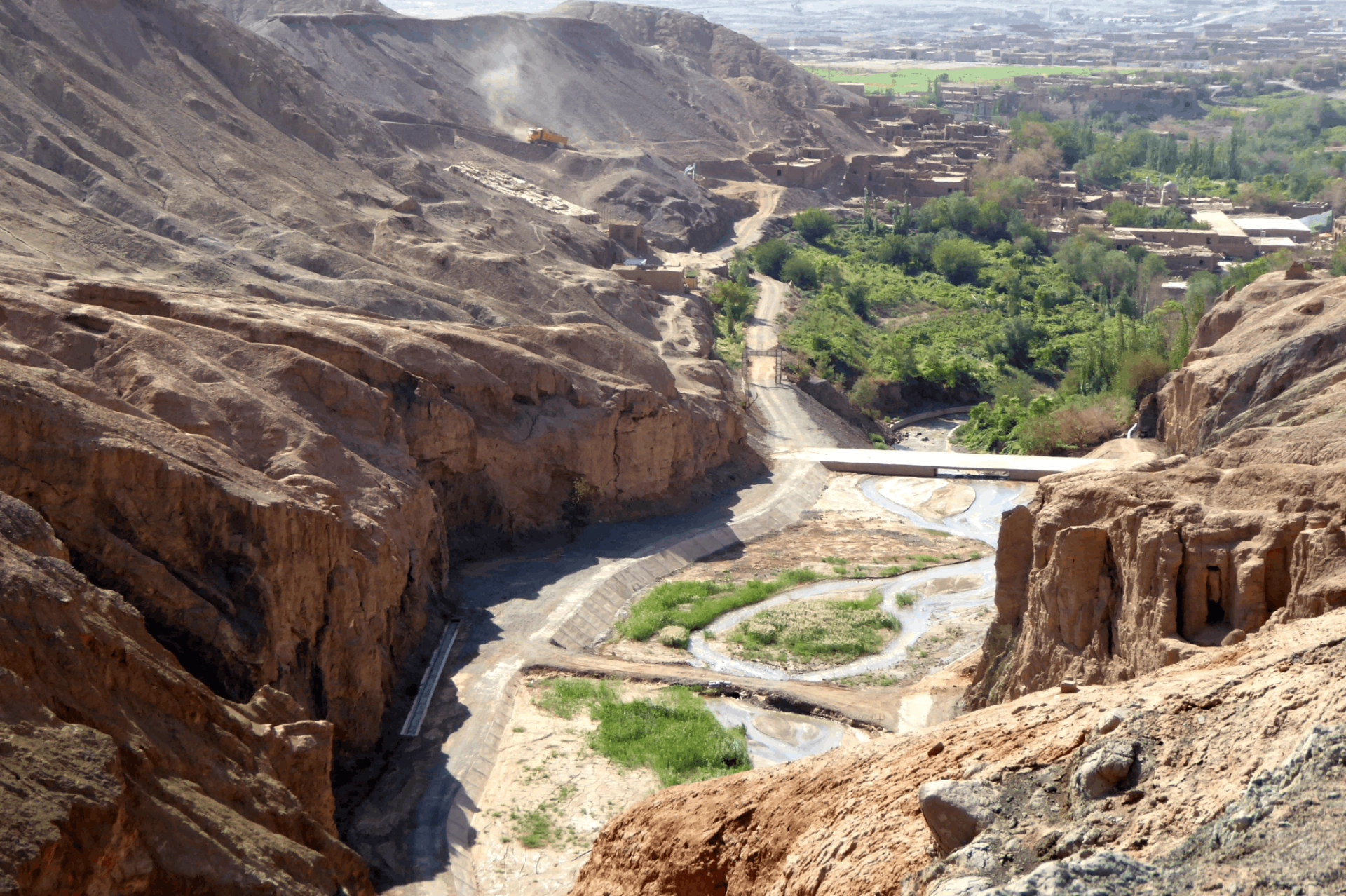
- Tuyoq Village & Valley (吐峪溝): A historic Uyghur village set in a lush canyon, famous for its ancient grape orchards and early Buddhist grottoes.
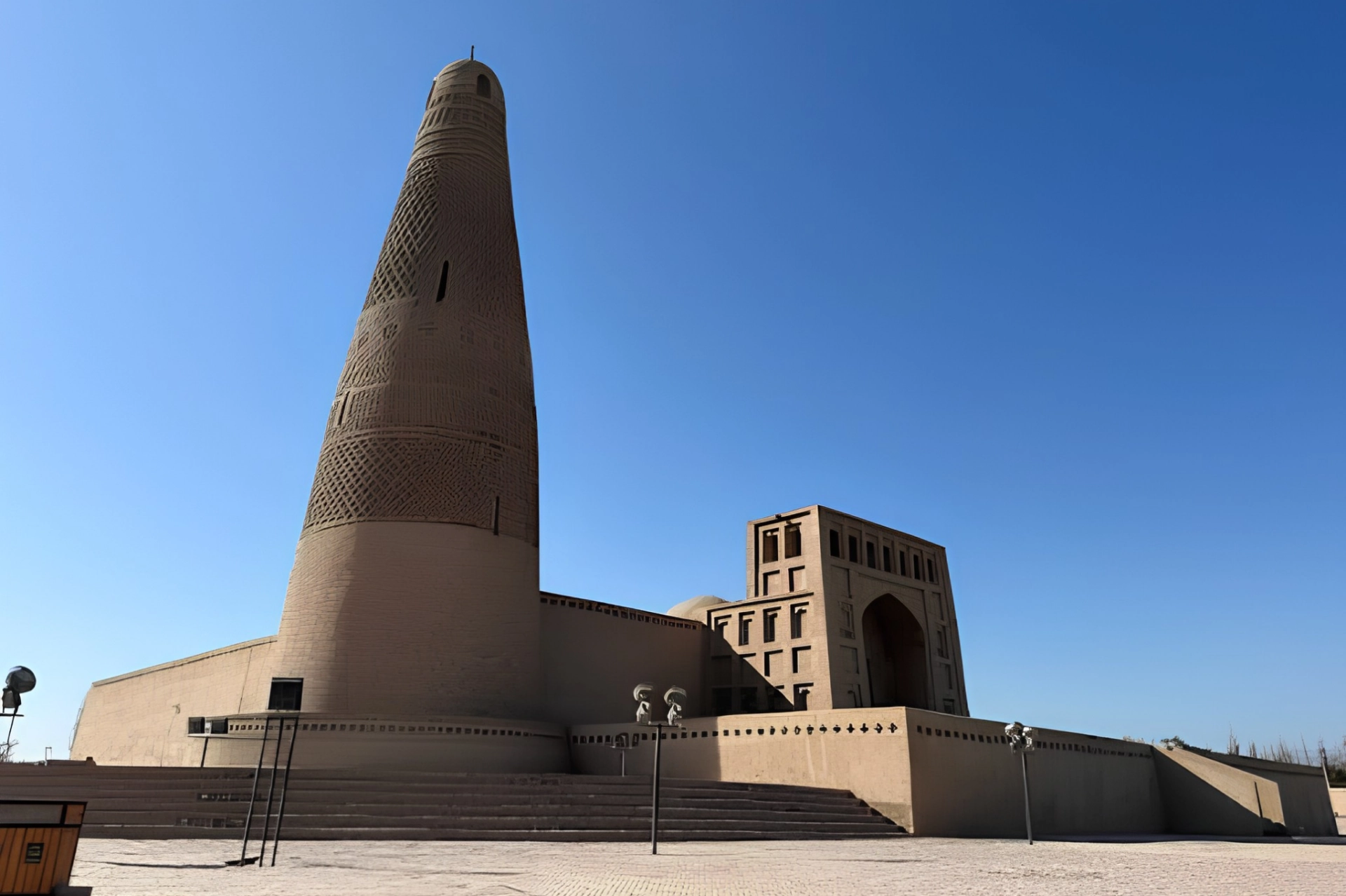
- Karez Irrigation System & Emin Minaret (蘇公塔): Cultural landmarks inside Turpan city showcasing unique Islamic architecture and underground water engineering.
Practical Logistics & Tips
- Getting There: Located roughly 45 km northeast of Turpan city center. There are no direct public buses, so booking a private vehicle with a driver or joining a small-group day tour is recommended.
- Best Time to Visit: Spring (April–May) and Autumn (September–October). Summer surface temperatures in the Turpan Depression—the lowest and hottest basin in China—can exceed 45°C (113°F). Visit early in the morning to beat the peak heat.
- Travel Documents & Visas: Foreign travellers must carry their physical passport at all times due to regional security checkpoints. Note that Xinjiang is not eligible for China's 240-hour visa-free transit policies; a standard Chinese tourist visa (L Visa) issued prior to arrival is required.
FAQ
Q1 What are the Bezeklik Thousand Buddha Caves?
Bezeklik is an ancient Buddhist grotto complex carved into the cliffs of the Mutou Valley in Xinjiang, China. Built between the 5th and 14th centuries, it served as the royal temple complex for the Gaochang Kingdom.
Q2 What does "Bezeklik" mean?
The name comes from a Uyghur word meaning "a place where there are paintings" or "decorated house," referring to the extensive murals that once covered the cave walls.
Q3 Why are so many of the murals missing from the walls?
Between 1904 and 1913, foreign expeditions—most notably led by Albert von Le Coq—cut roughly 90% of the finest murals from the walls and transported them to museums abroad.
Q4 Where are the original murals located now?
Surviving panels are held in international institutions, including museums in Berlin, St. Petersburg, London, Tokyo, and Seoul. However, a significant portion of the Berlin collection was destroyed during World War II bombing raids.
Q5 Is Bezeklik still worth visiting if most murals were removed?
Yes. Enough original artwork remains in several caves to demonstrate the incredible blending of Silk Road cultures. Additionally, the empty saw marks offer a compelling historical lesson, and the surrounding Flaming Mountains scenery is breathtaking.
Q6 Are photos allowed inside the caves?
No. Photography and videography inside the caves are strictly forbidden to prevent light damage to the remaining historic pigments. Exterior photography along the terrace is allowed.
Q7 How far is Bezeklik from Turpan city center?
It is approximately 45 kilometers (28 miles) northeast of Turpan, which takes about 45 to 50 minutes by car.
Q8 What other attractions should I pair with Bezeklik?
It pairs naturally with Gaochang Ancient City, Jiaohe Ancient City, the Astana Tombs, Tuyoq Valley, and the Grape Valley.
Q9 When is the best time of day to visit?
Early morning is best, especially during summer months, to avoid extreme desert heat on the exposed canyon terraces.
Q10 Do foreign tourists need a special permit to visit Bezeklik?
No special travel permit is required beyond a standard Chinese visa and passport. However, Xinjiang is excluded from China's visa-free transit rules, so you must hold a valid Chinese visa before travelling.