For a thousand years, every merchant, monk, and pilgrim traveling the Silk Road had to pass through one town before the deserts swallowed the route west. That town was Dunhuang. They came to trade, but they also came to pray—to give thanks for surviving the grueling crossing of the Gobi Desert or to beg for safe passage ahead. The result of this ancient devotion is one of the most extraordinary concentrations of religious art on Earth, carved directly into desert cliffs, sitting just a short drive from an impossible crescent-shaped lake cupped between singing dunes.
Dunhuang is the grand finale of any Silk Road itinerary. Here are the five wonders that make it completely unmissable for 2026 travelers, and how to experience each one to the fullest.
01
The Mogao Caves
The World’s Largest Underground Buddhist Art Gallery
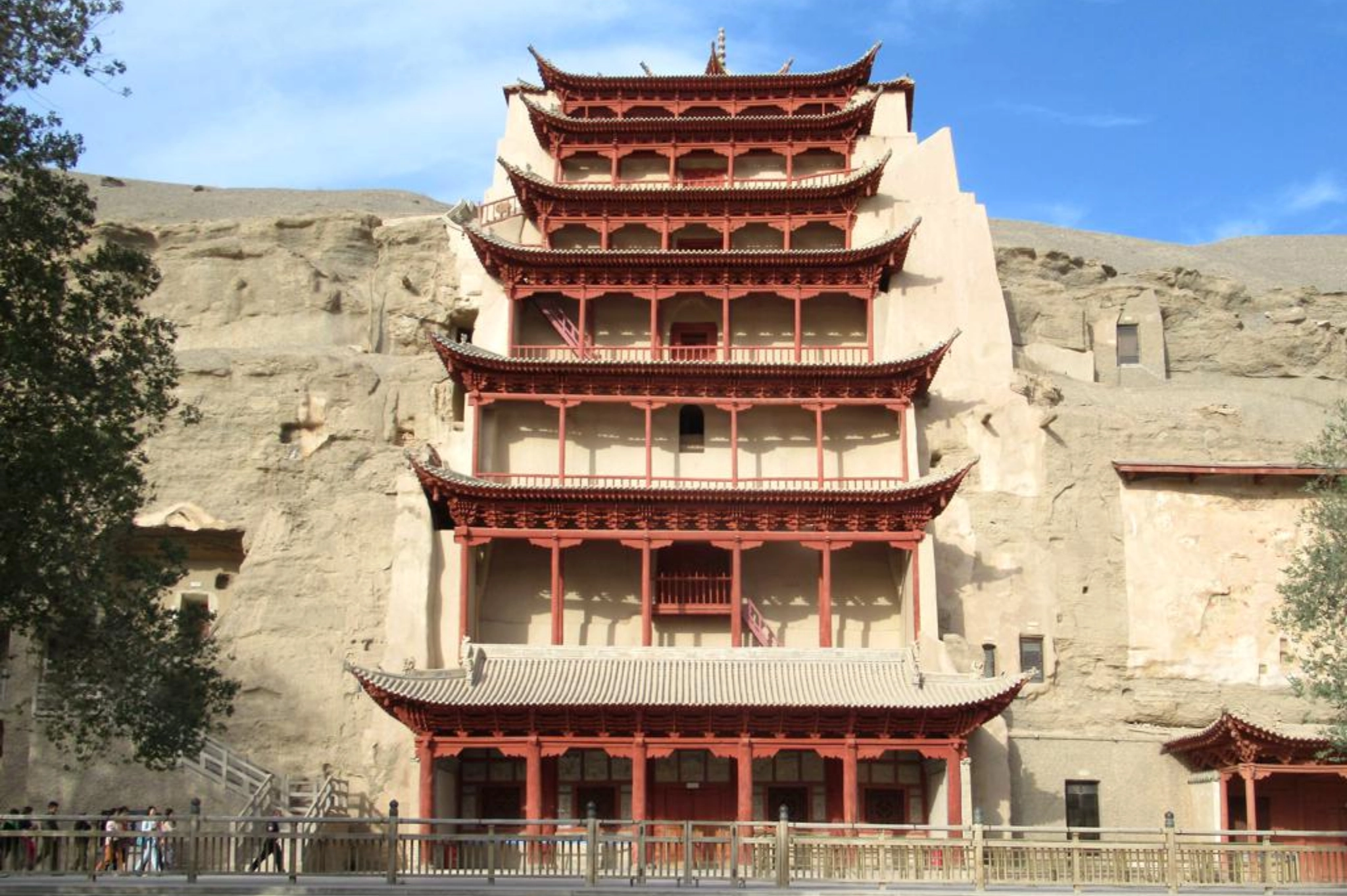
The nine-storey temple of Cave 96 — the iconic face of the Mogao cliffs.
Begun in 366 AD and expanded over ten dynasties, the Mogao Caves (or Mogao Grottoes) are a UNESCO World Heritage Site of staggering proportions: 735 grottoes, some 45,000 square metres of murals, and 2,415 painted sculptures. Step into a single dim cave and your guide’s flashlight reveals walls where celestial apsaras drift across a millennium-old ceiling, colossal Buddhas sit serene in faded gold, and entire cosmologies unfold in vibrant mineral pigment — all created long before Europe’s great cathedrals were even conceived.
2026 Visitor Rules & Hacks
No solo wandering. To protect the fragile art from humidity and CO₂, every visitor joins an official guided tour. Guides unlock a rotating selection of caves, so no two visits are quite the same.
Strict photography ban. No photos of any kind inside the caves — flash and screen light accelerate mineral oxidation. Cap your lens and simply be present.
Start at the Digital Exhibition Center. Before the shuttle to the cliffs, you watch two HD immersive and dome-screen films. They give the historical context that lets you actually decode what you see in the dark.
02
Crescent Lake
An Impossible Oasis Defying the Shifting Sands
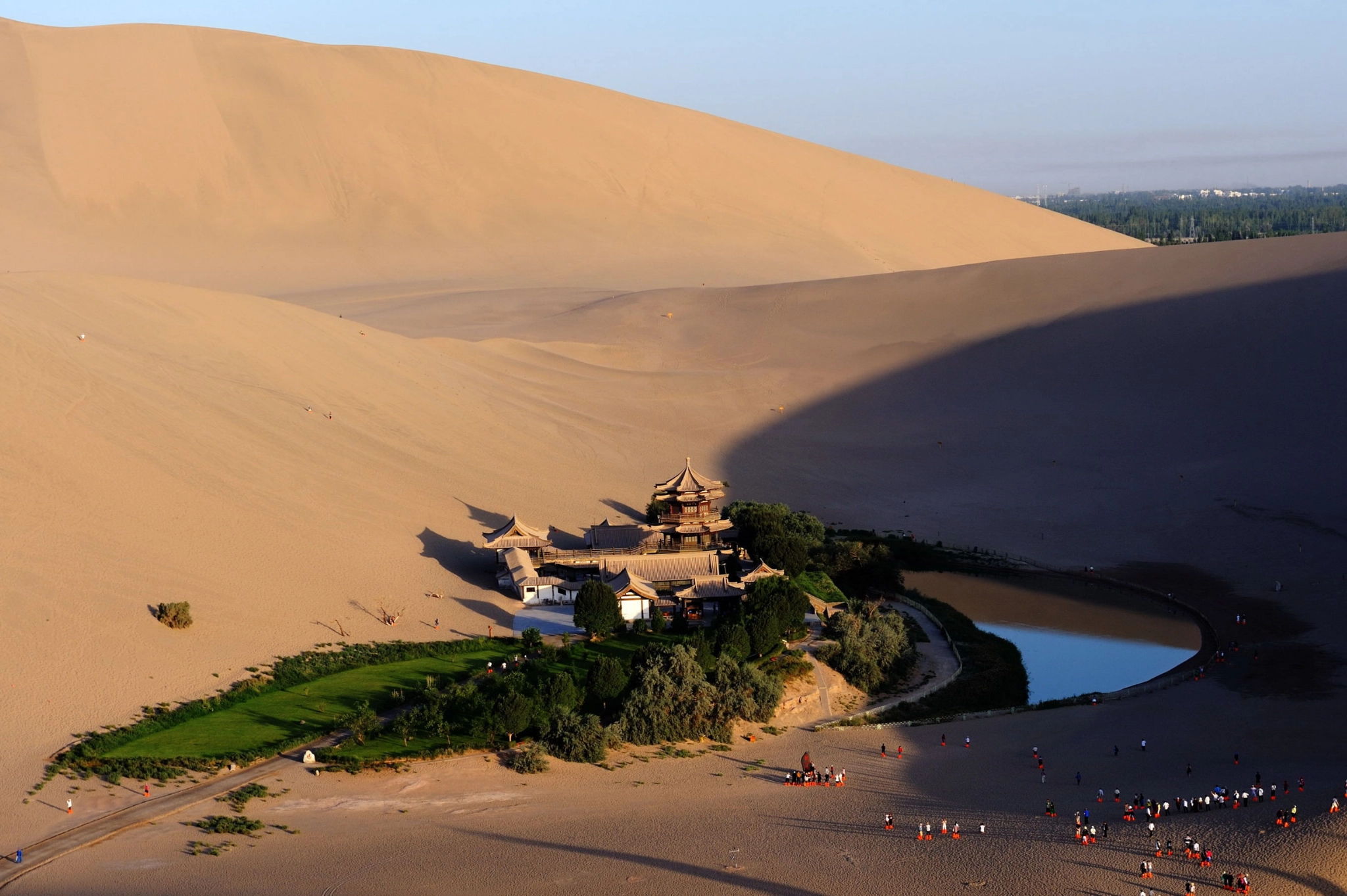
Crescent Lake (Yueya Spring) — a thousand-year oasis the dunes have never swallowed.
Just 6 kilometres south of Dunhuang, the desert breaks to reveal a geographical miracle: Crescent Lake (Yueya Spring). This crescent-moon spring pool has refused to dry up or be buried by the surrounding dunes for over a thousand years. A graceful Han-Tang style pavilion stands at its edge, and the juxtaposition of crystal water, lush reeds and a towering ocean of sand captures the pure romanticism of the ancient Silk Road.
03
Mingsha Mountain
The Legendary Singing Sand Dunes
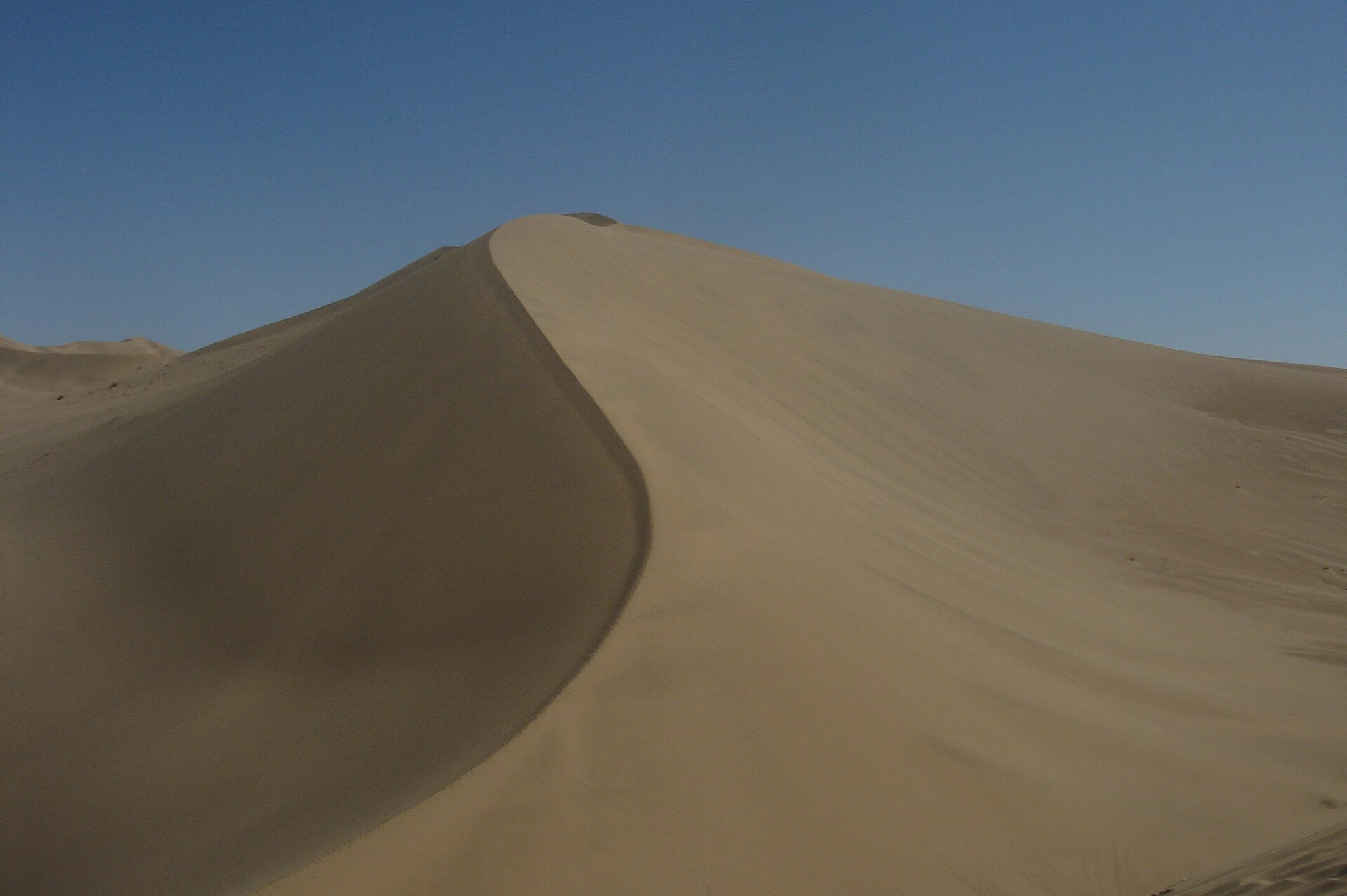
Mingsha Shan — the “Echoing-Sand Mountain” that hums in the wind.
Cradling the oasis is Mingsha Mountain — literally the “Echoing-Sand Mountain.” When strong desert winds sweep the ridges, or when visitors slide down the steep slopes, the shape and composition of the quartz grains create a low, resonating hum: the famous singing sands. Climbing the spine of the dune (wooden ladders line the main paths) for sunset is an elite travel experience — the low sun carving the desert into sharp geometric lines of bright gold and deep shadow.
Camel Caravans & Dune Surfing
Mingsha is an interactive playground. Mount a double-humped Bactrian camel and trek in a massive caravan across the undulating dunes — mirroring the exact silhouettes that crossed these sands millennia ago. For thrill-seekers, “dune surfing” down the sheer sand faces offers an adrenaline-pumping descent.
04
Yangguan
The Ancient Edges of the Known World
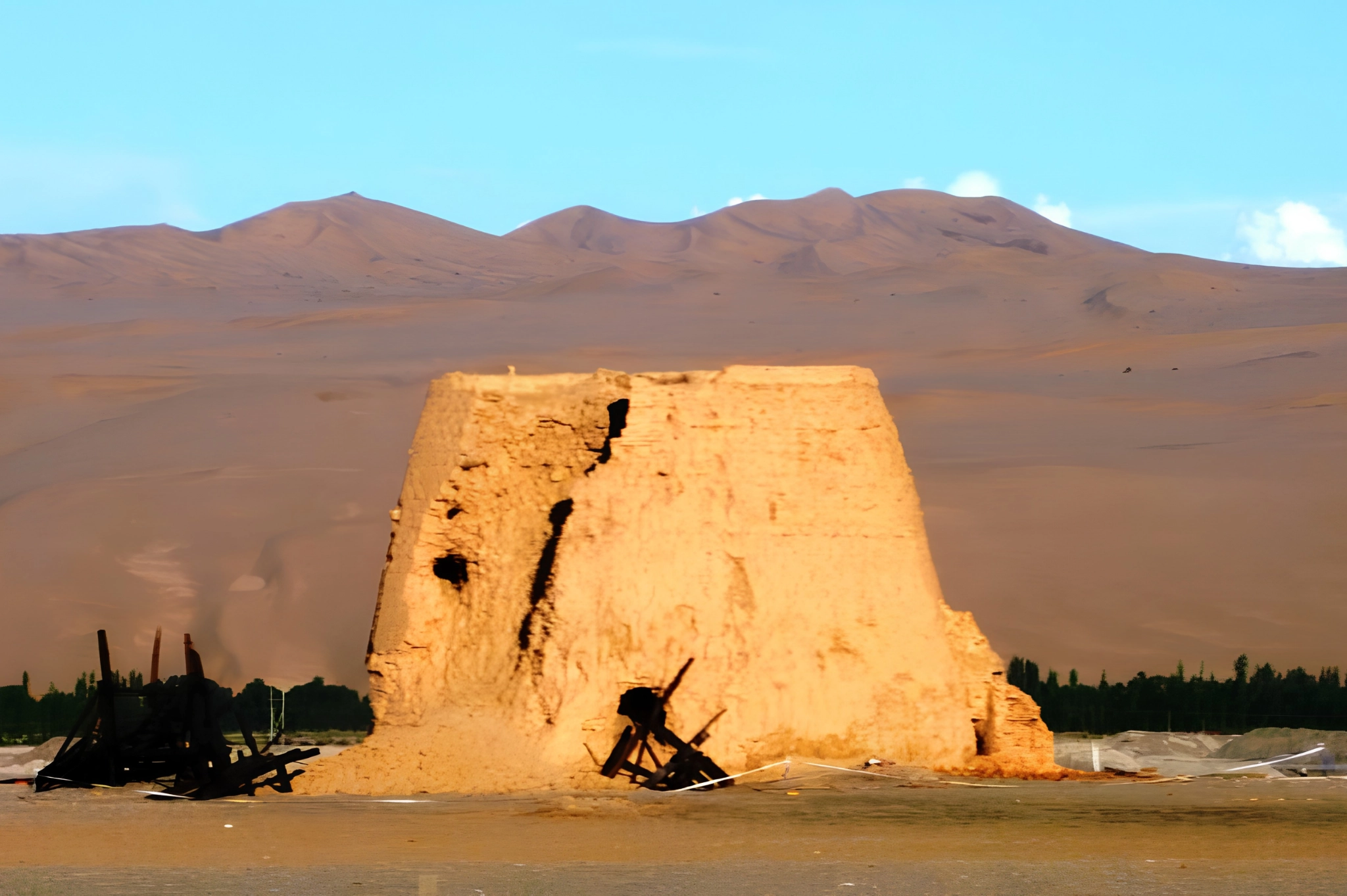
A weathered Han-dynasty beacon tower at the old frontier west of Dunhuang.
For travellers who want to venture further into the past, a half-day trip west leads to the crumbling ruins of a Han Dynasty imperial outpost: Yangguan Pass. This frontier gate marked the absolute boundary where imperial China ended and the wild, unknown Western Regions began. Standing beside a weathered rammed-earth watchtower with nothing but the vast Gobi stretching to the horizon evokes a deep, haunting sense of historical isolation. It is stark, profoundly moving, and blessedly free of crowds.
Desert Packing Guide
Anti-Sand & Sun Defense
The desert climate is exceptionally arid with high UV penetration. Pack these essentials:
Managing expectations
Dunhuang rewards historical curiosity. Arrive expecting a standard photo-op and the strict conservation rules of the Mogao Caves — dim lighting, mandatory pacing with a guide — may feel restrictive. But take time to understand the history first, knowing these murals hold a thousand years of human hope, fear and artistic triumph over an unforgiving landscape, and Dunhuang easily becomes the most moving stop on your journey across China.