Some landscapes you read about in travel magazines. This one stops your sentence mid-word.
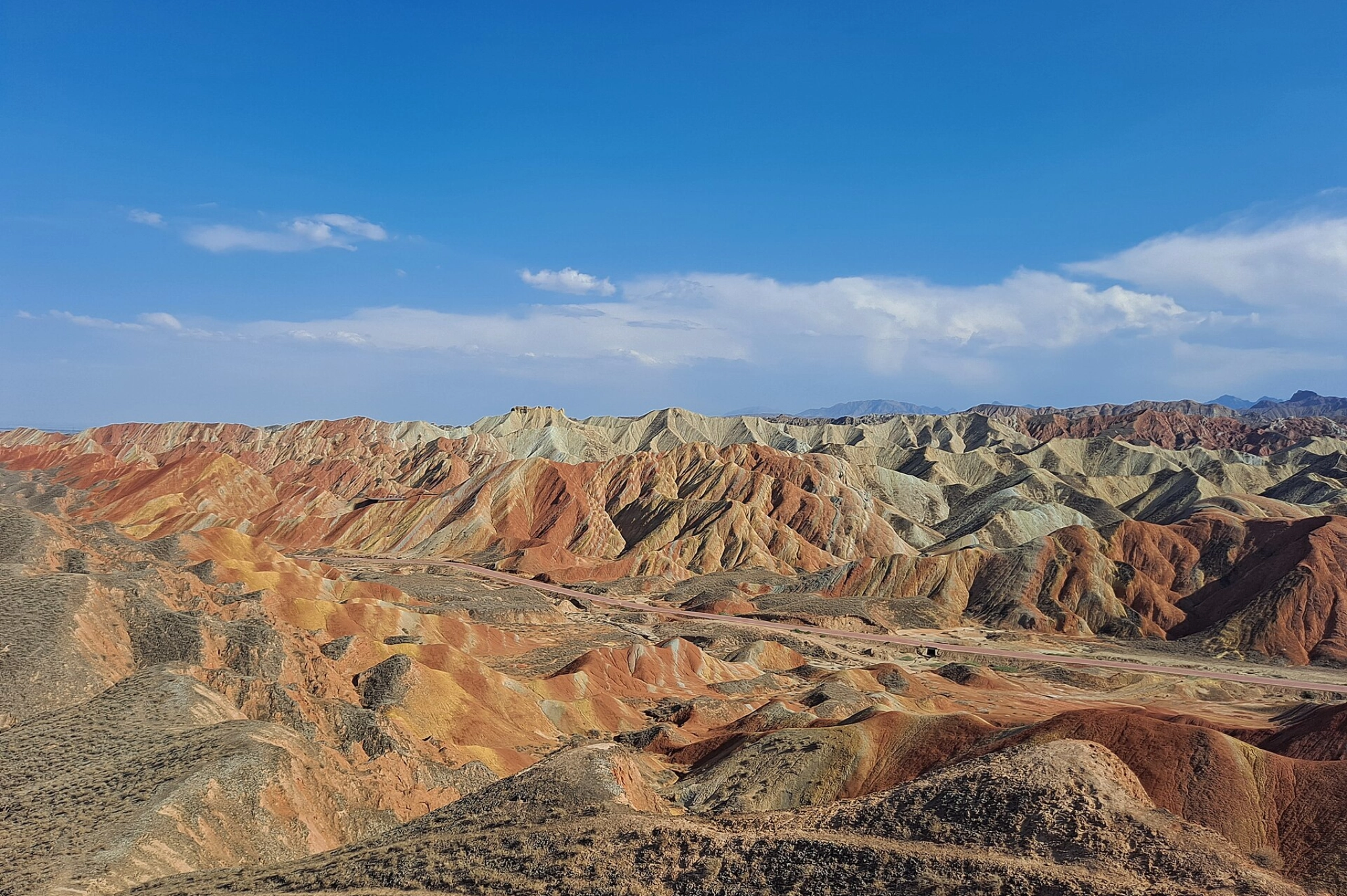
There is a precise moment, while standing on the wooden boardwalk at the third viewing platform of the Zhangye Danxia National Geopark, when a collective hush falls over most visitors. The undulating hills rising directly in front of you are violently striped—rust red, mustard yellow, mineral green, and soft lavender—folded and tilted as if a cosmic painter had poured ribbons of wet acrylic across the raw earth and frozen them in time.
It does not look real. It looks like a rendering error in a digital simulation. That immediate, jaw-dropping reaction is exactly why these "Rainbow Mountains" have become one of the most searched-for sights in Northwest China, and why they deserve a premier spot on your 2026 China travel itinerary.
Here are seven reasons to make the epic journey across the Hexi Corridor—and exactly how to plan it to perfection.
The Colors are Real Geology, Not an Instagram Filter
The very first question western travelers ask when researching this trip is whether the viral photos are heavily edited. They aren't. The vibrant bands you see are physical layers of sandstone and siltstone laid down over roughly 24 million years during the Cretaceous period.
These heavy mineral deposits reacted uniquely to environmental factors: iron oxide produces the deep reds and fiery oranges, while other trace minerals create the subtle green and blue-gray hues. Tectonic movement along the active fault lines of the Qilian Mountains subsequently tilted these flat, layered cakes at dramatic angles. Millions of years of wind and rain erosion chiseled the remaining rock into the rippled ridges you walk among today. Understanding this deep-time geology turns a beautiful photo-op into a profound encounter with Earth's history.
The Twin Parks Strategy: Qicai vs. Binggou Danxia
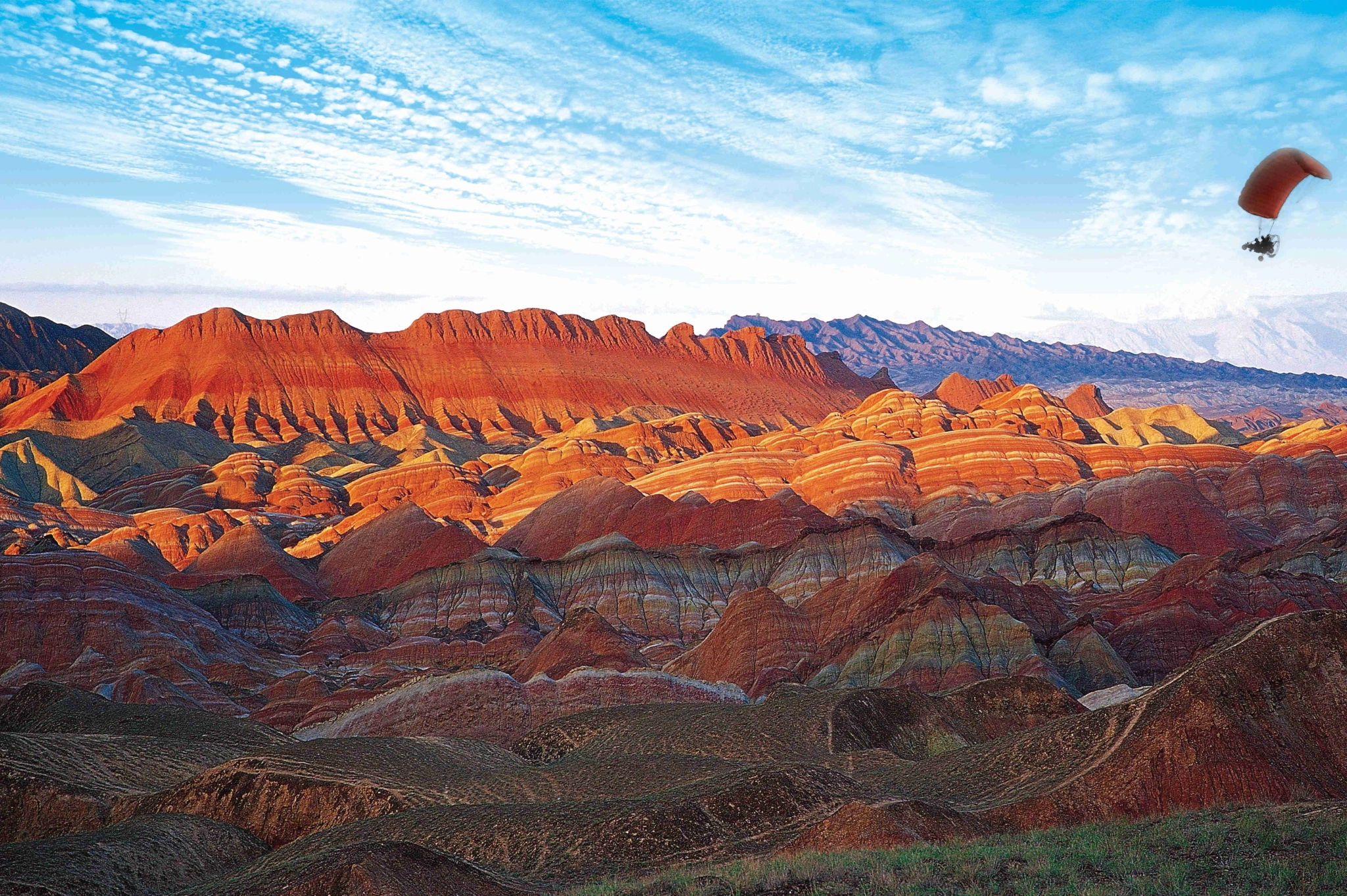
When people refer to "Zhangye Danxia," they are almost always talking about Qicai (Seven-Color) Danxia—the highly accessible park featuring the iconic rainbow ridges and well-maintained wooden boardwalks.
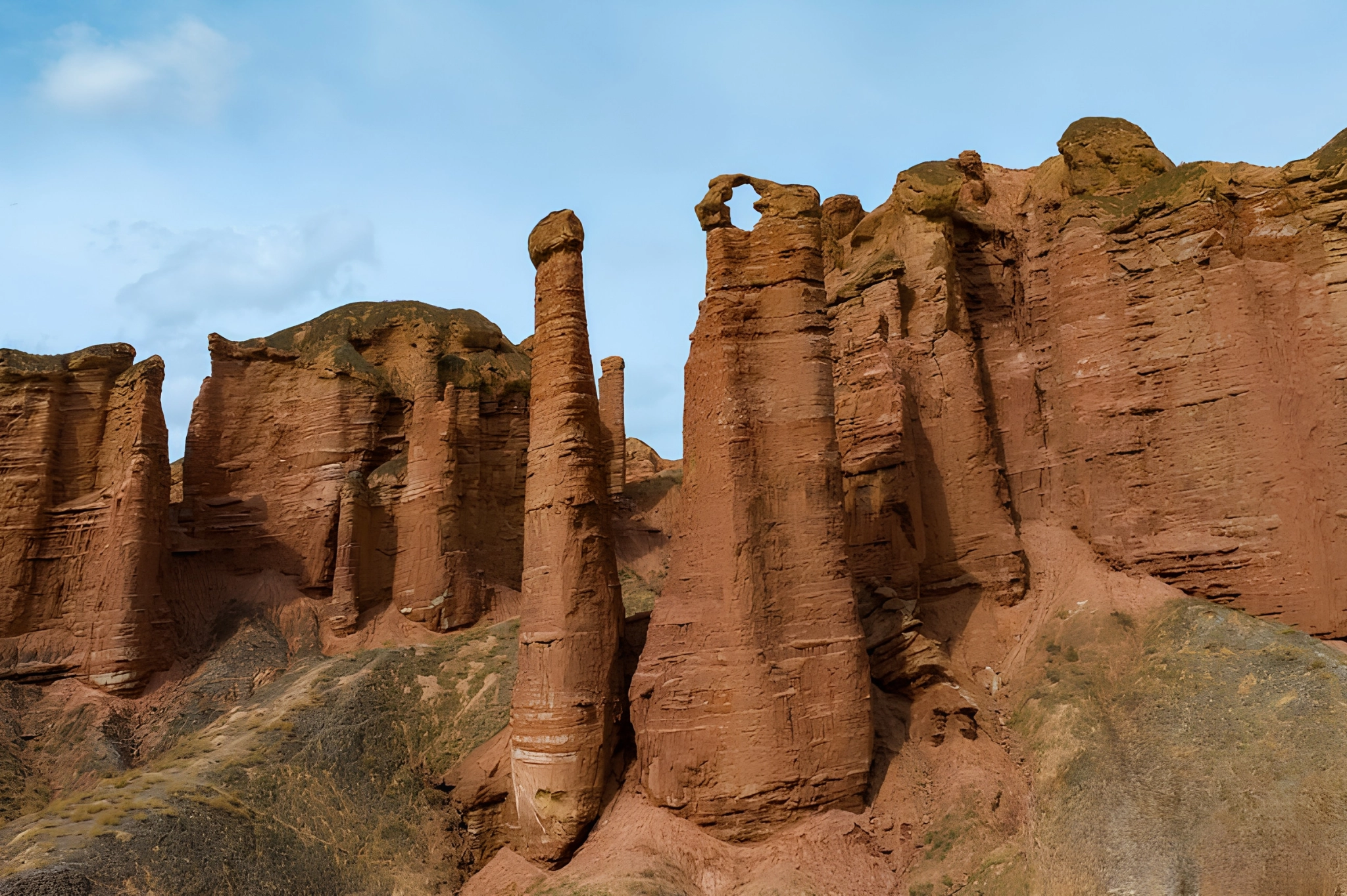
However, located just 25 minutes away lies its dramatic, quieter sister site: Binggou Danxia. While Binggou trades vibrant color palettes for massive, sculptural, castle-like rock towers and deep canyons, it receives a fraction of the crowds. If your schedule allows for a 2-day stay, pairing the two parks gives you both the postcard-perfect color (Qicai) and the raw, architectural majesty of the desert canyons (Binggou). For those on a tight 1-day timeline, Qicai Danxia remains the absolute priority.
Master the Four Viewing Platforms to Outsmart the Crowds
Inside Qicai Danxia, a fleet of complimentary shuttle buses operates on a continuous loop connecting four distinct observation decks. To avoid getting trapped behind large tour groups, the smartest strategic move is to head directly to the furthest decks first or travel counter-clockwise.
- Platform 1 (Great Scallop): The largest and closest platform, offering sweeping, ultra-wide panoramic views of the colored hillsides. Perfect for your introductory wide-angle shots.
- Platform 2 (Sunset Vista): This deck requires the highest staircase climb but rewards you with unparalleled topographic perspective, showing how the ridges slice across the horizon.
- Platform 3 (Seven-Color Fan): This is where you find the highest color contrast and the tightest pattern density. The ribbon-like stripes are incredibly vivid here, making it the best spot for abstract photography.
- Platform 4 (Seven-Color Red Cloud): The crown jewel sunset spot. The low-angle evening sun rakes across these specific hillsides, making the minerals look as if they are actively glowing from within.
The Rain Paradox: Timing is Everything
A flat midday sun will completely "wash out" the colors of the Danxia landforms, making them look like dusty pastel mounds. To experience the landscape at its absolute peak, you must time your visit precisely:
- The Season: April to June and September to October offer mild desert temperatures and crystal-clear atmospheric conditions, completely avoiding the oppressive mid-summer heat.
- The Daily Window: Plan to be on the platforms during the first 1.5 hours after sunrise or the last 2 hours before sunset (Golden Hour). The low, warm light accentuates the deep shadows and maximizes color saturation.
- The Secret Weapon (Rain): Counterintuitively, a light drizzle or visiting immediately after a rainfall yields the most spectacular views. When the dry sandstone absorbs moisture, it darkens the rock and strips away surface dust, causing the underlying minerals to blaze with an intensity you won’t see during a prolonged dry spell.
Seamless 2026 Logistics via High-Speed Rail
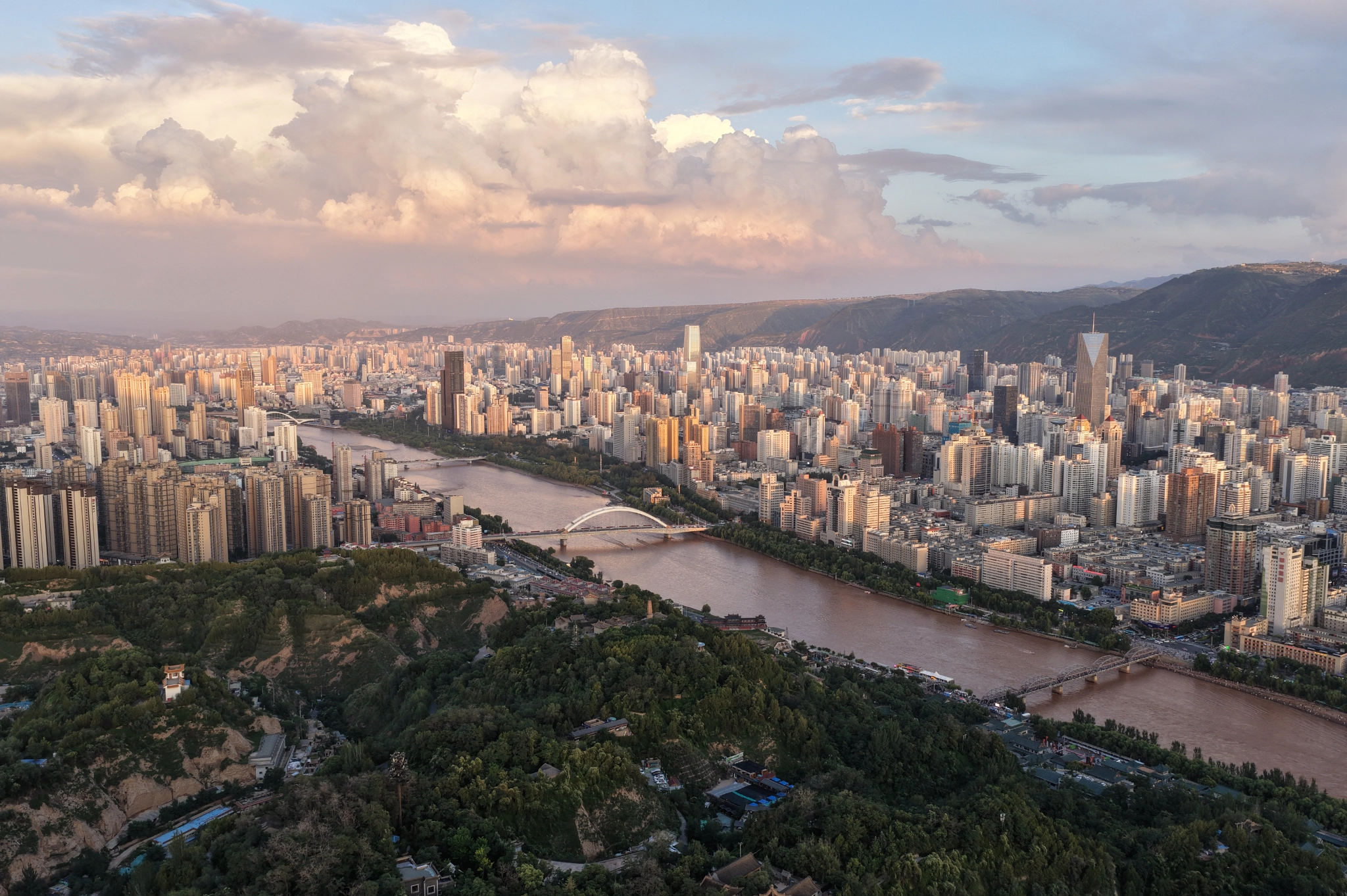
Northwest China historically evoked images of rugged, inaccessible expeditions. Today, the region boasts world-class infrastructure.
The most efficient travel route is to fly into Lanzhou, the vibrant capital of Gansu Province, and head to Lanzhou West Railway Station. From there, bullet trains bound for Zhangye West Railway Station sweep through the mountains in just 3 to 3.5 hours. Once you arrive in Zhangye city, the geopark is a straightforward 1-hour drive via private vehicle, taxi, or local tourist shuttle.
Upgrade Your Perspective: Hot-Air Balloons and Helicopters
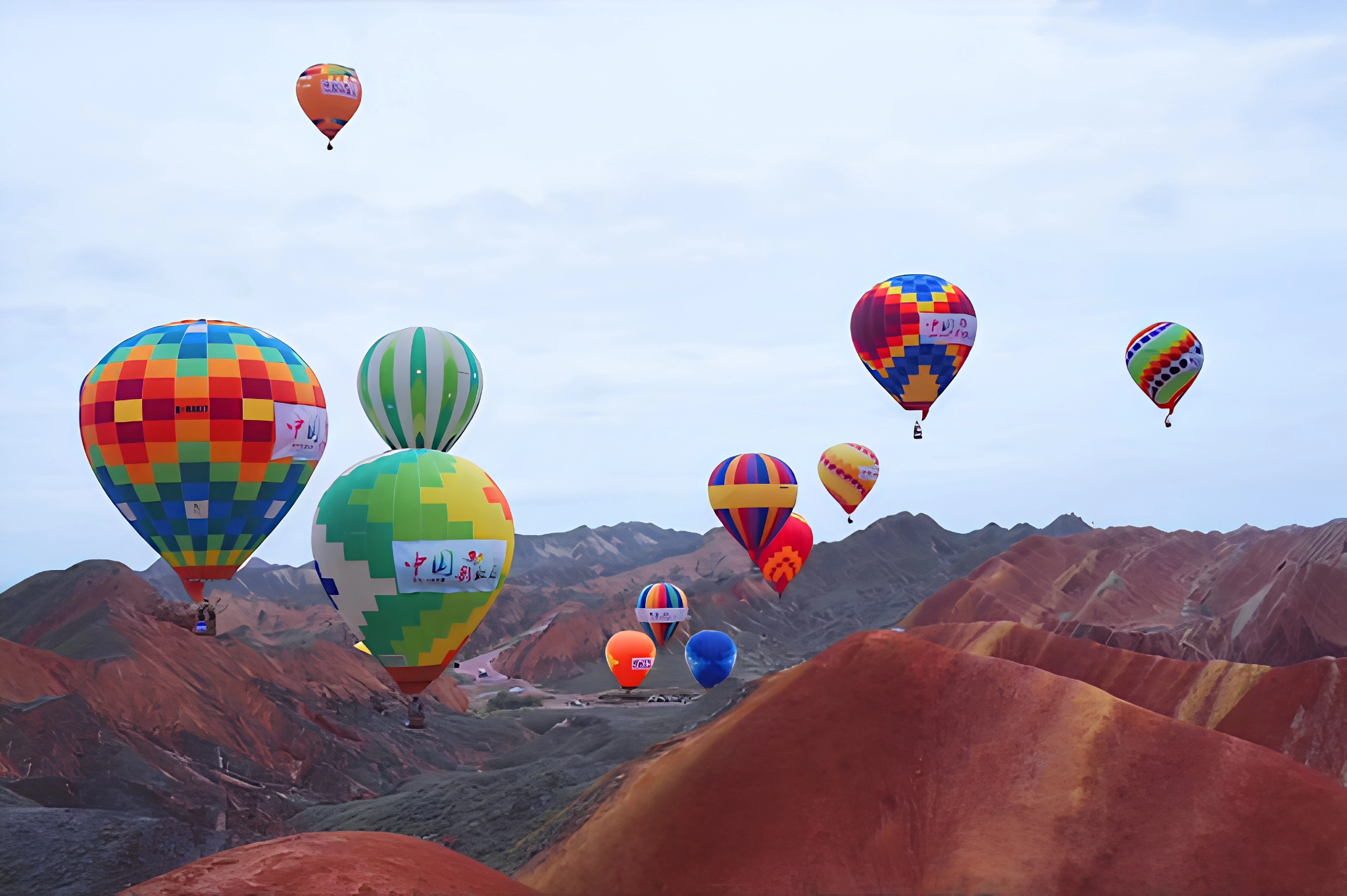
For travelers who want to transcend the standard boardwalk experience, Zhangye has developed an impressive array of low-altitude aviation options.
During the calm weather windows of early morning, you can book a hot-air balloon ride, paragliding experience, or helicopter flight right from the park interior. Drifting silently above the multi-colored creases of the earth as the sun breaks over the horizon provides an unmatched sense of scale and is highly recommended for milestone trips or photography-focused itineraries.
It Anchors One of the World’s Great Overland Journeys
You shouldn't visit Zhangye as an isolated photo-stop; it should be experienced as a primary chapter in an epic UNESCO Silk Road journey.
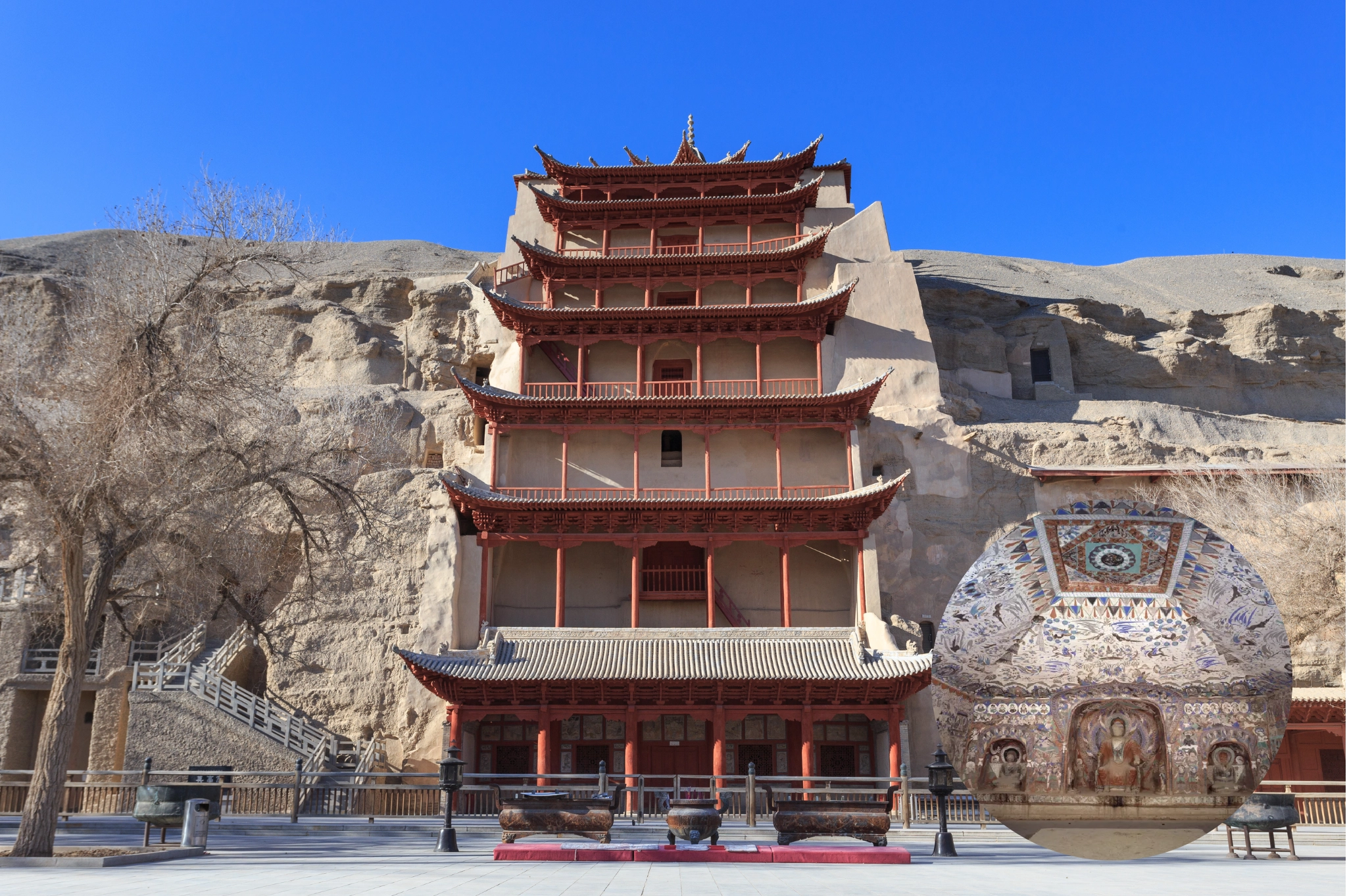
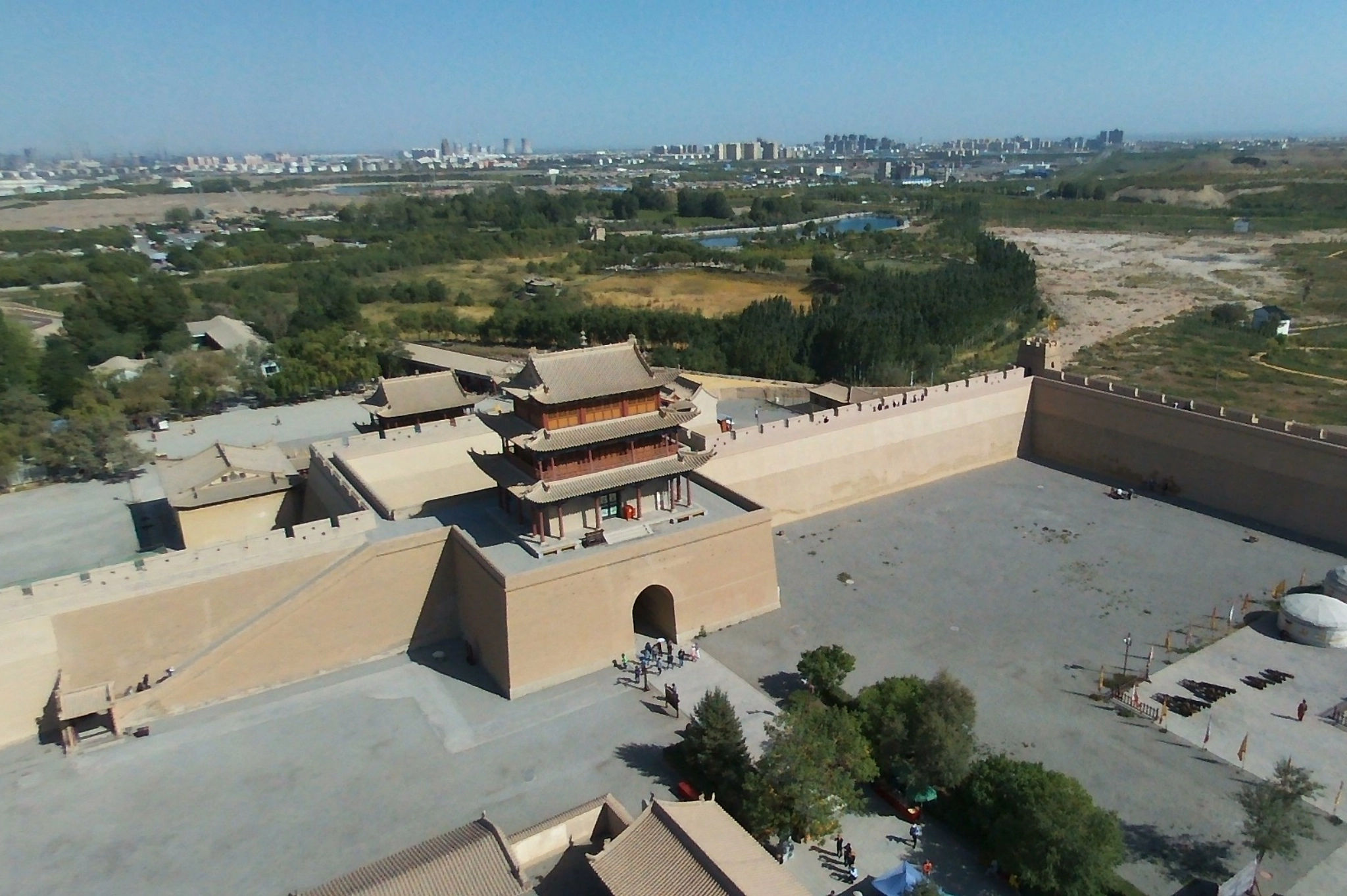
Zhangye sits squarely within the Hexi Corridor, a narrow desert oasis route that funneled caravans, monks, and armies between Central Asia and the ancient capitals of China for millennia. By combining Zhangye with the Mogao Caves of Dunhuang, the westernmost Great Wall fortress at Jiayuguan, and the ancient grottoes of Lanzhou, you form a flawless, historically rich overland itinerary.
A Realistic 2-Day Itinerary Template
To maximize your chances of catching a perfect sunset and avoid rushing through this massive landscape, a 2-day, 1-night plan is highly recommended:
- Day 1: Arrival & Crimson Sunset
- Midday: Arrive at Zhangye West Railway Station via high-speed train; check into your hotel or a boutique guesthouse near the park entrance.
- 15:30: Enter Qicai Danxia Park as the midday heat fades. Head straight through Platforms 1 and 2, setting up early at Platform 3 and 4 for the ultimate sunset display.
- Evening: Return to town to indulge in local Hexi Corridor cuisine (like local hand-pulled noodles and mutton dishes).
- Day 2: Ancient Culture & Architectural Canyons
- Morning: Visit the city center to explore the historic Giant Buddha Temple, home to China’s largest indoor clay reclining Buddha.
- Afternoon: Head out to Binggou Danxia to marvel at the massive rock fortresses and architectural landforms before boarding an evening bullet train westward to Jiayuguan or Dunhuang.
What to Pack: The Shadeless Desert Checklist
The Gobi Desert environment is beautiful but unforgiving. There is virtually zero natural shade inside the scenic area. Use this checklist to stay comfortable:
Essential Silk Road Gear
Sun Armor: High-SPF broad-spectrum sunscreen, polarized sunglasses, and a wide-brimmed sun hat. The desert UV rays are intense even on cool days.
Wind & Temperature Layers: The desert features vast diurnal temperature swings (often shifting over 15°C in a few hours). Bring a lightweight, wind-resistant jacket or shell for the rapid cooling that happens immediately after sunset.
Footwear: Durable, closed-toe walking shoes or trail runners. You will be logging several thousand steps up and down wooden boardwalk stairs.
Identification: Your physical passport is strictly required for real-time ticket validation at the park gates.
Setting Honest Expectations
We believe in radical transparency: the beauty of the Rainbow Mountains is highly dependent on light and weather. If you arrive on a heavily overcast, hazy, or dust-storm-prone day, the lack of directional sunlight means the hills will look like muted shades of brown and dark brick red.
Manage your expectations, plan your schedule around the golden hours, and allow for some itinerary flexibility. When the sun hits those ridges at the perfect angle, it will easily become one of the most visually stunning natural encounters of your traveling life.
FAQ
Q1: Are the colors of the Zhangye Danxia Rainbow Mountains photoshopped or artificial?
A1: No, they are entirely natural. The colors are the result of deep mineral crystallization within layers of sandstone and siltstone over millions of years. However, it is true that harsh, direct midday sun can make the colors appear muted or washed out in person. Seeing them during early morning or late afternoon light reveals the natural saturation shown in professional photographs.
Q2: What is the single best month of the year to visit?
A2: The absolute best months are May, June, September, and October. During these windows, you completely sidestep the heavy domestic crowds and searing heat of the July/August summer school holidays, while also avoiding the biting cold and potential sandstorms of early spring and winter.
Q3: Exactly how much time do I need inside the park?
A3: You should allocate a minimum of 3 to 4 hours to tour the primary Qicai Danxia park. Because the park is immense, walking between platforms is prohibited; you must factor in waiting times for the internal shuttle buses and climbing the extensive boardwalk staircases at each station.
Q4: How do I travel to Zhangye from Lanzhou efficiently?
A4: The premier method is via the high-speed bullet train. Frequent trains depart from Lanzhou West Railway Station and arrive at Zhangye West Railway Station in roughly 3 to 3.5 hours. It is a smooth, highly comfortable ride that cuts straight through the mountain passes.
Q5: Is it worth stopping in Zhangye if I am already going to Dunhuang?
A5: Yes, absolutely. They offer entirely different travel experiences. Dunhuang is an immersion into world-class Buddhist art history and sweeping desert sand dunes; Zhangye is a masterclass in rare, colorful tectonic geology. Since they both sit naturally along the main Silk Road railway line, combining them is seamless.
Q6: What happens if it rains on the day of my scheduled visit?
A6: Unless it is a severe downpour causing flash flood closures, do not cancel your trip! A light rain or the immediate moments after a storm is actually the best time to see the mountains. Moisture dampens the dry surface sediment, drastically intensifying the natural mineral saturation and making the reds and yellows pop far more than they would on a standard dry day.
Q7: Is the park accessible for senior travelers or those with limited mobility?
A7: The park is moderately accessible. The shuttle buses eliminate the need for long-distance walking across the valley floor. However, accessing the premium vantage points at the top of each observation deck requires walking up long flights of wooden outdoor steps. Travelers with knee issues or limited stamina can choose to remain at the lower boardwalk levels, which still offer excellent panoramic views.
Q8: How can I avoid the massive lines of tour groups inside the park?
A8: First, leverage the time-gap strategy by entering the park the moment it opens at sunrise, or during the late afternoon when day-tripping tour buses begin departing. Second, when boarding the internal park shuttle, bypass the crowded Platform 1 and ride further out into the loop to explore the platforms in reverse order.