For eleven months of the year, the area west of Jiuquan, Gansu province, is a study in browns and grays — bare Gobi gravel, low scrub, and the pale ridgelines of the Hexi Corridor running toward the desert. Then, for a few short weeks each October, one patch of it detonates into gold. Along the shore of a small desert lake, tens of thousands of desert poplars turn every shade of yellow and amber at once, their reflections doubling the blaze on the still water, and the ordinary Gobi becomes one of the most beautiful autumn landscapes in all of China. This is the Jinta Desert Populus Euphratica Forest, and among Chinese photographers and autumn-chasers it has quietly become a legend. Here are nine reasons it deserves a place on your Gansu itinerary — and why timing your visit is everything.
It's 8,000 Hectares of Golden Desert Poplar
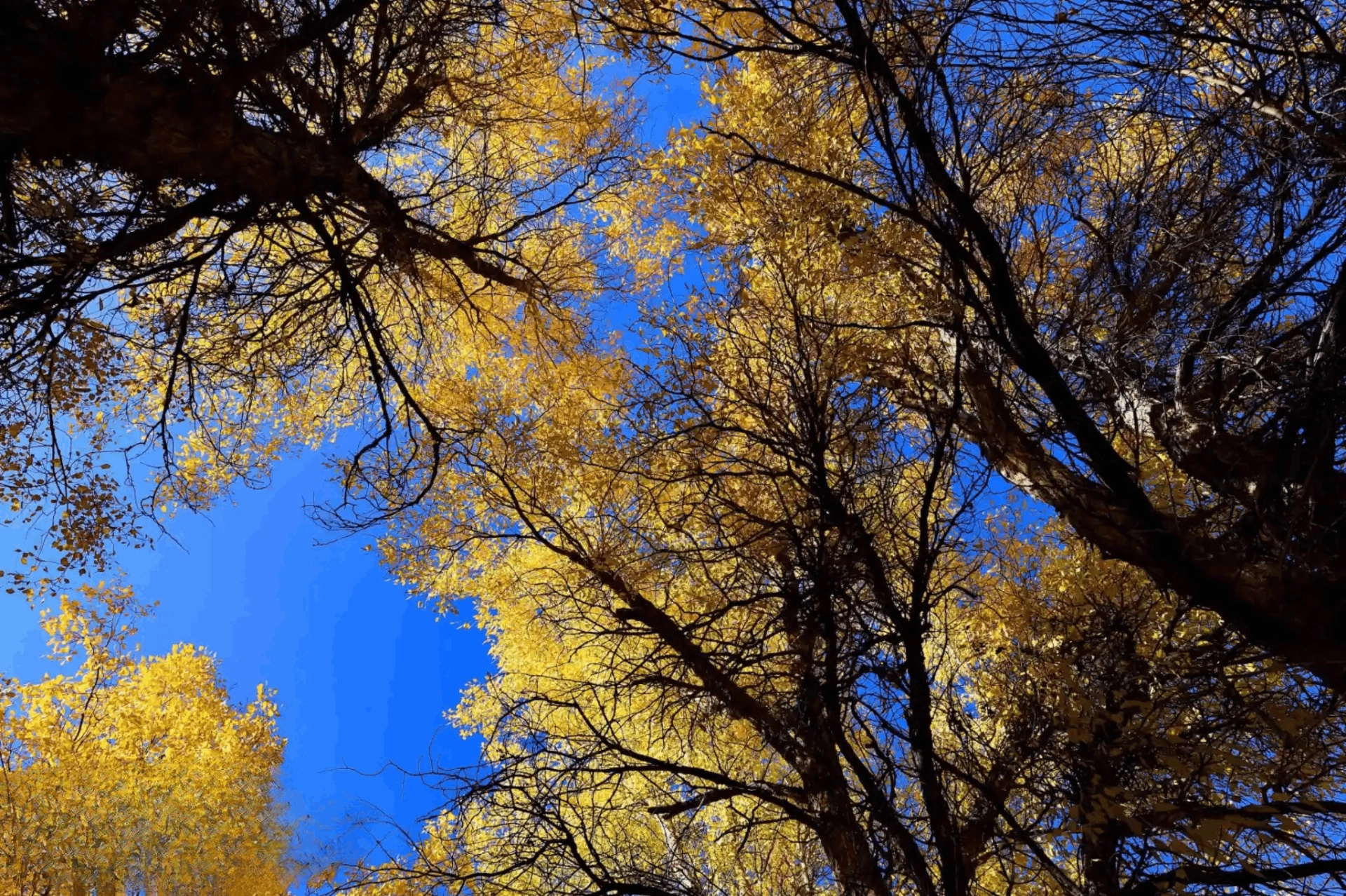
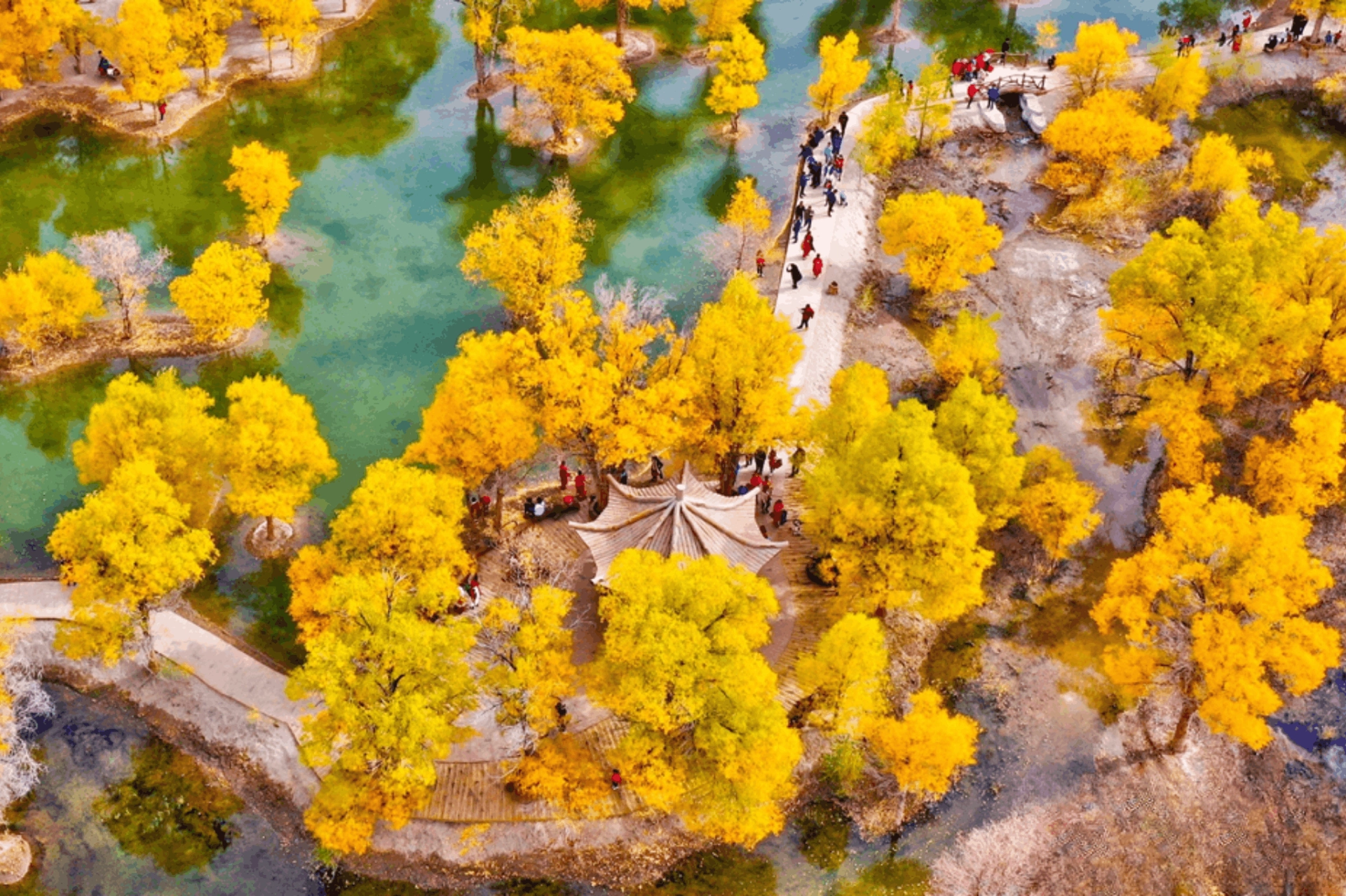
Jinta's forest is not a token grove but a genuine sea of trees: the scenic area spreads across more than 8,000 hectares at the Chaohu Forest Farm, west of Jinta County in Jiuquan, on the very edge of the Gobi Desert. In peak season the canopy runs gold to the horizon, broken by sandy paths, boardwalks and glinting water. The scale is what surprises first-time visitors: this is one of the largest and most accessible Populus euphratica landscapes in Gansu, big enough to wander for hours and yet compact enough to see its highlights in a single unhurried day.
The "Hero Tree" That Refuses to Die
The star of the show is the Populus euphratica, known in Chinese as huyang (胡楊) — the desert poplar, or, more poetically, the "hero tree." It is one of the few large trees on Earth that can survive in true desert, tolerating drought, salt and shifting sand that would kill almost anything else. Chinese tradition celebrates it with a famous saying: the huyang "lives for a thousand years, stands for a thousand years after it dies, and lies unrotted for a thousand years after it falls." Literal or not, the sentiment captures why the tree is so beloved — it is a symbol of endurance, resilience and defiance in the face of a hostile environment. Walking among gnarled, silver-barked trunks that look older than empires, you understand why Chinese travelers speak of the huyang almost reverently.
Jinbo Lake Doubles the Gold
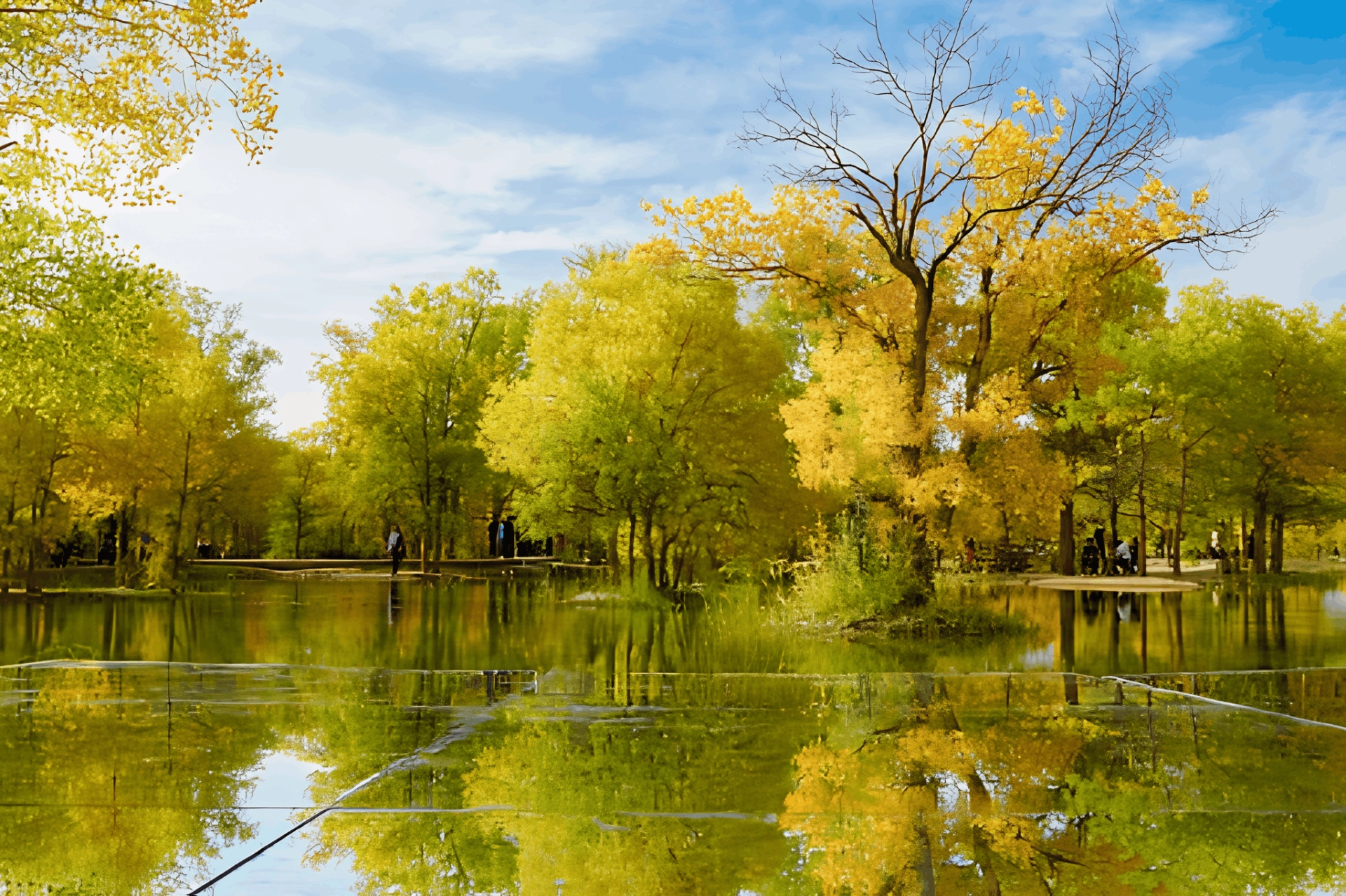
The heart of the scenic area is the Populus euphratica forest–c (金波湖) core zone, and it is here that Jinta earns its reputation. When the wind drops, the lake becomes a flawless mirror, and the golden forest along its banks is reflected so perfectly that the water seems to burn with the same fire as the trees. Photographers plan entire trips around this single effect — the doubled gold of forest and reflection under a hard blue sky. Boardwalks and viewing platforms let you line up the classic shots, and the calmest, most luminous light comes in the first hour after sunrise and the last hour before sunset. If you take only one photograph in Gansu, many visitors say, take it here.
It's Rated Gansu's Most Beautiful Autumn Scenery
This is not just a local secret. Jinta's desert poplar forest is regularly rated among the most beautiful autumn scenery in Gansu Province, and increasingly it draws photographers and tour groups from across China during the brief peak. That reputation matters for planning: it means the site is well developed for visitors, with paths, platforms, transport and facilities — but also that the best few days of color can be busy. The payoff is a landscape that genuinely lives up to the hype: a concentrated, intense autumn spectacle in a province better known for deserts and grottoes than for fall foliage.
October Is the Magic Window
Timing is everything with the huyang, because the golden display is short-lived. The leaves turn and peak in October — typically the first three weeks — when green gives way to brilliant yellow and gold before the leaves drop for winter. Arrive too early and the canopy is still green; arrive too late and the branches are bare. Locals and tour operators track the color closely, and the exact peak shifts a little each year with the weather, so it pays to check current conditions before locking in dates.
Five Different Worlds in One Scenic Area
Jinta is more varied than a single forest walk. The scenic area is organized into five functional zones, each with its own character: the Populus euphratica forest–Jinbo Lake core area, a jujube-forest sightseeing area, a Haloxylon ammodendron (saxaul) conservation area protecting another remarkable desert shrub, a desert recreation and experience area, and a desert reed maze. That mix means you can pair the headline golden forest with sand-dune play, desert plants found nowhere in a temperate landscape, and family-friendly activities — turning a photo stop into a satisfying half- or full-day out. It also underlines the site's dual identity: part scenic wonder, part working desert-ecology showcase.
It's a Man-Made Miracle of Sand Control
There is a deeper story behind Jinta's beauty. Much of this forest exists because people planted it. The area functions as an ecological shelterbelt — a wind-prevention and sand-fixation forest created to hold back the advancing Gobi and protect the oasis farmland of Jinta County. In other words, the golden spectacle that photographers travel hundreds of kilometres to shoot is also a living piece of desert-control engineering, a demonstration of how careful afforestation can turn a hostile frontier into both a green buffer and a tourism resource. For visitors interested in the environment, that back-story adds real meaning to the scenery: this is not untouched wilderness but a hard-won partnership between people and the desert.
It Sits on the Silk Road's Doorstep
Jinta is ideally positioned for travelers exploring Gansu and the historic Silk Road. Jinta lies within Jiuquan, one of the great cities in Northwest Gansu province along the ancient Hexi Corridor. From Jinta you are within easy reach of the western Silk Road's greatest hits: the fortress at Jiayuguan, the western end of the Great Wall; the singing sands and Buddhist caves of Dunhuang; and the rainbow hills of Zhangye Danxia. That means the desert poplar forest is not a detour so much as a golden bonus, slotting naturally into an autumn Hexi Corridor itinerary that already runs through this corner of Gansu.
There's a Festival Built Around the Gold
To make the most of its brief season, Jinta hosts an annual Populus Euphratica cultural tourism festival timed to the autumn color, with photography events, desert activities, camel rides and local food drawing visitors during the peak weeks. The festival atmosphere adds energy to a visit and is a good reason to plan around the color rather than stumble on it by accident. It also reflects how seriously the region now takes its golden forest as a signature attraction — an autumn counterpart to Gansu's summer grasslands and year-round Silk Road sites. Come for the trees, and you may find yourself swept up in a whole desert celebration of them.
FAQ
Q1: What is the Jinta Desert Populus Euphratica Forest?
It is a vast forest of golden desert-poplar (huyang) covering more than 8,000 hectares in Jinta County, near Jiuquan, Gansu, famous for its brilliant autumn color and the mirror reflections of Jinbo Lake. It is rated among the most beautiful autumn scenery in the province.
Q2: When is the best time to see the golden poplars?
October — usually the first three weeks — is peak season, when the leaves turn brilliant yellow and gold before dropping. The exact peak shifts each year with the weather, so check current color reports before locking in dates.
Q3: What is a Populus euphratica / huyang tree?
It is the desert poplar, one of the very few large trees able to survive in true desert, tolerating drought, salt and shifting sand. Chinese tradition praises it as the "hero tree" that lives a thousand years, stands a thousand years after death, and lies unrotted for a thousand years.
Q4: Where is Jinta and how do I get there?
Jinta County is part of Jiuquan in northwestern Gansu, on the Silk Road / Hexi Corridor. Most visitors base in Jiuquan or Jiayuguan and reach the forest by car or through an organized tour, it sits at about an hour from Jiuquan city.
Q5: What is Jinbo Lake and why is it special?
Jinbo Lake (金波湖) is the core scenic zone of the forest. On calm days it mirrors the golden poplars along its banks, doubling the color — the most photographed and iconic view in the whole scenic area.
Q6: Is there more to do than look at the trees?
Yes. The scenic area has five zones, including a jujube-forest area, a saxaul (Haloxylon) conservation area, a desert recreation area with dune activities and camel rides, and a desert reed maze — enough for a half or full day.
Q7: How does Jinta fit into a Silk Road trip?
It sits on the doorstep of the western Silk Road, within easy reach of Jiayuguan (the Great Wall's western end), Dunhuang (Mogao Caves and Crescent Lake) and Zhangye Danxia. In autumn it makes a natural golden bonus on a Hexi Corridor itinerary.
Q8: Is the forest natural or planted?
Much of it is a man-made shelterbelt, planted for wind prevention and sand fixation to protect Jinta's oasis farmland from the advancing Gobi. It is both a scenic wonder and a working example of desert-control afforestation.