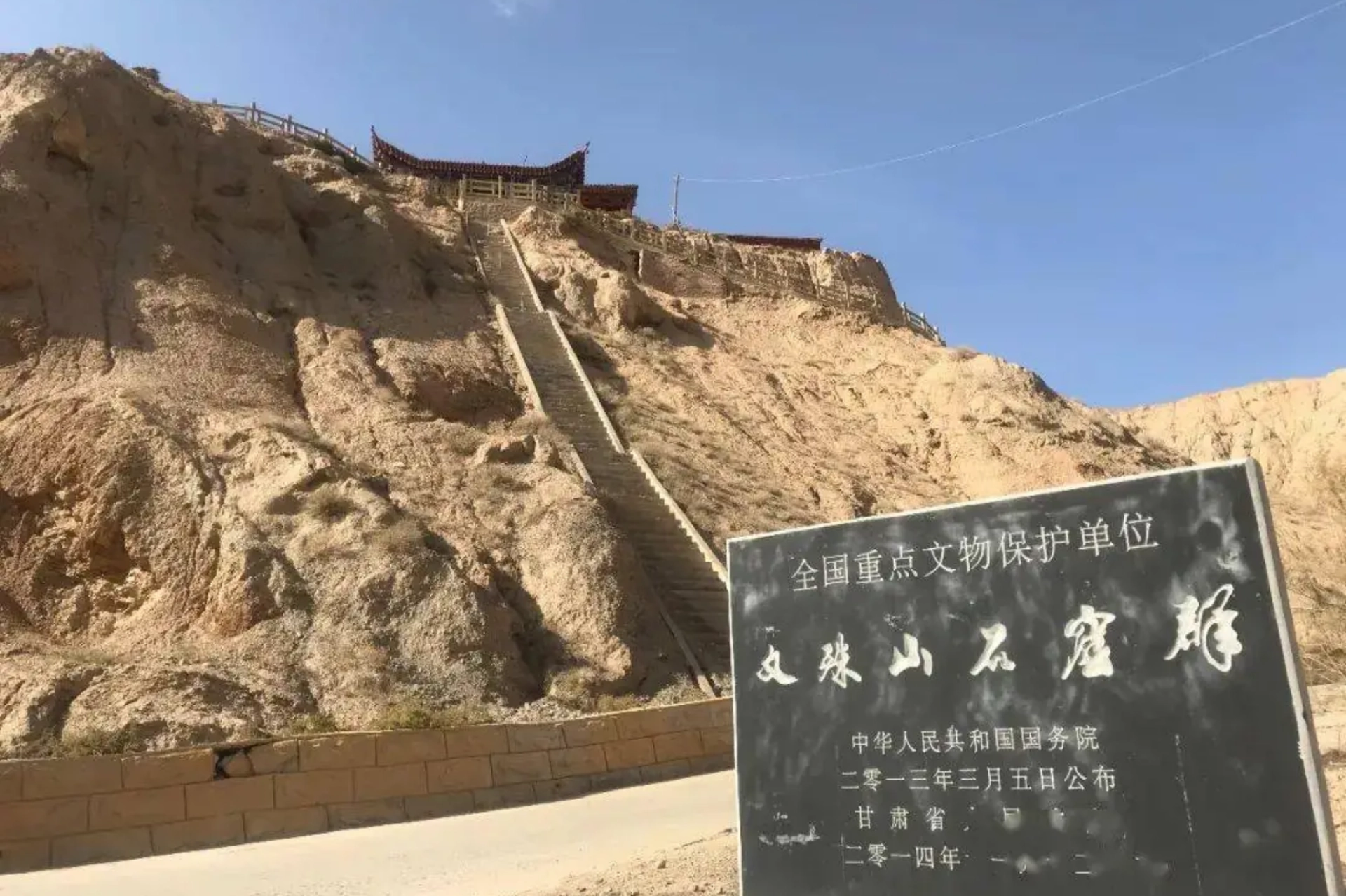
Everyone who travels the Silk Road through Gansu goes to the Mogao Caves at Dunhuang — and rightly so. But the Hexi Corridor is not a single masterpiece; it is a corridor of grottoes, a thousand-kilometer chain of Buddhist cave-temples carved into cliffs and hills across the narrow western stretch of Gansu. Tucked into a quiet mountain on the border between Jiuquan and Zhangye, in the Sunan Yugur Autonomous County, is one of the very oldest and most consequential of them all: the Wenshu Mountain Grottoes. It is roughly 1,600 years old, it helped invent the way Chinese cave temples were built, and most foreign travellers have never heard of it. Locals call it the "Little West Heaven." Here are eight reasons it deserves a place on a serious Silk Road itinerary.
It's Roughly 1,600 Years Old — Older Than Most of Mogao
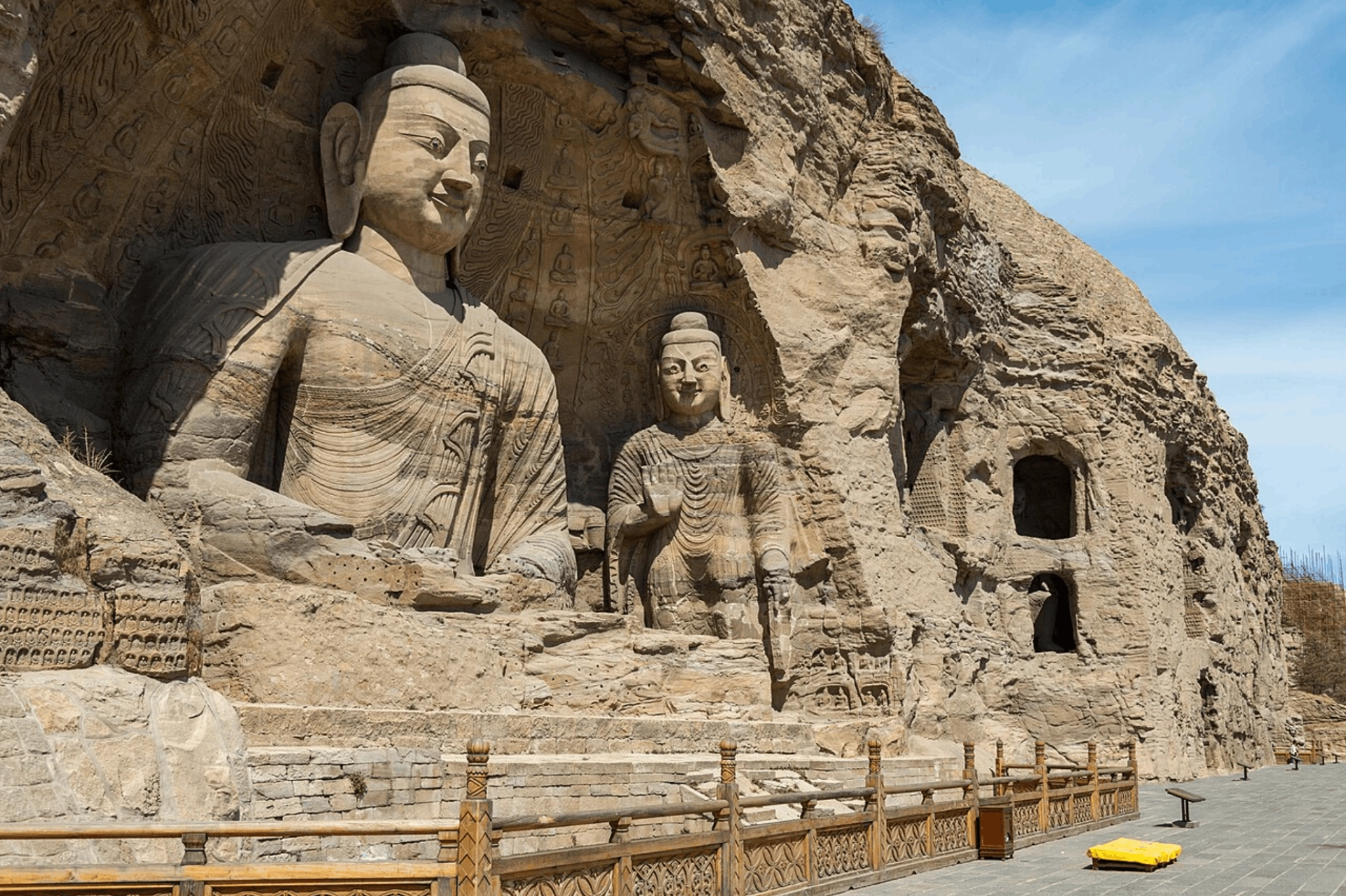
The Wenshu Mountain Grottoes were begun in the Northern Liang period, one of the short-lived kingdoms of the turbulent Sixteen Kingdoms era — around the years 401 to 433 AD. That makes the complex roughly 1,500 to 1,600 years old, placing its origins right at the dawn of large-scale Buddhist cave carving in China. To put that in perspective, the Northern Liang was carving caves here at the same time the earliest work was beginning at Dunhuang, and decades before the famous imperial projects at Yungang and Longmen further east. When you stand inside these caves, you are not looking at a provincial copy of a more famous site — you are looking at one of the fountainheads, a place where Chinese Buddhist art was still being invented. That antiquity, quietly held in an unassuming mountain, is the first thing that makes Wenshu Shan extraordinary.
The Birthplace of the "Liangzhou Model"
Here is the detail that makes art historians sit up: Wenshu Mountain is one of the key sites of the "Liangzhou Model". In the early 5th century, the Buddhist workshops of the Northern Liang — centred on the region around Liangzhou (modern Wuwei) and the western Hexi Corridor — developed a distinctive way of building cave temples, most notably the central-pillar cave: a square chamber with a large square pillar in the middle, carved with niches and Buddhas, around which worshippers could walk in ritual circumambulation. This Liangzhou Model became the template that spread eastward with Buddhism, influencing the design of caves at Yungang, Longmen and beyond, and shaping Chinese cave-temple architecture for centuries. Wenshu Shan preserves examples of this pioneering style. In other words, this obscure mountain in western Gansu is not just old — it is formative, a place where the architectural DNA of Chinese Buddhist grottoes was worked out. Few sites anywhere can claim that.
Over 500 Buddhas and 1,200 Square Metres of Murals
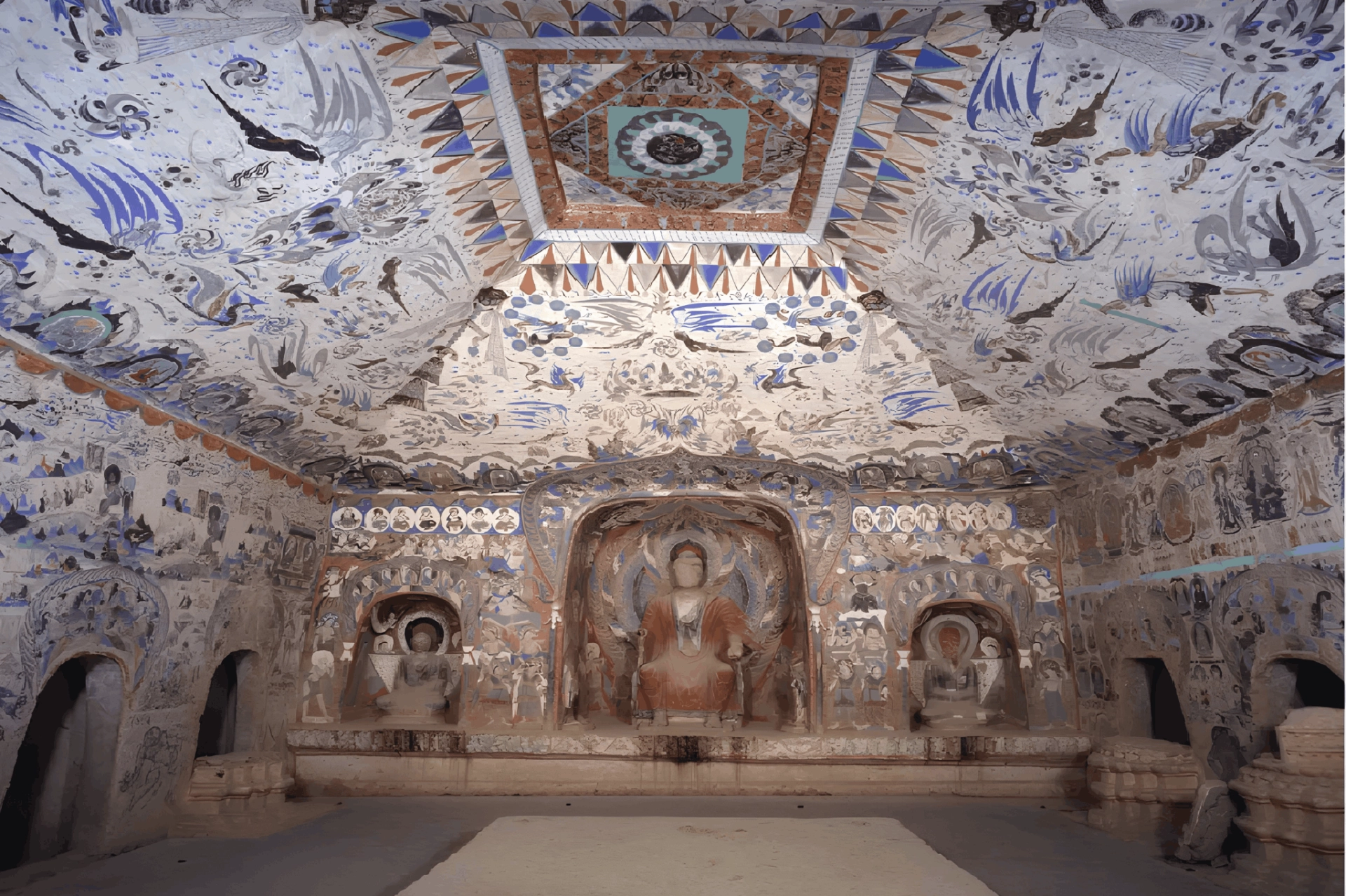
For all its scholarly importance, Wenshu Shan is also simply rich. Across the mountain's front and back clusters, the complex preserves more than 30 grottoes, over 500 Buddha statues, and more than 1,200 square metres of murals — a substantial body of surviving Buddhist art spanning the Northern Liang through later dynasties, including the Northern Wei, Tang, Western Xia, Yuan and beyond. The murals are the treasure: layered painted scenes of Buddhas, bodhisattvas, flying apsaras, donor figures and decorative motifs, some of them among the earliest cave paintings in the whole Hexi Corridor. Because the site was worked and reworked across many centuries, walking through it is like reading a stratified history of Silk Road Buddhist art in a single mountain — from the raw, formative styles of the Sixteen Kingdoms to the more refined imagery of the Tang and the distinctive Tangut art of the Western Xia.
The "Little West Heaven" — a Living Pilgrimage Mountain
Wenshu Mountain is named for Manjushri (Wenshu in Chinese), the bodhisattva of wisdom, and it has long been more than an archaeological site — it is a genuine Buddhist pilgrimage mountain, nicknamed the "Little West Heaven."For centuries, worshippers have climbed its slopes to pray among the caves, and its location in the Sunan Yugur Autonomous County gives it an unusually layered spiritual character: this is a meeting ground of Han Chinese, Tibetan and Yugur Buddhist traditions, where a Chinese-named grotto mountain sits amid the grasslands and herding culture of one of China's smallest ethnic minorities. That living devotional dimension — prayer flags, temples, incense, pilgrims — sets Wenshu Shan apart from grottoes that survive only as museums. It is a place still charged with the faith that created it.
The Ten-Thousand-Buddha and Thousand-Buddha Caves
The complex's most celebrated chambers are its Ten-Thousand-Buddha Cave and Thousand-Buddha Cave, whose names describe exactly what makes them awe-inspiring: walls and ceilings covered in row upon row of small painted Buddhas, multiplied into the hundreds and thousands, along with larger central images and richly decorated pillars. The "thousand Buddhas" motif — endless repeated Buddha figures symbolising the infinite Buddhas of the cosmos across all time — is one of the great visual signatures of Silk Road cave art, and to stand in a chamber surrounded by them is a genuinely transporting experience. These caves also preserve some of the site's finest mural work, and it is here that the age and artistry of Wenshu Shan hit home most powerfully. They are the reason a detour to this mountain is worth the effort.
It Fills a Missing Link in the Hexi Corridor Grotto Trail
The Hexi Corridor is often described as a "corridor of grottoes," and the great sites are usually listed as Dunhuang's Mogao Caves, the Yulin Caves, Maijishan far to the southeast, Mati Si (Horse Hoof Temple), the Giant Buddha Temple at Zhangye and the Tiantishan caves at Wuwei. Wenshu Mountain is the quiet connective tissue between them — an early node that helps explain how Buddhist cave art travelled and evolved along the corridor. For a traveller trying to understand the whole story rather than just tick off the famous names, Wenshu Shan is the missing chapter: it shows the origins of the tradition that reaches its dazzling climax at Mogao. Adding it to a Hexi Corridor route turns a string of separate sights into a coherent narrative of how Buddhism, and its art, moved east into China.
All the History, None of the Crowds
Perhaps the most immediately appealing reason to come is the one you'll feel the moment you arrive: there is almost no one here. While Mogao operates a strict timed-ticket system with capped daily numbers and tour groups shuffling through in the tens of thousands, Wenshu Mountain remains genuinely off the beaten path — a place where you can often explore the caves and the mountainside in near solitude, at your own pace, without a scrum. For travellers who find the big-name sites overwhelming, this is a gift: the chance to encounter 1,600-year-old Buddhist art in quiet, contemplative conditions that actually match the spirit of the place. That combination — world-historical significance plus real tranquillity — is increasingly rare on the Silk Road, and it is Wenshu Shan's greatest luxury.
A Setting Worth the Journey
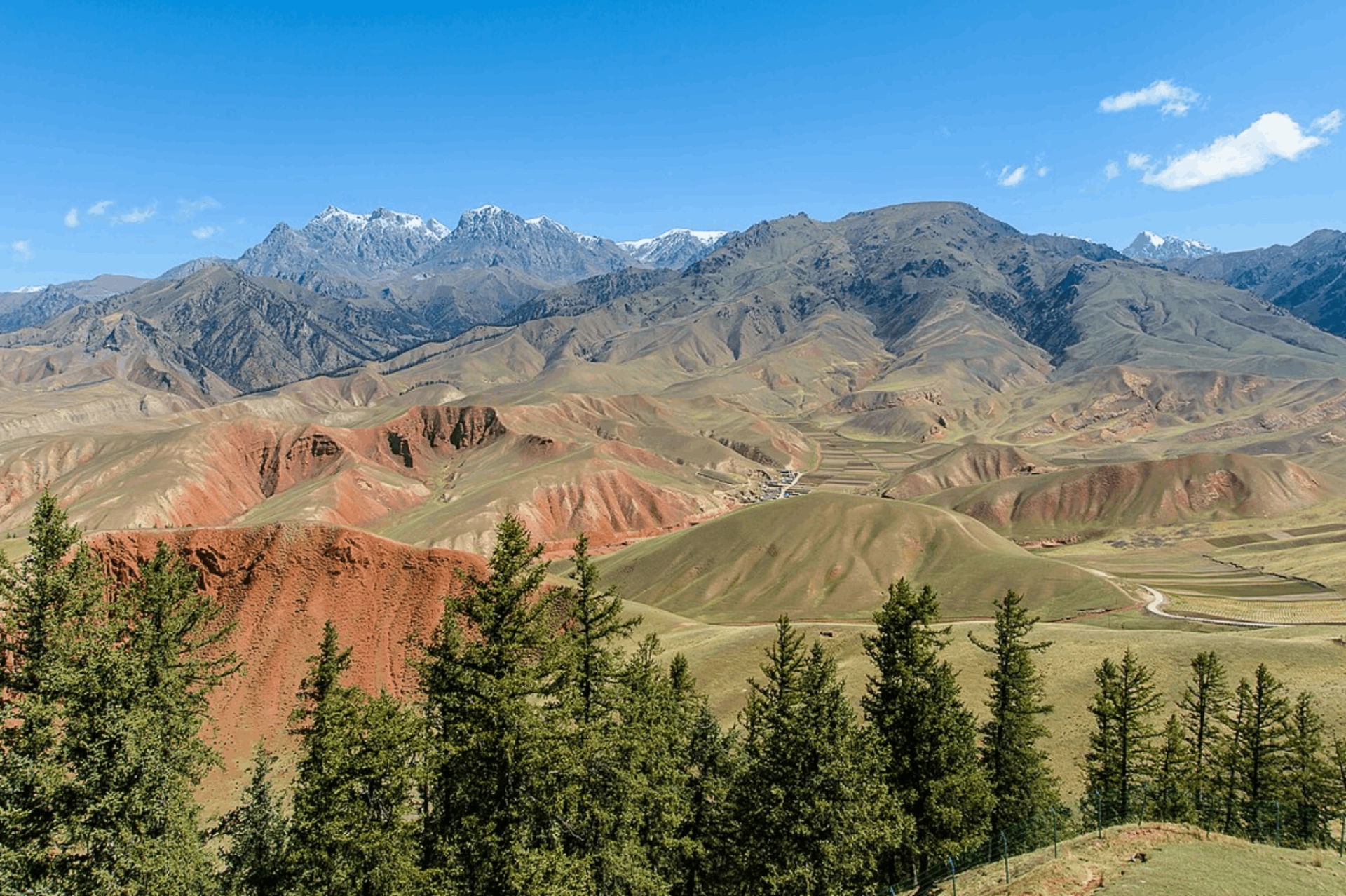
Finally, there is the landscape. Wenshu Mountain rises from the borderlands where the Hexi Corridor meets the foothills of the Qilian Mountains, in the grassland-and-herding country of the Sunan Yugur homeland. The setting is spare and beautiful — pale hills, big skies, distant snow-capped peaks, the pastures of one of China's least-known ethnic minorities spreading out below. Reaching the grottoes means a journey through this quiet, wide country, and the sense of remoteness is part of the reward: this is what the Silk Road actually felt like, a sacred site reached across empty land. Pair it with nearby stops — the fort at Jiayuguan, the cliff grottoes of Mati Si, the reclining Buddha at Zhangye — and Wenshu Shan becomes the contemplative heart of a Hexi Corridor loop that goes beyond the postcard highlights.
How to Visit in 2026
The Wenshu Mountain Grottoes lie in Qifeng Township, Sunan Yugur Autonomous County, on the border between Jiuquan and Zhangye in western Gansu — most easily reached as a side trip from Jiuquan / Jiayuguan (a short drive away) or from Zhangye, both of which sit on the Lanzhou–Urumqi high-speed rail line and have airports. Because public transport to the site is limited, most visitors come by car, taxi or a hired driver/guide, which also makes it easy to combine with other Hexi Corridor stops.
This is a fragile, nationally protected cultural site: the murals are ancient and light-sensitive, so flash photography is generally prohibited, and some caves may be gated or require a guardian to open them. Dress for a mountain, high-desert climate — strong sun, wind, cool mornings — and allow a half-day including travel. As always, confirm current opening hours, ticketing, road access and which caves are open with a local source or licensed guide before you go, as access to protected grottoes can change and remote sites are not always staffed on a fixed schedule.
FAQ
Q1: What are the Wenshu Mountain Grottoes?
They are a Buddhist cave-temple complex situated on Wenshu Mountain in Sunan Yugur Autonomous County, western Gansu. First carved during the Northern Liang period (early 5th century AD), the site preserves over 30 caves, 500 Buddha statues, and 1,200 sq m of murals. It is recognized as a nationally protected cultural relic and nicknamed the "Little West Heaven."
Q2: How old are the Wenshu Mountain Grottoes?
Carving began in the Northern Liang era of the Sixteen Kingdoms, around 401–433 AD. This gives the complex a history of roughly 1,500–1,600 years, placing it among the earliest Buddhist grottoes in China and contemporary with the origins of Dunhuang's Mogao Caves.
Q3: Why are they historically and artistically important?
Wenshu Shan is a foundational site for the "Liangzhou Model" — the Northern Liang's pioneering central-pillar cave architecture. This structural design spread east and deeply influenced later major sites such as the Yungang and Longmen grottoes, making Wenshu Shan a key birthplace of Chinese cave-temple design.
Q4: What does the name mean?
The mountain is named after Manjushri, the bodhisattva of wisdom. Because of its long-standing active devotion and spiritual prominence among local worshippers, it earned the nickname "Little West Heaven."
Q5: What are the main highlight caves to see?
The Ten-Thousand-Buddha Cave and Thousand-Buddha Cave (千佛洞) are the most celebrated chambers. They feature walls and ceilings adorned with thousands of small painted Buddhas, central statues, and well-preserved historical murals spanning multiple dynasties.
Q6: Where is the site located, and how can I get there?
It is located in Qifeng Township, Sunan Yugur Autonomous County, near the border between Jiuquan/Jiayuguan and Zhangye in Gansu Province. Public transportation is limited, so it is best reached by private car, taxi, or a hired driver as a side trip from Jiayuguan or Zhangye.
Q7: How does visiting Wenshu Shan differ from visiting the Mogao Caves?
Wenshu Shan shares a similarly ancient origin but remains off the beaten path with minimal tourist crowds compared to Mogao's strict daily quotas and large tour groups. It offers a quiet, contemplative experience that allows visitors to witness early Silk Road cave art up close without the rush.
Q8: What practical advice should foreign travellers keep in mind?
Since it is a fragile, protected cultural heritage site, flash photography is strictly prohibited inside the caves to safeguard the murals. Some caves may be locked and require a site guardian to open them. It is recommended to hire a local guide or driver and double-check current access and opening status before traveling.