Somewhere around the third inning, you will realize you have not actually watched the game.
You came for baseball. What you got was a stadium where an entire section of thousands of people stands, sits, jumps, and sings in unison on cue — every batter with his own theme song, every song with its own choreography, a full brass section blaring, thundersticks cracking like machine-gun fire, and a line of dancers on a raised platform in the outfield leading all of it like conductors of a very well-drilled, very sweaty orchestra. The pitcher throws. Nobody stops singing.
This is Taiwanese baseball. It is the single most underrated tourist experience on the island, tickets start at about the price of a bubble tea, and from late March until October there is a game almost every night of the week. If you have a free evening in Taiwan in the summer, go. Here is why.
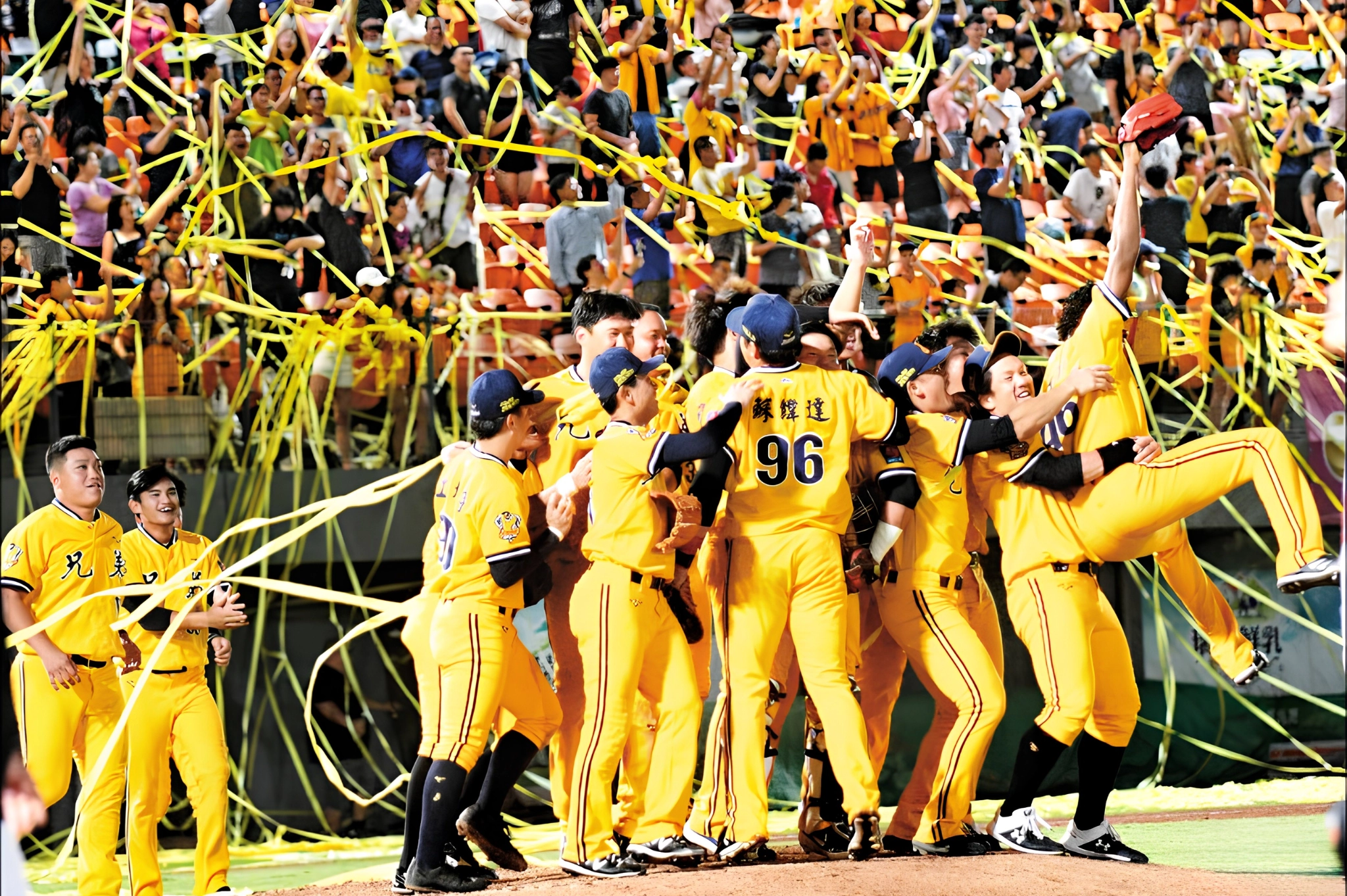
Baseball isn't a sport here — it's a national identity
To understand the noise, you need to understand the history.
Baseball arrived in Taiwan during the Japanese colonial era (1895–1945), which is why it is the island's national game rather than basketball or football. It stuck — and then, in the 1960s and 70s, it became something far bigger. Taiwan's Little League teams began traveling to Williamsport, Pennsylvania and winning, over and over, at a moment when the island was politically isolated on the world stage and desperate for a way to be seen. Families stayed up through the night to watch grainy broadcasts from halfway around the world.
That emotional connection never really faded. When Taiwan wins a major international baseball tournament today, the island erupts. Streets grow quiet as people gather around televisions, then explode with cheers, tears, and fireworks when the final out is recorded. Walk into a stadium in Taipei or Taichung, and you are stepping into a place that carries seventy years of collective memory, pride, and hope.
—
The cheerleaders are bigger stars than the players
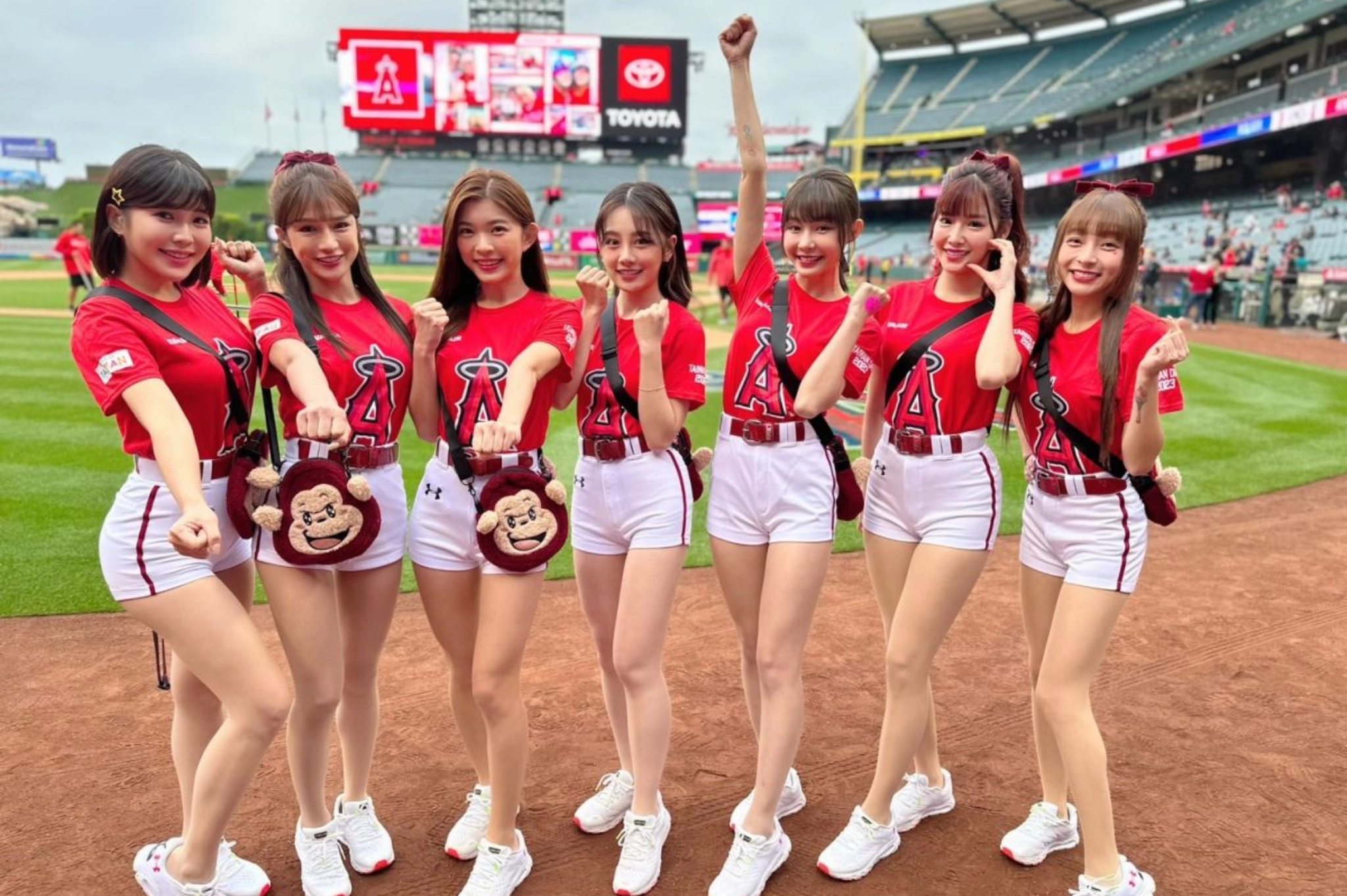
Here is the part that genuinely stuns first-time foreign visitors: in Taiwan's professional league, the CPBL, the cheer squads are often more famous than the athletes.
Each of the six teams has its own squad — the Rakuten Monkeys have the Rakuten Girls, the Uni-President 7-Eleven Lions have the Uni-Girls (the oldest squad, dating to the mid-1990s), the Wei Chuan Dragons have the Dragon Beauties, and so on. Collectively there are now over 150 professional cheerleaders in the league. They have their own trading cards, their own merchandise lines, their own lipstick collaborations, millions of followers, and sold-out fan meetings.
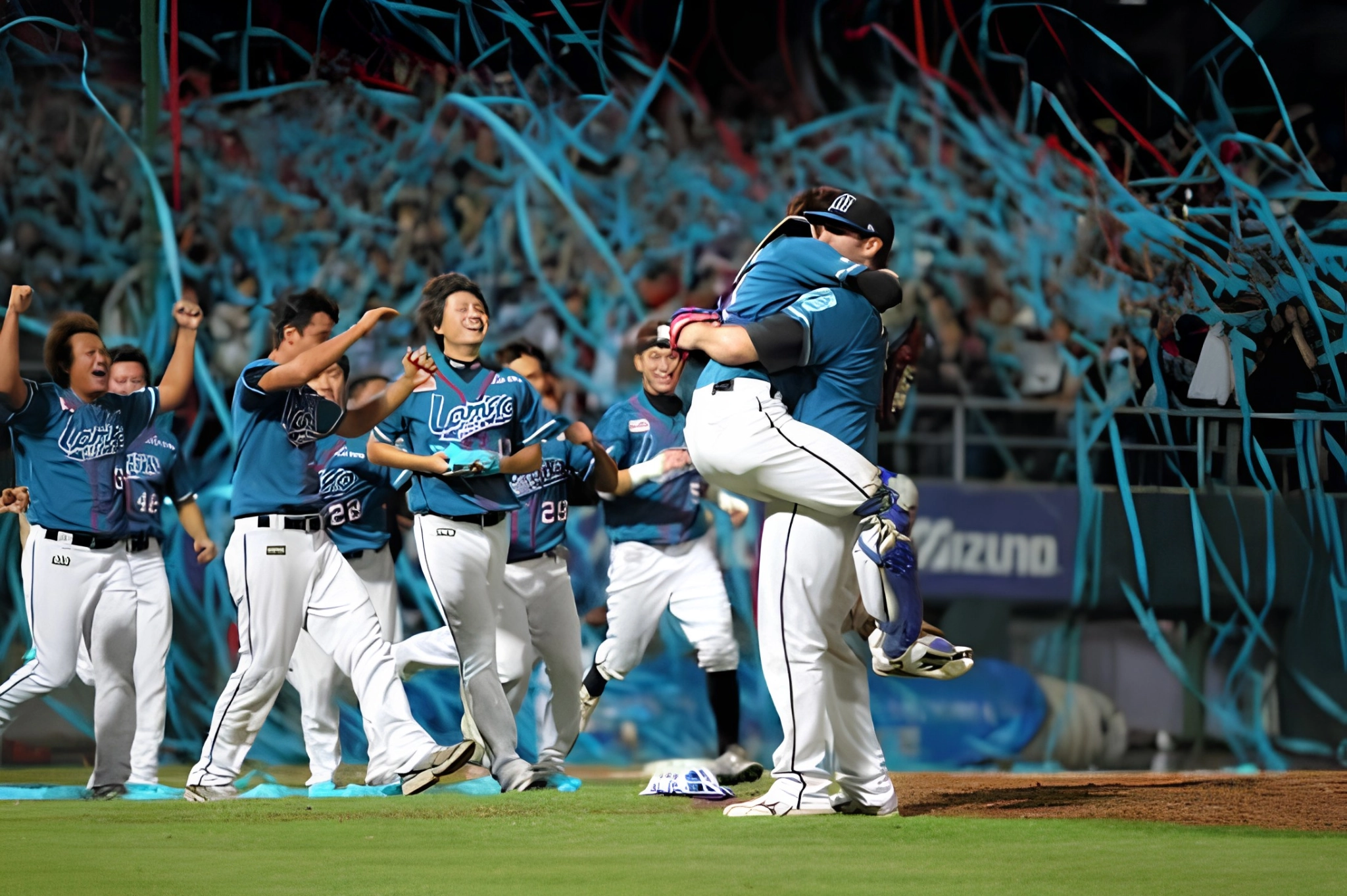
The style itself is a hybrid, and you can trace exactly where it came from. In 2012 the Lamigo Monkeys (now the Rakuten Monkeys) played in South Korea for the Asia Series, saw the K-baseball cheer culture — the dancers, the nonstop dance music, the choreography — and brought it home. They fused it with what Taiwan already had: trumpets, drums, and relentless call-and-response chanting. The result is a sound and a spectacle that exists nowhere else, and it has been so successful that it is now exported back outward. Korean and Japanese cheerleaders now cross over to work in Taiwan's league, and Taiwanese-style cheering has been showing up in Korean and Japanese stadiums.
Diplomats have a nickname for the phenomenon: cheerleader diplomacy. It may be the most effective soft power Taiwan has ever produced by accident.
—
What actually happens in the stands
Forget everything you know about American ballpark etiquette. There is no polite clapping. There is no "let's watch the game quietly." Here is how it works:
- You cheer only when your team is batting.
This is the golden rule. Each stadium is split down the middle — home fans on one side, visiting fans on the other — and each side goes absolutely nuclear during their own team's offensive half-inning, then falls almost silent when the other side takes over. It is a strangely polite arrangement, and it means the noise ping-pongs back and forth all night. - Every batter has a personal song.
When a player steps up, the crowd instantly switches to his individual chant, complete with hand motions. Everybody knows all of them. You will not. It does not matter — clap along, and by the sixth inning you will have accidentally learned three of them. - The cheer platform runs the room.
The dancers, the lead cheerleader with the microphone, the drummers and trumpeters — they set the tempo, and the crowd follows without question. Between innings the platform becomes a full-blown pop performance. - Nobody cares if you're a foreigner.
In fact, that is half the fun. Stand up, copy your neighbor, wave the inflatable sticks, and you will be adopted by the section within twenty minutes. Taiwanese fans are delighted when visitors join in. - And it doesn't end at the ninth inning.
Games are frequently followed by post-game concerts on the field, occasionally with major Taiwanese or international artists. The ticket you bought for a ball game turns into a music festival.
—
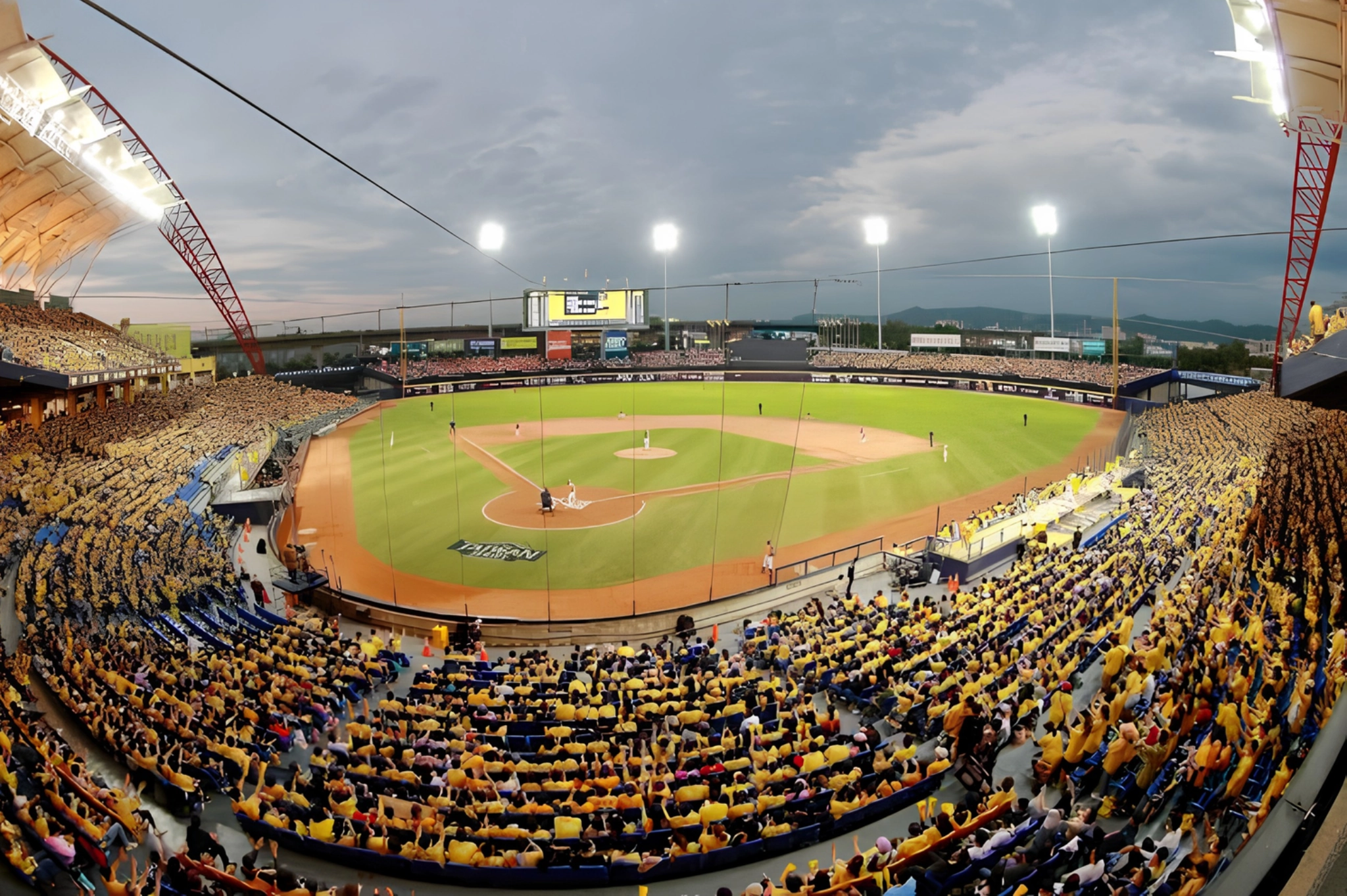
The practical stuff: how to actually go
Season. The 2026 CPBL season runs from late March through October, with games about six days a week — roughly 50-plus games a month at the height of summer. July is peak.
Where. The main venues are the gleaming new Taipei Dome (air-conditioned, right in the city, MRT-accessible — an excellent choice in July heat), Xinzhuang Baseball Stadium in New Taipei, the charming old Tianmu Stadium in Taipei's Shilin district, and Taichung Intercontinental Stadium. Games are played across roughly a dozen and a half venues around the island.
Price. This is the punchline. Outfield seats start around NT$250 (about US$8). Infield seats run to roughly NT$800. Taipei Dome is a little pricier, generally NT$400–1,100. For comparison, a mid-tier ticket to a Major League game in the US often costs five to ten times that — for a fraction of the atmosphere.
Tickets. You can buy through the teams' ticketing partners online, or through international platforms like Klook and KKday, which have English-language listings for Taipei Dome and Tianmu games — the easiest route for a visitor. If you want the local method, tickets can also be bought at the iBon kiosks inside any 7-Eleven or the machines at FamilyMart. The kiosks are entirely in Chinese, but Google Translate's camera mode makes it navigable — select your seats, then pay at the register (cash).
Food. Stadiums have proper food stands — fried chicken, sushi, hot dogs, pizza — plus convenience stores and beer counters inside the concourse. Crucially, you are allowed to bring in your own food and drinks. Yes, that means you can pick up a box of xiaolongbao, fried chicken cutlet, or a full night-market haul on the way in and eat it in your seat while ten thousand people sing around you. This is arguably the correct way to do it.
Which team? If you want the maximum spectacle, the Rakuten Monkeys are widely considered to have the most developed cheer culture and the biggest party atmosphere. But honestly — pick whichever team is playing on the night you are free, sit on the home side, and you will not be disappointed.
—
Why it matters more than it looks
It would be easy to write all of this off as noise and pop choreography. It isn't.
Taiwan is a place that has spent decades having to insist, loudly, on being noticed. The stadium is where that instinct becomes joyful instead of anxious — thousands of people in one room, in perfect coordinated rhythm, unmistakably themselves, having an absurdly good time. It's the same energy you feel at a temple parade, at a night market at midnight, at a Mazu pilgrimage — Taiwan does collective, unselfconscious, full-volume enthusiasm better than almost anywhere.
You do not need to like baseball. You do not need to understand a single rule. You just need a NT$250 ticket, a plastic bag of night-market food, and a willingness to stand up and sing a song you have never heard before, in a language you may not speak, with hundreds of strangers who are extremely happy you came.
That's the game.