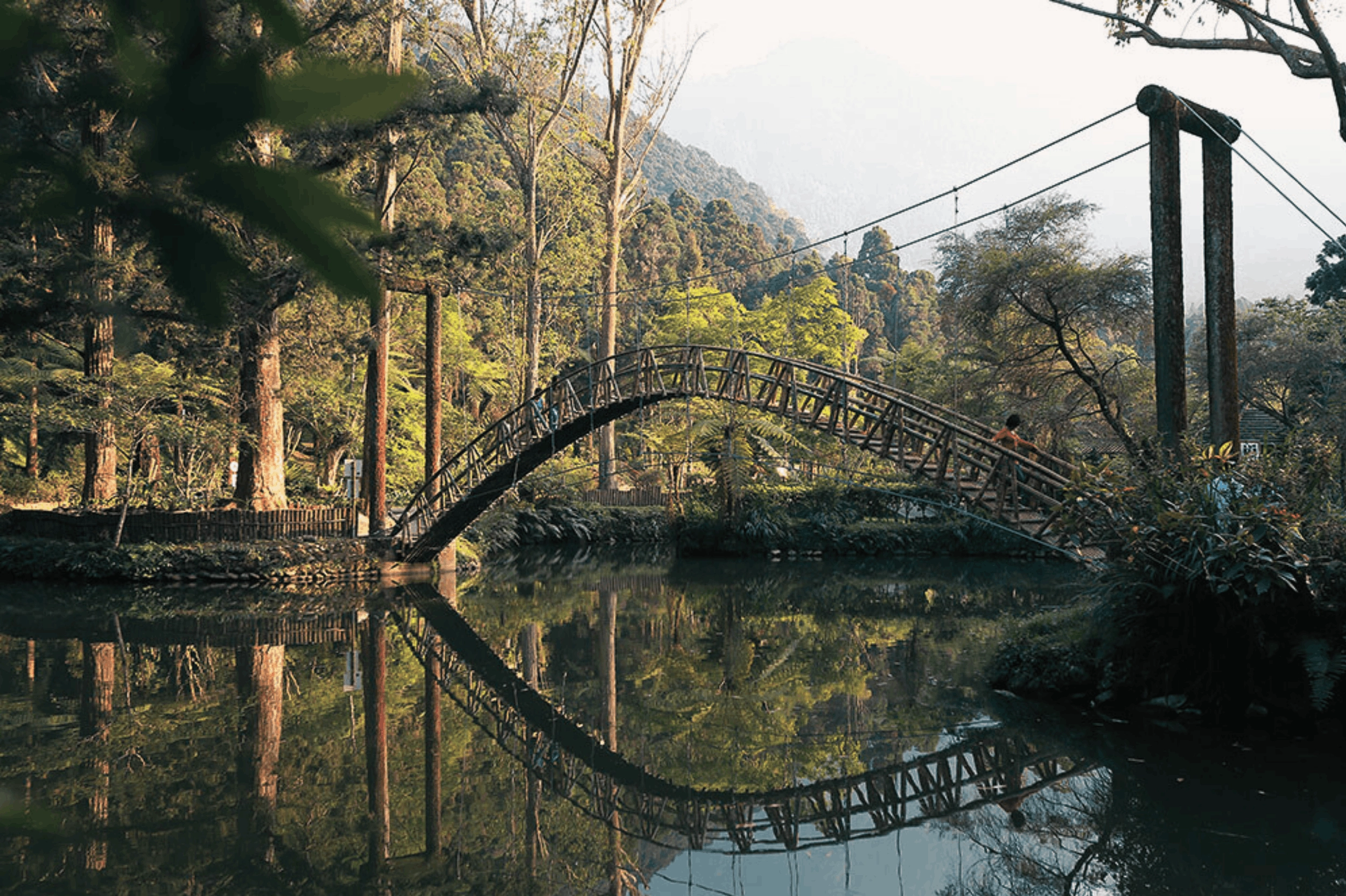
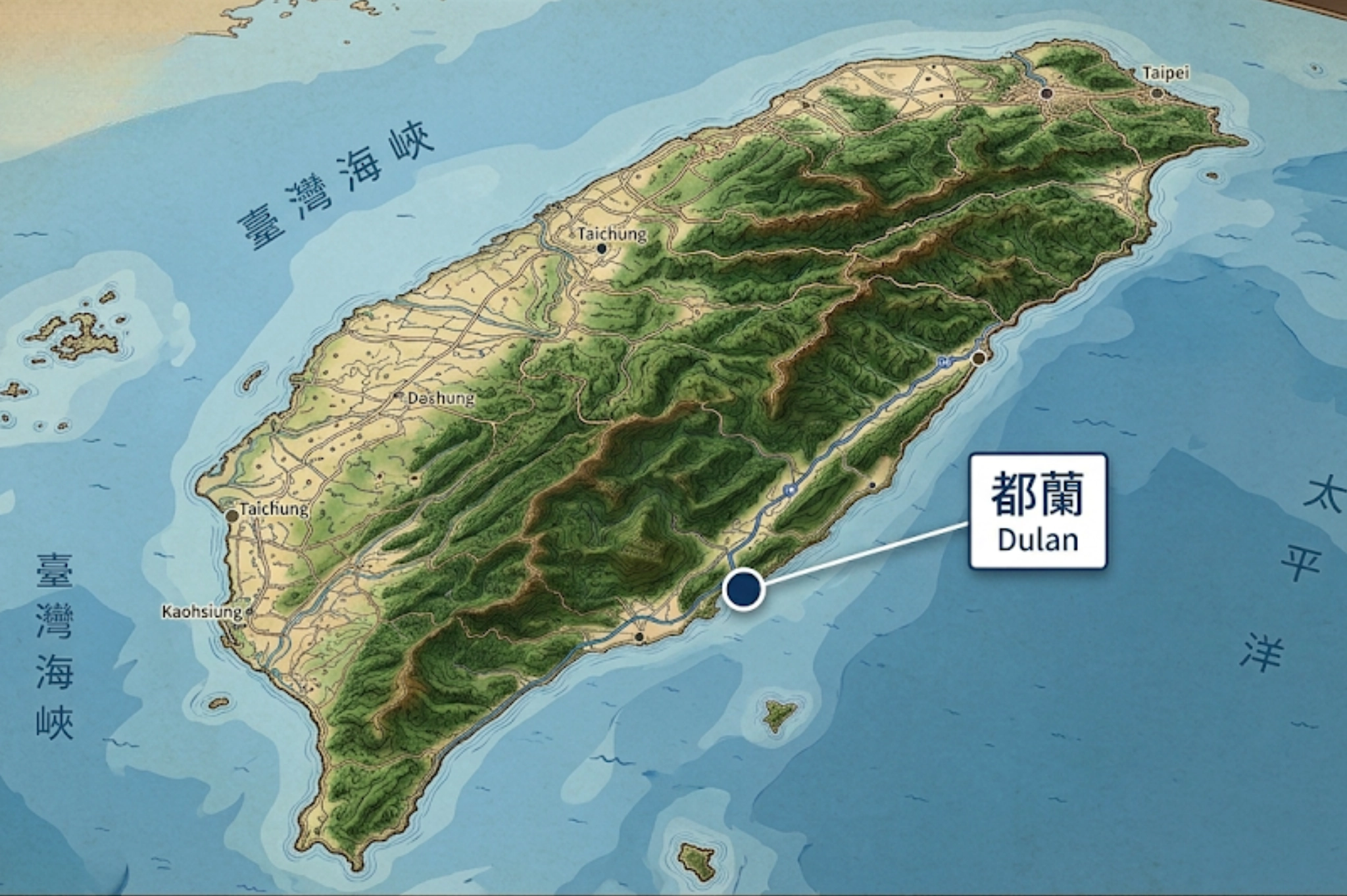
There is a stretch of Taiwan's east coast where the mountains fall almost straight into the Pacific, where the two-lane Highway 11 is the only road worth mentioning, and where the biggest sound on a Saturday night is not traffic but a driftwood stage humming with guitars. This is Dulan (都蘭), a village of a few thousand people in Taitung County that has quietly become the beating heart of Taiwan's surf and arts scene. If Taipei is Taiwan's brain and Tainan its stomach, Dulan is the island's quiet heartbeat.
For a foreign traveller used to Taiwan's neon-lit night markets and bullet-train efficiency, Dulan is a delightful contradiction: a place where the appropriate response to almost any question is a shrug and the words "maybe later." It is worth the trip precisely because it refuses to hurry.
—
A Sugar Factory That Refused to Die
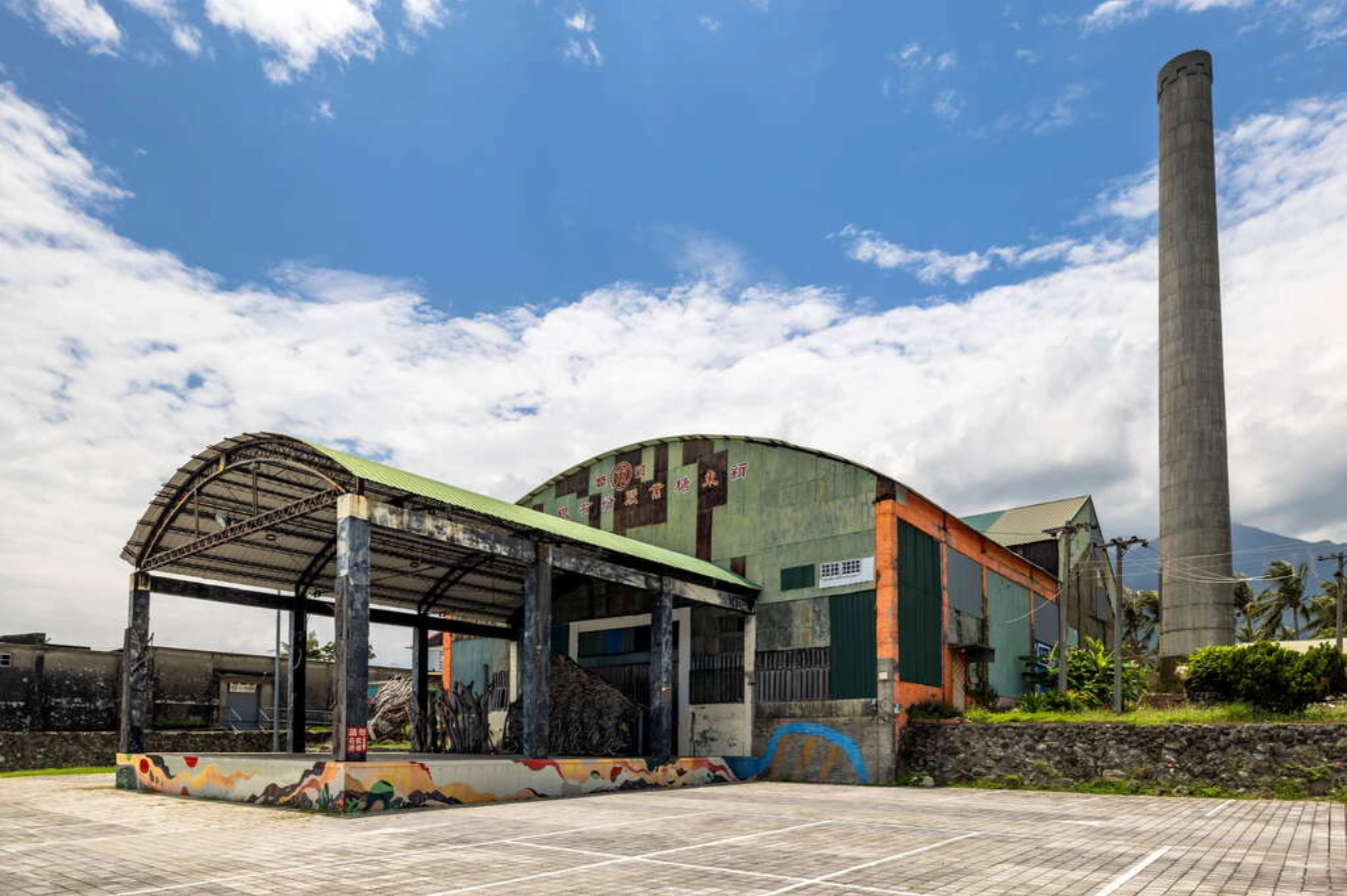
To understand Dulan you have to understand the Sugar Factory. In many ways, everything here revolves around it.
The Dulan Sugar Factory (都蘭糖廠) was built in the 1930s, during the Japanese colonial period, when Taiwan's east coast was carpeted in sugarcane and sugar was one of the island's most valuable exports. The soil and climate around Dulan were so good that the factory's output once ranked at the very top among Taiwan's roughly nineteen sugar refineries. For decades the whole village rose and slept to the rhythm of the harvest.
Then the economy changed. Cheaper sugar from abroad, industrialization, and the slow drift of young people toward the cities left the factory obsolete. It shut its doors in 1991 and sat empty and rusting for years — the kind of abandoned industrial hulk that, in most places, ends up demolished.
Instead, something rarer happened. Artists moved in. Drawn by cheap rent, big empty workshops, and the extraordinary light of the coast, a loose community of painters, woodcarvers, musicians, and indigenous craftspeople colonized the old warehouses. With eventual support from the Taitung County Government, the ruin was reborn as the Dulan Sugar Factory Culture Park. Today the same sheds that once boiled cane hold artist studios, a cultural-creative boutique, a café, a small craft brewery, Taiwanese and Japanese restaurants, a snack kiosk, and — most importantly — an open-air driftwood stage.
Not a museum that freezes the past behind glass, but a working place that simply started doing something new.
—
Saturday Night: The Concert Nobody Advertises
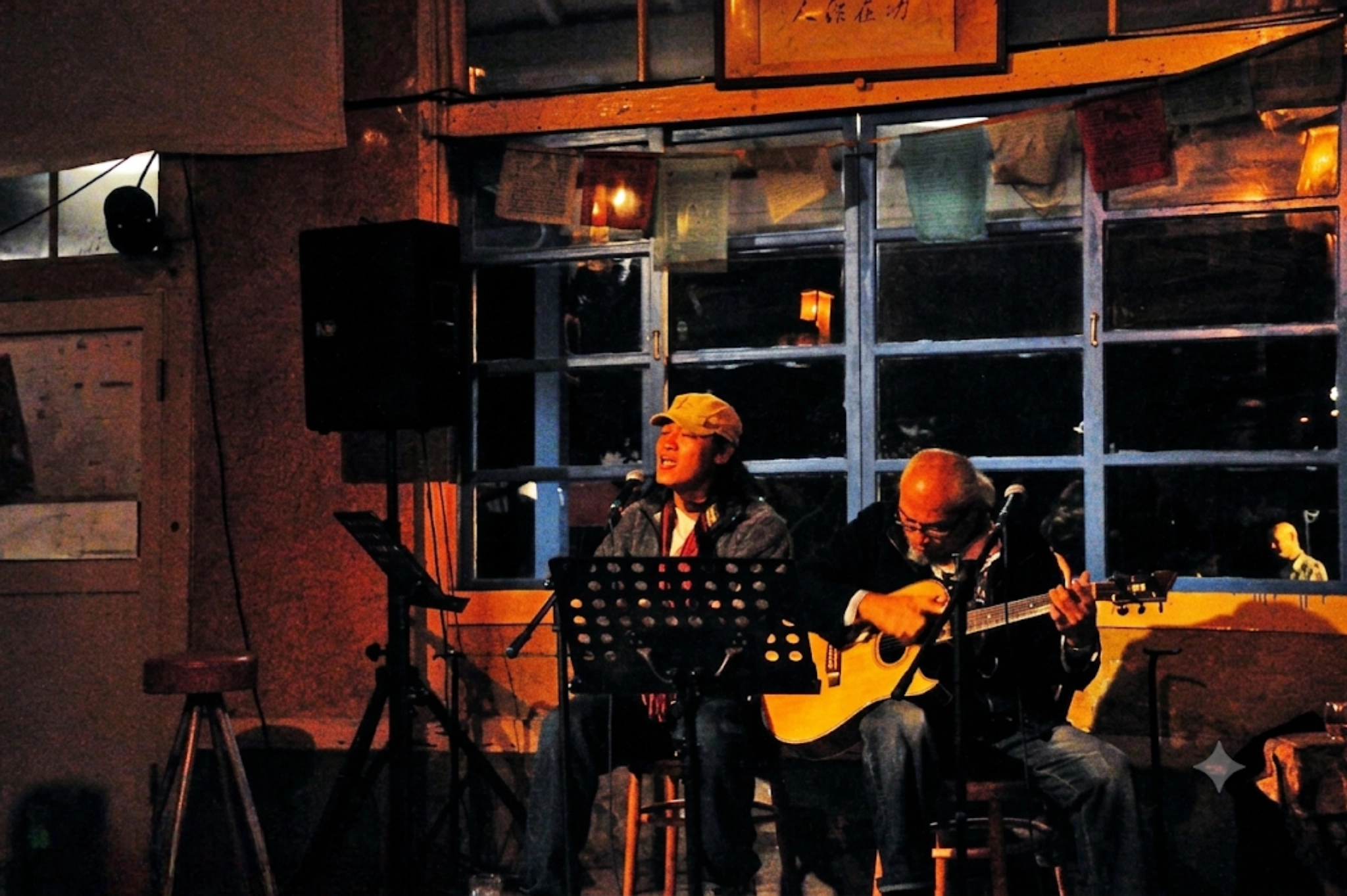
If you can time your visit for any night of the week, make it Saturday. That is when the Sugar Factory's driftwood stage comes alive with free live music, and it is the single best introduction to who actually lives in Dulan.
On any given Saturday you might hear an Amis grandmother singing in her own language, a Han Chinese folk guitarist from Taipei who came for a weekend and never left, and a sunburned expat drummer who traded a desk job for a surf shack. There is no cover charge, no VIP section, and no schedule you can rely on. People bring beer from the on-site brewery, kids run underfoot, and dogs sleep through the whole thing.
For foreign visitors this is often the moment Dulan clicks. You realize you are not watching a performance staged for tourists — you have simply been let into a village's weekly ritual.
—
The Waves: Taiwan's Surf Capital
Dulan sits on one of Taiwan's most consistent stretches of coast for surfing, and it has earned a quiet international reputation as the island's surf capital. The appeal is not that the waves are the biggest in Asia — they aren't. The appeal is the feeling: uncrowded line-ups, a laid-back local crew, mountains at your back and open Pacific in front, and a cost of living low enough that a surfer can actually afford to stay a while. Several small surf shops and guesthouses along Highway 11 rent boards and offer lessons, and the vibe toward beginners is famously friendly.
A note on seasons
Taiwan's east coast gets its best, most powerful surf in autumn and winter (roughly September through March), when swells from northeast monsoons and distant typhoons roll in. Summer tends to bring smaller, gentler waves — actually ideal if you're learning.
The flip side of summer is typhoon season: the far edge of a passing storm can deliver spectacular surf for experts, but also dangerous currents and sudden closures. If you paddle out in July, ask the local shops about conditions first. In Dulan, that advice comes with a smile and usually a cup of tea.
—
Amis Country

Dulan is not just a surf town that happens to sit on the coast — it is deep in the homeland of the Amis people, Taiwan's largest indigenous group. Long before sugar or surfboards, this was Amis land, and it still is in every way that counts.
You feel it in the food (wild greens, river shrimp, sticky rice steamed in leaves, betel-nut flowers stir-fried into surprising dishes), in the language you overhear at the market, and above all in the summer Harvest Festival season, when villages up and down the coast gather for days of ceremonial singing and dancing to give thanks and mark the year. These festivals are sacred community events, not tourist shows; visitors are sometimes welcome to watch respectfully from the edges, but should always follow local guidance about photography and participation. If you are lucky enough to be invited to join a circle dance, accept — and follow the person in front of you.
—
How to Do Dulan Right
Getting there takes effort, which is part of the filter that keeps Dulan mellow. Most travellers fly or take the train to Taitung City, then drive or catch a bus about 20 kilometres north up the coast on Highway 11. Renting a scooter in Taitung is the classic move — the coastal ride itself is one of the most beautiful in Taiwan.
Once you arrive, resist the urge to plan. Dulan rewards the traveller who books two nights and does almost nothing: a morning surf lesson, an afternoon coffee at the Sugar Factory, a wander to the nearby Water Running Up oddity (an optical illusion where water appears to flow uphill) or the mysterious prehistoric stone remains at the Dulan Site, dinner at a roadside indigenous kitchen, and then — if it's Saturday — the driftwood stage.
Before you go
Bring cash, bring sunscreen, bring patience for the "island time" pace — and leave your itinerary in the glovebox.
—
Why It Matters
In an age when every scenic corner of Asia seems to be racing to install the same infinity pools and photo frames, Dulan is a small, stubborn argument for a different kind of travel — one built on community, second lives for old places, and the radical idea that a village can decide to stay itself. The sugar is long gone. What replaced it, improbably, is sweeter: music, waves, art, and a welcome that asks nothing of you except that you slow down.
—
Come for the surf.
Stay for the shrug.