The Other Terracotta Army Almost No Foreigner Knows About
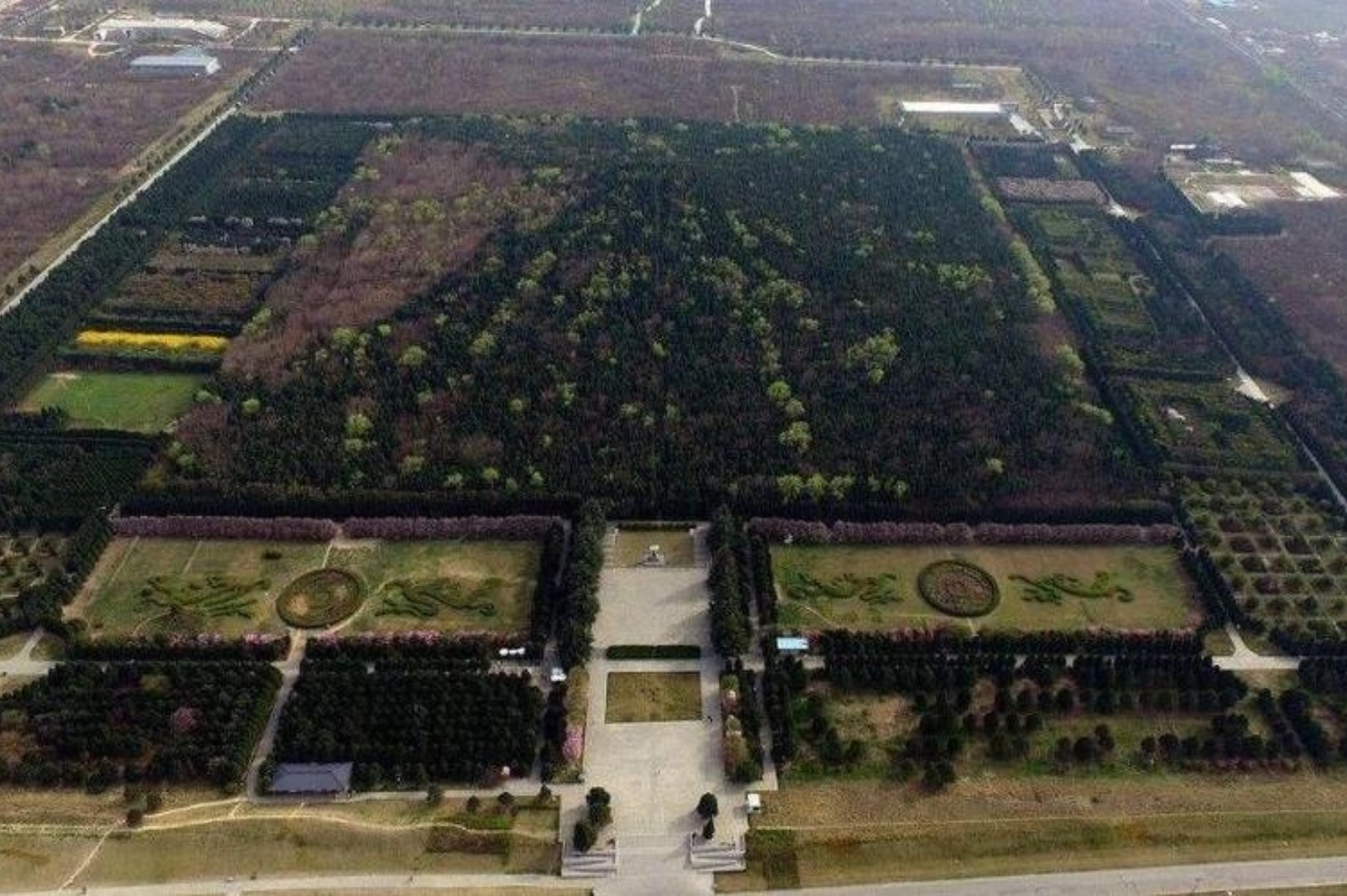
Twenty kilometers north of central Xi'an, in a quiet sprawl of green fields between the Wei and Jing rivers, there is an imperial tomb complex covering 20 square kilometers — bigger than the historic core of Paris, twice the size of Manhattan's Central Park, and home to what archaeologists believe is the largest underground burial assemblage in China after the Qin Shi Huang complex itself. Inside it, in a glass-walled underground gallery completed in 2006, are more than 50,000 miniature terracotta figures, hundreds of pottery horses, sheep, and pigs, bronze chariots, silk garment fragments, and the remains of a complete miniature ancient Chinese state, all arranged exactly as they were placed at the bottom of 86 burial pits in 141 BCE.
The site is called Hanyangling (漢陽陵, Hàn Yáng Líng) — the Mausoleum of Emperor Jing of Han, the fourth emperor of the Western Han Dynasty (r. 157-141 BCE).
You will not find it on the standard Western tour itinerary. Most agencies route foreign clients from the Terracotta Warriors straight back to central Xi'an. The Warriors take six hours. The day is "done."
This is, professionally speaking, the biggest single missed opportunity in foreign Xi'an itineraries. Hanyangling is genuinely better than the Terracotta Warriors in three measurable ways: archaeological intimacy (you walk directly above the pits on a glass floor), chronological depth (it is younger and culturally richer than the Qin complex), and crowd density (on most days, the underground gallery has more archaeologists than tourists).
Who Was Emperor Jing of Han — And Why Should You Care?
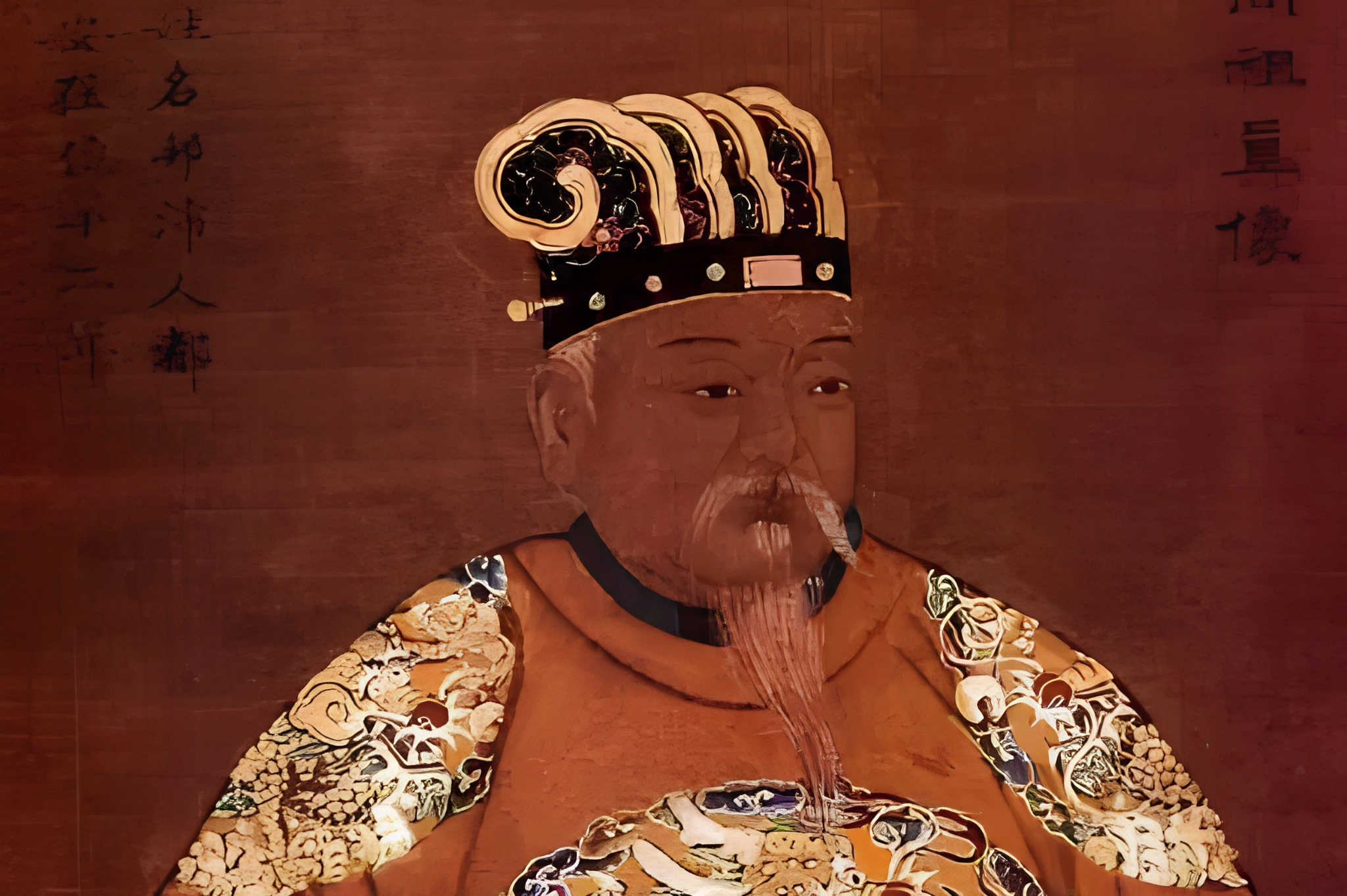
To understand why Hanyangling matters, you have to understand why Emperor Jing matters. The Han Dynasty is China's foundational dynasty in the same way the Roman Empire is Europe's: it gave the country its dominant ethnic name ("Han people," still used today), its bureaucratic skeleton, its writing system, and its first stable model of imperial governance. The Han ruled China for 426 years (202 BCE - 220 CE) in two halves — the Western Han, based in Chang'an (Xi'an), and the Eastern Han, based in Luoyang.
The first 60 years of the Western Han, however, were precarious. Emperor Gaozu, the founding peasant-rebel-emperor, died in 195 BCE. His widow Empress Lü essentially ran the empire for 15 years. The next two emperors were weak. The dynasty's survival was not assured.
Emperor Jing, who took the throne in 157 BCE at age 31, is the man historians credit with stabilizing the Han. Together with his father Emperor Wen, his reign forms the period known as the "Rule of Wen and Jing"— one of the four "golden ages" of Chinese imperial history, alongside the Han Empress Lü's stabilization, the early Tang of Taizong, and the early Qing of Kangxi-Qianlong.
What did he actually do? Three things, in order of long-term importance:
- He cut taxes to historic lows. Land tax was reduced from one-fifteenth to one-thirtieth of harvest — a rate so low it was not matched again in Chinese imperial history until the 18th-century Qing.
- He crushed the Rebellion of the Seven States. In 154 BCE, seven of the empire's regional kings revolted. Emperor Jing's generals defeated them in 90 days. The defeat ended the regional-king model and centralized power around the imperial court for the first time.
- He filled the imperial granaries. By the end of his reign, the state granaries were so full that, according to the Records of the Grand Historian (史记), the grain "rotted from the bottom because new harvests kept arriving on top."
That economic and political surplus was inherited by Jing's son, Emperor Wu, the most famous Han emperor — the one who expanded the empire into Korea, Vietnam, and Central Asia, opened the Silk Road, and made Confucianism the state ideology. None of that was possible without Emperor Jing's surplus. The Han Dynasty's geopolitical career is essentially Jing's savings account, spent by his son.
His tomb reflects all of this. Hanyangling is not a tomb built for war (like Qin Shi Huang's). It is a tomb built for good government — which is why the figurines depict farmers, eunuchs, ministers, court ladies, livestock, granary keepers, and dancing girls instead of armored infantrymen.
The Glass Walkway: What You Actually Experience Inside the Underground Museum
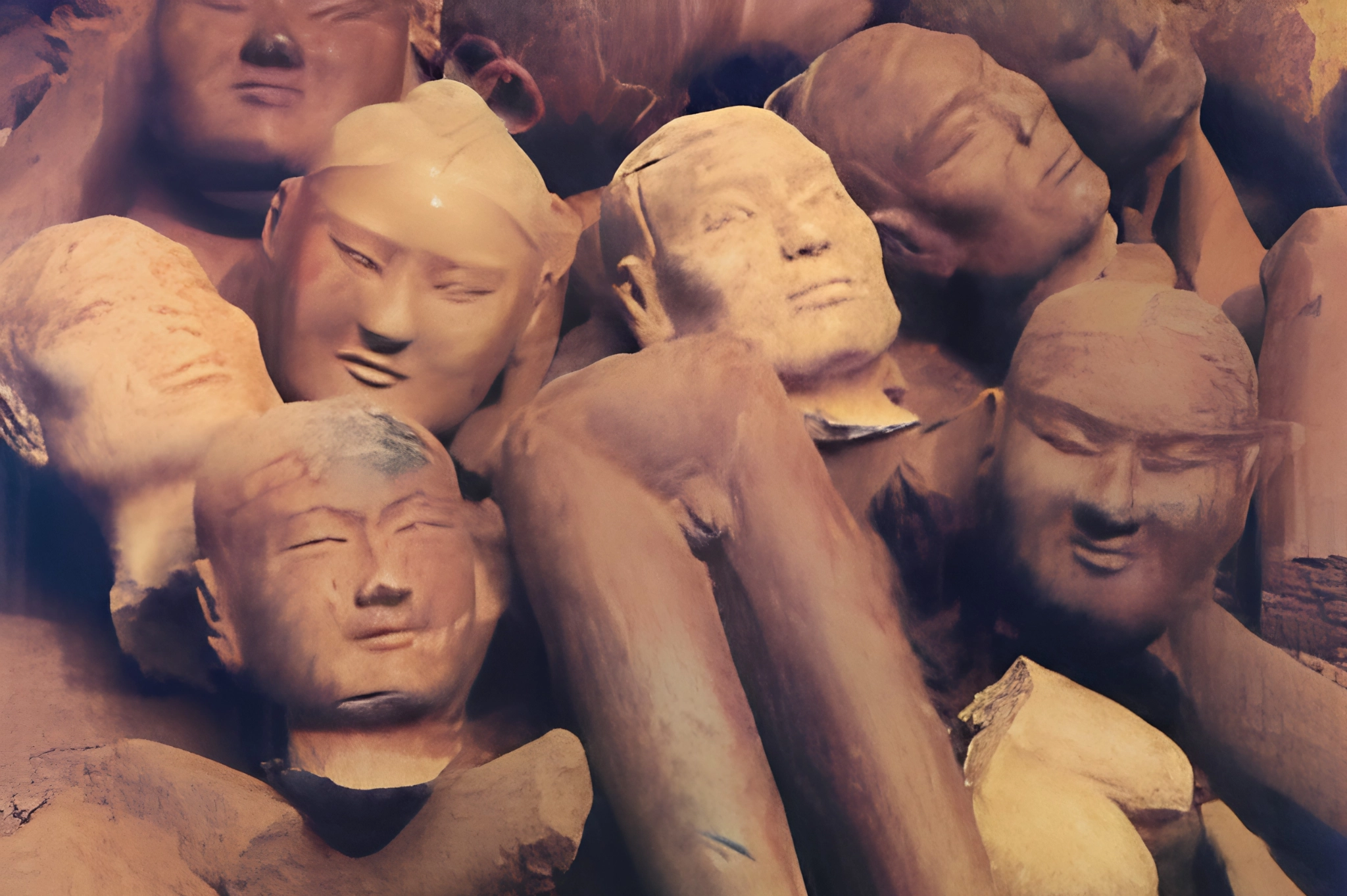
The Hanyangling Underground Museum opened to the public in 2006 and is, by global archaeological consensus, the first and largest in-situ underground museum in the world. The architectural premise is genuinely unusual: instead of excavating the pits and moving the artifacts to a separate display building (the standard model used at the Terracotta Warriors), the museum was built directly on top of the pits, with a transparent multi-layer high-strength glass walkway and glass floor system that lets visitors walk above and beside the artifacts while they remain in their original archaeological context.
The underground hall covers 7,850 square meters — approximately the area of a football field — and shelters 10 of the 86 known burial pits that surround the central mausoleum mound. The remaining 76 pits are preserved underground but not currently open to visitors.
What You See, in Order
The entrance descends 12 meters via a sloped corridor lit in soft amber. You emerge onto an elevated glass causeway that runs the length of the gallery. The pits open up below you. There is no railing between you and the artifacts; there is only glass.
In the first three pits, you see rows of foot-tall miniature terracotta figures: eunuch officials in long robes, palace dancers with raised arms, soldiers in armor, kneeling servants holding offerings. Unlike the life-size Qin warriors, these figures are 60 centimeters tall and were originally fully dressed in real silk and wood-armed clothing. The silk has rotted; the wooden arms have decayed. But on the floor of the pits, you can still see the rust-colored fabric residue that marks where each figure's clothing once was, and the empty shoulder sockets that once held movable wooden arms.
This is one of the most important details about Hanyangling: the figures are anatomically nude beneath their now-vanished costumes. They have genitals, belly buttons, toe creases. Each figure was sculpted as a fully realized human body, then dressed. The Han craftsmen who made them were not making decorations; they were making artificial persons.
In the fourth and fifth pits, you walk over the animal pits: hundreds of small terracotta horses, cattle, sheep, pigs, dogs, and chickens, arranged in tidy formations. These represent the livestock of the imperial granary and stable system that Jing supposedly miniaturized to accompany him into the afterlife.
In the sixth pit, you walk over the chariot pit: the wooden chariots themselves have decayed, but the bronze fittings — wheel hubs, axles, ornamental fittings, harness rings — remain in place. The archaeologists have reconstructed one chariot off-site; the other six are left in their archaeological state, as a deliberate teaching exhibit on the difference between excavated artifact and reconstructed artifact.
The seventh through tenth pits include administrative figurines (clerks holding bamboo scrolls), kitchen figurines (with miniature bronze cooking pots), and the famous female palace-dancer pit, which contains rows of figurines mid-pose. The dance is identified as the Han Long-Sleeve Dance — the ancestor of the Tang court dances and the source of the iconic Chinese-opera sleeve movements still used today.
The Sensation, Honestly Described
It is the closest a living person can come to walking through an excavation in real time. The lighting is deliberately archaeological — cool white over the artifacts, warm amber along the walkway. The glass is rated to 1,000 kilograms per square meter but visually almost invisible; first-time visitors often pause, lean over, and audibly catch their breath when they realize the floor between their feet is glass and the 2,170-year-old emperor's pottery army is six feet below them.
What Makes Hanyangling Different from the Terracotta Warriors
Most Western itineraries treat these two sites as redundant — "you've seen one terracotta army, you've seen them all."This is an understandable, but incorrect, assumption. The two complexes were built for completely different reasons, by completely different governments, in completely different aesthetic traditions, separated by 70 years and one dynasty.
| Feature | Terracotta Warriors (Qin) | Hanyangling (Han) |
| Emperor | Qin Shi Huang (秦始皇), d. 210 BCE | Emperor Jing of Han (汉景帝), d. 141 BCE |
| Date of burial | 210 BCE | 141 BCE |
| Distance from Xi'an | 40 km east | 20 km north |
| Figure size | Life-size (180 cm) | One-third life-size (60 cm) |
| Figure subjects | Soldiers, generals, war chariots | Officials, eunuchs, dancers, livestock, granary keepers |
| Original clothing | Painted-on lacquer | Real silk and wood (now decayed) |
| Display method | Glass-walled trench, viewing from above and side | Glass-floor walkway directly above pits |
| Number of figures | ~8,000 confirmed | 50,000+ estimated |
| Daily visitor capacity | 65,000 (high season) | 6,000 (high season) |
| Average wait time | 90+ minutes for Pit 1 | Under 10 minutes |
| Foreign tour bus density | High | Very low |
| Cost (2026) | ¥150 | ¥90 |
The single most important difference is what each tomb represents about its emperor. Qin Shi Huang's army says: I conquered the world by force and I will hold it by force in death. Emperor Jing's pottery state says: I ruled by good governance, low taxes, full granaries, and ceremonial order, and that is what I will take with me.
This is not a small distinction. It is, in many ways, the founding philosophical argument of Chinese imperial governance. The Qin model collapsed in 15 years. The Han model lasted four centuries.
The Burial Mound and the South Necropolis
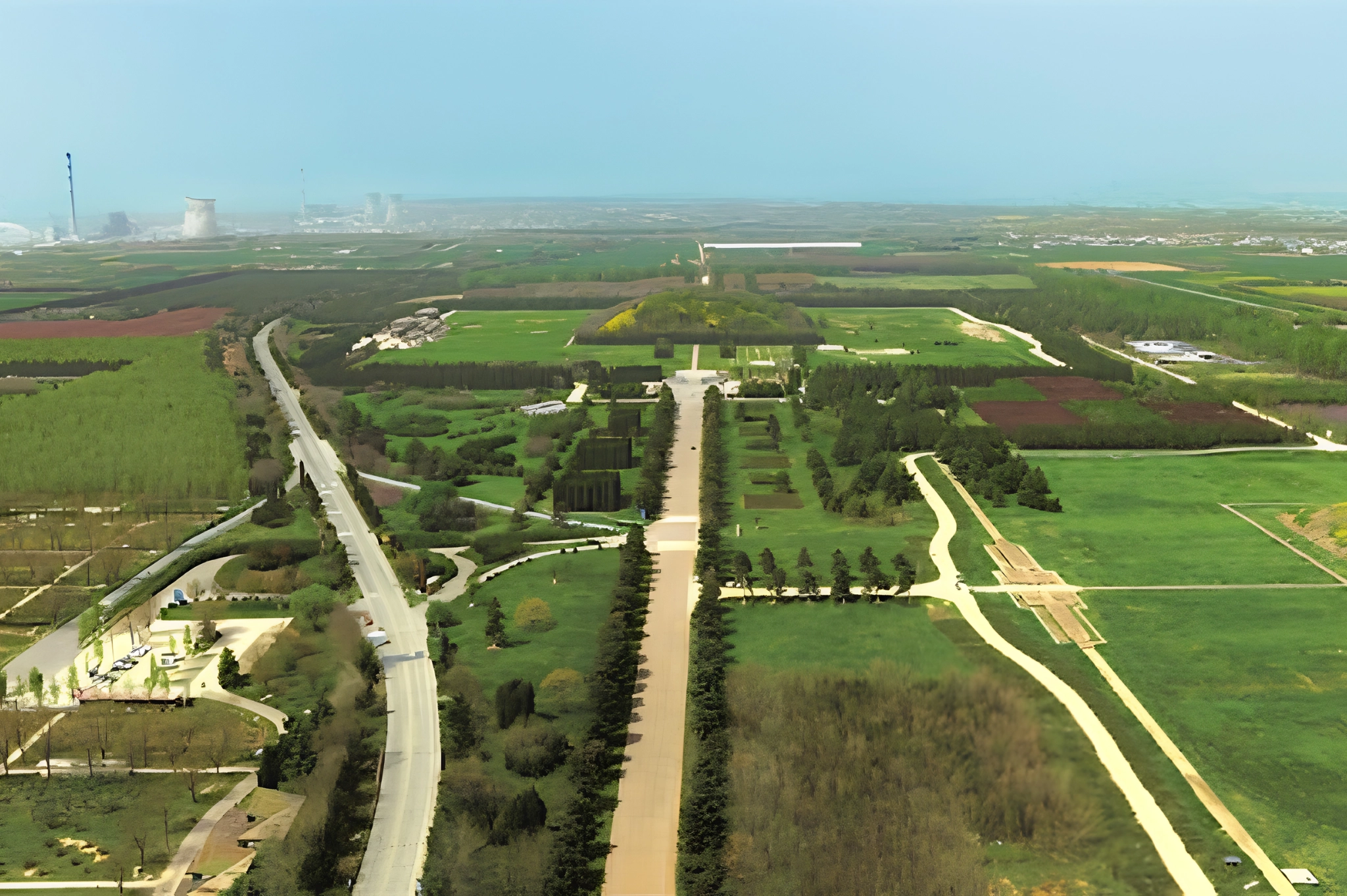
The underground museum is the main attraction, but the broader site is worth at least another hour of your time.
The central burial mound rises 32.28 meters above the surrounding farmland and is in the shape of a truncated pyramid — a so-called 覆斗形 (fùdǒu xíng) "inverted bushel" shape characteristic of Han imperial tombs. The mound has never been opened. The emperor's actual sarcophagus and personal grave goods are still inside, untouched since 141 BCE. Modern Chinese archaeological policy explicitly forbids opening intact royal tombs without compelling reason, in part because the Mawangdui excavations of 1971-74 destroyed silk and lacquer artifacts that began oxidizing within minutes of exposure to air. Hanyangling's central chamber will, in all likelihood, not be opened in our lifetimes.
The Empress Wang's mound sits roughly 450 meters east of the emperor's mound and is structurally identical. Han imperial burial conventions placed husband and wife in separate but matched mounds within a single complex — a convention not used by Qin, but adopted by every dynasty afterward.
The South Necropolis features the partially reconstructed southern ceremonial gate of the original tomb complex. The gate is built over the original Han Dynasty foundation stones, with the upper structure rebuilt in 2008 using Han-period construction techniques (rammed earth core, wooden bracket roof, gray tile). Standing under the gate and looking back toward the burial mounds is one of the most striking views in the Xi'an area — and there is almost never anyone else in the frame.
How to Get There, Tickets, and a 2026 Practical Tour Plan
Hanyangling Museum is located in Wei Yang District, Xianyang City, about 20 km north of the Xi'an city center. It is approximately midway between central Xi'an and Xianyang International Airport, which makes it an exceptionally convenient first-day or last-day stop.
Getting There
- By taxi or Didi: 30-40 minutes from central Xi'an, approximately ¥80-100 one-way. The most practical option for foreign travelers.
- By Xi'an Metro Line 14 to Hanyangling Station, then a 15-minute walk or 5-minute taxi. Total travel time around 75 minutes from the Bell Tower.
- By tourist bus: Bus 4 from Wenjingdu Square (北门外文景广场), departs every 30 minutes, ¥3.
- By tour: Most reputable agencies (Fresh International Travel included) bundle Hanyangling with the Maoling Mausoleum (Emperor Wu of Han's tomb, 70 km further west) into a "Han Dynasty Day" that runs 9 AM to 5 PM.
Tickets and Hours
- Standard adult ticket: ¥90 (down from ¥120 in 2024; the price was reduced as part of Shaanxi's foreign-visitor incentive program).
- Children under 1.2 m, seniors over 65, full-time students with valid ID: free or half-price.
- Open daily except for the second Tuesday of each month (maintenance day).
- Hours: 8:30 AM - 6:30 PM (March-November), 9:00 AM - 5:30 PM (December-February). Last admission 90 minutes before closing.
- Audio guide: ¥30 deposit, available in English, Japanese, Korean, French, and German.