"Three bends, nine moves and eighteen poses" — a street dance born in a village beside the airport where our Shandong route begins, still performed by nearly 1,000 village, school and neighbourhood teams.
Key Points at a Glance
Jiaozhou Yangko, Qingdao
Frequently Asked Questions
Jiaozhou Yangko, Qingdao
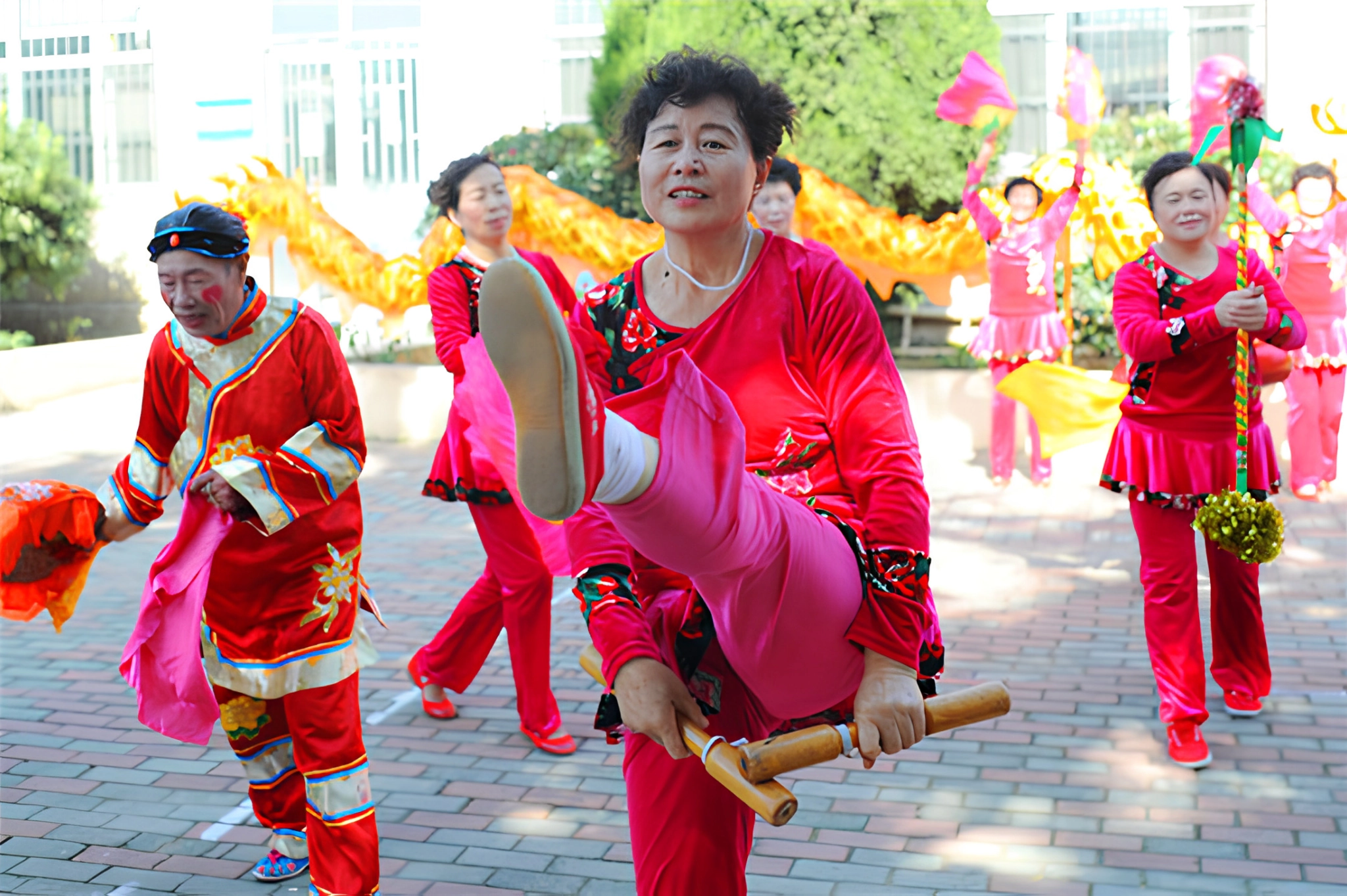
You May Already Have Landed in the Home of Yangko
Qingdao Jiaodong International Airport, where our 8-day Shandong route begins and ends, is in Jiaozhou, a county-level city of Qingdao on the shore of Jiaozhou Bay. Almost every visitor drives straight through it on the way to the Old Town. Jiaozhou has another claim, however: it is known as the "Town of Yangko."
Yangko (秧歌) is a rural folk dance of northern China. Jiaozhou's version is said to have been born in a small village there about 300 years ago, and it was added to China's national intangible cultural heritage list in 2006.
What You Are Watching
Yangko is a street dance, not a stage ballet. Dancers twist their waists boldly to bright, cheerful music, in groups, in costume, usually outdoors. The Jiaozhou form is described in Qingdao government materials as having "three bends, nine moves and eighteen poses": a compact vocabulary of bends and body shapes that dancers combine into long, rolling routines. It is one of the three major yangko forms in Shandong.
What makes it hard to forget is the spirit. A yangko team is not a company of professionals; it is a village, a school, a neighbourhood. Jiaozhou is reported to have nearly 1,000 yangko teams.
A Dance With a Passport
Yangko has travelled far beyond the Qingdao countryside:
- 2010 Shanghai World Expo and the 2011 Xi'an International Horticultural Exposition both featured Jiaozhou yangko dancers.
- On 27 January 2019, children from Jiaozhou performed at an evening gala in Issy-les-Moulineaux, outside Paris, marking the 55th anniversary of China-France diplomatic relations. They danced in a group number and again with an 11-year-old French singer. The team had been invited only two weeks earlier and rehearsed around their school exams.
- Qingdao's government says teams have also joined cultural exchanges in South Korea and Italy.
How a Local Government Keeps a Dance Alive
The numbers behind the dance are unusually large. According to a 2019 China Daily report, the local government has invested over 400 million yuan in intangible heritage protection, built a 120 million yuan "Chinese Yangko City" with a theatre, a main square, a school and a folk culture pavilion, and supports seven private yangko training schools and more than 30 training programmes, serving about 1,500 students a year.
Lantern Festival: When the Dance Is Most Alive
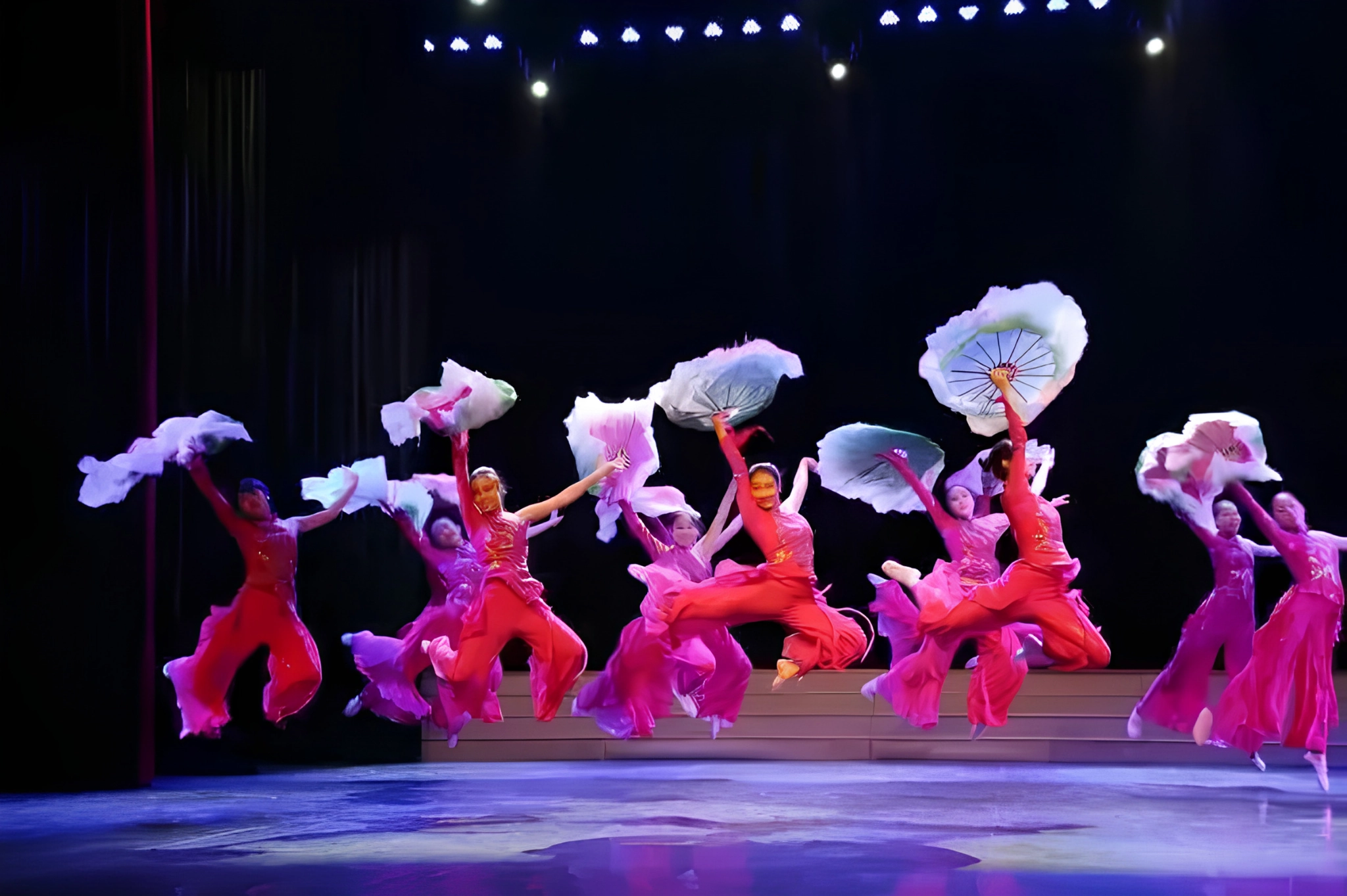
Yangko is a festival dance, and the Lantern Festival is its natural stage. In 2025, the Jiaozhou Yangko Dance Festival was held on the Lantern Festival with over 60 performance teams and more than 1,100 performers, according to a Chinese government news report. The same day, international students from Afghanistan and Kyrgyzstan joined locals in making yuanxiao sweet dumplings, painting paper lanterns, dancing yangko and guessing lantern riddles.
In 2027 the Lantern Festival falls on Saturday, 20 February, two weeks after Chinese New Year on 6 February. We cannot say what Jiaozhou will schedule, but if you are travelling in this season it is the best time to ask.
How It Connects to Our Route
Yangko is not part of our standard 8-day itinerary, and we do not promise a performance. But the geography works well:
- Day 1: Your first minutes in Shandong, from the airport to Qingdao Old Town, are in yangko country.
- Day 8: On departure day, a short stop in Jiaozhou before your flight is possible by request, subject to season and timing.
- Related folk arts: Day 7's woodblock New Year painting at Yangjiabu and the folk culture of the Weifang area belong to the same family of New Year traditions.
If you want yangko on a winter departure, tell us when you book and we will check the calendar.
Tips for Watching a Folk Dance as a Visitor
- Stand back and watch the whole line. The beauty is in the formation as much as the individual.
- Ask before filming close-up. Performers are often local amateurs.
- Dress warmly in February. Qingdao in February is cold and windy.
- Bring cash or a mobile wallet. Street snacks around lantern events are common. See our China travel logistics article.