Every Chinese province has its stereotypes. Shaanxi turned its own into a rhyme.
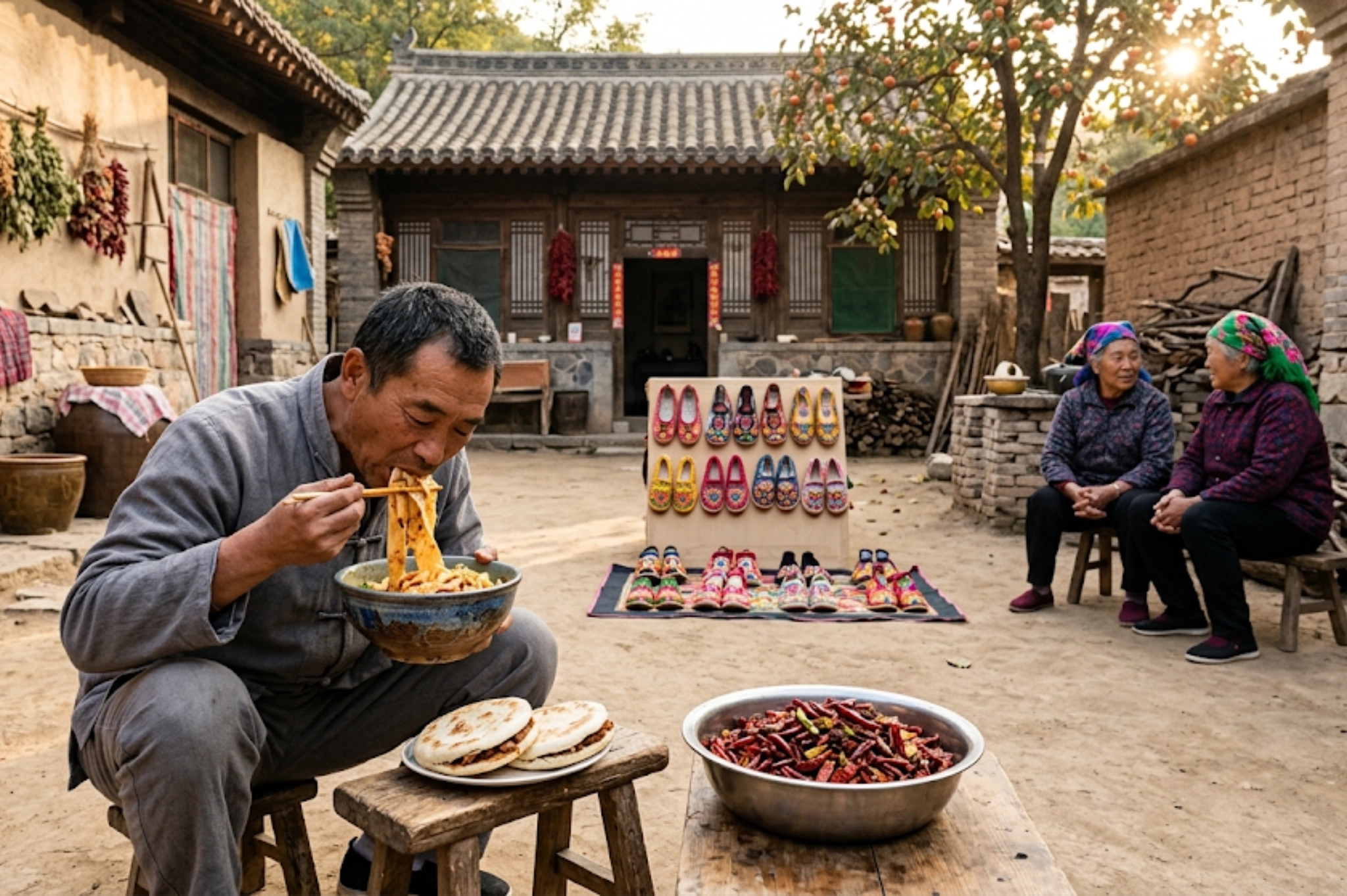
Ask anyone from Xi'an about the "Eight Oddities of Shaanxi" (陝西八大怪, Shǎnxī bā dà guài) and they'll grin and start reciting: noodles like trouser belts, pancakes like pot lids, bowls you can't tell from basins… It's a folk list of local habits that outsiders find strange — and that locals are secretly proud of.
Here's the fun part for visitors: the Eight Oddities are not a museum exhibit. You can see almost all of them in a few days in Xi'an. Most of them are on your plate. A couple you'll see from the coach window. One you'll hear at full volume.
(Small warning: the "eight" is flexible. Depending on who you ask, the list runs to nine or ten items. Nobody in Shaanxi minds. Counting precisely is not one of the oddities.)
The Oddities at a Glance
| # | The saying (Chinese) | Literal meaning | Where you'll see it on our tour |
| 1 | 麵條像褲帶 | Noodles like trouser belts | Biangbiang noodles — Day 3 "Traditional Shaanxi Noodles" lunch |
| 2 | 鍋盔像鍋盖 | Flatbread like a pot lid | Muslim Quarter (Day 1), Yongxingfang (Day 2) |
| 3 | 碗盆難分開 | Can't tell bowls from basins | Any noodle restaurant, all week |
| 4 | 辣子是道菜 | Chilli is a dish in itself | Every table in Xi'an |
| 5 | 泡饃大碗賣 | Soaked bread sold in huge bowls | Yangrou paomo — Muslim Quarter / Yongxingfang |
| 6 | 帕帕頭上戴 | Handkerchiefs worn on heads | Rural Guanzhong — the drive to Famen Temple (Day 5) |
| 7 | 房子半边盖 | Houses built with half a roof | Countryside villages; recreated at Tang/folk sites |
| 8 | 板凳不坐蹲起來 | Squat instead of sitting on stools | Street-food stalls, parks, bus stops |
| 9 | 姑娘不對外 | Local girls don't marry out | A local joke — ask your guide |
| 10 | 秦腔不唱吼起來 | Qin opera is yelled, not sung | City wall parks, Chang'an Dapaidang (Day 8) |
Noodles Like Trouser Belts (麵條褲帶)
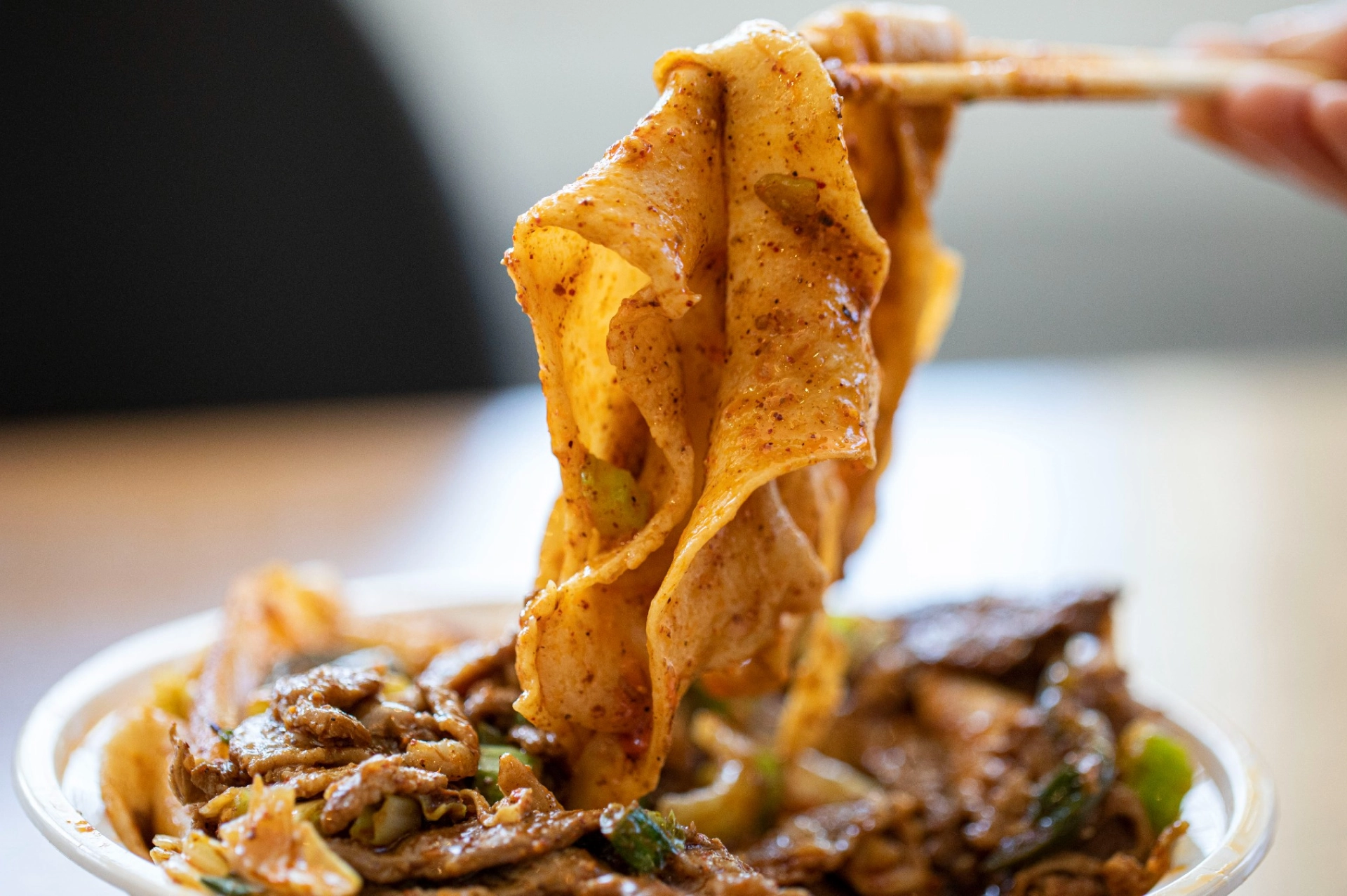
The famous one. Biangbiang noodles are hand-pulled ribbons, often 2–3 cm wide and a metre or more long, slapped against the counter until they stretch — the "biang" is said to be the sound they make. They're served in a bowl with chilli flakes, garlic and spring onion, then doused in sizzling hot oil at the table.
The character for "biang" is one of the most complex in Chinese, with around 58–62 strokes depending on the version, and it isn't in most computer fonts. Many noodle shops paint it huge on their walls as a dare.
Why so wide? The Guanzhong Plain is wheat country. For farm workers who needed maximum energy with minimum fuss, one thick noodle beat a hundred thin ones — it's filling, fast to make, and holds sauce.
Try it: Day 3's "Traditional Shaanxi Noodles" lunch before the Terracotta Warriors.
Flatbread Like a Pot Lid (鍋盔像鍋盖)
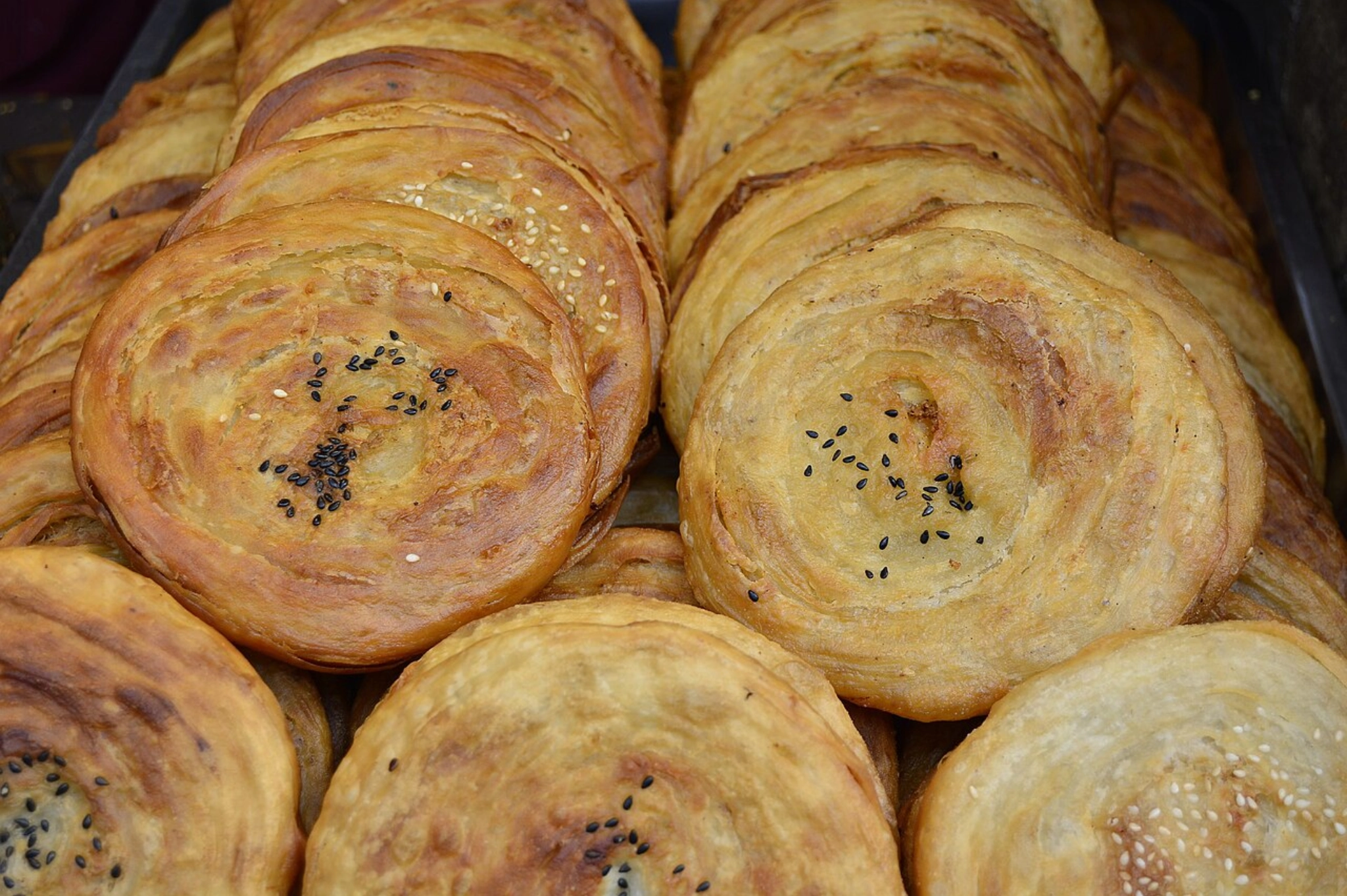
Guokui (鍋盔) is a dense, thick, round flatbread that can be the size of a car wheel's hubcap — traditionally baked in huge rounds and sold by the wedge. Local legend says it was the travel ration of Tang Dynasty soldiers: it's dry, heavy, keeps for days, and doesn't break in a saddlebag.
It's also the ancestor of a lot of Xi'an street food. The bread in a roujiamo — the "Chinese hamburger" — belongs to the same family of Shaanxi flatbreads.
Try it: Look for stalls with stacks of giant golden discs in the Muslim Quarter on Day 1.
Bowls You Can't Tell From Basins (碗盆難分開)
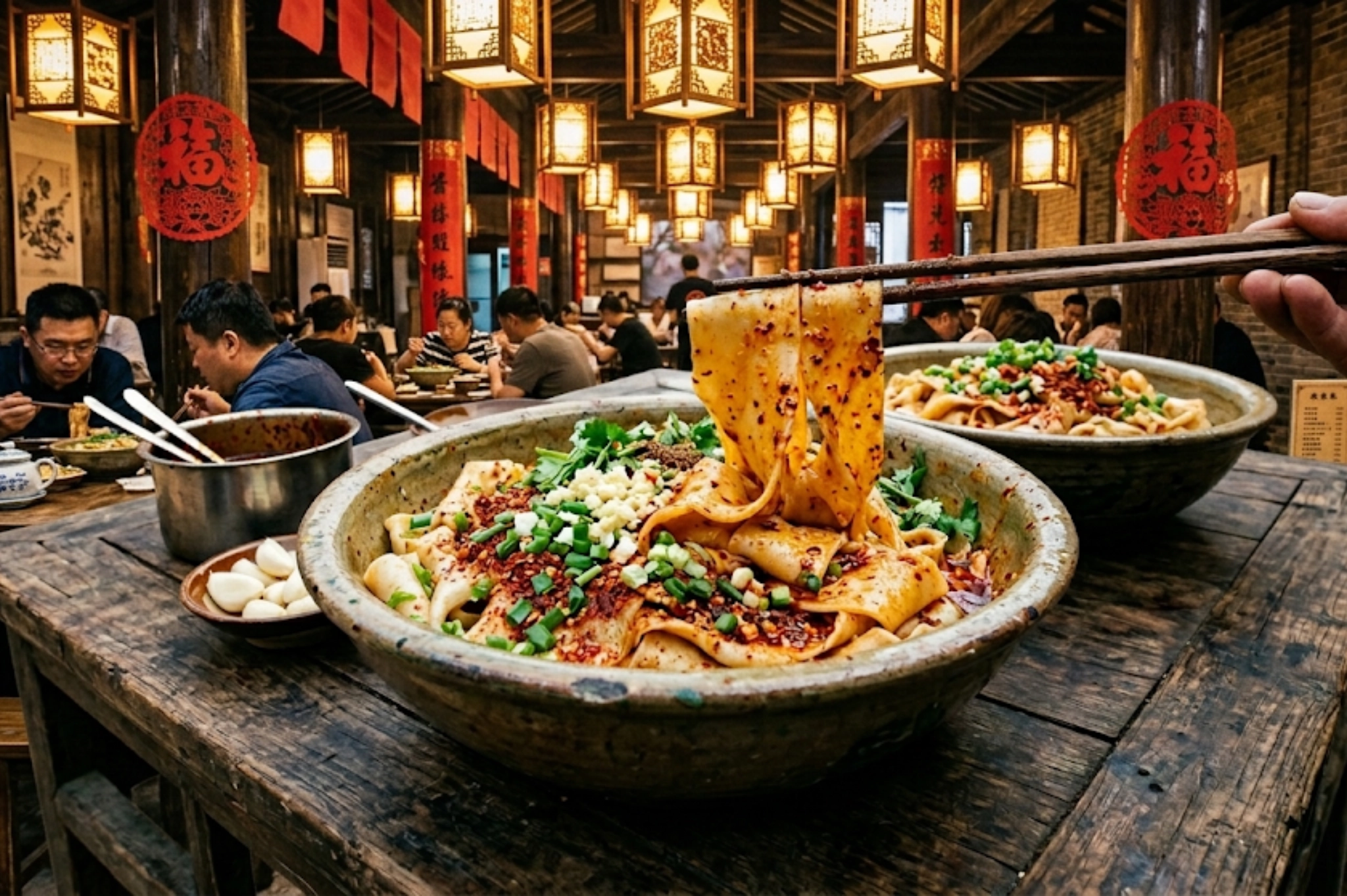
The first time a bowl of noodles lands in front of you in Xi'an, you may wonder if it's meant for four people. It isn't.
Shaanxi noodle bowls are enormous — wide, deep, and heavy. The practical reason: belt-wide noodles need space to be tossed with chilli, vinegar and oil, and a small bowl won't let you mix them properly. The cultural reason: Guanzhong people take pride in being generous, direct, and hungry. A small bowl looks stingy.
Travel tip: One bowl is lunch. If you're sharing plates with a group, order fewer mains than you think.
Chilli Is a Dish (辣子是道菜)
Sichuan and Hunan get all the fame for spice. Shaanxi people think that's cute.
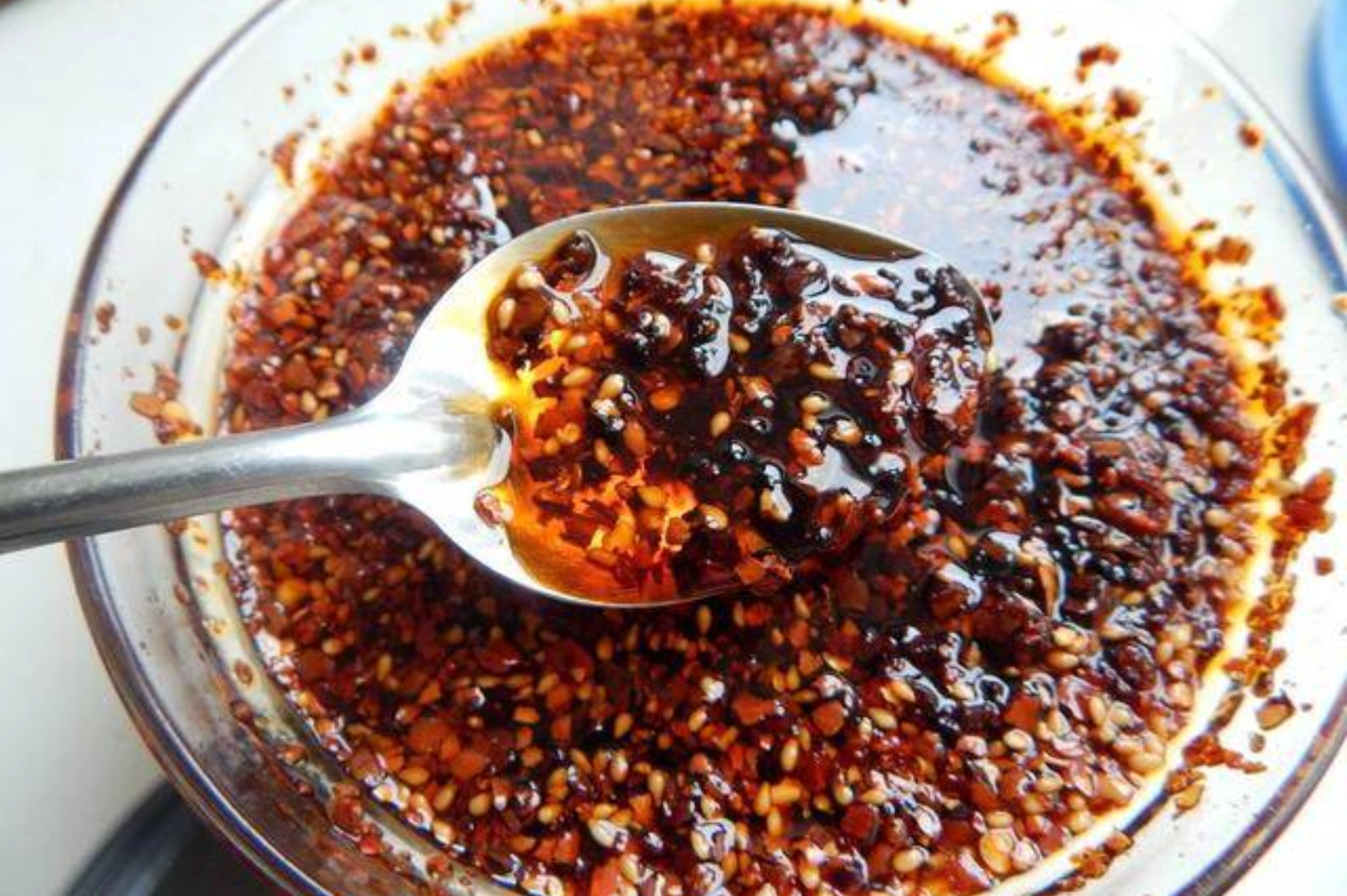
In Xi'an, youpo lazi (油潑辣子) — coarse chilli flakes with hot oil poured over them until they crackle — sits on nearly every table. It's more fragrant and toasty than face-melting, and locals will happily eat it spread on a piece of flatbread with nothing else. That's the joke: in Shaanxi, chilli isn't a seasoning, it's a course.
Survival phrases: bú là (不辣) = no spice, wēi là (微辣) = mild. You'll still want to try a little youpo chilli — it's the flavour of the city.
Soaked Bread Sold in Huge Bowls (泡饃大碗賣)
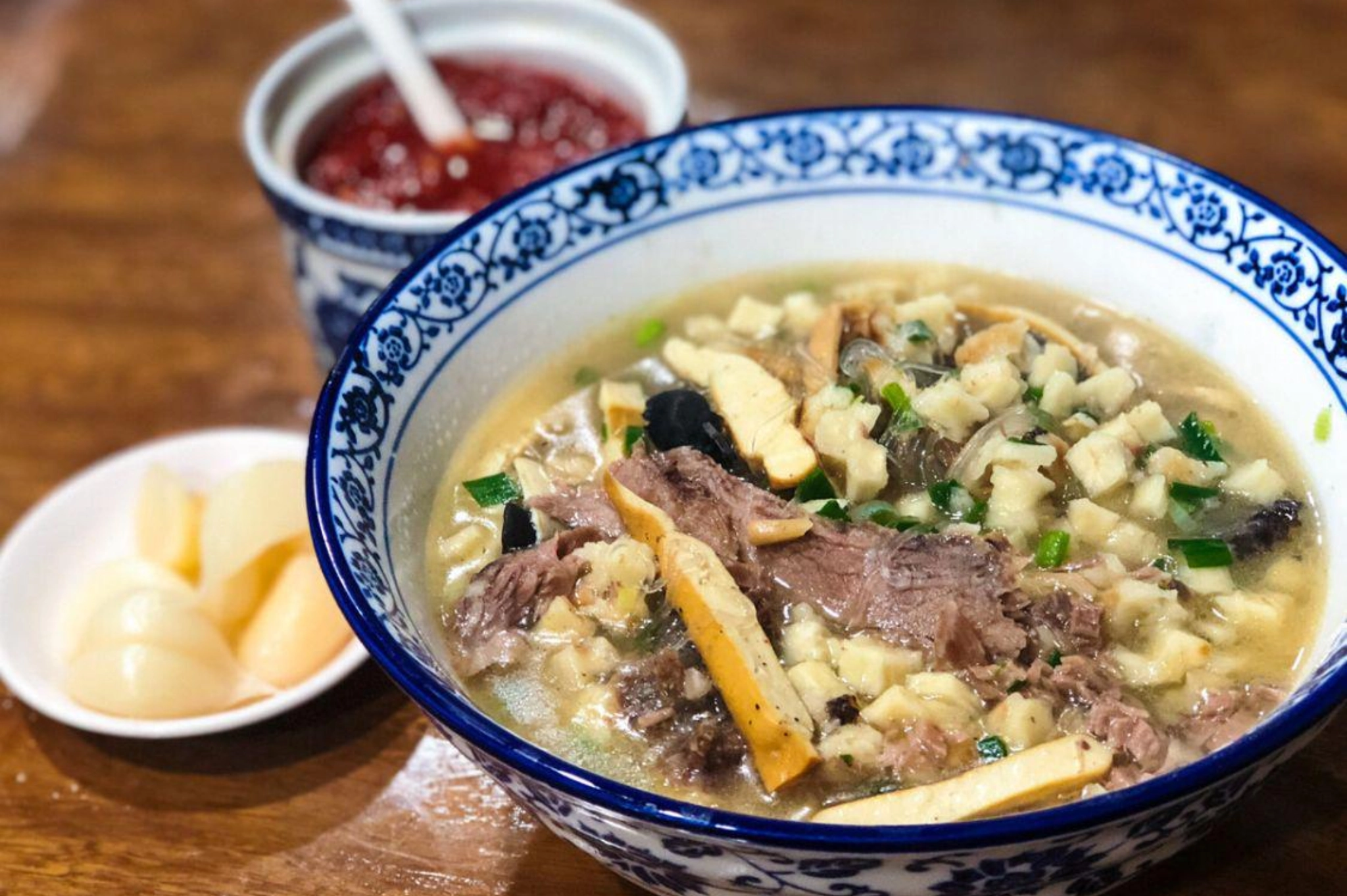
Yangrou paomo (羊肉泡饃) — mutton soup with crumbled bread — is Xi'an's soul food and a Muslim Quarter institution.
The ritual is the attraction: you're handed a round of unleavened bread and expected to tear it into pea-sized pieces yourself. The finer you tear, the better the soup absorbs. Locals can spend 15–20 minutes on this, chatting while they tear. The kitchen then ladles rich mutton broth over your bread and brings it back — in, yes, a basin-sized bowl — with pickled garlic and chilli paste on the side.
Pro move: Eat it from the edge inward, and bite a clove of sweet pickled garlic between mouthfuls to cut the richness.
Handkerchiefs on Heads (帕帕头上戴)
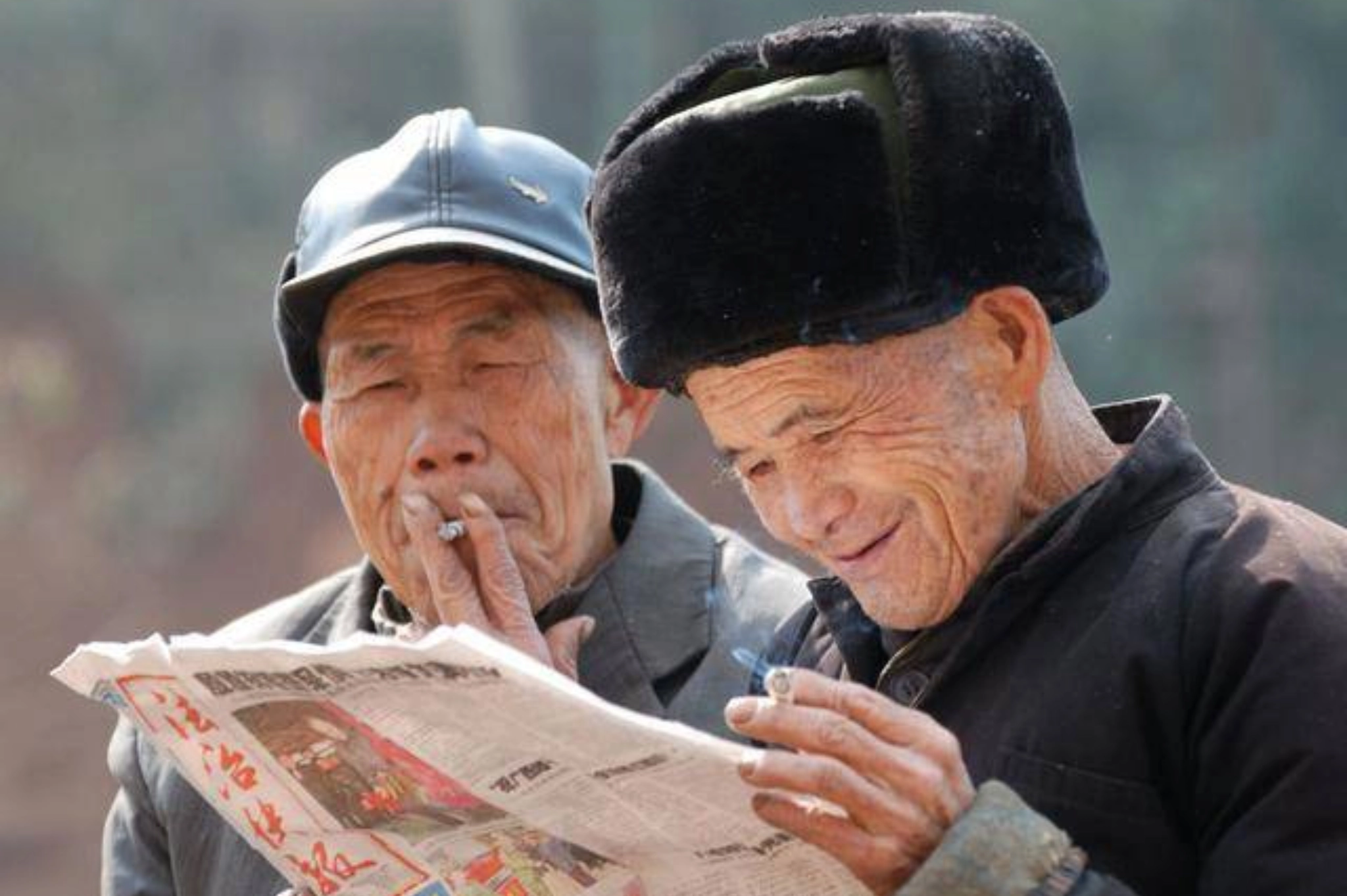
Drive out into the Guanzhong countryside — as we do on the way to Famen Temple on Day 5 — and you may still see older village women wearing a square of cloth tied over their hair.
It's pure practicality. The loess plain is dusty, windy and sunny. A kerchief kept hair clean in the fields, shaded the face, wiped sweat, and cost far less than a hat. Today it's fading, but it's become an icon of traditional Shaanxi rural life in folk art and on stage.
Houses With Half a Roof (房子半边盖)
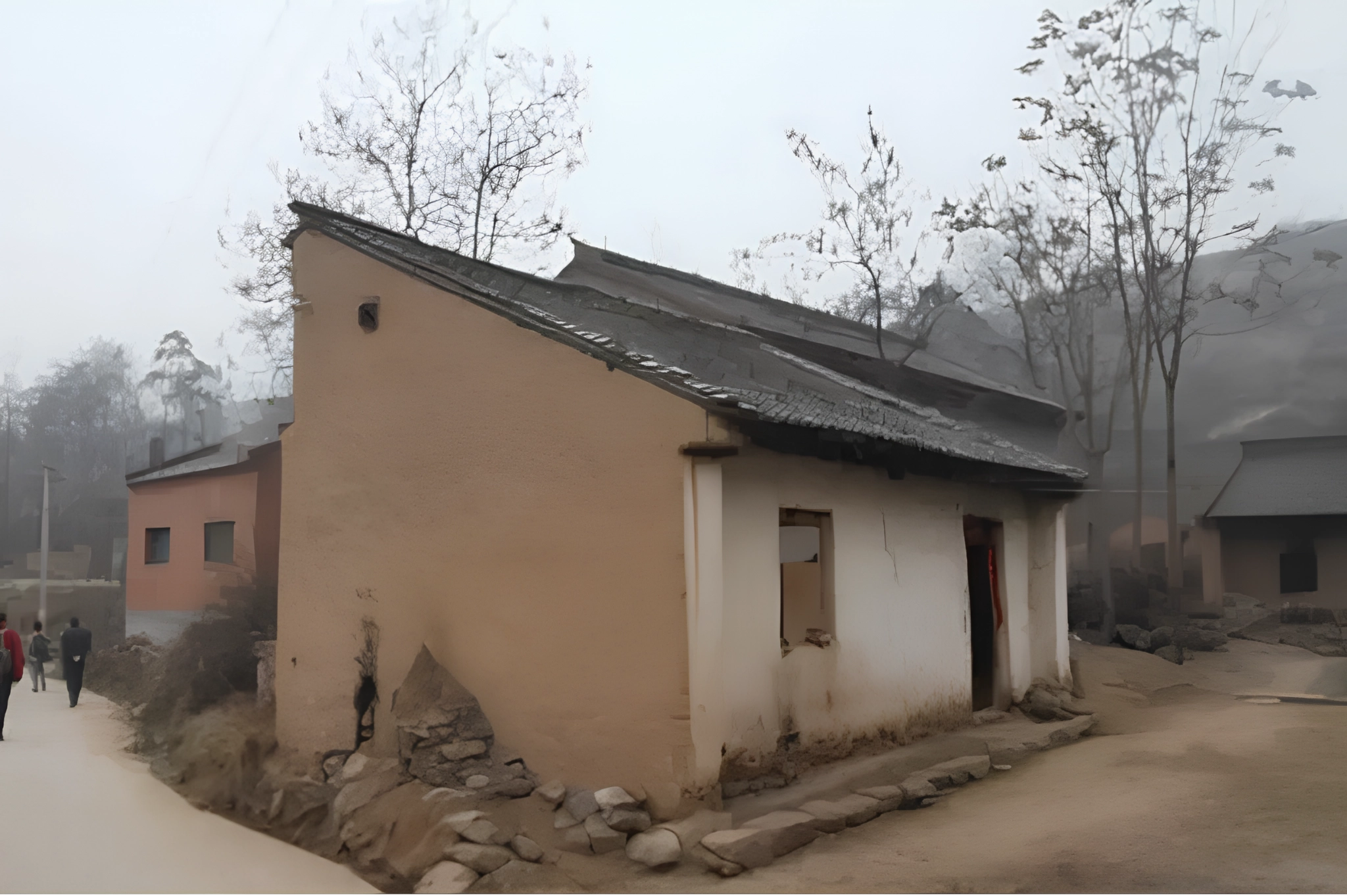
Look at traditional Guanzhong village houses and something feels off. The roof slopes in one direction only, as if someone sliced a normal house down the middle.
These "half-side houses" have practical explanations that locals still argue about:
- Cheaper and faster to build — one wall, one slope, fewer beams, perfect for narrow courtyard plots.
- Rainwater harvesting — in a dry region, a single slope channels all rainwater into your own courtyard. The local saying: "fertile water doesn't flow into outsiders' fields" (肥水不流外人田).
- Security and wind — a high, windowless back wall faces the street, keeping out wind, dust and thieves.
Spot it: From the coach on country roads around Lintong, Huayin and Fufeng.
Squatting Instead of Sitting (板凳不坐蹲起来)
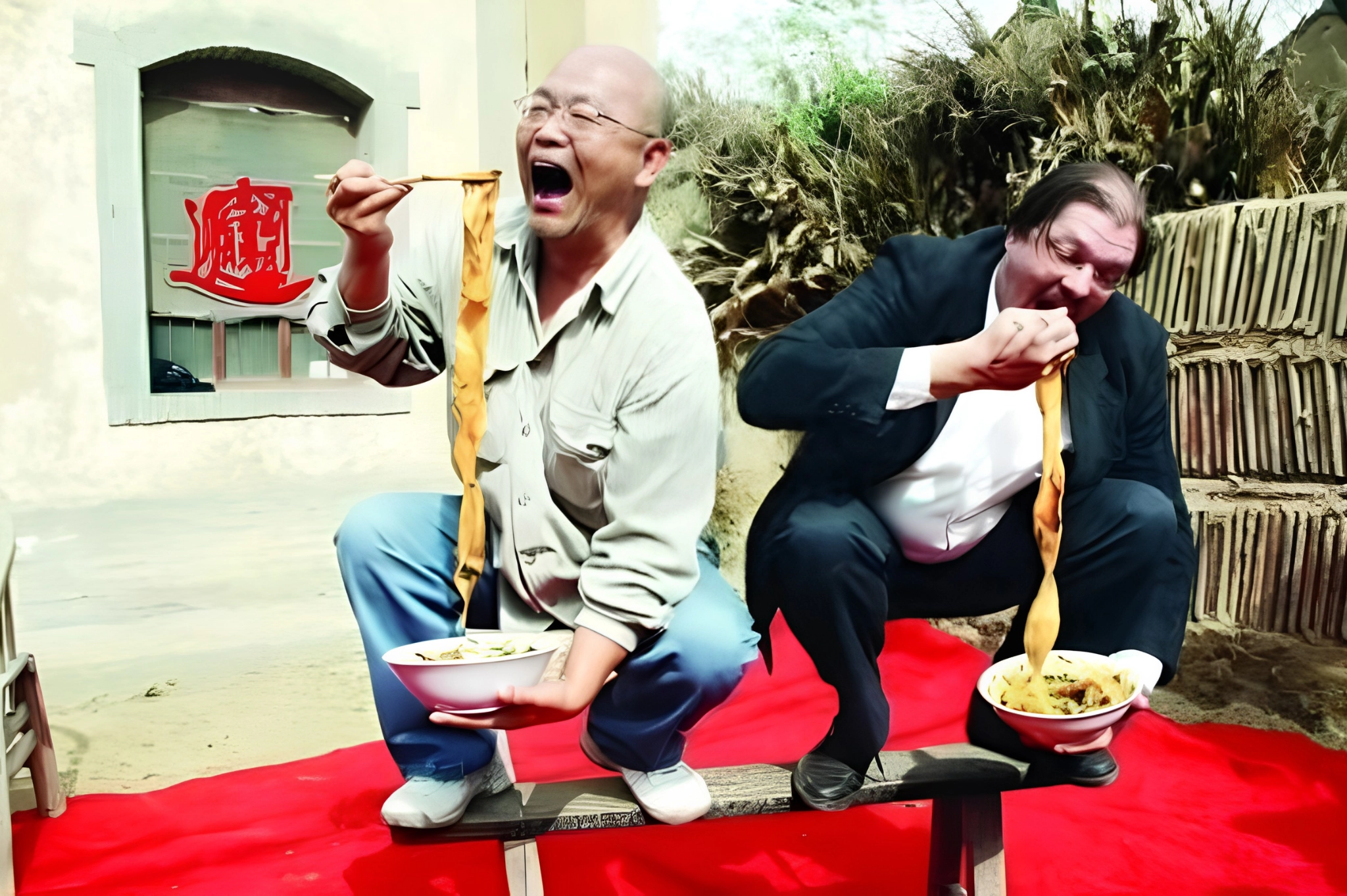
Walk past a noodle stall or bus stop in Xi'an and you'll see men comfortably squatting with a basin of noodles — sometimes right next to an empty stool, and sometimes squatting on top of the stool.
Locals say it's simply more comfortable after a day in the fields, and that squatting with a bowl became a way of life in Guanzhong villages, where men gathered along the lane at mealtimes, each crouched with his own giant bowl, chatting and eating. Some wags attribute it to ancient emperors. Nobody really knows.
Try it yourself at a street stall. Your thighs will explain within 30 seconds why this counts as an oddity.
Local Girls Don't Marry Out (姑娘不對外)
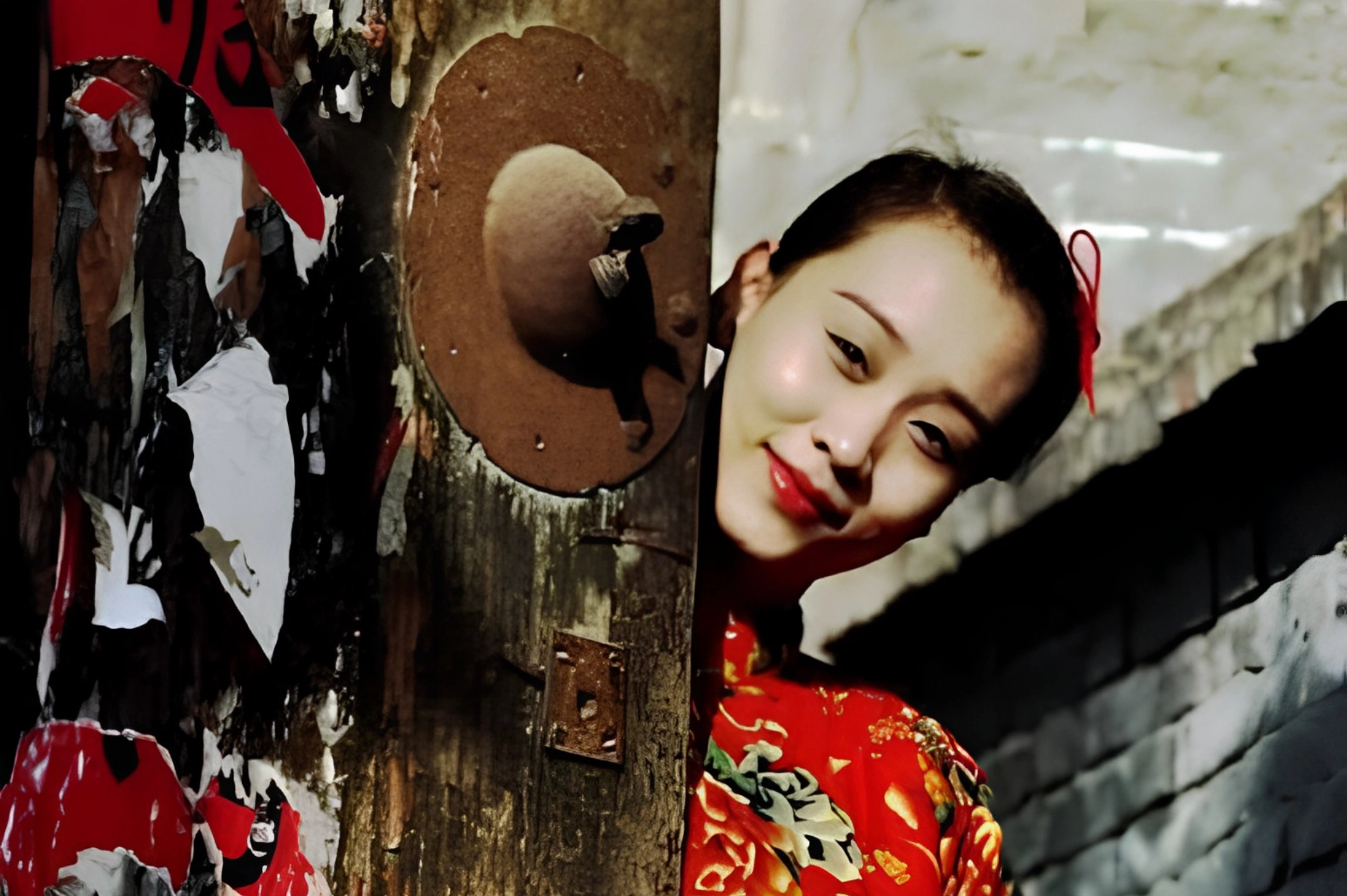
The only oddity you can't photograph. The old saying claims that Guanzhong women preferred to marry locally rather than move to other provinces. Historically, it reflected a region that was fertile, self-sufficient and — as the heart of 13 dynasties — convinced it was the centre of the world. Why leave?
Today it's a proud joke. Ask your Xi'an guide about it and you'll get a laugh and, probably, a story about their own family.
Qin Opera Isn't Sung — It's Yelled (秦腔不唱吼起来)
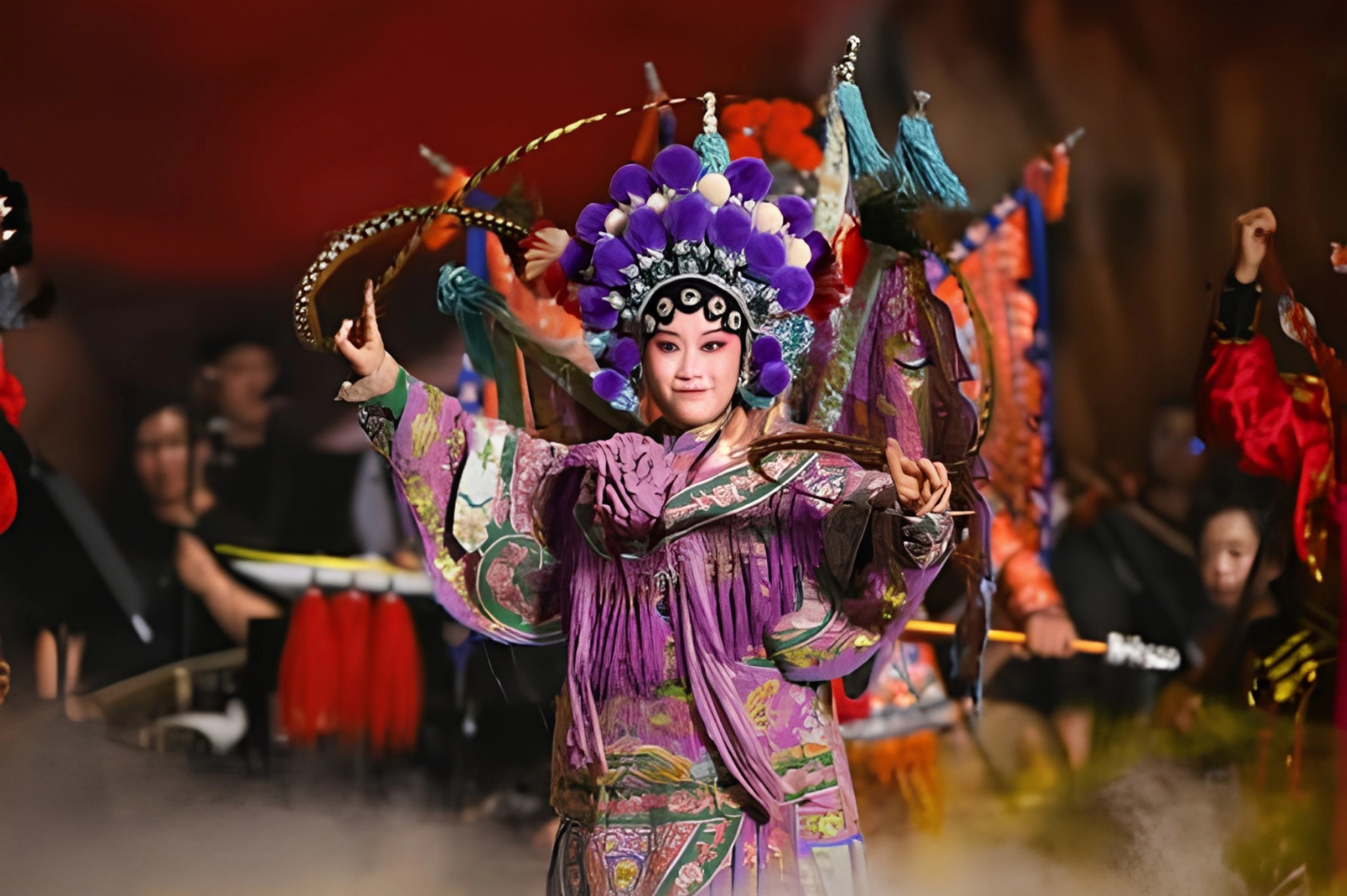
Qinqiang (秦腔), Shaanxi's native opera, is performed at a volume designed for outdoor village stages, with a cracking wooden clapper and a piercing fiddle. Chinese media call it "China's ancient rock music."
You'll likely hear amateur singers in the parks around the city wall in the morning, and live Qin opera during our farewell lunch at Chang'an Dapaidang. (Read our full guide to Qinqiang and Xi'an's 1912 Yisushe theatre for more.)
Why the Oddities Matter
Put the list together and a portrait emerges: people from a dry, windy wheat plain who value practicality over polish, eat big, speak bluntly, sing loud, stay close to home, and are extremely proud of having once been the capital of the world.
That's the Xi'an you'll meet. The Terracotta Warriors and Tang palaces are the headline, but a basin of belt noodles, eaten while squatting next to a man shouting opera, is the footnote you'll tell your friends about.