Beijing Free Alley Museums: 3 Top Cultural Spots to Explore the Root of All Hutongs
The Root of All Hutongs: Beijing's Free Alley Museums Are the Best Thing You Can Do With a Wednesday Morning
Every visitor to Beijing "does the hutongs." Usually this means twenty minutes in a pedicab, a photograph in front of a red door, and a bag of candied hawthorn. It is pleasant. It is also tourism that is more about the idea of a place rather than about experiencing it firsthand.
There is a better version, and it costs nothing. Beijing has quietly built a network of free, small, exceptionally well-made museums inside the hutongs themselves — in real courtyards, on real alleys, staffed by people who often grew up on the street outside. September, with its dry air and 25°C afternoons, is the single best month of the year to walk between them.
Here is the route, and the history that makes it worth walking.
Start with the alley that gave the others their name
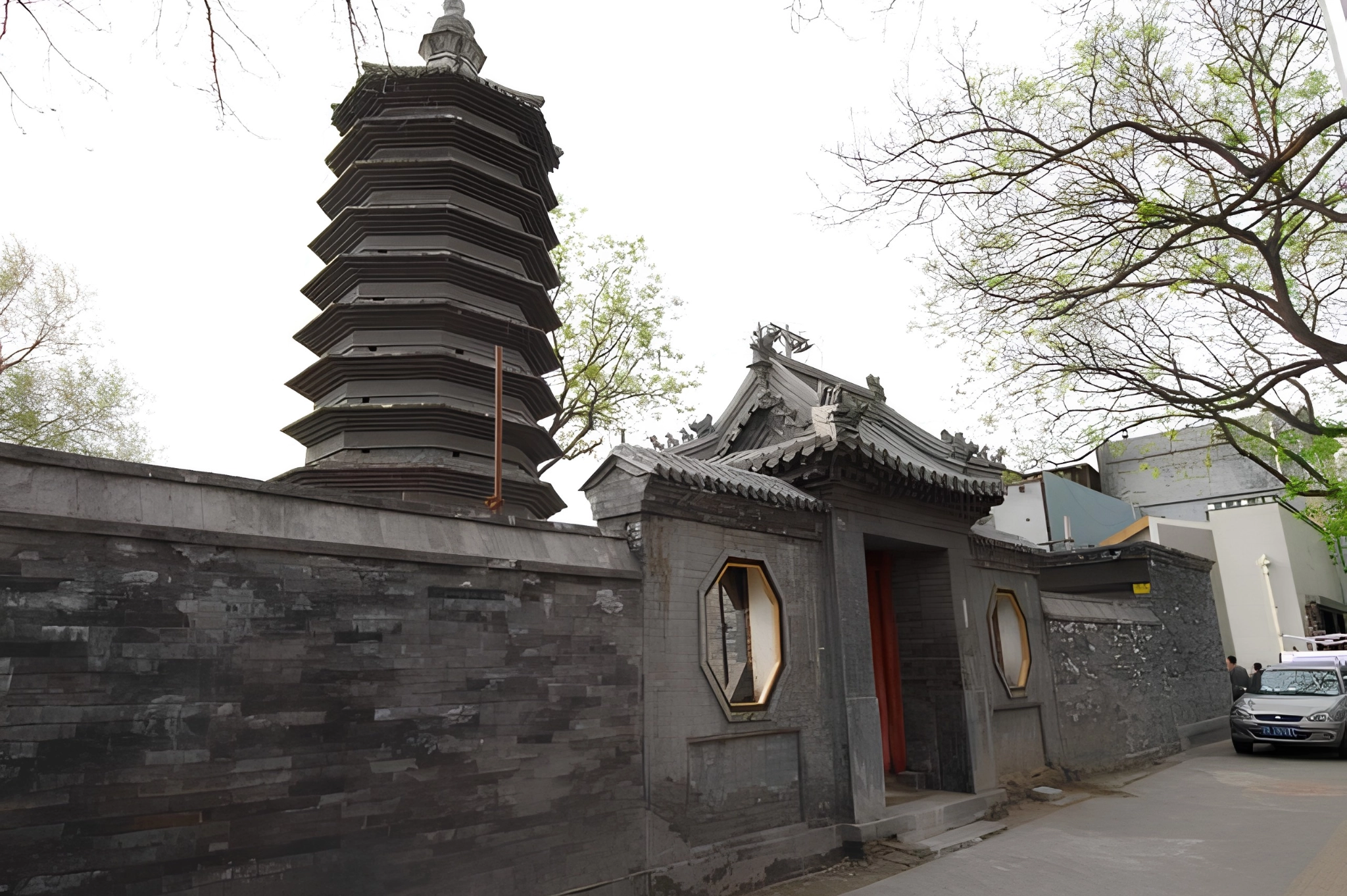
Go to Zhuanta Hutong (磚塔胡同) in Xicheng District, a short walk west of Xisi subway station.
It looks unremarkable. It is, by a reasonable argument, the most important alley in the city.
Zhuanta Hutong was laid out in the Yuan Dynasty (1271–1368), when Kublai Khan's planners drew Dadu — the grid that modern Beijing still sits on top of. It is the only hutong in the city that appears in the historical record continuously across the Yuan, the Ming, the Qing and the Republican era, under the same name, on the same line, for more than seven hundred years. Beijing has thousands of alleys. This one is the documented ancestor, which is why Beijingers call it "the root of the hutongs."
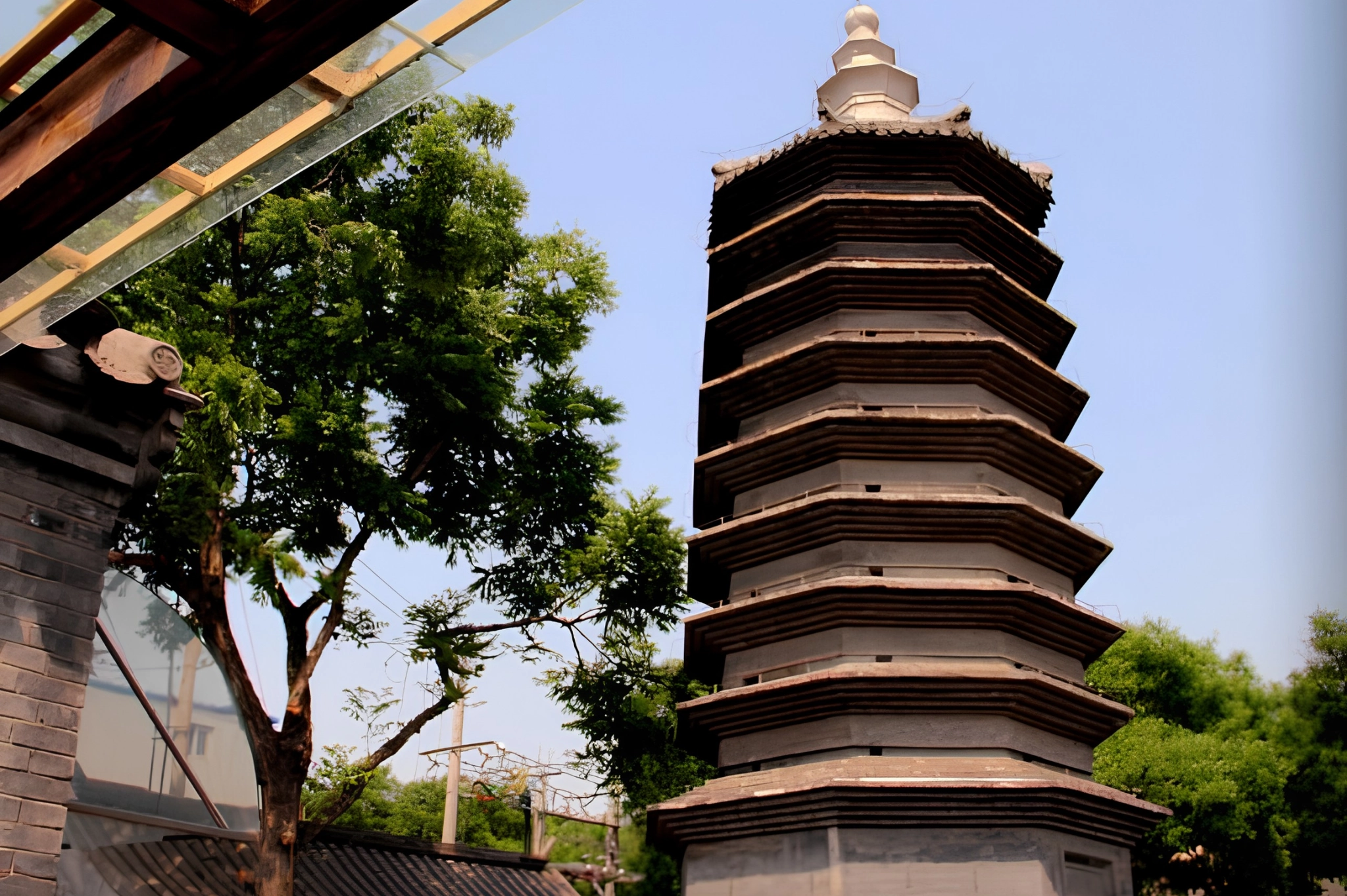
The name means "Brick Pagoda Alley," and the pagoda is still standing at the eastern end: the Wansong Laoren Pagoda (万松老人塔), the tomb-tower of a Buddhist monk who died in 1246 and who taught Yelü Chucai, the Khitan statesman who advised Genghis and Ögedei Khan. The original Yuan structure was octagonal with seven tiers of eaves; it was rebuilt and raised to nine tiers in 1753 under the Qianlong emperor, and rebuilt again in 1927. Today it stands about 16 metres high, wedged between shops, an 800-year-old grave marker that the modern city simply built around rather than through.
For most of the twentieth century the pagoda was invisible — sealed inside a courtyard, then a shop. It was only opened up and turned into a small public space in the 2010s. There is now a tiny bookshop, Zhengyang Bookstore, at its base, specialising in books about Beijing itself. It is one of the few bookshops on earth with a thirteenth-century monk buried in the garden.
New for this year: No. 33 Zhuanta Hutong has become the "Root of Hutong" Cultural Experience Center (胡同之根文化体验馆), created through Beijing's voluntary-lease-surrender urban renewal programme — residents who wanted to leave the cramped courtyards were bought out, and the freed space went back to public use rather than to developers. The rooftop terrace has become a genuine local hotspot: you stand above a sea of grey tile roofs with the towers of Financial Street rising directly behind them. It is the clearest single image of what Beijing actually is — a Yuan Dynasty street plan with a twenty-first-century skyline bolted to the horizon.
Free. No booking. Go before 10am if you want the roof to yourself.
Then cross town to the museum that started the trend
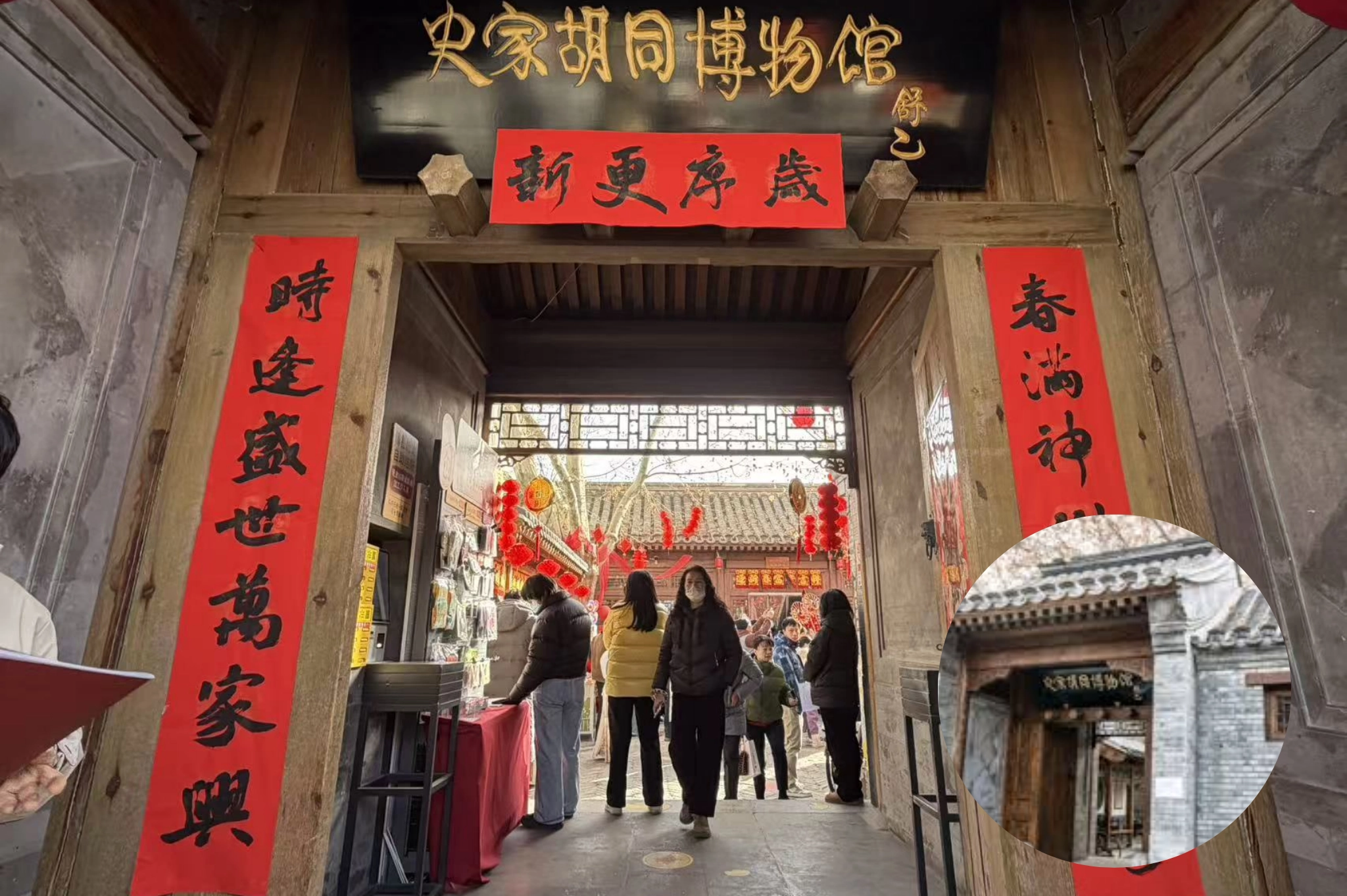
Shijia Hutong Museum (史家胡同博物舘), No. 24 Shijia Hutong, Dongcheng District. Nearest subway: Dengshikou or Chaoyangmen.
Opened on 18 October 2013, this was Beijing's first museum dedicated to hutong life — and it remains the best. It occupies a genuine two-courtyard siheyuan that was once the home of Ling Shuhua (1900–1990), one of the most interesting writers of Republican China: a painter and short-story author, friend of Virginia Woolf, correspondent of the Bloomsbury Group, and a woman whose Beijing salon hosted Tagore during his 1924 visit. Her father was a Qing official; the courtyard was part of her dowry. She left China in 1947 and her daughter later returned the property for public use.
The museum is a joint project between the Prince's Charities Foundation China and the local Chaoyangmen subdistrict government — one of the more successful examples of foreign heritage money working inside a Chinese neighbourhood. There are eight exhibition halls around two courtyards, and admission is free.
What makes it worth an hour rather than ten minutes:
The scale model. A large diorama of Shijia Hutong as it stood in the 1950s, house by house, with the residents named. Shijia was an unusually distinguished street — at various times it housed the founder of a girls' school, senior diplomats, a film studio, and the Beijing People's Art Theatre's first rehearsal rooms.
The reconstructed 1950s–1980s rooms. Complete interiors: the wireless, the enamel washbasins, the thermos flasks with their peony decals, the honeycomb coal briquettes. If you have ever wondered what a hutong household actually contained, this is the answer, and it is startlingly recent.
The sound archive. This is the part people remember. The museum recorded and preserved the vanished soundscape of old Beijing — the distinct musical cries of the knife-sharpener, the rag-and-bone man, the sesame-cake seller, the barber's tuning fork, pigeons with whistles tied to their tail feathers wheeling over the roofs, cicadas, the winter wind. You sit in a darkened room and press buttons. Old men frequently stand in there listening for a long time without saying anything.
The courtyard itself. Persimmon and jujube trees, an old-style screen wall, and in September the light comes in at exactly the angle the architecture was designed for.
Why the hutong museums exist at all
A little context makes the visit land harder.
Beijing had roughly 3,000 hutongs in the 1950s. By the early 2000s, after decades of demolition for roads, ring roads, subway lines and commercial blocks, well under half survived in recognisable form. The alleys that remain in the old city core are now protected — but "protected" arrived late, and the museums are partly an act of documentation by people who watched the rest go.
That is why they feel different from state museums. The Shijia collection was substantially donated by residents: their photographs, their ration coupons, their wedding certificates, their furniture. The "Root of Hutong" centre exists because the city decided that when residents move out of an overcrowded courtyard, the space should become something the neighbourhood can use.
It is also why these are places where you will see actual Beijingers, often elderly, often pointing at things and telling their grandchildren stories. Very few tourist sites in this city offer that.
Building the walk: a half-day route
A comfortable half-day, roughly 4–5 km of walking plus one subway hop.
8:30 — Zhuanta Hutong and the Wansong Pagoda. Bookshop, pagoda, then the Root of Hutong Center rooftop. 9:30 — Walk east along Xisi Nandajie. Optional detour: the Xisi Brick Pagoda area's old shopfronts, several with preserved Republican-era facades. 10:15 — Subway from Xisi to Dengshikou (Line 4 to Line 5, one change). 10:45 — Shijia Hutong Museum. Allow a full hour. 11:45 — Walk the length of Shijia Hutong itself, then north into the Dongsi grid — Dongsi Sitiao through Batiao are among the best-preserved alley blocks in Beijing, with Ming and Qing gateposts, carved lintels, and the stone mounting blocks still in place. 12:30 — Lunch. Dongsi Minfu for home-style Beijing dishes, or the Longfusi block for something newer.
Optional add-on if you want a third museum: the Dongsi Hutong Museum (东四胡同博物馆) at No. 77 Dongsi Sitiao, also free, also in a restored courtyard, with a superb collection of architectural fragments — door piers, roof charms, brick carvings — arranged so you can finally tell what all that decoration on the gates actually means.
Practical notes
All three museums are free. Bring your passport; some require a scan or registration at the door. Opening hours are typically 09:00–17:00, last entry 16:30, closed Mondays. Check on the day — small municipal venues occasionally close for events. Booking: Shijia and Dongsi generally accept walk-ins, but reservations via the WeChat mini-programme are safer at weekends. Respect the residents. These are living streets. People are hanging laundry, cooking, playing chess. Do not photograph through open doorways or into courtyards that are not museums. Public toilets in hutongs are frequent, marked, and usually do not supply paper. Carry tissues. Weather: September in Beijing averages highs around 26°C and lows around 15°C, with the year's lowest humidity and best visibility. Mornings can be genuinely cool — bring a layer.
The one thing to take away
The Forbidden City tells you how China's emperors wanted to be remembered. The hutong museums tell you how ordinary Beijingers actually lived — in courtyards subdivided among six families, with a shared tap, a coal stove, a persimmon tree and the sound of a knife-sharpener coming down the alley at eight in the morning.
Both are true. Only one of them is free.