There is a particular sound that a hot oolong makes when you pour it from a clay pot into a thin porcelain cup on a wooden balcony in Jiufen on a wet afternoon. It is a small sound. It is almost nothing. But because the rest of the soundscape has thinned to the drip of water off red lanterns, the soft scrape of slippers on tile, and the slow huff of the wind moving up the mountain off the Pacific, that sound becomes the loudest thing in the room.
This is the experience that an estimated five million people a year now climb a hillside in northeastern Taiwan to have. They do not climb it for the tea. They climb it because, sometime around 2002, the internet became convinced that Jiufen was the town that inspired Spirited Away — and because the town, charmingly, decided to lean into it.
The truth is more interesting than the myth, and the timing is better than the guidebooks let on. Mid-May to mid-June is meiyu, plum-rain season, when warm air off the South China Sea collides with the still-cool mountain ridges of northern Taiwan and parks a stationary front over the island for weeks. The forecast becomes a polite fiction. The umbrellas come out. The tour buses thin. And Jiufen — a town built vertically into a cliff above the sea, festooned in red lanterns, threaded with stone staircases — becomes the version of itself that the photos are trying to capture and almost always fail.
The mist does the work no filter can fake.
—
Gold first, ghosts later, lanterns last
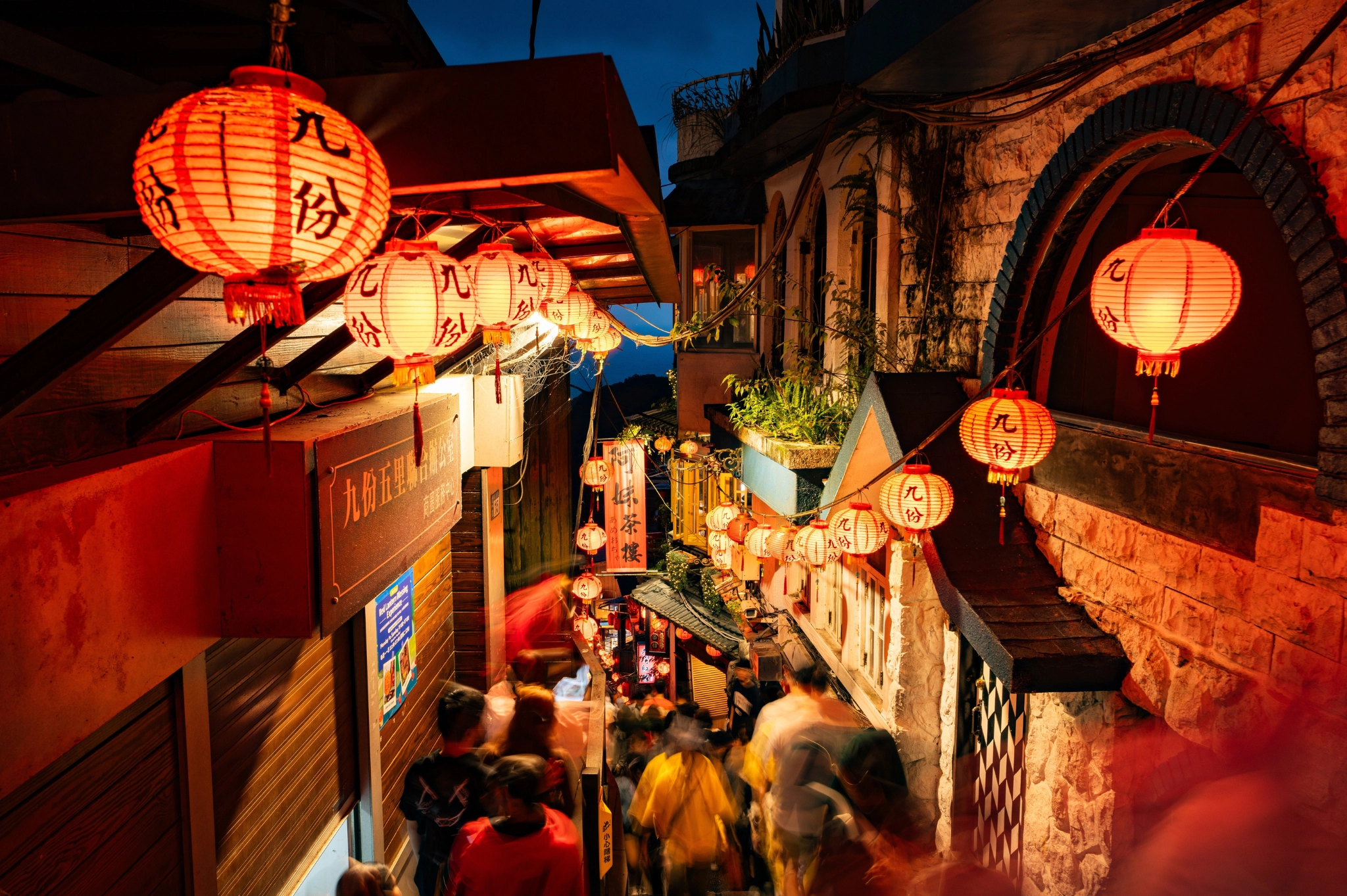
Jiufen's name (九份, "nine portions") is older than its fame and predates the gold by about a hundred years. The standard explanation is that nine families once lived on this stretch of coast and that every shipment of supplies arriving by sea was divided into nine equal shares — nine portions, hence the name.
The town was an unremarkable Hakka fishing and farming village until 1893, when a railway worker washing rice in the Keelung River downstream noticed gold flakes in his pan. By the following year the entire hillside above Ruifang was a Klondike. By 1903 the Japanese colonial administration had taken over the gold rights, professionalised the operation, and turned the dirt track up the cliff into a proper road. Within a decade Jiufen had electricity, a cinema, a telegraph office, two pharmacies, and the highest density of brothels per square kilometre in colonial Taiwan.
The gold ran out in stages. By the 1950s the easy seams were gone. The Japanese had left after the war. The mines limped along under the Republic of China government until 1971, when the Taiwan Metal Mining Corporation officially shut Jiufen down and the town began a long, slow emptying. By the early 1980s Jiufen was a ghost — wooden houses collapsing into the slope, cats outnumbering people, the cinema boarded up, mining shafts sealed and forgotten.
Two things saved it. The first was a Taiwanese film called A City of Sadness (悲情城市), directed by Hou Hsiao-hsien, which used Jiufen's crumbling streets in 1989 as the backdrop for a wrenching story about the 228 Incident, a tragic chapter in Taiwan's modern history. The film won the Golden Lion at Venice. Suddenly Taiwanese tourists, who had not climbed up to Jiufen in thirty years, wanted to see the staircase where Tony Leung sat. The second was Hayao Miyazaki's Spirited Away, released in 2001 — although here, the legend needs trimming.
—
The Miyazaki question, settled
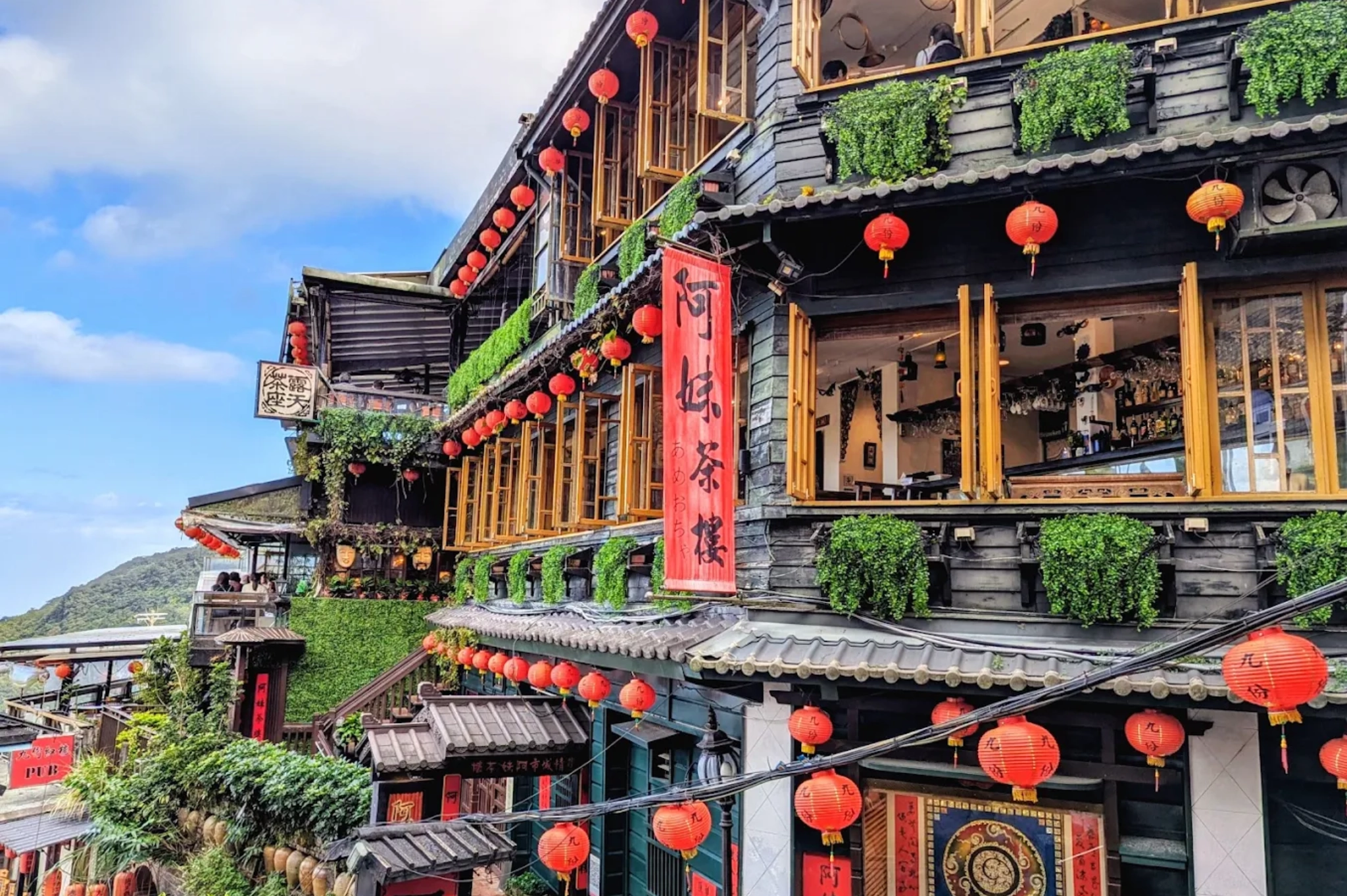
Every English-language guidebook on Jiufen will tell you that the A-Mei Tea House, the red-lantern-draped wooden structure at the top of Shuqi Road that everyone photographs, inspired the bathhouse in the Studio Ghibli's beloved animated filmSpirited Away. Miyazaki has been asked this directly, on the record, more than once, and his answer has been consistent: he did not visit Jiufen before making the film and the resemblance is coincidence. His art director, Yōji Takeshige, has been similarly clear. The bathhouse design draws on the Edo-Tokyo Open Air Architectural Museum and on the old hot-spring inns of Japan, not on a Taiwanese mountain town.
That has not stopped Jiufen from leaning into the story, and there is something funny and very Taiwanese about how thoroughly the town has embraced this connection. The glowing red lanterns of A-Mei Tea House are real, the steep stone staircases are real, and the mist that often drifts through the mountain streets creates an atmosphere that feels almost magical. Whether or not Jiufen inspired the film, its enchanting scenery continues to captivate travelers from around the world, many of whom come to experience the dreamlike setting for themselves over a cup of tea.
"If they leave happy, who am I to fight Studio Ghibli?"
— the shopkeeper at the Soga Soga mochi stand, who stopped correcting visitors years ago
—
What the visit actually feels like in the rain
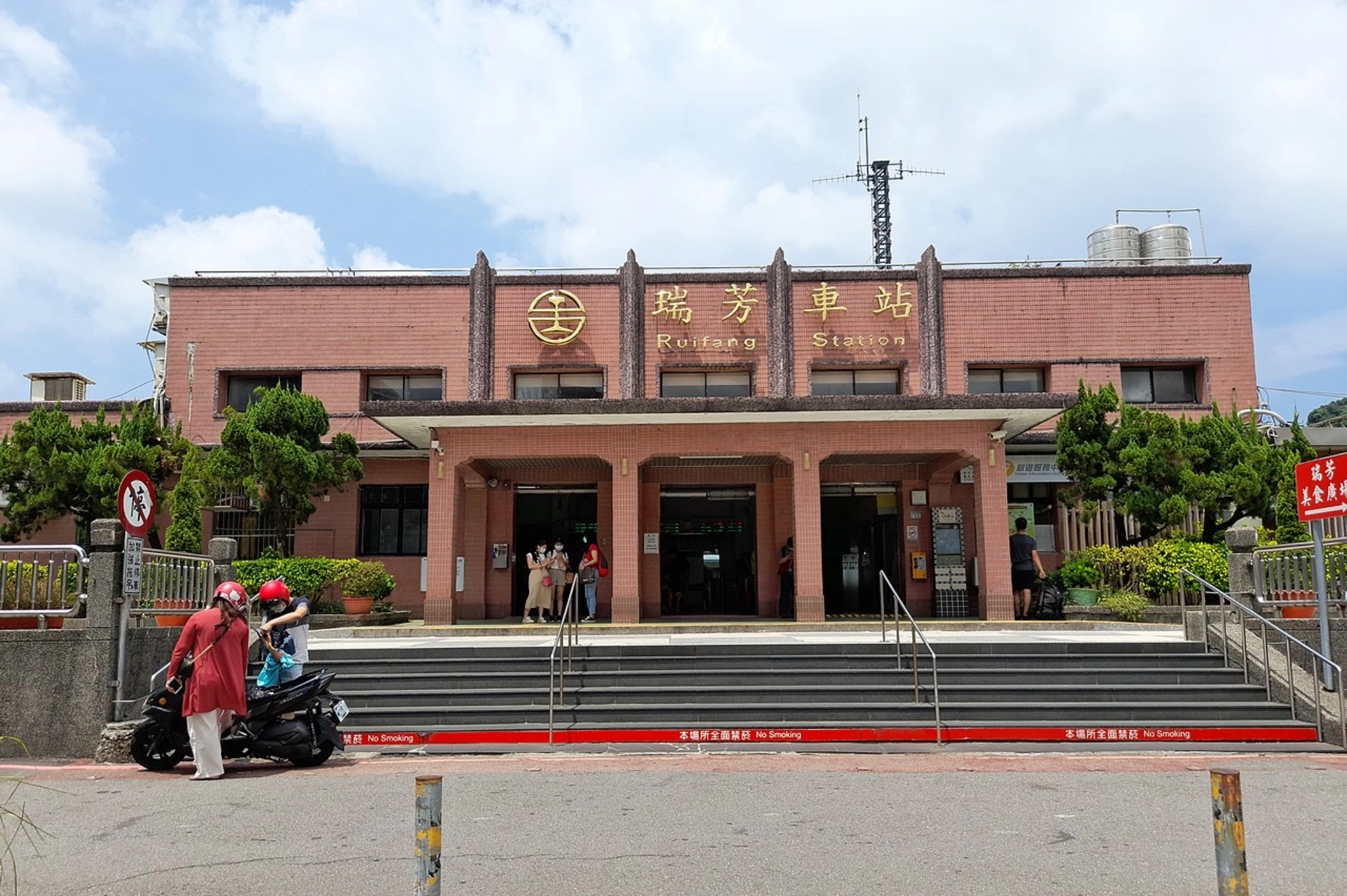
The standard approach is to take the TRA train from Taipei Main Station to Ruifang (about forty minutes, NT$76 in the regular cabin, no reservation needed), then catch the 788 bus or a taxi the final fifteen minutes up the mountain. The road climbs sharply, switching back twice, and the first thing you notice on a rainy day is that the clouds are below you. The Pacific spreads out underneath like a sheet of crumpled grey silk; Keelung Mountain rises behind in two muscular lumps; and the rooftops of Jiufen tumble down the slope in faded reds and blackened tile.
Most tour groups disembark at the Jiufen Old Street stop and head straight for Jishan Street (基山街), the covered market lane that has become the town's commercial spine. This is the loudest, busiest, most relentlessly photographed part of Jiufen, and on a clear weekend it is essentially a slow-moving river of phones. In the rain, with the umbrellas open and the awning catching the drops, the same lane becomes a tunnel of warm light and food smells: the yu yuan (taro-and-sweet-potato ball soup) at Ah Gan Yi (阿柑姨芋圓), simmering since 1972 in a kitchen with a sea view; the cao zai guo (草仔粿), pounded mugwort dumplings stuffed with savoury radish and dried shrimp; the hong zao rou yuan (red-yeast pork meatballs); the smoke-grilled blood-sausage skewers; and, increasingly, the very Instagrammable peanut-and-cilantro ice cream rolls — a single block of taro ice cream shaved with peanut brittle and wrapped in a popiah skin with a startling handful of fresh coriander on top. Eat it; the coriander is the point.
The other main artery, perpendicular to Jishan and far more atmospheric, is Shuqi Road (豎崎路), the vertical stone staircase that descends from the schoolyard at the top of the town past three of the most photographed tea houses in Taiwan. A-Mei Tea House is the wooden, lantern-hung one at the bend. Hai Yue Lou (海悅樓) sits directly across with a glassed-in balcony and a sweeping ocean view. Sheng Ping Theatre (昇平戲院), the restored 1934 cinema where A City of Sadness was set, is two flights down. In the rain, with the lanterns lit at four in the afternoon because the sky has already turned dark, this staircase is the single most photogenic stretch of streetscape in northern Taiwan.
—
How to drink tea in a tea house without being a tourist about it
There is a way to sit down at A-Mei or Hai Yue Lou that involves more than ordering a pot, and it is worth learning, because the staff will quietly walk you through it if you let them.
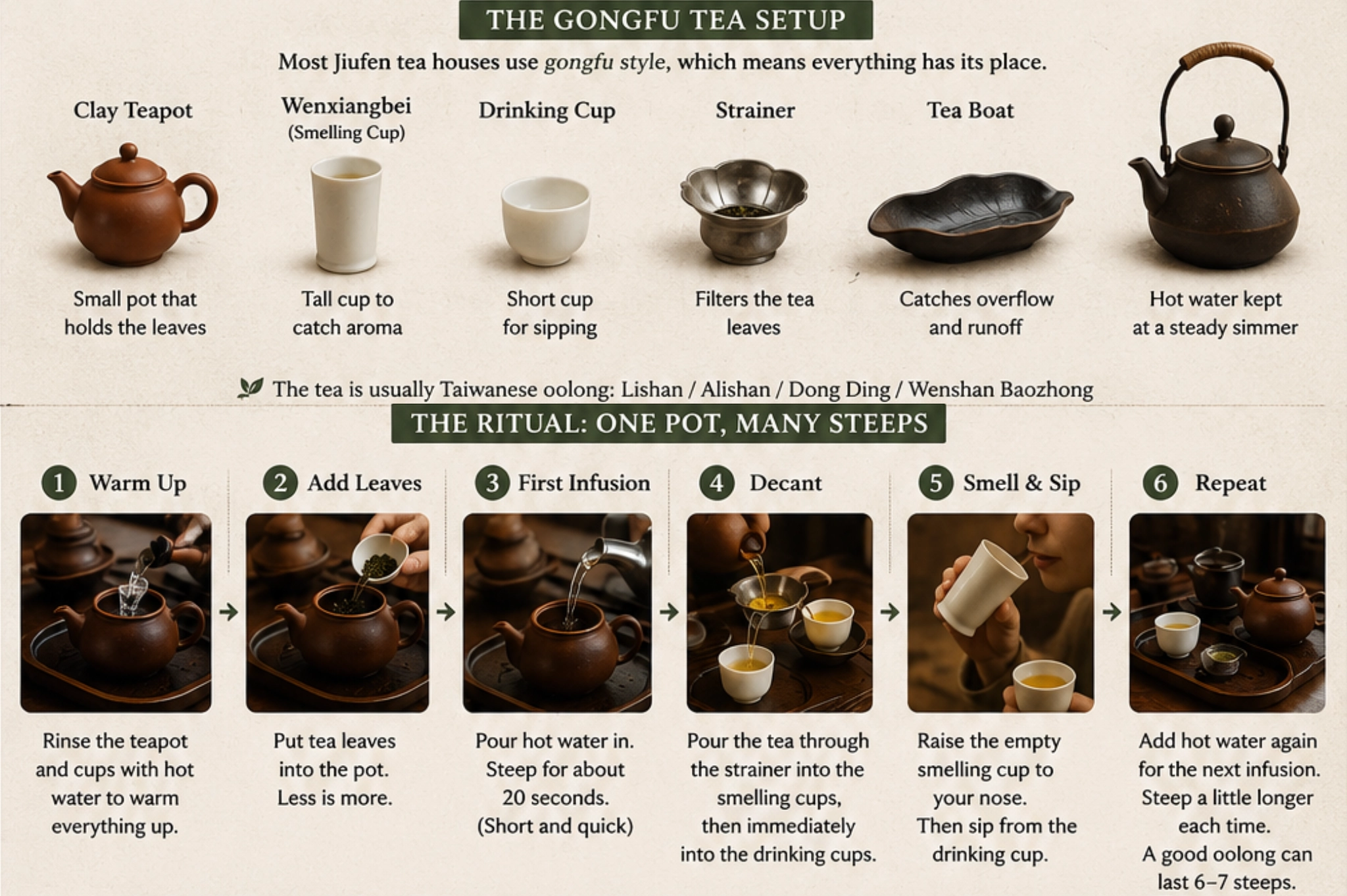
The setup at most Jiufen tea houses is gongfu style: a small clay teapot, a tall wenxiangbei (smelling cup), a short drinking cup, a strainer, a tea boat for the runoff, and a kettle kept at a steady simmer. The tea will be a Taiwanese oolong — usually a high-mountain Lishan or Alishan, sometimes a roasted Dong Ding, often a Wenshan baozhong if you ask for something lighter. Expect to pay NT$300 to NT$600 per person for the tea itself, plus a small tea-snack platter (usually pumpkin seeds, dried plum, and a savoury rice cracker) that is included.
The ritual is this. The first infusion is short — maybe twenty seconds — and is poured straight into the smelling cups, then immediately decanted into the drinking cups. The smelling cup, now empty, is what you raise to your nose; the aroma trapped in the ceramic is the tea's clearest signature. The drinking cup is what you sip. Each subsequent infusion can run a little longer; a good oolong will give you six or seven steeps before it tires. The pot is yours for as long as you want it. Nobody will rush you. The view of the ocean disappearing into the rain is, in fact, the point.
A practical tip: ask for the qingxin (清心) high-mountain oolong if it is on the menu. It is the one varietal that holds its character through every steep and pairs cleanly with the slightly sweet, slightly savoury snacks.
—
What everyone misses
Three spots to combine to your Jiufen visit.
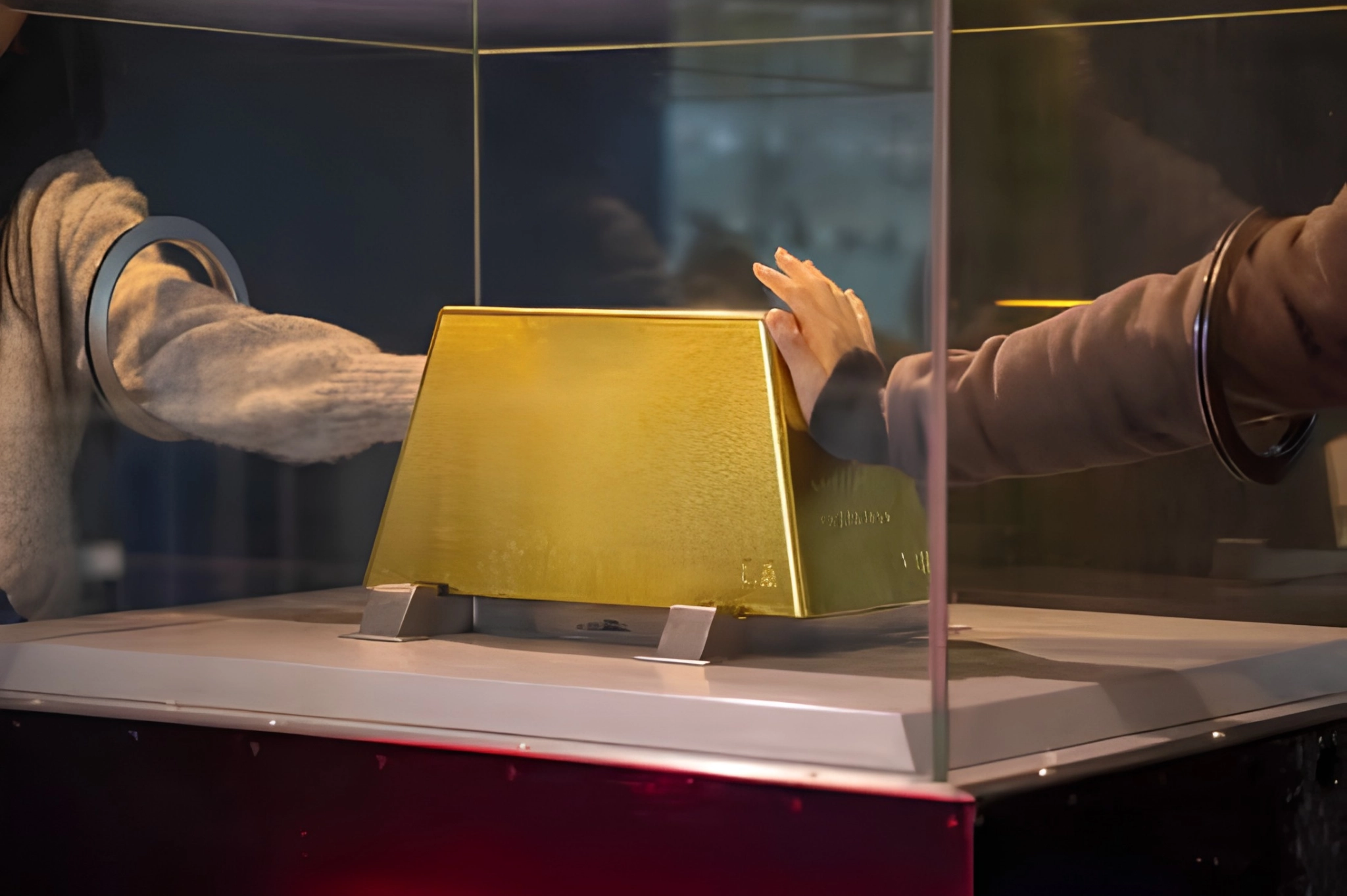
The Gold Museum, Jinguashi (黃金博物園區) — one ridge over, free shuttle every twenty minutes. Built on the Japanese-era mining complex: a walk-through replica extraction tunnel, the restored crown-prince guesthouse where Hirohito was meant to stay (he never came), and Asia's largest publicly displayed gold ingot — 220kg, which you may touch through a small window. Entry NT$80. Worth three hours; almost nobody gives it three hours.
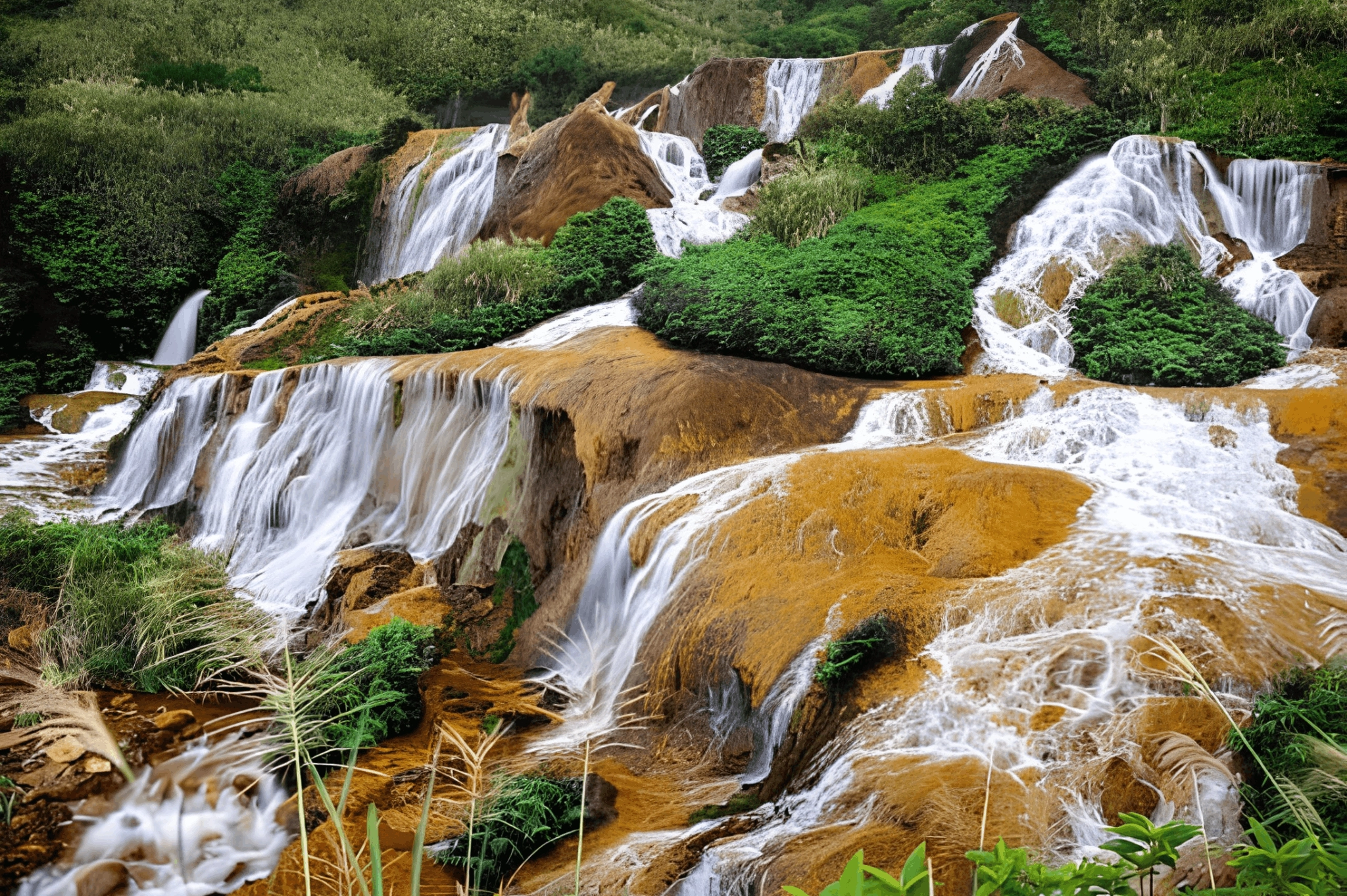
The Golden Waterfall (黃金瀑布) — five minutes downhill. The water runs over a mineral seam so heavy in iron and copper that the rock has turned burnt-orange and the water looks gilded. On a misty day the contrast is otherworldly.
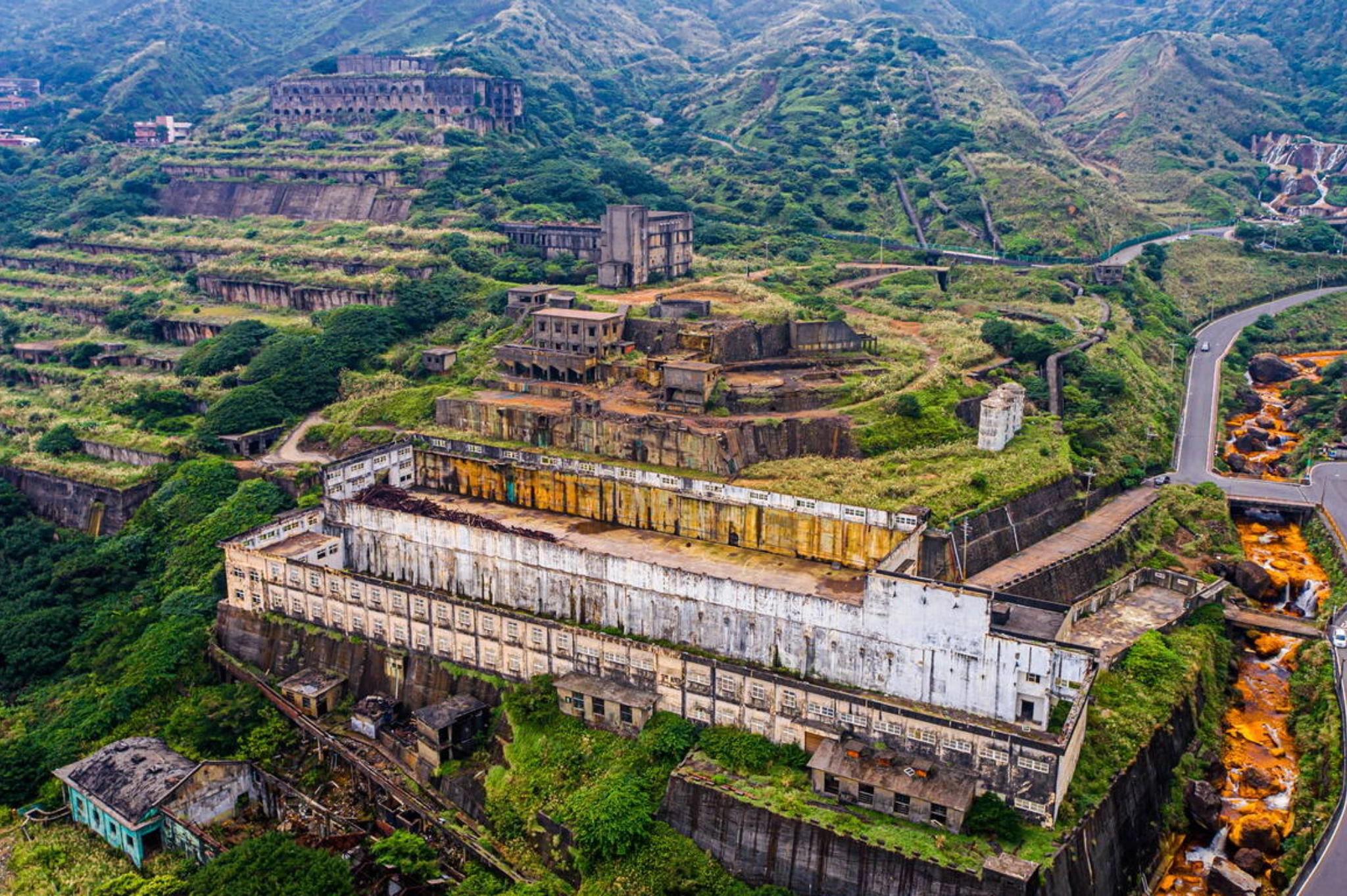
The 13-Level Ruins (十三層遺址) — ten minutes further down. The abandoned art-deco concrete cliff face of the old Shuinandong smelter, terraced into the mountain in thirteen levels, lit in soft amber at night from October to March. By day: a Roman amphitheatre slowly losing a fight with the jungle. Photographers know it. Foreign tourists almost never do.
—
Why now
Plum-rain season is, paradoxically, the smartest time of year to come to Jiufen. The summer typhoons are still far. The autumn tour-bus crush has not yet started. The temperature on the mountain hovers in the low twenties Celsius even when Taipei is sticky and 30. And the mist — the soft, slow mist that wraps the lanterns and turns the staircase into something out of a painted scroll — is doing its work every afternoon, on schedule, until at least the second week of June.
Before you go
- Bring a real waterproof jacket, not just a poncho.
- Bring shoes with grip. The stone staircases at Shuqi Road get slick.
- Bring cash. Many of the small vendors still don't take card.
And one last piece of advice, which is also a small confession: stay overnight. The day-trippers leave on the last bus around six in the evening, and Jiufen between seven and midnight, with the tea houses still glowing and the streets emptied of tour groups, is a different town entirely. There are perhaps a dozen minsu (small guesthouses) on the upper slopes, most of them family-run, most of them under NT$3,000 a night.
Wake up at five-thirty. Walk to the top of Shuqi Road in the dark. Watch the sun come up over the Pacific, over a town that gold built, that the world rediscovered through a movie its director never saw. The lanterns will still be lit. The rain will probably still be falling. The tea will be exactly where you left it.