There are markets you walk through, and there are markets you survive. Kashgar’s Sunday Livestock Bazaar is firmly the second kind — a dust-and-dung, shouting-and-haggling spectacle of thousands of farmers, herders and traders buying and selling sheep, cattle, camels and donkeys exactly as their great-great-grandfathers did when this was the busiest crossroads on the entire Silk Road. For foreign travellers now returning to Xinjiang in growing numbers — helped by China's wave of visa-free entry and easier independent travel — this is the morning that stays with you long after the grand mosques and ruined cities blur together.
Kashgar sits at the western edge of China, closer to Baghdad than to Beijing, wedged against the Pamir and Tianshan ranges where the northern and southern Silk Road routes finally met. For two thousand years it has been a trading town, and nowhere is that history more alive than at the weekly animal market on the city's eastern outskirts. Pair it with the great Id Kah Mosque in the heart of the old town, and you have the two experiences that define a visit to Kashgar.
A Market Older Than Most Countries
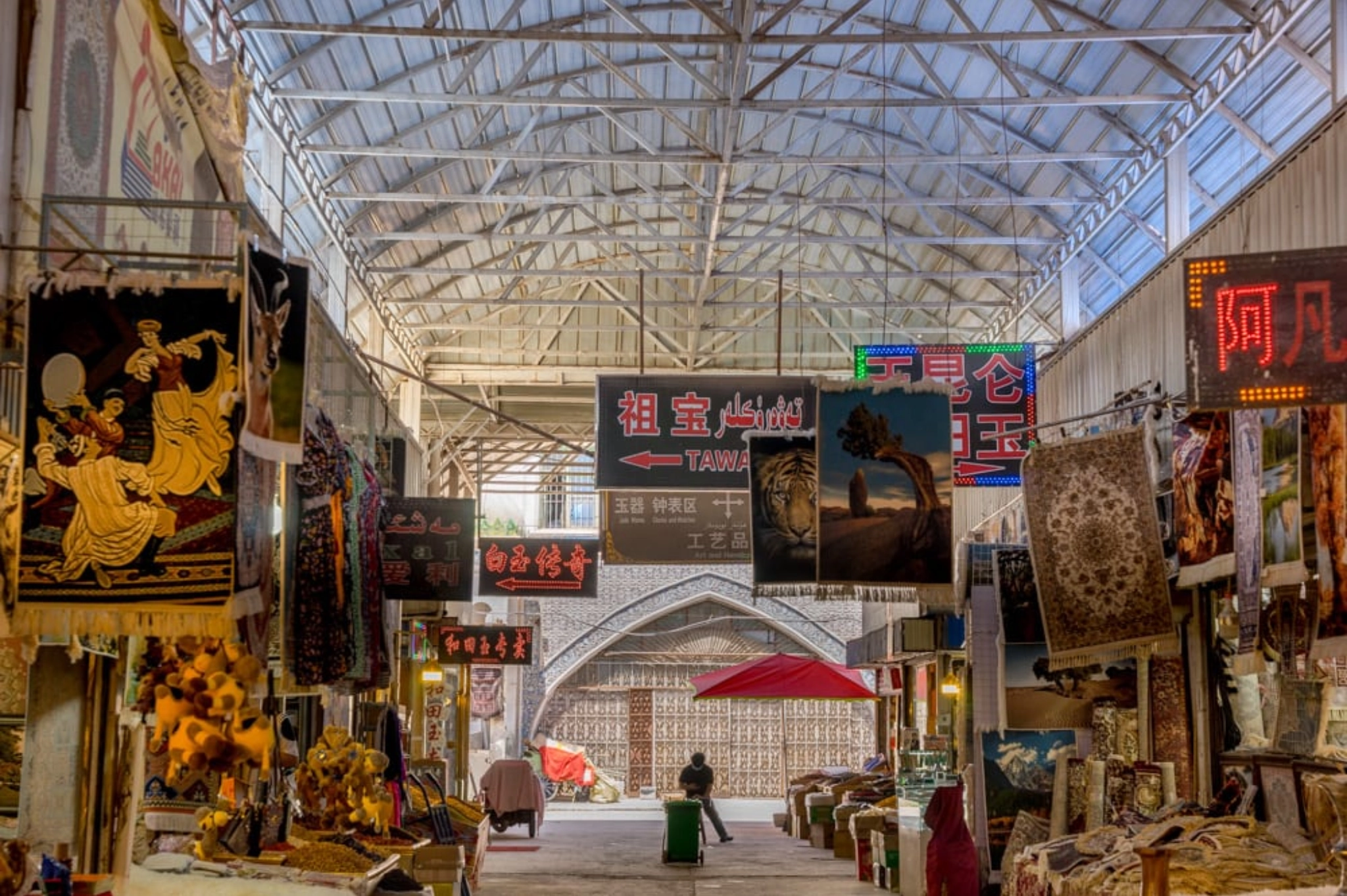
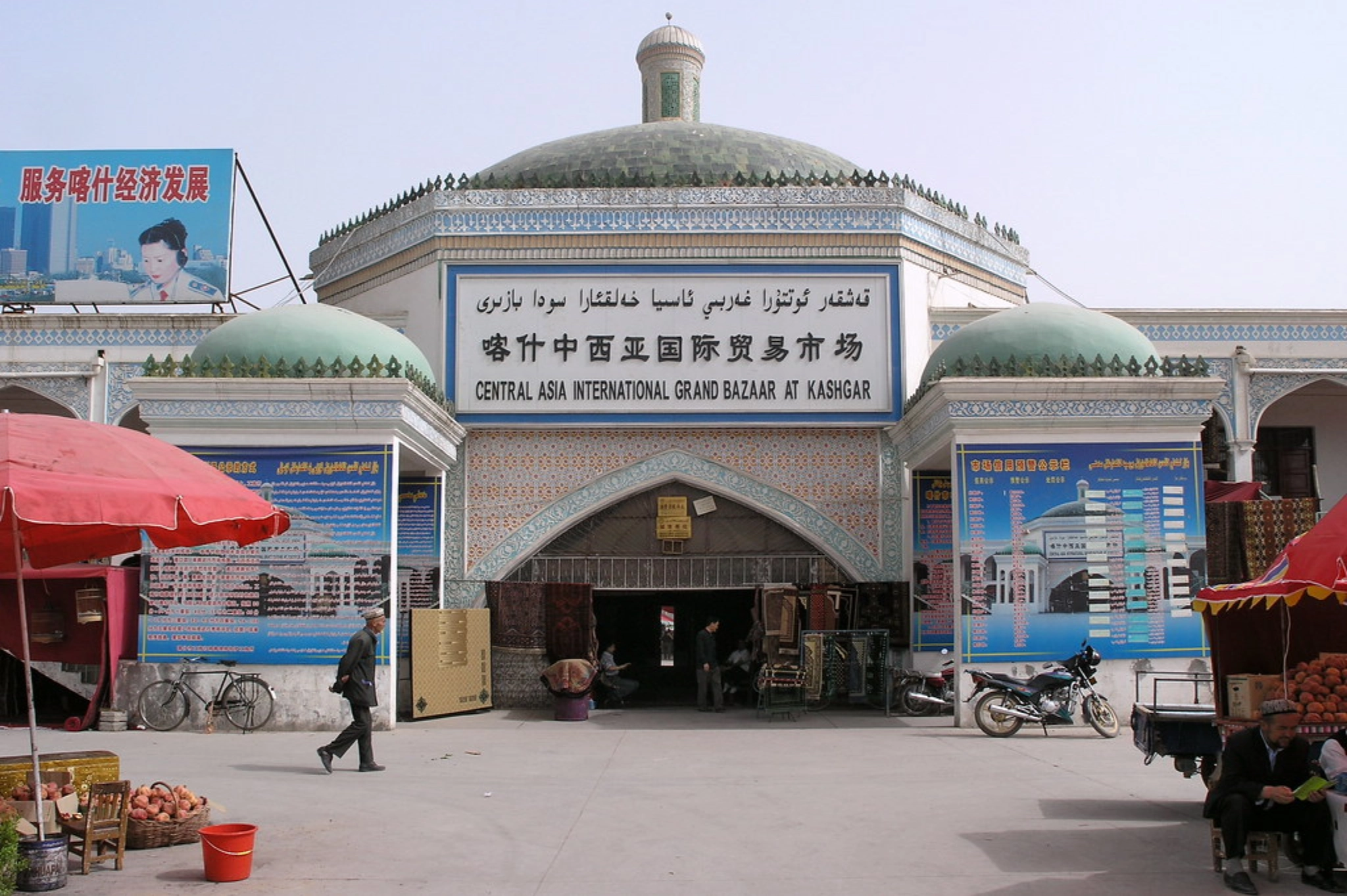
Kashgar's bazaar tradition stretches back more than 2,000 years, and the main Grand (Sunday) Bazaar is often called the largest market in all of Central Asia. Confusingly, the famous "Sunday Market" now trades almost every day of the week, selling everything from carpets, copperware and fur hats to dried fruit, spices, knives and musical instruments in a covered maze northeast of the old city. But one thing has stubbornly refused to modernise, and it is the reason serious travellers time their arrival for a Saturday night: the livestock bazaar still happens only on Sundays.
On that one morning, the city's population is said to swell by around 100,000 as families pour in from villages and oases across the Kashgar plain. The main bazaar gets busy — but the real theatre is 6 to 10 kilometres out of town.
Inside the Mal Bazaar
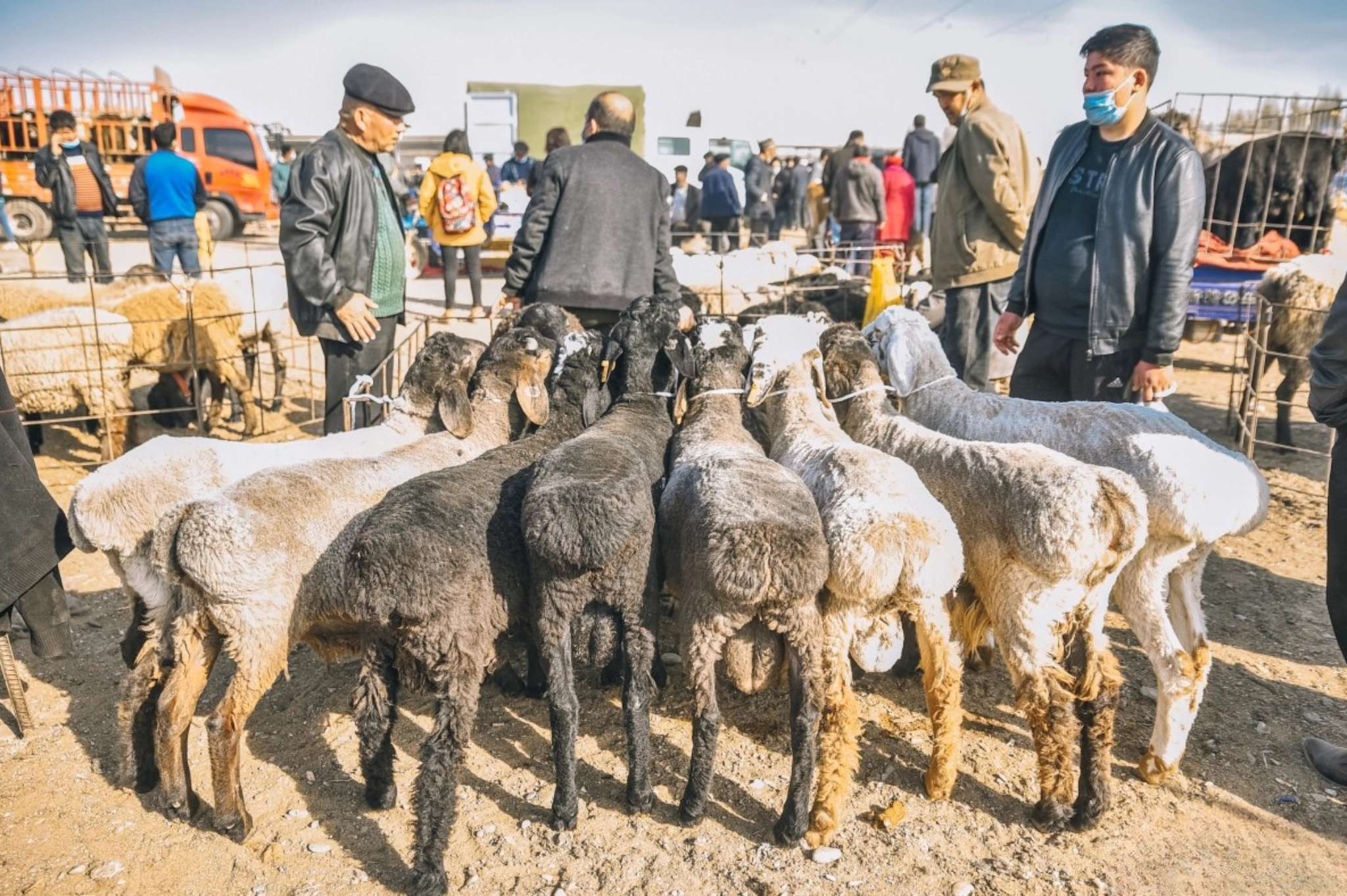
The livestock market — Mal Bazaar in Uyghur — unfolds on a huge dusty ground ringed by poplar trees and parked donkey carts. By early morning it is already in full roar. Pens and tethering lines divide the chaos into rough districts: fat-tailed sheep in one area, cattle in another, then the donkeys, the horses, and — if you are lucky — a line of Bactrian camels chewing slowly through the din.
What makes it unforgettable is that this is not a show put on for tourists. It is a working market where real money changes hands and a family's year can turn on the price of a good ewe. You will watch men in embroidered doppa caps run their hands along a sheep's spine to judge the fat, prise open a donkey's mouth to check its teeth, and "test-drive" animals on the spot — trotting a horse up and down, or hitching a donkey to a cart and sending it clattering through the crowd while everyone scatters. Deals are sealed the old way, with a slapped handshake and a peeled wad of notes. Because this is the Muslim west of China, you will see every animal here except pigs.
Around the edges, the market feeds itself: open-air barbers shave heads under the trees, blacksmiths hammer, and clouds of smoke rise from stalls grilling lamb kebabs, baking sesame nan bread and ladling out bowls of noodles and samsa. Buy a skewer, find a bench, and simply watch — it is one of the great free shows of Asia.
Id Kah: The Soul of the Old City
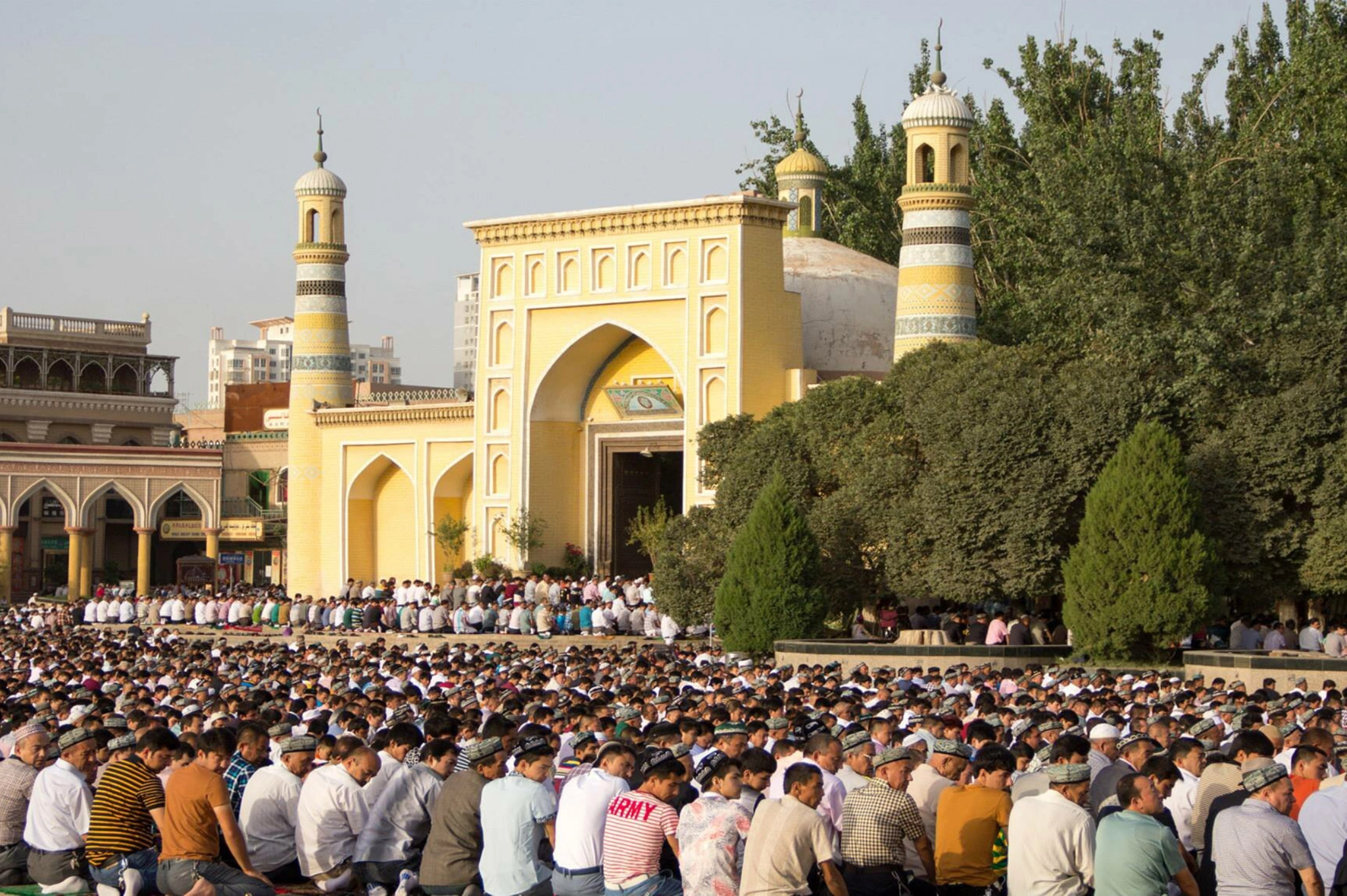
After the dust of the livestock ground, the calm of Id Kah Mosque is a deliberate contrast. Standing on the vast square at the centre of Kashgar's old town, Id Kah is the largest mosque in China, its mustard-yellow gatehouse and slender minarets instantly recognisable. Its origins reach back to around 1442, and over the centuries it grew into a complex of prayer halls, teaching rooms and a tree-shaded courtyard that can hold many thousands of worshippers at the great festivals.
For visitors it is both a living place of worship and the symbolic heart of Uyghur Kashgar. Dress modestly, remove your shoes where required, keep your voice down, and check whether non-Muslims may enter on the day you visit, as access can vary. Even from the square outside, with the call to prayer rolling across the rooftops and old men gossiping in the shade, you feel why this spot has anchored the city's life for close to 600 years.
Losing Yourself in the Old Town
Id Kah opens straight onto the restored lanes of Kashgar Old City, a warren of mud-brick and timber houses, overhanging balconies and workshop alleys that is one of the best-preserved traditional Islamic towns in Central Asia. Follow your ears and nose: the coppersmiths' street ringing with hammers, the hat-makers, the pottery quarter, the bakers sliding nan onto the hot walls of clay tonur ovens. Children play in the alleys, families sell pomegranate juice from doorways, and every few steps opens onto another photograph. It is the natural way to spend the rest of a Sunday after the market.
Why Kashgar Belongs on Your Silk Road Trip
Most Silk Road itineraries race between the famous sights — the caves, the deserts, the ancient cities. Kashgar is different because it is not a monument to the past but a town still living a version of it. The livestock bazaar, the covered market, the mosque and the old town together give you something rare: a day that feels less like sightseeing and more like time travel into the great trading world that once linked China to Persia, India and Rome. It is also the gateway to some of Xinjiang's most spectacular road trips — the Karakoram Highway up to Karakul Lake and the Pamirs, and the oasis towns of the southern Silk Road.
Practical Notes for Foreign Visitors
- Where: Kashgar (Kashi), the westernmost city of Xinjiang, near the borders with Kyrgyzstan, Tajikistan, Afghanistan and Pakistan.
- The one rule: The livestock bazaar runs on Sunday mornings only — arrive the night before and go early (roughly 8–9am onwards) for the busiest, most atmospheric trading. The main Grand Bazaar trades daily.
- Getting to the animal market: It lies about 6–10 km east of the centre; a short taxi ride (around 20–30 RMB) is the simplest option, or ask your guide/hotel.
- Getting to Kashgar: Kashgar has an airport with flights from Urumqi and beyond, plus rail connections; many travellers fly in and use it as a base.
- Id Kah Mosque: In the old-town square; dress respectfully (covered shoulders and legs, women may want a scarf), and confirm entry rules and prayer times on the day.
- Etiquette at the market: It's a real workplace — stay clear of moving animals and carts, ask before close-up portraits, and a smile goes a long way with traders.
- Combine with: Kashgar Old City, the Afaq Khoja (Fragrant Concubine) Mausoleum, the Yengisar knife workshops, and the Karakoram Highway to Karakul Lake and Tashkurgan.
The Silk Road was built on exactly this: animals, bargaining, bread baked against a hot clay wall, and strangers from a dozen cultures meeting in one dusty square. Nineteen centuries on, Kashgar still does it every Sunday morning — and you are very welcome to pull up a bench and watch.