Asked who should lead the campaign, the seventy-six-year-old answered: "No one is better than this old subject." He rode west — and instead of the slaughter everyone expected, he sat down and started to farm.
Key Points at a Glance
Zhao Chongguo and the tuntian frontier
Frequently Asked Questions
Zhao Chongguo and the tuntian frontier
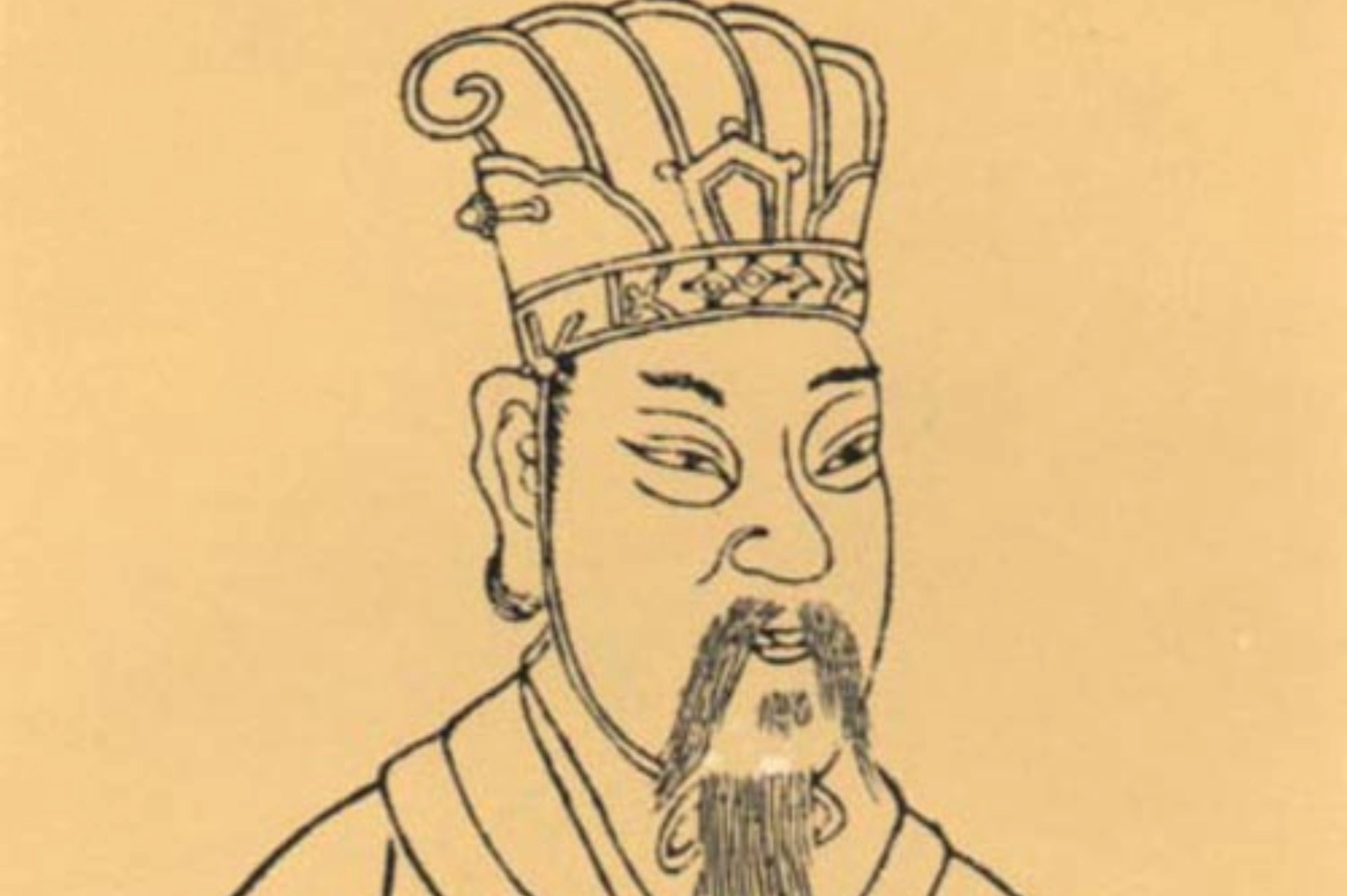
In the spring of 61 BC, the Han court had a problem on its western edge.The Qiang tribes beyond the Yellow River had risen in revolt, an earlier Han expedition had already inflamed the situation, and the emperor needed a commander who could put the fire out. The man he summoned was Zhao Chongguo (趙充國). There was only one complication: Zhao was seventy-six years old.
When Emperor Xuan sent a messenger to ask whom he should appoint to lead the campaign, the old general's reply has echoed down two thousand years of Chinese military history: "No one is better than this old subject." He got on a horse, rode west, and then — instead of launching the slaughter everyone expected — he sat down and started to farm. The strategy he invented on that campaign would outlive him by two millennia, and it is one of the great untold reasons the Silk Road corridor through Gansu could be held, settled and civilised at all.
A Gansu Frontier Boy
Zhao Chongguo was born around 137 BC in Shanggui, a town in the Han's Longxi Commandery that sits inside today's Tianshui, in eastern Gansu. This matters. He was not a soft courtier parachuted onto the border; he was a product of it — a frontier child from the loess hills of Gansu, raised within sight of the grasslands where the empire's settled farmland frayed into the territory of nomads and raiders. He grew up familiar with both worlds the Han was trying to control: the settled world of farming and the nomadic one of horsemen.
As a young man he joined the Feathered Forest, the elite cavalry guard in the capital, Chang'an (modern Xi'an), and he quickly proved himself the hard way. In 99 BC, under the great expansionist Emperor Wu, he rode in general Li Guangli's campaign against the Xiongnu demonstrating his outstanding strength and mind. The army was surrounded and running out of supplies. Zhao took about a hundred picked men, smashed a hole through the enemy encirclement, and opened an escape route for the trapped Han force. When it was over he had taken more than twenty sword and arrow wounds. Emperor Wu, told of the breakout, asked to see the injuries personally, was astonished, and promoted him on the spot. The farmer-strategist of legend began as one of the bravest cavalrymen of his age.
The Crisis of 61 BC
By the time the Qiang crisis erupted, decades had passed. Zhao had served three emperors, helped settle the succession that put Emperor Xuan on the throne, been made Marquis of Yingping and risen to General of the Rear. He was old, honoured, and could have retired in comfort. Instead he volunteered for the frontier one last time.
The Qiang were a confederation of tribes in the highlands south-west of Gansu, along the Huangshui river valley on what is now the Gansu–Qinghai border. They had grievances, they had numbers, and — most dangerously — there were signs they might ally with the Xiongnu to the north, catching the Han's western corridor in a pincer. A first Han commander had already made things worse by provoking tribes who had not yet rebelled. The court wanted the revolt crushed fast and hard.
Zhao refused to be hurried. He led roughly ten thousand cavalry out from Jincheng — the Han garrison commandery centred on today's Lanzhou, the Gansu capital — crossed the Yellow River under cover of night, fortified his camp, and then did almost nothing dramatic. He sent scouts. He declined to chase skirmishers into traps. He let the enemy coalition reveal its own fault lines.
The Idea That Changed the Frontier
Then came the memorials. Rather than demand more troops for a bigger war, Zhao proposed the opposite. He asked permission to disband most of the cavalry and keep just 10,281 soldiers on the frontier — not as an idle garrison, but as a working one. These men would settle the land, dig irrigation canals, build roads and watch-posts, and grow their own grain along the Huangshui, turning a hostile borderland into cultivated Han country one field at a time. A small mounted force would protect the farmers; the farms would feed the soldiers; and the slow, patient spread of settlement would do what armies could not — make the frontier permanently Chinese.
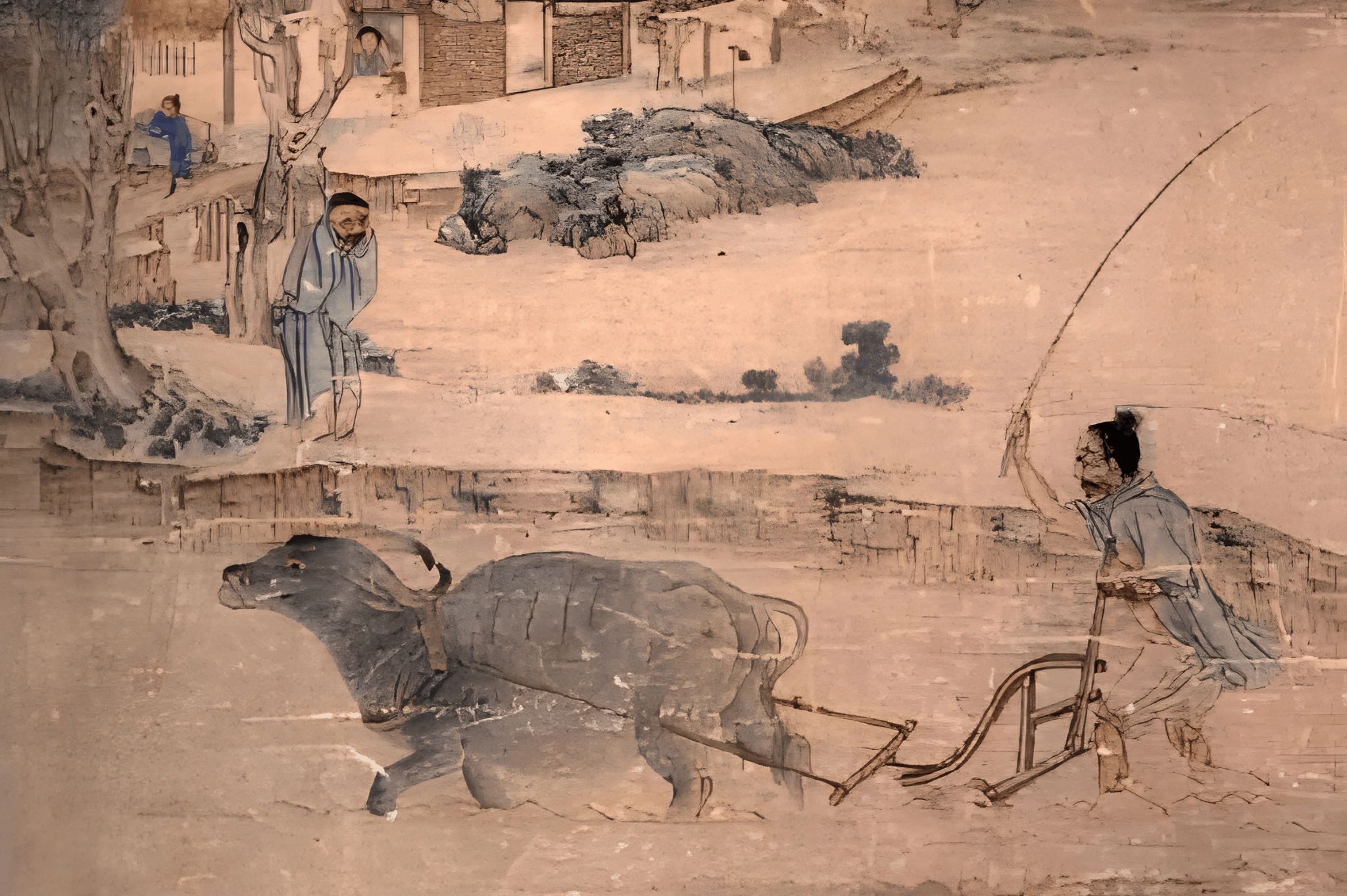
This was tuntian — the "garrison field" or military agricultural colony. The idea of soldier-farmers was not completely new, but Zhao gave it its classic, fully argued form. In a famous memorial he laid out twelve advantages of the farming strategy over a continued offensive: it would save enormous sums, avoid exhausting the army, deny the Qiang the chance to unite, protect the supply lines, and let the frontier pay for its own defence. When some at court pushed back, he patiently submitted a second and then a third memorial, answering every objection. The record notes that by the time of the third, the balance of opinion had flipped: a large majority of the senior officials who debated it came round to his side.
He was, in effect, winning a war through budgeting and farming rather than fighting alone. And it worked. Starved of a dramatic enemy to rally against and squeezed by steady Han settlement, the Qiang coalition fractured. Zhao deliberately offered amnesty and rewards to those who came over, splitting the alliance rather than annihilating it. Within a year the revolt was effectively finished. The Han set up the dependent state of Jincheng to manage the pacified tribes, the emergency garrison was stood down, and the old general went home to retire. He died around 52 BC, aged roughly eighty-five.

Why a Farming Memo Became Immortal
It would be easy to file Zhao Chongguo under "competent Han general" and move on. That would miss the point. His tuntian memorials became one of the most influential strategic documents in Chinese history. The principle he articulated — that you hold a frontier not with a wall of spears but with self-supporting soldier-settlers who make the land productive and loyal — was adopted, adapted and re-adopted for the next two thousand years.
The Han applied military-farm colonies right across the Hexi Corridor, the thousand-kilometre neck of Gansu that carries the Silk Road; those colonies are a large part of why desert garrison towns like Dunhuang and Jiuquan could survive and grow. Later dynasties built whole military systems on the same logic: the fubing militia system of the Northern Wei, Sui and Tang, and the weisuo garrison-colony system of the Ming, are both descendants of Zhao's idea. His reputation as a strategist was so durable that in 1700, the Kangxi Emperor — fighting his own frontier wars against the Dzungars seventeen centuries later — ordered his commanders to study Zhao Chongguo's campaigns as a model. Emperor Cheng had earlier honoured him with a portrait among the dynasty's greatest ministers and a formal eulogy by the scholar Yang Xiong. Few soldiers in world history have been studied, by name, as required reading for eighteen hundred years.
Standing Where It Happened
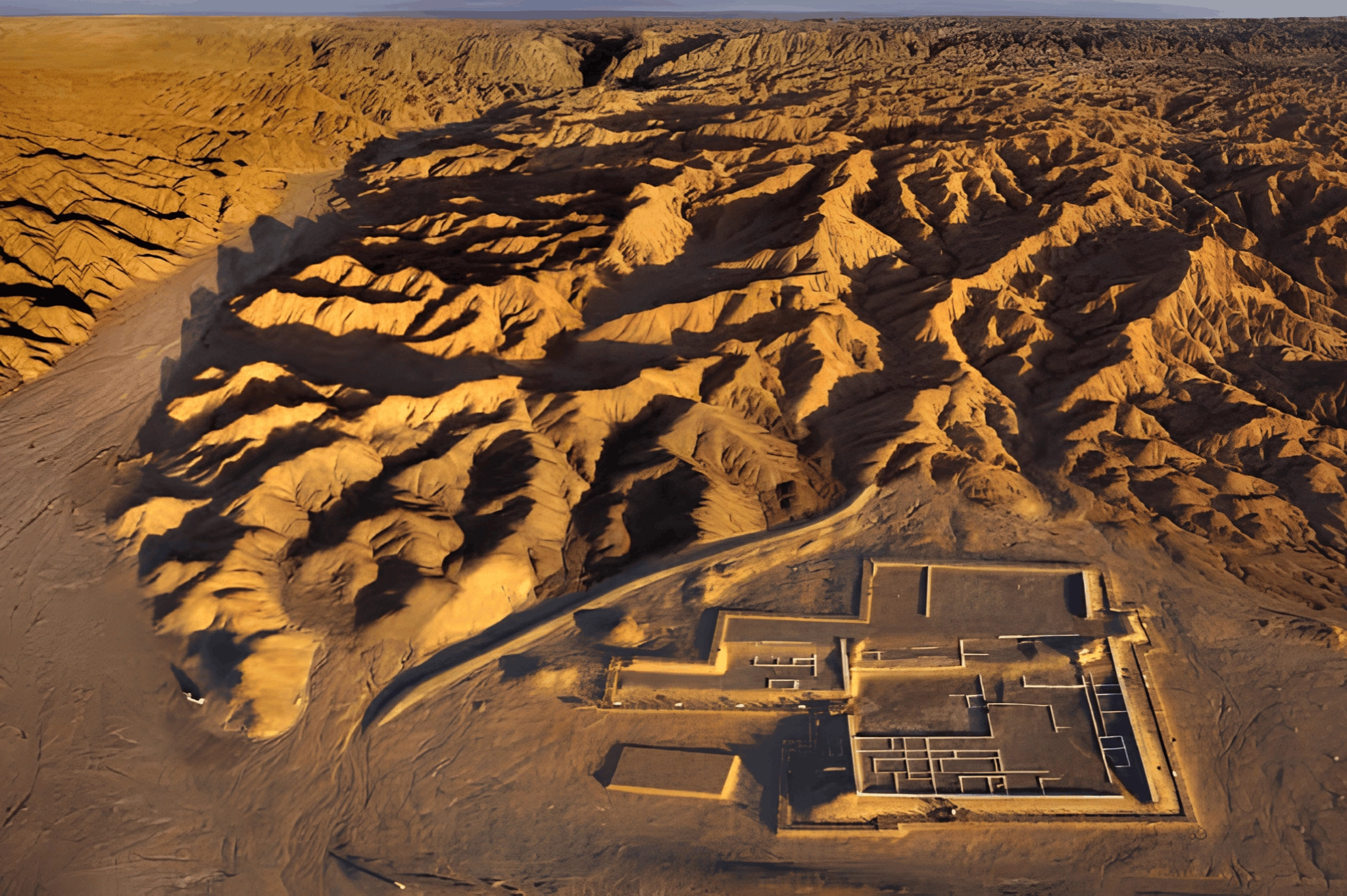
For a traveller, the beauty of Zhao Chongguo's story is that it is written into the Gansu landscape itself. His was not an abstract theory; it was a programme of building — canals, roads, beacon towers, granaries, garrison walls — and an astonishing amount of that Han frontier infrastructure still stands in Gansu, precisely because the tuntian system made the corridor worth building in the first place.
Drive the Hexi Corridor today and the physical evidence of the farmer-soldier frontier is everywhere. Outside Dunhuang you can walk along the Han Great Wall — not stone, but two-thousand-year-old rammed earth and bundled reed, the actual border wall Zhao's generation manned — and visit the ruins of Xuanquanzhi, a Han postal relay station whose excavated documents record the daily grind of frontier logistics, and the Hecang granary, the great Silk Road storehouse that fed the garrisons. The beacon towers that still punctuate the desert were the early-warning system of exactly the kind of settled, self-supplying frontier Zhao designed. Further west, the mighty Ming fortress of Jiayuguan marks the same strategic line that the Han had first secured with soldiers who farmed. In Lanzhou, where the Yellow River runs through the modern capital, you are standing in the old Jincheng from which the seventy-six-year-old general rode out on his last, cleverest campaign.
Gansu's Silk Road is usually told as a story of merchants, monks and painted caves. But none of it — not the caravans, not the grottoes, not the oasis cities — could have existed without the unglamorous, decisive achievement of men like Zhao Chongguo, who worked out how to make a desert frontier feed and defend itself. The next time you look out over a field of Hexi Corridor wheat ringed by Gobi, remember the old man who proved that the surest way to win a border was to plant it.