Key Points at a Glance
Przewalski's horses in Gansu
Frequently Asked Questions
Przewalski's horses in Gansu
Of all the horses on Earth, only one has never let a human climb onto its back and stay there. Every other horse you have ever seen — the thoroughbred, the carthorse, the wild-looking mustangs of the American West, the brumbies of Australia — descends from animals that people tamed thousands of years ago. The mustang and the brumby are not wild horses at all; they are domestic horses gone feral, the runaway children of saddle stock. There is exactly one living horse that was never domesticated, that carries a wildness going back to the Ice Age unbroken: the Przewalski's horse, and against almost impossible odds, it is galloping again across the Gobi of Gansu.
For a traveller crossing the Hexi Corridor on the Silk Road, this is one of the most remarkable stories in the whole province — a species that was declared extinct in the wild, rebuilt from a tiny handful of survivors in foreign zoos, and then physically flown home to the deserts of northwest China to learn how to be wild all over again.
A Different Animal from the Horse You Know
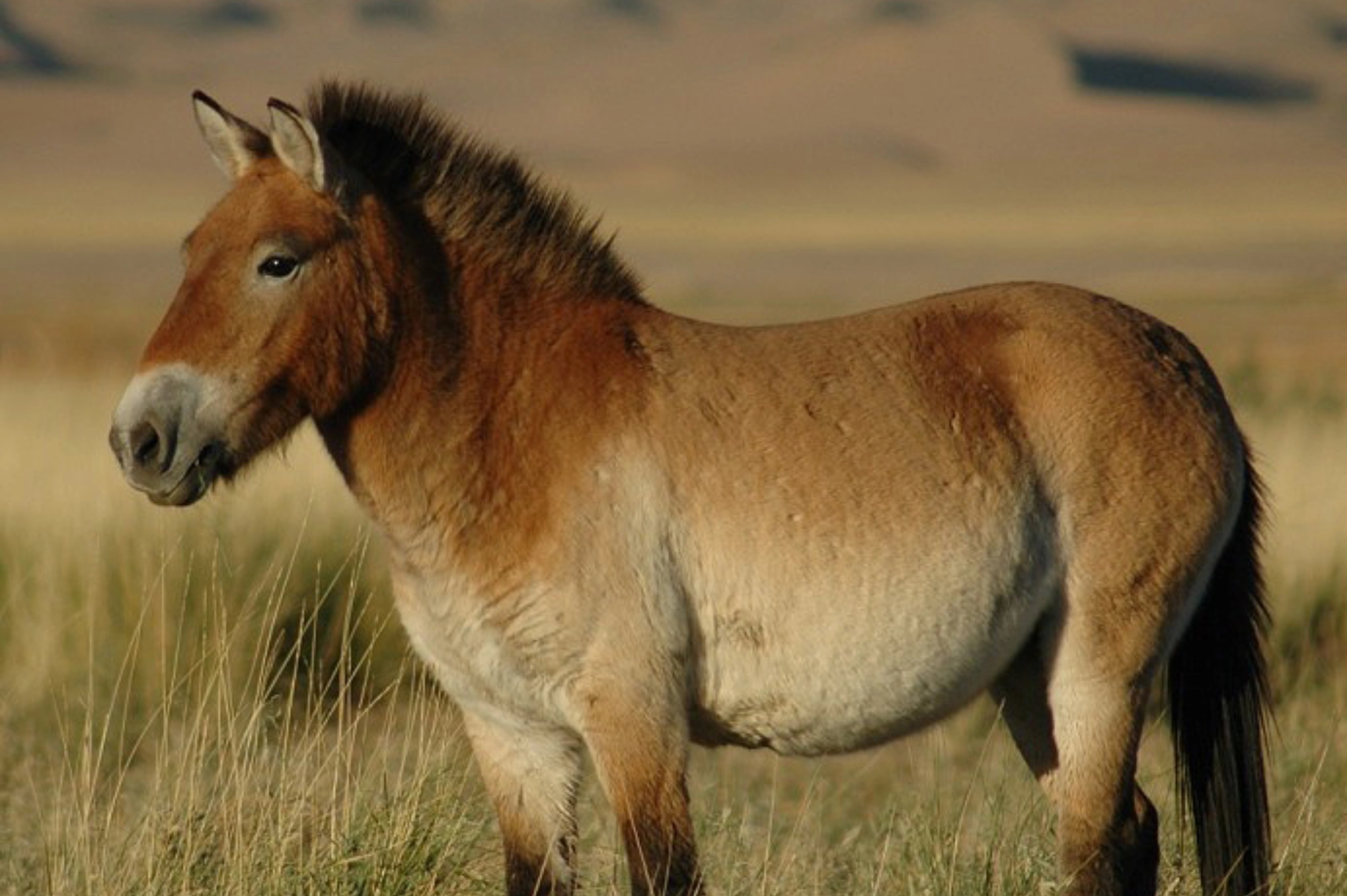
Stand a Przewalski's horse next to a riding horse and the differences are immediate. It is stocky and short-legged, more pony-sized than racehorse, built like a compact, muscular tank rather than an elegant sprinter. Its coat is a warm dun or beige, pale underneath, with a dark dorsal stripe running down the spine and faint zebra-like barring on the legs — the ancient camouflage of a steppe animal. Most striking of all is the mane: short, stiff and standing straight up like a brush, with no forelock flopping over the brow. It looks, in other words, exactly like the horses painted on the walls of Ice Age caves in Europe, because it is essentially that animal, still alive.
The deepest difference is invisible. A domestic horse has 64 chromosomes; the Przewalski's horse has 66. It is a genuinely distinct wild equine, not a feral variety, and that extra chromosome pair is the biological signature of an animal that split from the domestic line long ago and was never folded back into human breeding. Remarkably, the two can still interbreed and produce fertile offspring — but left to itself, the Przewalski's horse is its own ancient creature, the living fossil of the world's grasslands.
Discovery and Then Disappearance
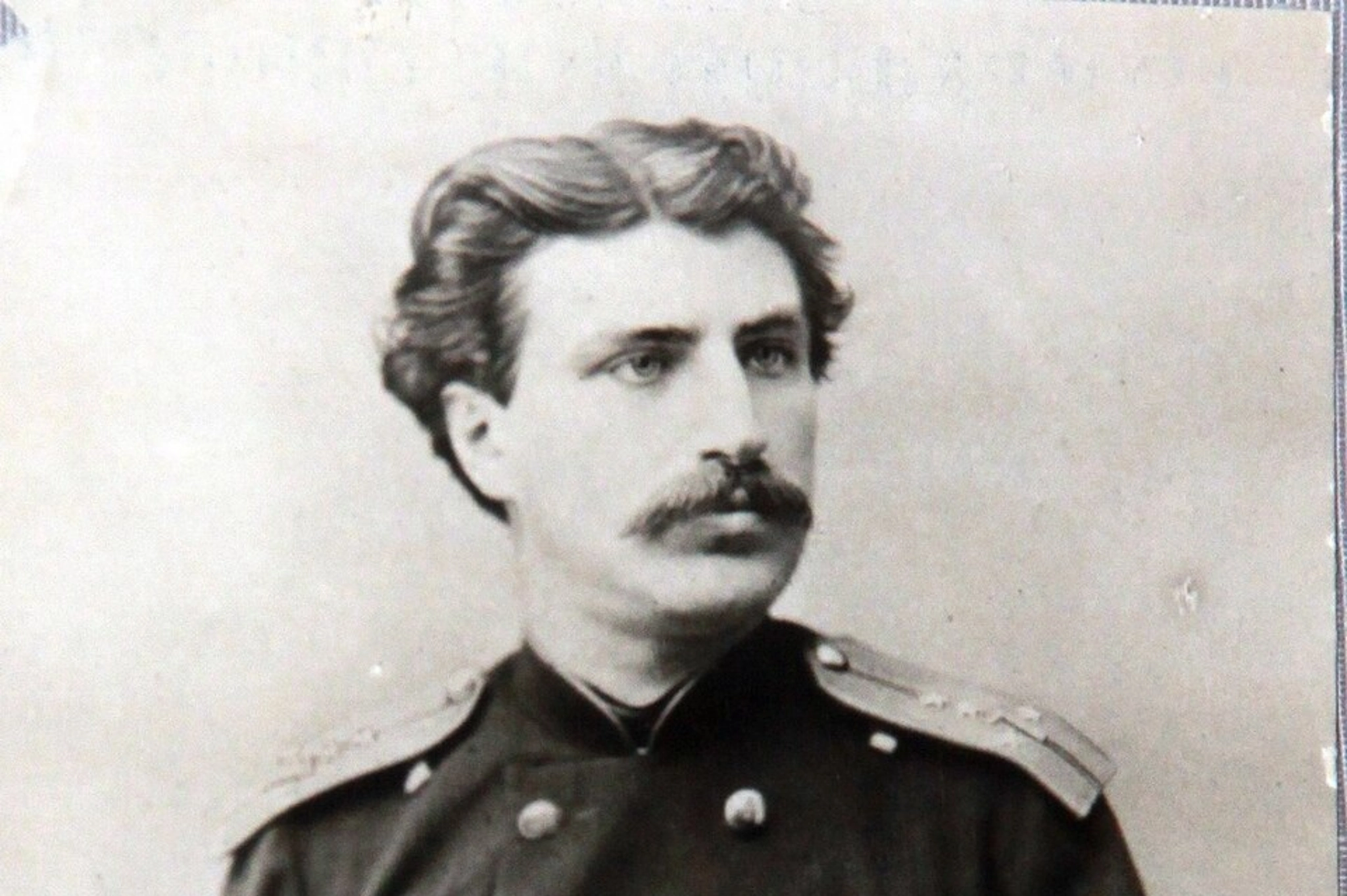
The horse takes its name from the Russian explorer Nikolai Przhevalsky, who obtained a specimen in the late 1870s from the borderlands of Dzungaria, the dry basin country on the edge of today's Xinjiang and Mongolia. To nineteenth-century European science it was a sensation: a true wild horse, the last one, roaming the most remote steppes of Central Asia. Collectors rushed in. Around the turn of the twentieth century, foals were captured and shipped to European zoos and private parks — a brutal business, since adults were often killed to take the young.
Those captures, cruel as they were, turned out to be the species' lifeline. In the wild, the Przewalski's horse was running out of room and time. Hunting, harsh winters, competition with livestock and the chaos of the twentieth century closed in, and the last confirmed wild sighting came in 1969, in Mongolia. After that, silence. The only truly wild horse on Earth was declared extinct in the wild. Everything that remained — every Przewalski's horse alive — descended from a tiny founder group of roughly a dozen captured animals surviving in zoos in Europe. The entire future of the species hung on careful, almost desperate, pedigree breeding to avoid the genetic dead end of inbreeding.
The "Wild Horse Homecoming"
By the late twentieth century, conservationists had the zoo population slowly climbing and began to ask the audacious question: could you put them back? China, whose own western deserts were part of the horse's ancestral range, answered yes. In 1985 it launched a programme memorably called the "Wild Horse Homecoming". The first horses were flown in from Britain and Germany in 1986, to a breeding centre on the edge of the Junggar Basin in Xinjiang, and the long work of re-wilding began — teaching zoo-born animals, generation by generation, to survive a desert their great-great-grandparents had been torn out of.
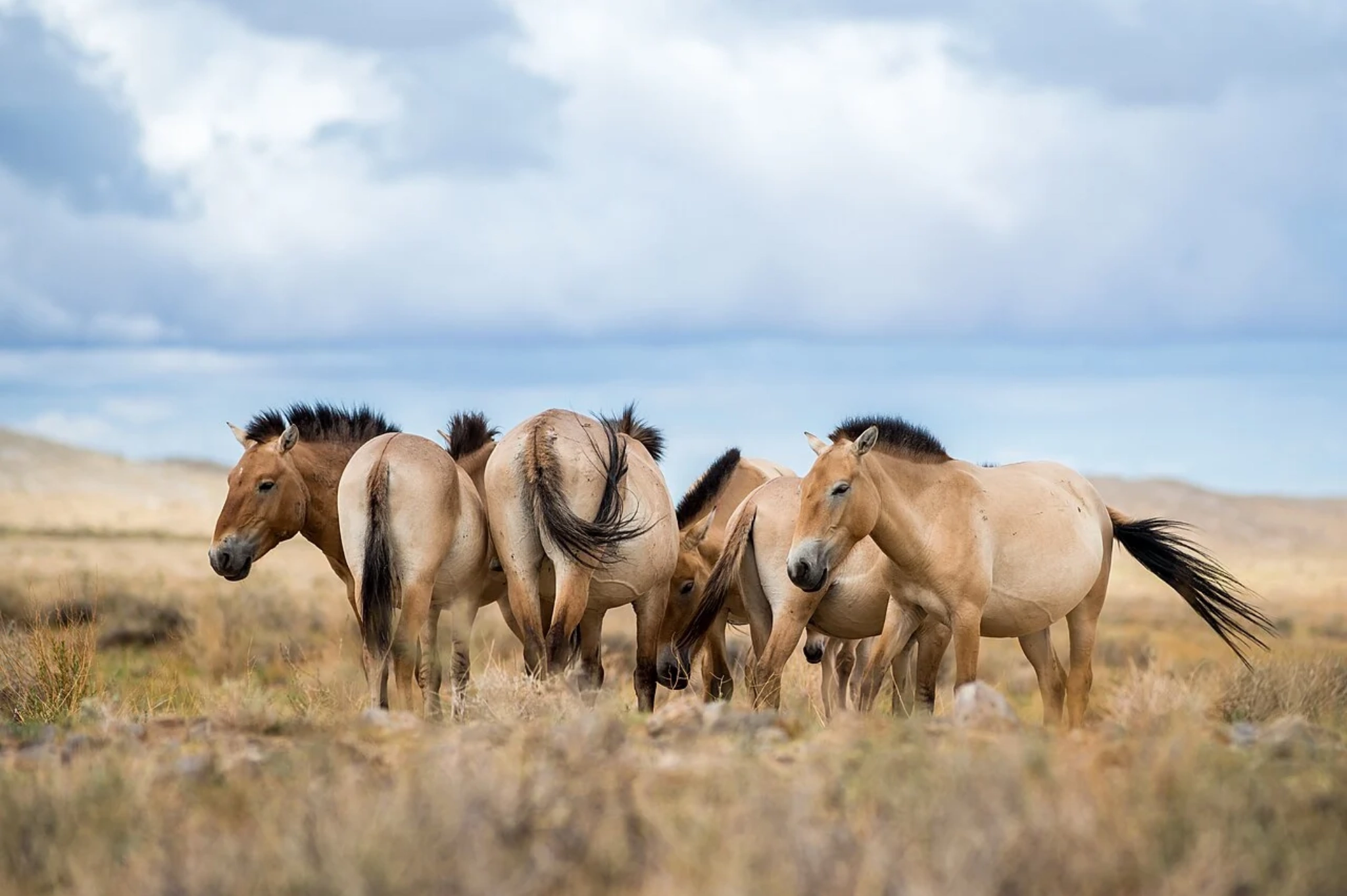
Gansu became a second front in that homecoming, and it is Gansu's chapter that a Silk Road traveller passes through. Starting in 1990, a group of 18 horses was returned from the United States and Germany to the Hexi Corridor, cared for at the Gansu Endangered Animal Research Center in the desert near Wuwei. From that founder group the Gansu programme grew its own breeding herd, and later began releasing animals toward a semi-wild life: batches went out in 2010 and 2012, foals were born to the released horses under open sky, and by the end of 2018 the regional population had reached around 60.
There is a second Gansu herd with its own story. In 1985, ten Przewalski's horses arrived from Britain and were first kept at a deer park near Beijing; in 1997, ten of them were moved west to the Anxi reserve in Gansu, where the herd grew to around two dozen. And the desert around Dunhuang — at the West Lake (Xihu) National Nature Reserve, a vast wetland-and-Gobi wilderness that is also the last refuge of the wild Bactrian camel — has received horses too, so that the animal now moves across some of the very landscapes the Silk Road caravans once crossed.
Rebuilding a Wild Society, Not Just a Population
Bringing a species back from extinction in the wild is about far more than counting foals. A Przewalski's horse is a deeply social animal, and a healthy herd has a structure that zoo life tends to erase. In the wild they live in small family bands — a dominant stallion, several mares and their young — alongside looser bachelor groups of young males waiting for their chance. Re-wilding means letting released horses rediscover that society: forming bands, contesting leadership, teaching foals born under open sky how to read the desert, find water, and survive predators and weather without a keeper nearby. Each generation that manages it is a little more genuinely wild than the last.
The genetics make every single animal precious. Because the entire species funnels through that founding dozen, conservationists manage breeding like a global chess game, using a meticulous international studbook and, increasingly, genome sequencing to pair animals so that rare bloodlines are not lost and inbreeding is kept at bay. Horses are deliberately moved between centres and even countries to keep the gene pool mixing. It is painstaking, unglamorous work, and it is the quiet machinery behind the headline that the deserts of Gansu once again have wild horses in them at all.
Where the Story Stands Now
The numbers today would have seemed like fantasy in 1969. China's Przewalski's horse population has climbed above 900 — roughly one-third of the entire global total of the species. Decades of meticulous studbook management, genome sequencing and generation-by-generation release have pulled an animal back from literal extinction in the wild to breeding herds moving across the deserts of the northwest. Horses bred in China have even been sent back to Mongolia to reinforce the homeland population — a reversal that would have been unimaginable a generation ago.
It is important to be honest about what "wild" means here, because the conservation story is still unfinished. Many of the released herds are not yet fully self-sufficient: in the brutal cold of a Gobi winter, when temperatures plunge and snow buries the forage, rangers still put out hay and alfalfa to keep the horses from starving. The species remains officially dependent on that human help, which is why the global status remains cautious. But the trajectory is unmistakable, and deeply hopeful: an animal that existed only behind zoo fences is, year by year, relearning how to be a wild creature of the open desert.
Can a Traveller Actually See Them?
The Przewalski's horse is a genuinely wild animal in vast, protected, often restricted reserves — this is not a petting zoo, and the core areas of places like the Dunhuang West Lake reserve are strictly managed and not open for casual wandering. A tourist should not expect to stroll into the Gobi and find a herd on demand.
What a traveller can realistically do is encounter the story where it is told and managed. Breeding and research facilities such as the one near Wuwei exist precisely because these animals are being studied and bred, and the broader Hexi Corridor — Wuwei, Zhangye, Jiuquan, Dunhuang — is where the homecoming is happening. A knowledgeable guide can explain which reserves currently allow any form of visit, build a realistic wildlife-and-history day into a Silk Road route, and, crucially, set expectations so that the thrill is in understanding the comeback rather than in guaranteeing a photo.
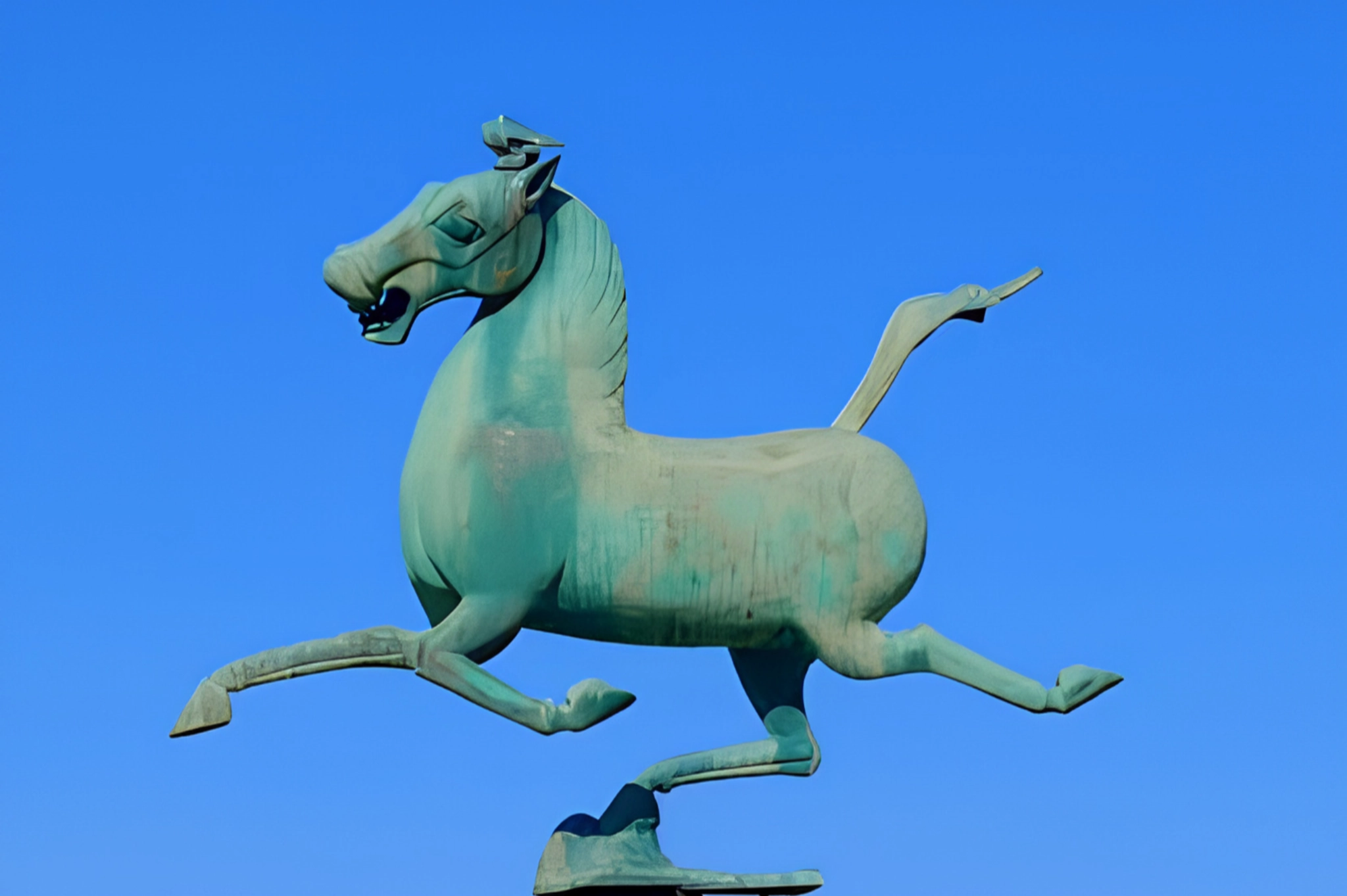
And there is a lovely resonance in seeing it here. Gansu's most famous ancient artifact is the Flying Horse, the 2,000-year-old bronze of a galloping steed unearthed at Wuwei, an emblem of the Silk Road's horse culture. To travel the same corridor today and know that the only truly wild horse on Earth is being coaxed back to life in these exact deserts is to feel the deep, unbroken thread between the Silk Road's past and its present. The bronze horse gallops forever, frozen in metal. A few valleys away, a real wild horse — the last of its kind — is learning to gallop again for real. For a certain kind of traveller, that is reason enough to come.