Pale, fine-grained and faintly sweet, with almost none of the barnyard note most travellers brace for — milk lambs raised on thyme-scented terraces above a great bend of the Yellow River, then braised with chilli, cumin and Sichuan pepper.
Key Points at a Glance
Jingyuan lamb, Baiyin, Gansu
Frequently Asked Questions
Jingyuan lamb, Baiyin, Gansu
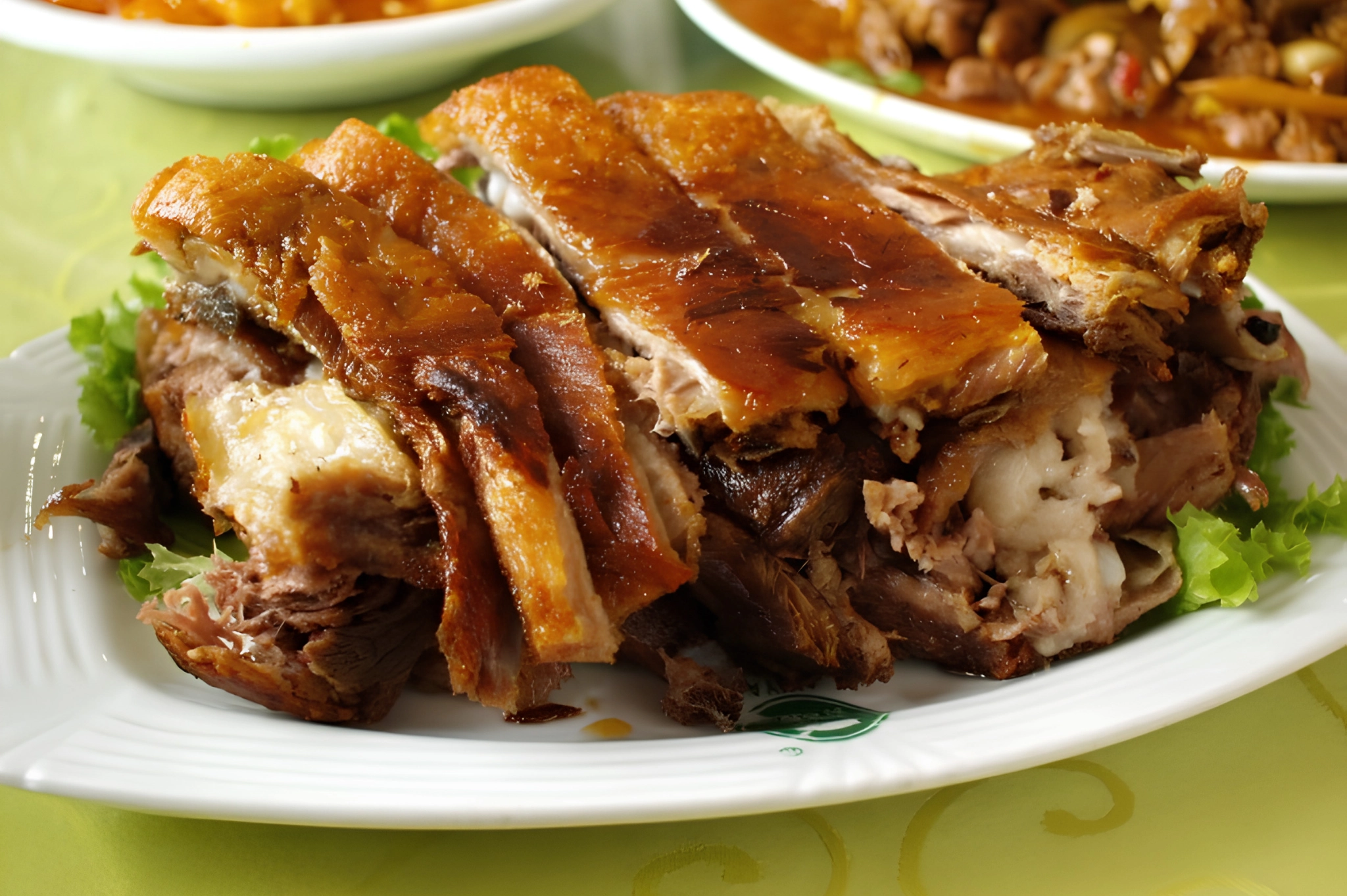
Ask a traveller in northwest China what they expect from a plate of lamb and many will brace for one thing: the gaminess — that strong, muttony smell that makes a lot of people push the dish away. Then they try Jingyuan roast lamb, and the bracing turns to surprise. The meat is pale, tender, faintly sweet, and almost clean on the tongue, with none of the heavy barnyard note they were steeling themselves for. It is the dish that quietly converts the lamb-sceptics — and in central Gansu, where it comes from, people will tell you, with complete seriousness, that it is the best lamb in China. To understand why, you have to go to a dry, sun-blasted county on a great bend of the Yellow River.
Where It Comes From: Jingyuan, on the Yellow River
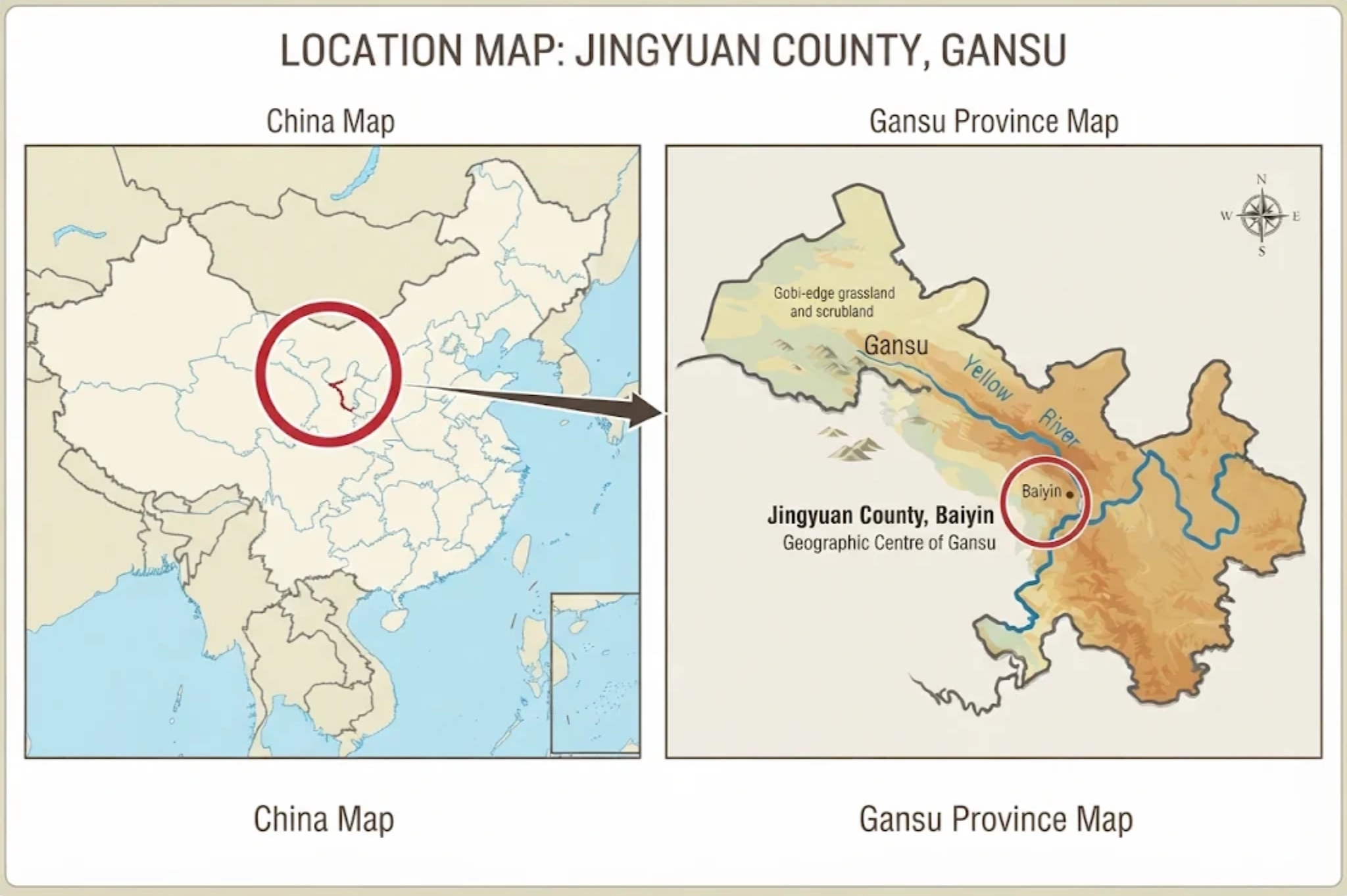
Jingyuan County sits in Baiyin prefecture, in the geographic centre of Gansu, where the Yellow River carves through arid terraces and Gobi-edge grassland. This is not lush country. The land is pale and stony, the rainfall thin, the summers hot and the winters hard. And yet it is exactly this harshness that locals credit for the quality of their lamb — the same way a hard, stony vineyard can make a better grape than a fat, easy one.
Central Gansu has raised sheep for as long as anyone can remember. It sits on the old Silk Road, in a belt of Hui-Muslim and pastoral culture where lamb and mutton are the heart of the table, and over generations the county built a reputation that now reaches well beyond the province. "Jingyuan lamb" has become a regional brand — the dish people from Lanzhou will happily drive out to Baiyin to eat, and the one Jingyuan expats hunt for when they move away.
Why This Lamb Is Different
Two things, by local account, set it apart: what the sheep eat, and how young they are when they are cooked.
First, the pasture. The sheep of the Jingyuan area graze the dry Yellow-River terraces and hills, which are dotted with hardy wild herbs — above all wild thyme, along with plants such as licorice and other salt-tolerant desert forage. Herders across the northwest have long believed that lambs raised on this thyme-scented, herb-rich scrub produce meat that is naturally fragrant and, crucially, far less gamey — as if the animals seasoned themselves from the inside. The same reasoning is attached to the famous Tan sheep of the neighbouring Yellow-River regions, and Jingyuan sits squarely in that tradition. The mineral-rich water and the salty, alkaline ground are given part of the credit too.
Second, the age. The star of the dish is not grown mutton but yanggao — a milk lamb, slaughtered young, often cited at around thirty to forty-five days old, when it is still nursing and its flesh is at its most delicate. Meat this young is pale, fine-grained and tender, with very little of the firm, strong-tasting character that older sheep develop. Put the herb-fed pasture together with the youth of the animal, and you get the Jingyuan signature: lamb that even committed mutton-avoiders can eat happily.
The Signature Dish: Yellow-Braised Lamb
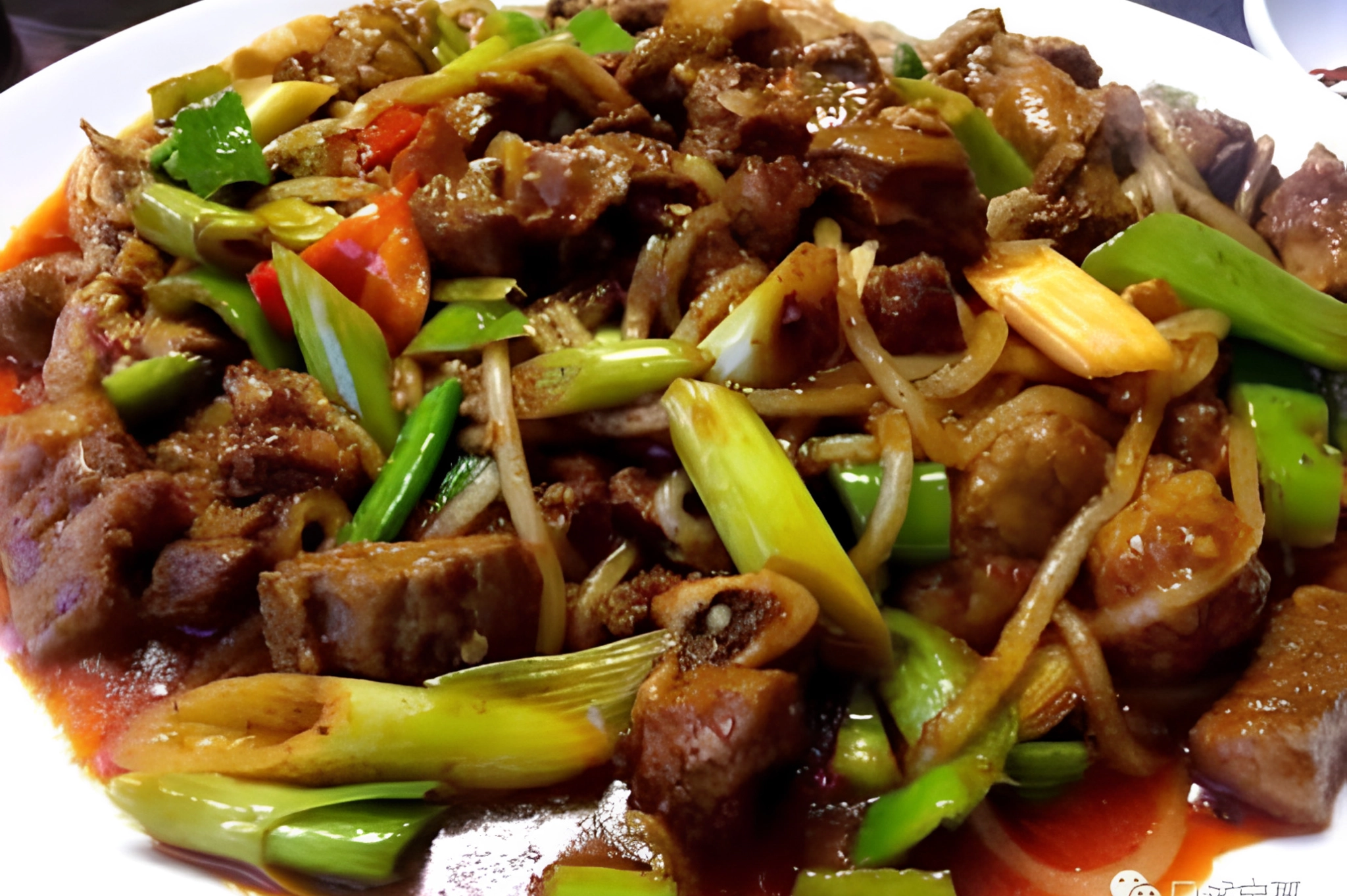
There are several ways to cook Jingyuan lamb, but the one that made its name is yellow-braised lamb (黃燜羊羔肉, huángmèn yánggāoròu).
The young lamb is chopped, bone-in, into bite-sized pieces. It goes into a hot wok or heavy pot and is seared and stir-fried hard with plenty of dried red chilli, ginger, garlic, Sichuan pepper and often cumin — the spice kit of the Silk Road northwest — until the meat colours and the chillies turn fragrant. Then it is braised: a splash of liquid, the lid on, and a slow simmer that lets the bones give up their richness and the sauce reduce to a glossy, russet-gold coating. The result is tender meat that slips off small bones, deeply savoury and warmly spicy without being brutal, the chilli heat lifted by the sweetness of the young flesh.
The genius of the dish is in what comes next. When the lamb is nearly gone, wide, hand-torn noodle flakes are often dropped straight into the leftover braising sauce and cooked in it, soaking up every drop of lamb-and-chilli flavour — a second course built from the first. Alternatively the lamb is mopped up with chewy local flatbread. Nothing is wasted, and the meal has a satisfying arc from rich meat to comforting carbs.
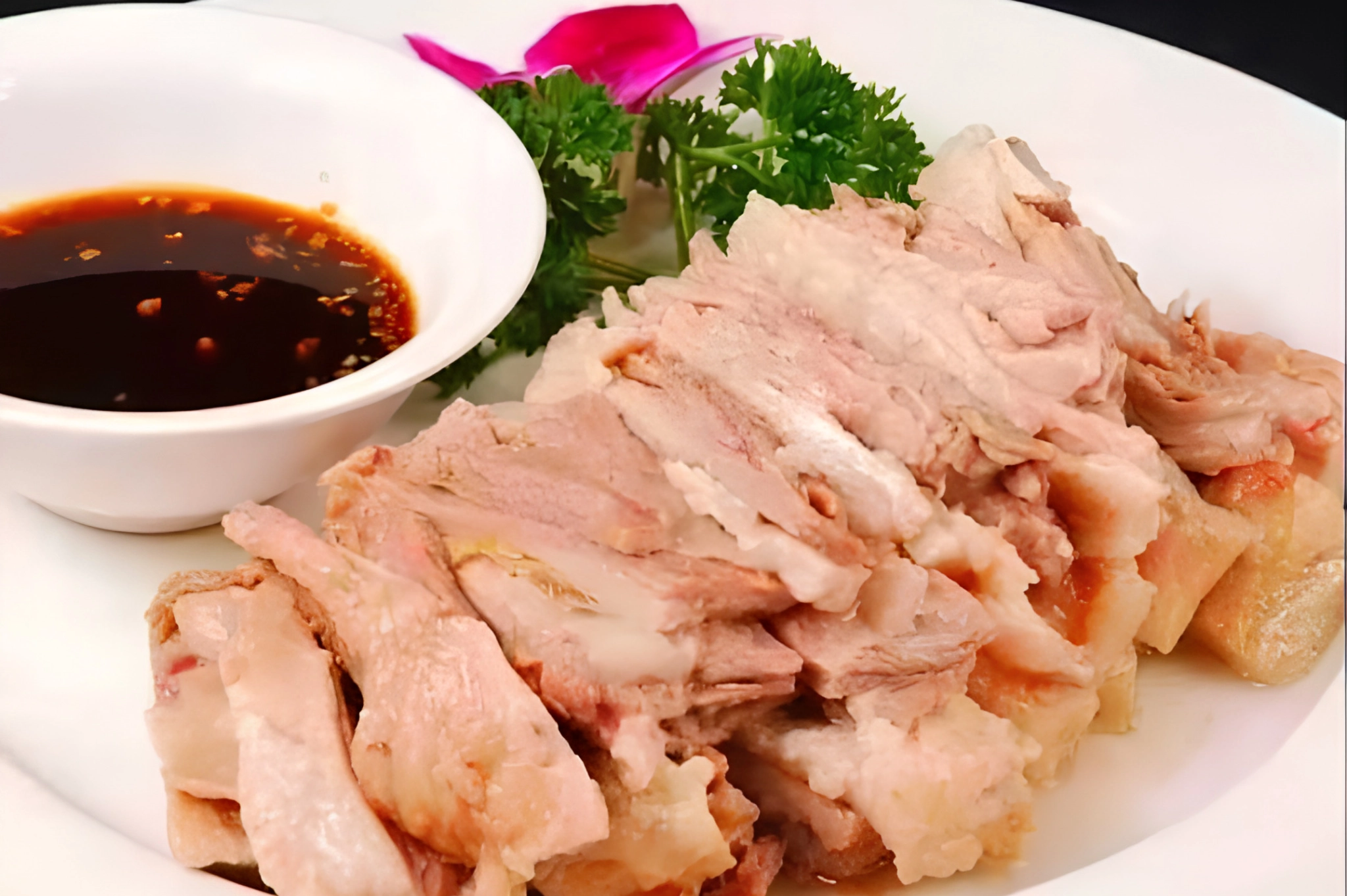
Beyond the yellow braise, you will also meet Jingyuan lamb stir-fried, clear-stewed (a gentler, soupy treatment that shows off the pure sweetness of the meat), and threaded onto skewers and grilled over coals, cumin-dusted, like the lamb skewers found all along the Hexi Corridor. At a celebration you may be offered a whole roasted or braised lamb, carved at the table — the grand gesture of northwestern hospitality.
Halal, Hospitality and the Culture Around the Dish
Lamb in central Gansu is inseparable from its Hui-Muslim and pastoral culture. Much of the best Jingyuan lamb is cooked in halal kitchens, and the dish belongs to a wider northwestern food world — the hand-grabbed lamb of Linxia, the lamb-and-noodle dishes of the Hexi Corridor, the mutton soups of the Silk Road towns — in which offering a guest good lamb is the warmest thing a host can do. A pot of yellow-braised lamb shared around a table, with flatbread, pickles, tea and plenty of talk, is central-Gansu hospitality in its purest form.
Practical 2026 Guide for Foreign Visitors
| Where to Find | Most authentic in Jingyuan County and Baiyin, but dedicated spots operate in Lanzhou and across central Gansu. |
| How to Order | Look for 羊羔肉 (yánggāoròu) on signs; specify 黃燜 (huángmèn) for the yellow braise. |
| Portions & Pricing | Often sold by weight or set portions. Best shared among a small group. Moderate pricing. |
| Halal Verification | Look for the 清真 (halal) sign on storefronts if keeping halal. |
| Spice Level | Real chilli warmth; ask for shǎo là (少辣) for milder taste, or try qīngdùn (清燉) for a clear, non-spicy broth. |