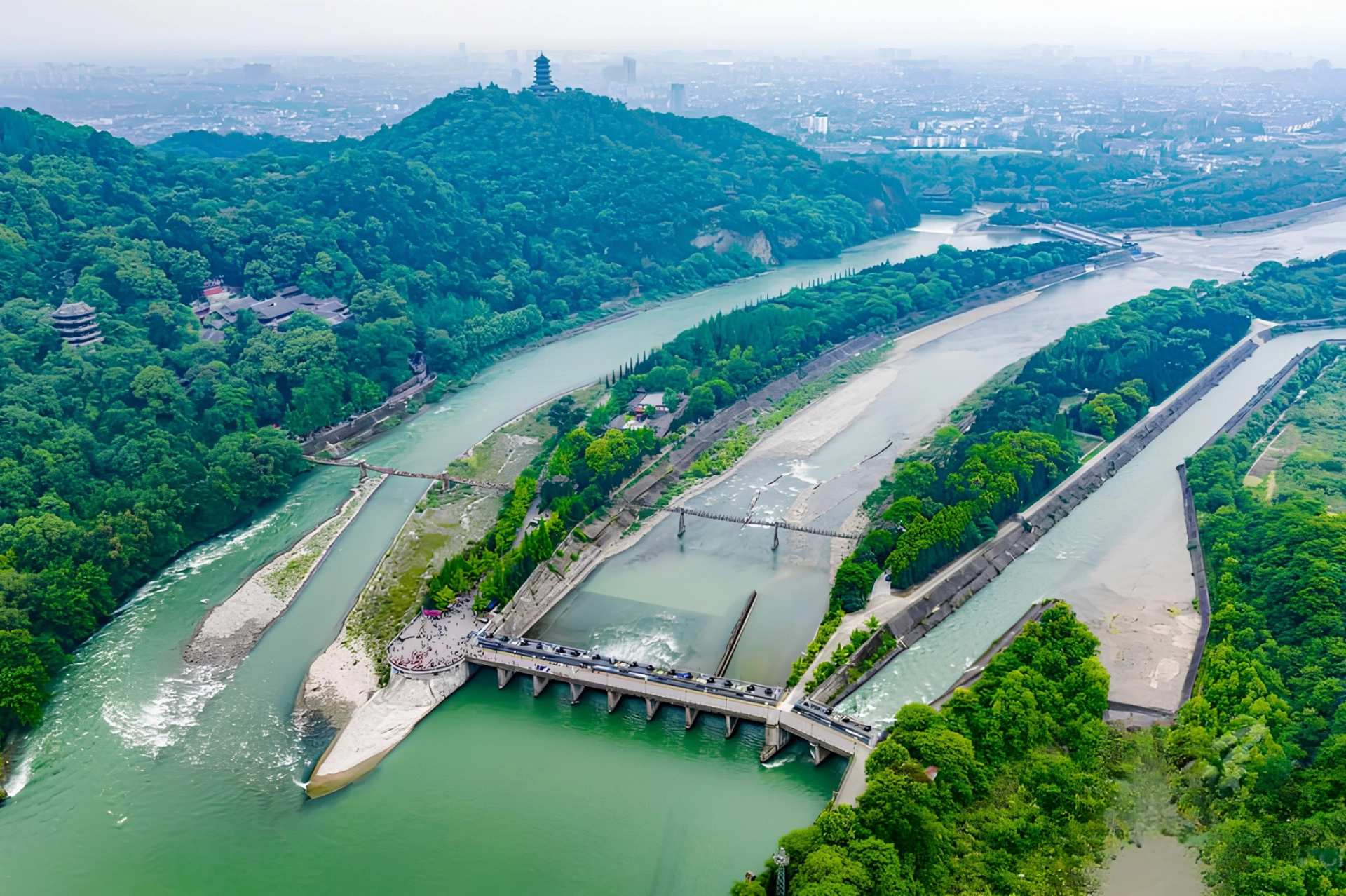
Engineering Without Force: The Li Bing Legacy
In 256 BC, Governor Li Bing rejected the conventional wisdom of building a dam to control the flood-prone Min River. Instead, he designed a "soft system" that uses geometry and gravity to convince the river to regulate itself. Today, this UNESCO World Heritage site remains fully operational, feeding the agriculture of over 12 million people on the Chengdu plain.
The Triple-Component Logic
The system functions through three ingenious, passive components:
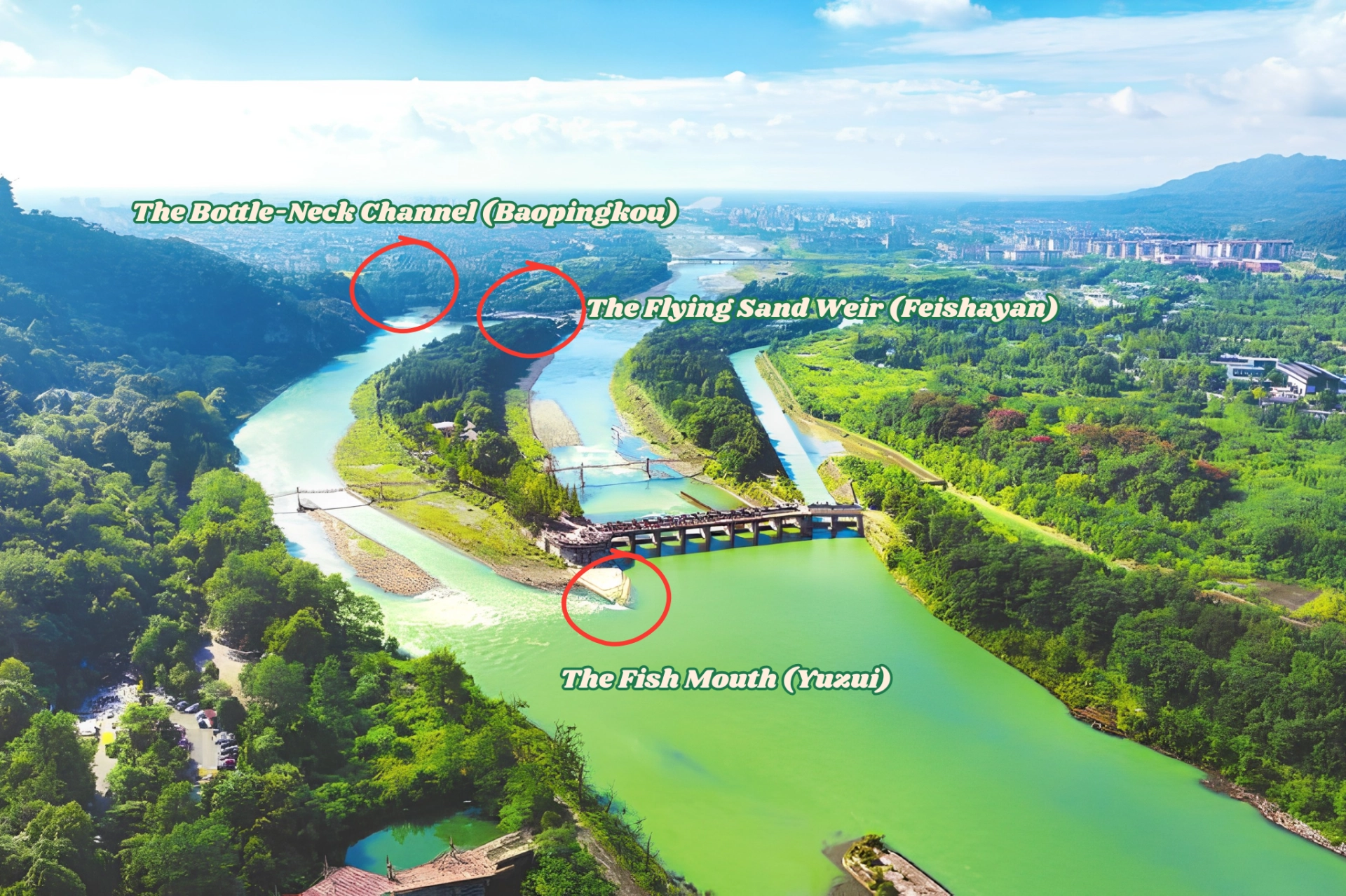
- The Fish Mouth (Yuzui): An artificial island that automatically splits the river into inner and outer channels based on seasonal volume.
- The Flying Sand Weir (Feishayan): A low spillway that uses centripetal force to fling sediment out of the irrigation channel, preventing siltation for two millennia.
- The Bottle-Neck Channel (Baopingkou): A narrow rock-cut passage that acts as a final flow regulator to prevent downstream flooding.
2026 Practical Information for International Travelers
| Transport | High-speed rail from Chengdu Xipu to Dujiangyan Station (~35 min, ¥15). |
| The "Blue Tears" | Visit the Nanqiao (South Bridge) after 7:00 PM to see the illuminated blue reflections on the water. |
| Best Vantage Point | Climb to Erwang Temple for the only panoramic view of all three system components. |
| UNESCO Double | Combine with Mount Qingcheng (10 mins away) to see the Daoist roots of "action through non-action". |
The Philosophical Edge: Wu Wei in Stone
Dujiangyan is more than an irrigation system; it is the physical manifestation of Daoist philosophy. By working with natural forces rather than against them, Li Bing created a resilient masterpiece that has survived catastrophic earthquakes and 2,200 years of use. It remains the world's premier case study in "ecological engineering".
FAQ
Q: Is Dujiangyan a dam?
A: No. It is the world’s only surviving non-dam irrigation system. It regulates water and sediment using natural flow dynamics and clever geometry rather than a physical wall.
Q: How do I get to Dujiangyan from Chengdu in 2026?
A: Take the frequent high-speed trains from Chengdu Xipu Station. The ride takes approximately 30–35 minutes and costs about $15.
Q: What are the "Blue Tears" of Dujiangyan?
A: This refers to the stunning night illumination at Nanqiao Bridge, where blue lights reflect off the rushing river water, creating a "shimmering tear" effect.