The Bridge Marco Polo Called the Finest in the World — And the Lions Beijing Says You'll Never Finish Counting
There is a saying in Beijing that sounds like a joke until you try it:
The lions of Lugou Bridge — you can't count them.
It's used the way English speakers say "too many to count" — a stock phrase, dropped into conversation about anything uncountable. Most Beijingers who use it have never stood on the bridge.
Those who have seen them understand: it isn't a metaphor. It's a description.
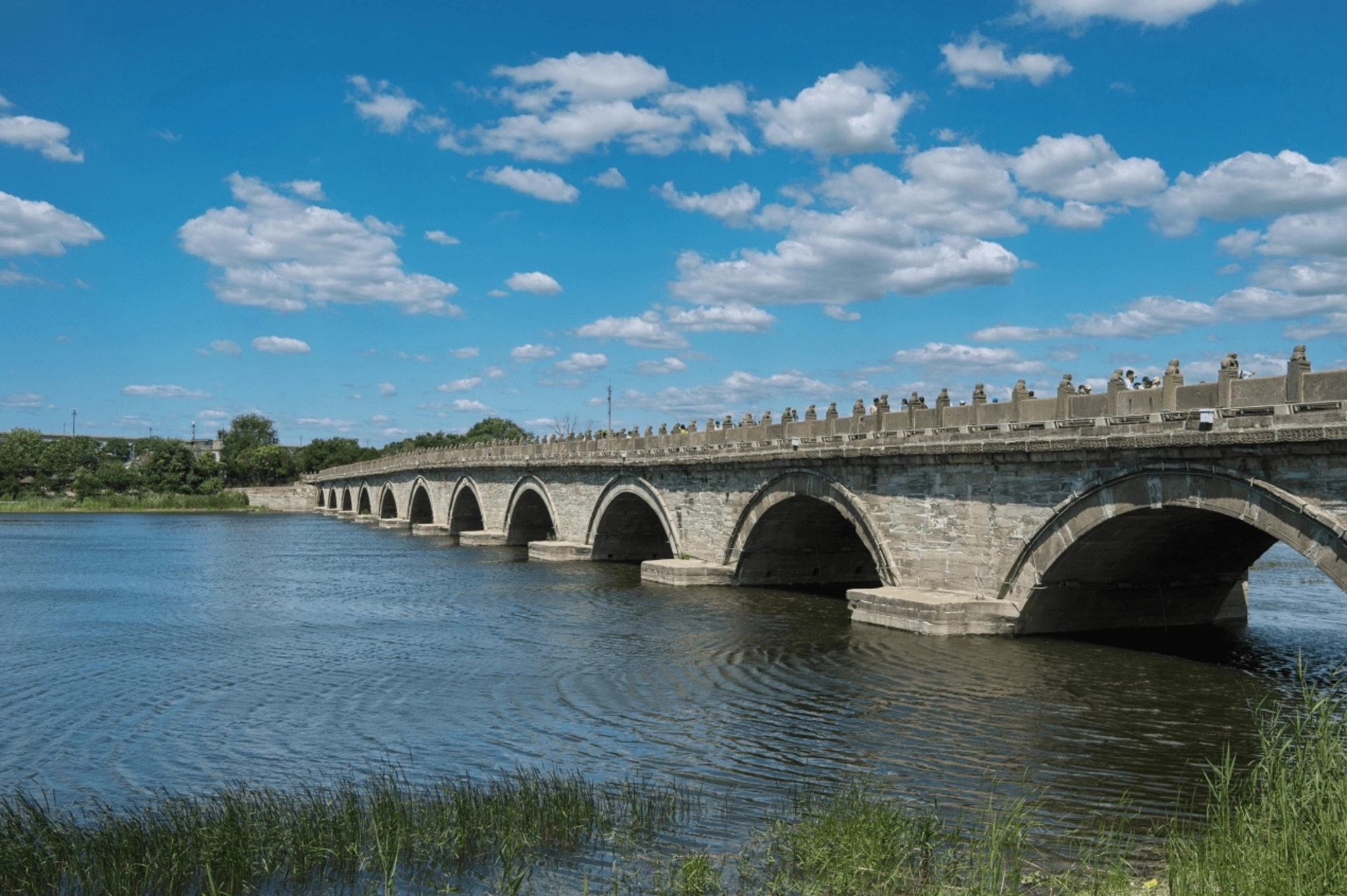
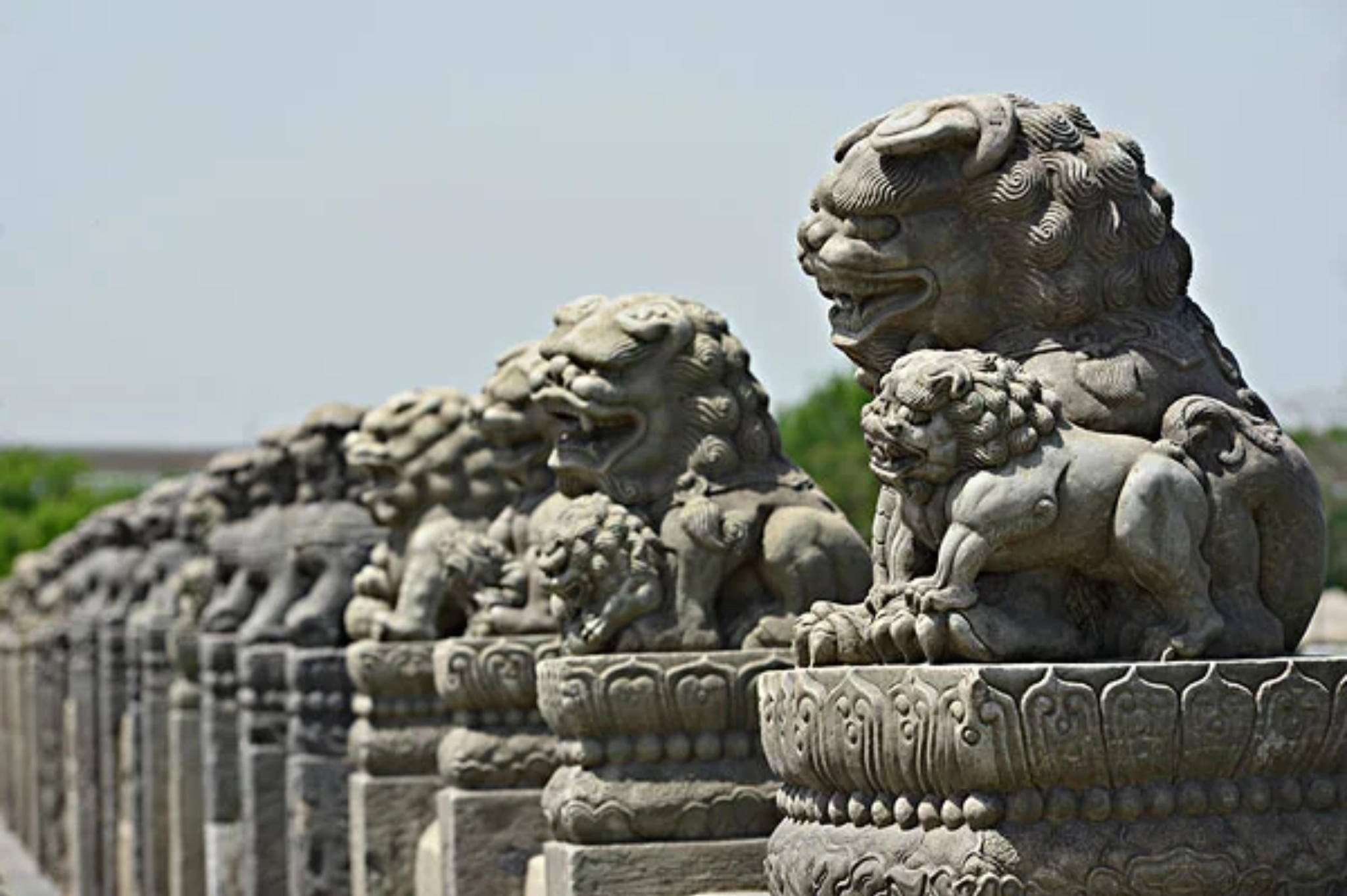
Lugou Bridge — known in English as the Marco Polo Bridge — has stood over the Yongding River in Beijing's southwest since 1192. It carries 281 stone pillars, each topped with a carved lion. But the lions have lions: cubs tucked under paws, clinging to backs, peering out from between the parent's ears, hidden beneath the belly where you only find them by crouching. Nobody has ever produced a count everyone agrees with. Official surveys put the total in the 480s to 500-plus, and the number changes with each new survey because someone always finds another cub.
This is one of the oldest structures in Beijing, one of the least visited by foreign tourists, and — since Subway Line 16 opened a station a ten-minute walk away — one of the easiest to reach.
Here's why it deserves half a day.
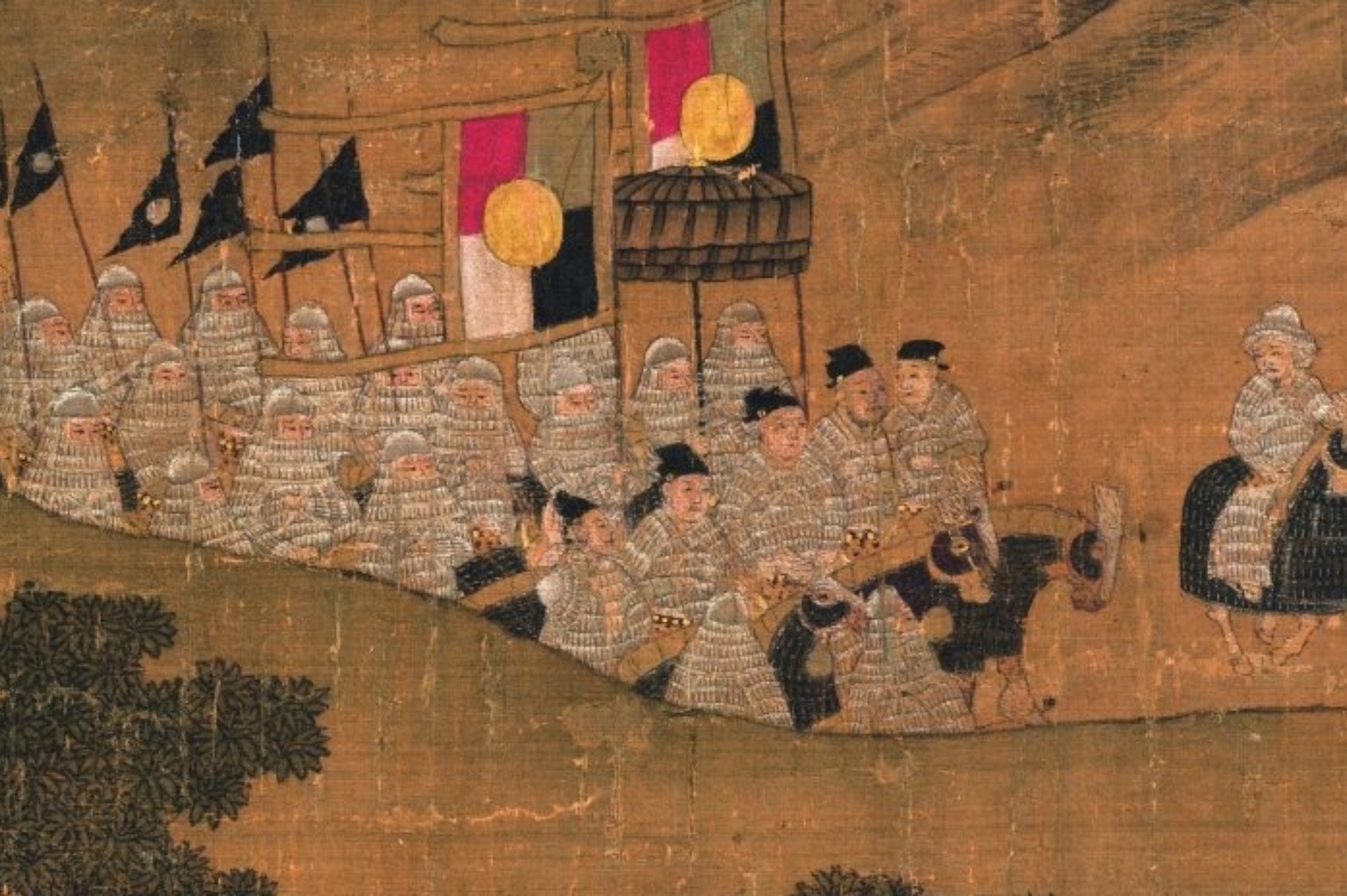
The bridge is older than almost everything you came to Beijing to see
Get the chronology straight and the bridge becomes astonishing.
Lugou Bridge was completed in 1192, under the Jin Dynasty — the Jurchen dynasty that ruled northern China before the Mongols, and which made this city its capital under the name Zhongdu.
That is:
- 229 years before the Forbidden City and the Temple o Heaven were completed (1420)
- Roughly 380 years before the Ming rebuilt the Great Wall sections at Badaling and Mutianyu into what visitors photograph today
- Contemporary with Richard the Lionheart's crusade and the building of Notre-Dame Cathedral in Paris.
Almost everything that says "ancient Beijing" on a tour itinerary is Ming or Qing — 15th to 18th century. Lugou Bridge is 12th century, and large parts of the structure below the parapets are original Jin stonework, repaired but never replaced.
It is 266.5 metres long, carried on eleven arches, built from grey granite, and it survived eight centuries of the Yongding River — a river notorious enough that its name literally means "Forever Stable," which is what the Qing court renamed it in 1698 out of what can only be described as optimism. It had flooded catastrophically and repeatedly under its previous name, Unstable River.
The bridge outlasted the river's temper. The Kangxi Emperor rebuilt sections after a flood; the Qianlong Emperor had it resurfaced and left an inscription. But the bones are Jin.
Did Marco Polo actually see it?
Yes — and his account is the reason for the English name.
Marco Polo reached Khanbaliq (Mongol Beijing) in the 1270s, roughly eighty years after the bridge was finished. In his Travels, he describes a magnificent stone bridge over a river outside the capital, praises its craftsmanship in terms he uses for very little else in China, and dwells on the carved lions along its parapets.
European readers who later travelled to Beijing matched the description to Lugou Bridge, and the name stuck in every Western language. In China it has always been Lugou Bridge, after the old name of the river.
There is a pleasing symmetry in this: a bridge in Beijing named in English after an Italian who wrote about it in a Genoese prison, and named in Chinese after a river that no longer carries that name.
The lions: how to actually look at them
Do not walk the bridge in five minutes taking wide shots. The bridge is not the attraction. The lions are.
What to look for:
The dynasties are mixed. Most lions are Ming (1368–1644) and Qing (1644–1911) replacements, but a number are Yuan (1271–1368) and a handful are believed to be original Jin. You can learn to date them by eye within twenty minutes of looking, and it becomes addictive.
The older ones are rounder, flatter, more abstract — heavy-browed, compact, almost bear-like, with shallow carving. The Ming lions are more muscular and formal. The Qing lions are fussier: elaborate curled manes, deeper undercutting, more theatrical expressions. Late repairs are obvious — brighter stone, sharper edges, a certain lifelessness.
The cubs are the game. This is what makes the count impossible. Systematically check every lion for:
- cubs held under a front paw
- cubs climbing the back
- cubs peeking over a shoulder
- cubs pressed against the chest
- cubs beneath the belly, visible only if you get low
Some parents carry one. Some carry several. Some carry none. A few cubs are so worn they're only findable by touch.
The wear tells the story. Eight centuries of weather, cart wheels, war and hands have rounded some lions almost to boulders while others under sheltered angles remain crisp. Sighting down the parapet at low sun in autumn — when the light rakes sideways — the whole line reveals its depth at once.
Also look down. The original stone road surface survives in the central span, deeply grooved by centuries of cart traffic. Those ruts are the actual footprint of the caravan route into the capital.
Wanping: the walled town most visitors don't realise is there
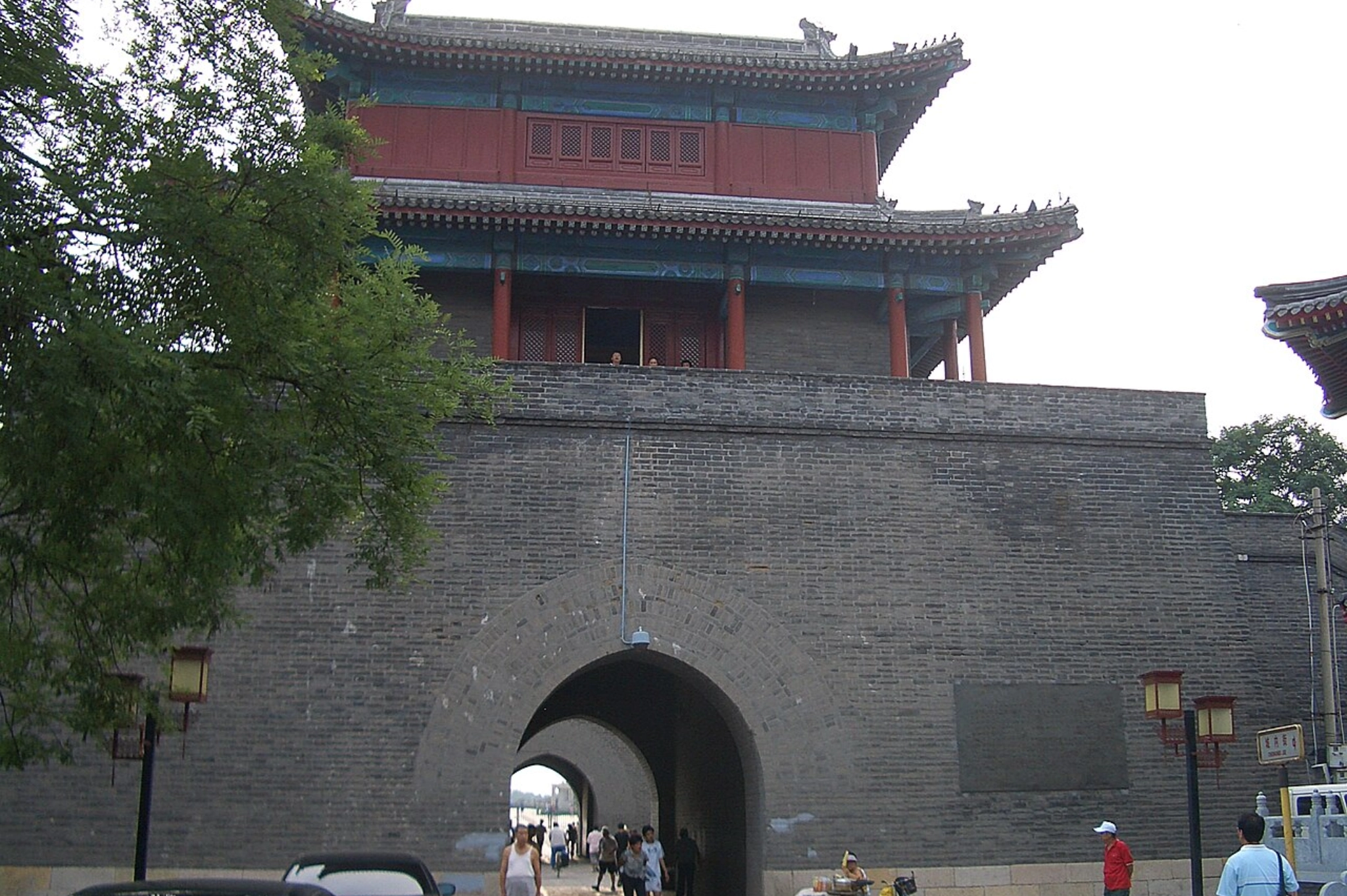
At the eastern end of the bridge stands Wanping Fortress — and this is the part that turns a bridge visit into a half-day.
Wanping is a complete Ming-dynasty walled garrison town, built in 1638–1640 in the last, panicked years of the Ming Dynasty to guard the southwestern approach to the capital. It is small — a rectangle roughly 640 by 320 metres — with walls, gate towers at each end, and a single main street running through.
Beijing's own city walls were demolished in the 1950s and 60s. Wanping's survive. You can walk the street between them and get a physical sense of the enclosed, defended, gate-and-curfew city that Beijing itself once was.
The town has been restored and is quiet in a way central Beijing never is. There are courtyard cafés, small shops, and a length of wall you can walk.
The other history: 7 July 1937
There is no honest way to write about this bridge without the second story, and visitors should know what they are walking into.
On the night of 7 July 1937, Japanese garrison troops conducting exercises near the bridge demanded entry into Wanping to search for a soldier they said was missing. Chinese forces refused. While the matter was still under negotiation, fighting broke out.
The Marco Polo Bridge Incident — known in Chinese as the Double Seven Incident — is dated by Chinese historians as the beginning of the full-scale War of Resistance Against Japanese Aggression, and by many historians worldwide as the effective start of the Second World War in Asia. The war that followed lasted eight years.
Inside Wanping stands the Museum of the War of Chinese People's Resistance Against Japanese Aggression, the national museum of that conflict.
A note for foreign visitors: this is a national memorial site, presented from a Chinese perspective, and it is emotionally serious. It is also, for most Western visitors, a large gap in their historical education being filled — the Asian theatre of the war generally receives a fraction of the attention the European theatre gets in Western schooling.
Go respectfully, or don't go — but know that 3 September, today, is China's national Victory Day, commemorating the formal Japanese surrender in 1945. If you visit this site in early September, expect commemorative activity, larger domestic crowds, and a more solemn atmosphere than usual.
You can visit the bridge and skip the museum. Many visitors do. But you should not visit without knowing why the site matters twice.
Practical guide
Getting there — this is the easy part now
Take Subway Line 16 to Wanpingcheng Station, the southern terminus of the line. From the station it's a 10-minute walk to Wanping's gate, the bridge and the museum, all clustered together.
Line 16 runs north–south through western Beijing and interchanges with Line 4, Line 10, Line 6 and others. From most central hotels this is a single transfer.
Before Line 16 extended south, this site required a long bus ride or a taxi, which is a large part of why so few international visitors have been. That excuse is gone.
Tickets and hours
- Bridge and Wanping area: around ¥20
- War museum: free, but advance online reservation is normally required, and you will need your passport
- Hours: the bridge area generally opens around 07:00 and closes early evening; the museum keeps standard museum hours and closes Mondays
Confirm the museum's reservation system before you go — it's the one thing that will turn you away at the gate.
How long to allow
- Bridge alone, done properly with the lions: 45–60 minutes
- Bridge + Wanping walls and street: 2 hours
- Bridge + Wanping + war museum: half a day
When to go
Autumn, late afternoon. September and October give Beijing its clearest air of the year, and low sun raking along the parapet is the only light that shows the lions properly. Arrive around 16:00 in September for the last two hours of good light.
Avoid 7 July and the days around 3 September unless you specifically want to see the commemorations — those are the busiest and most solemn days on the site's calendar.
What to bring
A zoom lens or a phone with decent zoom — many of the best cubs are on parapet lions you can't get close to. Comfortable shoes, because the original stone surface is uneven by design. And your passport, without exception.
Quick facts
Name: Lugou Bridge / Marco Polo Bridge (盧溝橋)
Built: 1189–1192, Jin Dynasty
Rebuilt: 1698 (Kangxi era), resurfaced under Qianlong
Length: 266.5 m, 11 arches
Pillars: 281, each topped with a carved lion
Lion count: Officially 480s–500+; disputed, and that's the joke
Adjacent: Wanping Fortress (1640), a complete Ming walled town
Also on site: Museum of the War of Chinese People's Resistance Against Japanese Aggression
Historic significance: Marco Polo Bridge Incident, 7 July 1937
Getting there: Subway Line 16 to Wanpingcheng, 10-min walk
Entry: ~¥20 bridge area; museum free with advance booking
Best time: Autumn, late afternoon, for raking light on the lions