A nobleman walked the length of the Turkic world collecting words, carried them to Baghdad as the first dictionary of the Turkic languages, and drew the oldest surviving map by a Turkic hand. He came home to a hill above an apricot village to die.
Key Points at a Glance
Mahmud al-Kashgari's Mausoleum, Kashgar
Frequently Asked Questions
Mahmud al-Kashgari's Mausoleum, Kashgar
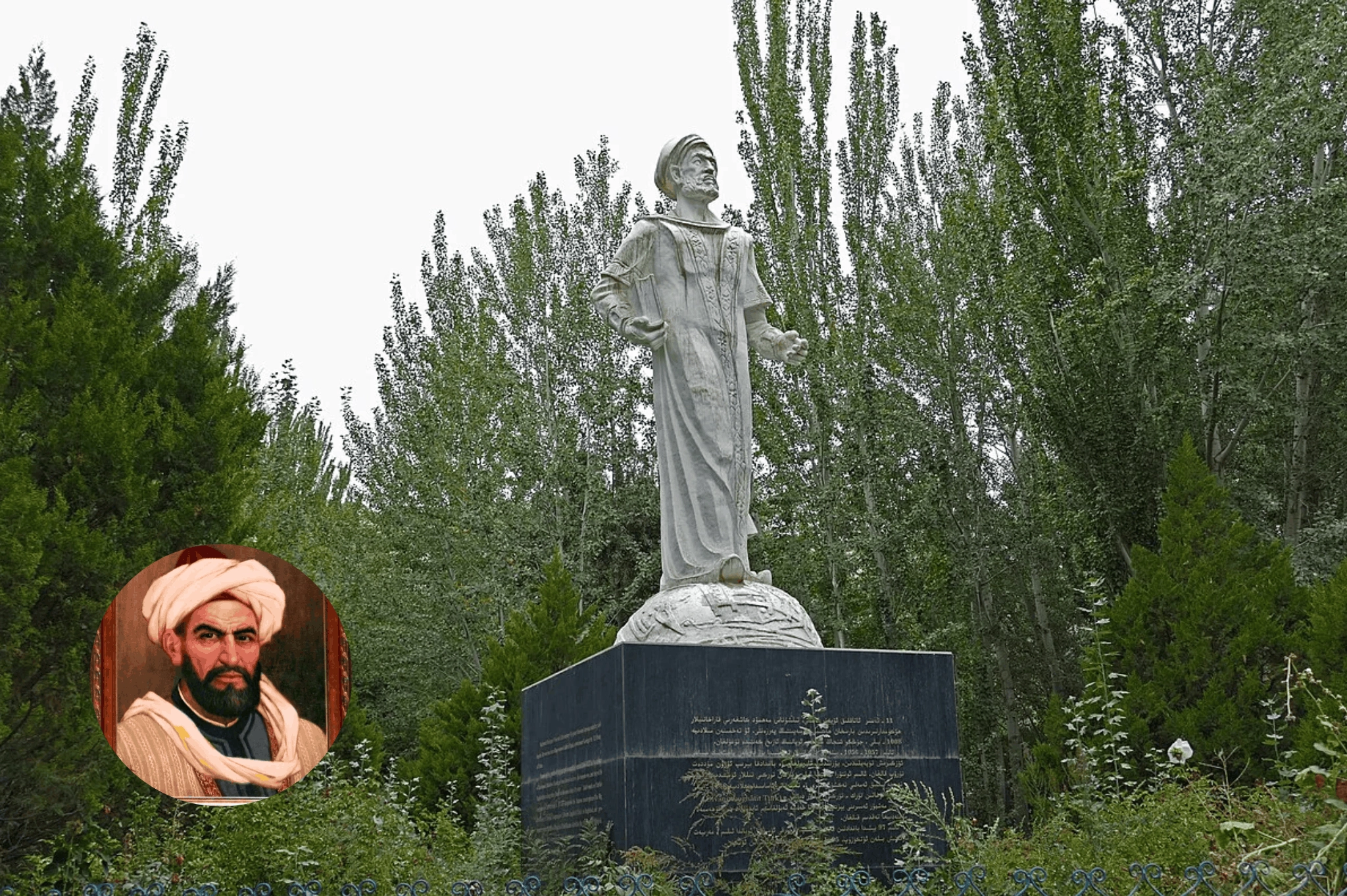
The Man Who Mapped the Turkic World: At the Mausoleum of Mahmud al-Kashgari Outside Kashgar, the 11th-Century Scholar Who Drew the Oldest Turkic World Map and Wrote a 7,500-Word Dictionary That Saved a Language From Silence
Most travellers come to Kashgar for the living city — the labyrinth of the Old Town, the Sunday bazaar, the great yellow face of the Id Kah Mosque, the smell of cumin smoke and fresh nang bread. Few of them drive the half-hour out of town to a quiet hill above an orchard village called Opal, and fewer still know that the man buried there, nearly a thousand years ago, did something almost no one in history has managed: he took an entire family of living languages, in danger of being written off as the rough speech of herders, and proved to the most powerful civilisation of his age that it was as worthy of attention as Arabic and Persian. His name was Mahmud al-Kashgari, and his tomb is one of the most quietly extraordinary places on the whole Silk Road.
A Scholar Born of the Karakhanid Golden Age
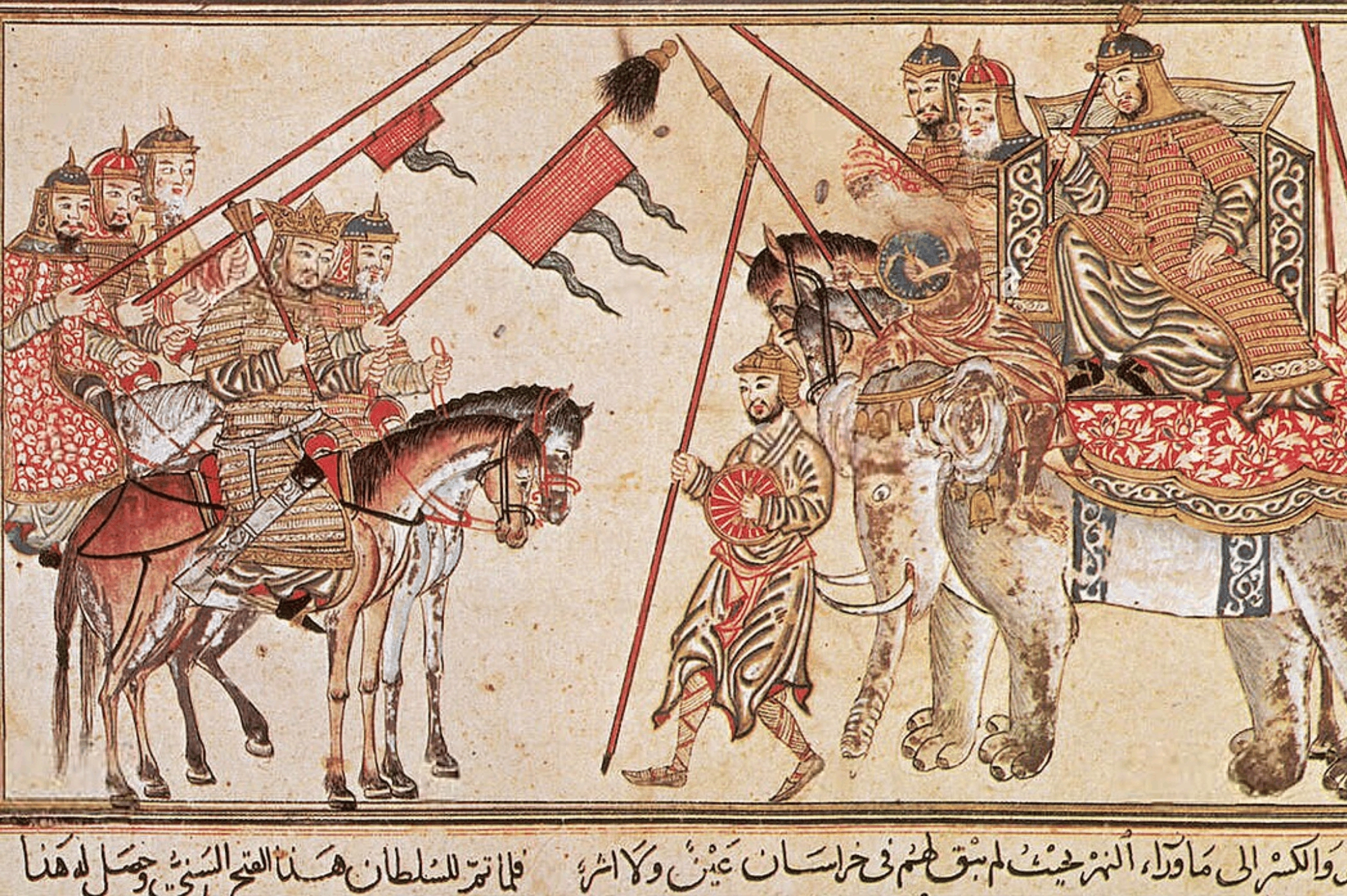
In the eleventh century, Kashgar was far more than a trading city along the Silk Road. Under the Karakhanid dynasty, it became an important centre of scholarship, lliterature and Islamic learning. It sat near the heart of the Karakhanid Khanate (the Kara-Khanids), the first great Turkic dynasty to adopt Islam, after the ruler Satuq Bughra Khan converted in the tenth century. Under the Karakhanids, Kashgar and the twin capital of Balasagun became glittering centres of Turkic-Islamic civilisation, where mosques, madrasas and libraries rose and poets and philosophers wrote in a newly confident Turkic tongue.
It was in this flourishing intellectual environment that Mahmud al-Kashgari was born, around 1005. By tradition he belonged to the region of Kashgar itself; some sources place his birth across the mountains at Barsgan, near the shore of Lake Issyk-Kul, where his father Husayn served as a local lord related to the Karakhanid ruling house. Either way he came from an aristocratic family and received one of the finest educations available at the time. He also grew up immersed in two linguistic and cultural worlds: the Arabic of scholarship and the Turkic traditions of the steppe. This dual heritage would prove essential to his life's work.
The Great Journey and the Book It Produced
Mahmud's life took a sharp turn in mid-century, when dynastic bloodshed in the Karakhanid court appears to have driven him into exile. Instead of retreating, he turned exile into expedition. For years he travelled across the Turkic-speaking world — through the towns and tent-camps of Central Asia — doing something no scholar had done before: listening. He gathered words, proverbs, songs and sayings from tribe after tribe, noting carefully how the Oghuz spoke differently from the Kyrgyz, how a word shifted as it crossed a river or a mountain range. He was, in effect, the first great field linguist of the Turkic languages, eight centuries before the discipline had a name.
He carried this harvest of language to the greatest city of the Islamic world. Settling in Baghdad, seat of the Abbasid Caliphate, he spent the years 1072 to 1074 composing his masterpiece: the Dīwān Lughāt al-Turk — the "Compendium of the Languages of the Turks."It was the first comprehensive dictionary of the Turkic languages, thousands of entries deep, written in Arabic so that the scholars of Baghdad could finally read it — and dedicated to the Abbasid caliph, the new ally of the rising Turkic powers. It was far more than a word list. Mahmud larded it with poetry, riddles, folk wisdom and ethnographic notes, so that today it is our single richest window into the Turkic world of the eleventh century — its tribes, its beliefs, its daily life, much of which would otherwise have vanished without a trace.
The Oldest Map Drawn by a Turkic Hand
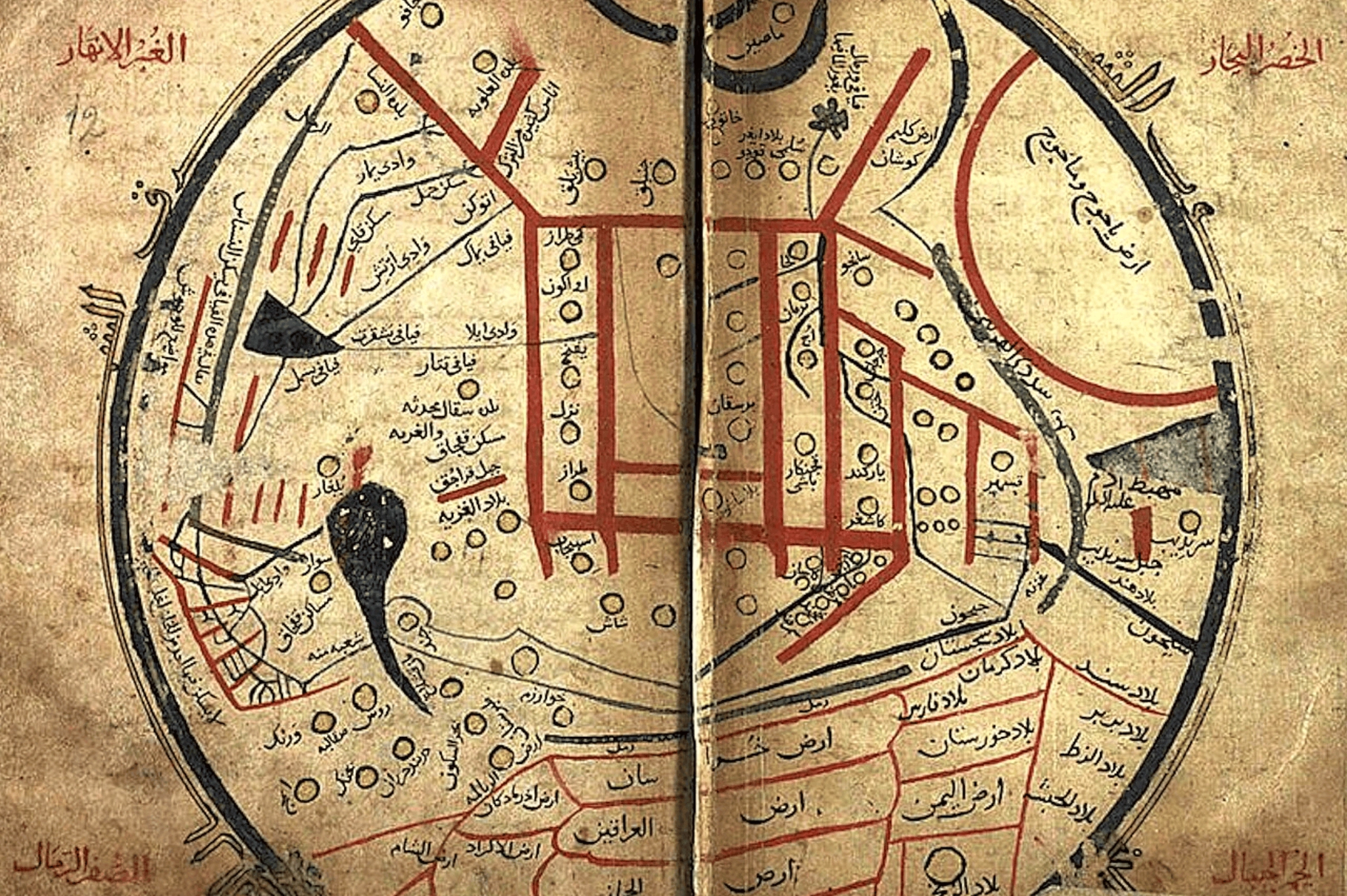
Bound into the pages of the Dīwān is one of the treasures of world cartography: a circular world map, the oldest surviving map made by a Turkic scholar. Hand-drawn and colour-coded, it shows the mountains, rivers, lakes, deserts and seas of the known world, with the cities and homelands of the Turkic peoples set proudly near its centre — a deliberate act of placing his own people at the heart of things. Lakes are drawn in green, seas in blue, rivers in blue lines, mountains in red, sands in yellow. For a reader in Baghdad, it was a revelation: a vast, ordered human geography stretching east across Central Asia that most of the Arab world had never imagined in such detail. The single surviving manuscript of the whole work, copied in 1266, is today one of the prized possessions of a library in Istanbul, and the map has been reproduced on banknotes, stamps and monuments across the Turkic world.
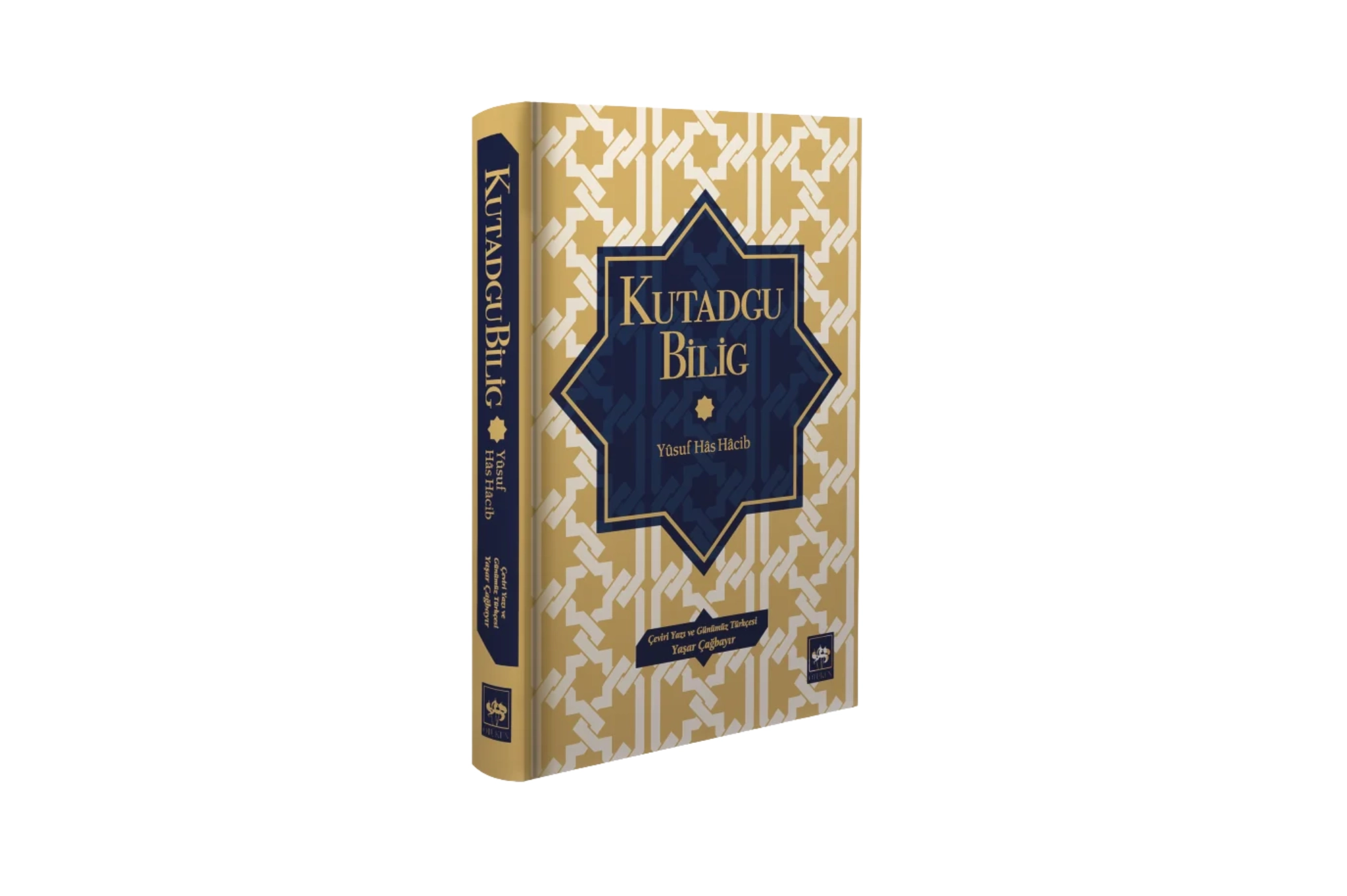
A Companion in Genius: The Poet of Kashgar
Mahmud was not alone in his golden age. Almost at the very moment he was gathering his words, another Kashgar-connected genius, Yusuf Khass Hajib of Balasagun, completed the Kutadgu Bilig — the "Wisdom of Royal Glory," finished around 1069–70 and presented to the Karakhanid ruler of Kashgar. It is the first great long poem written in the Turkic language, a book-length meditation on how to live and rule well, and Yusuf too is honoured with a mausoleum in Kashgar itself. Together these two eleventh-century masters mark the high-water moment of Karakhanid Kashgar, when this oasis on the edge of the Taklamakan was one of the intellectual capitals of the Turkic-Islamic world. To visit both tombs offers a chance to trace the early development of written Turkic literature through two remarkable monuments.
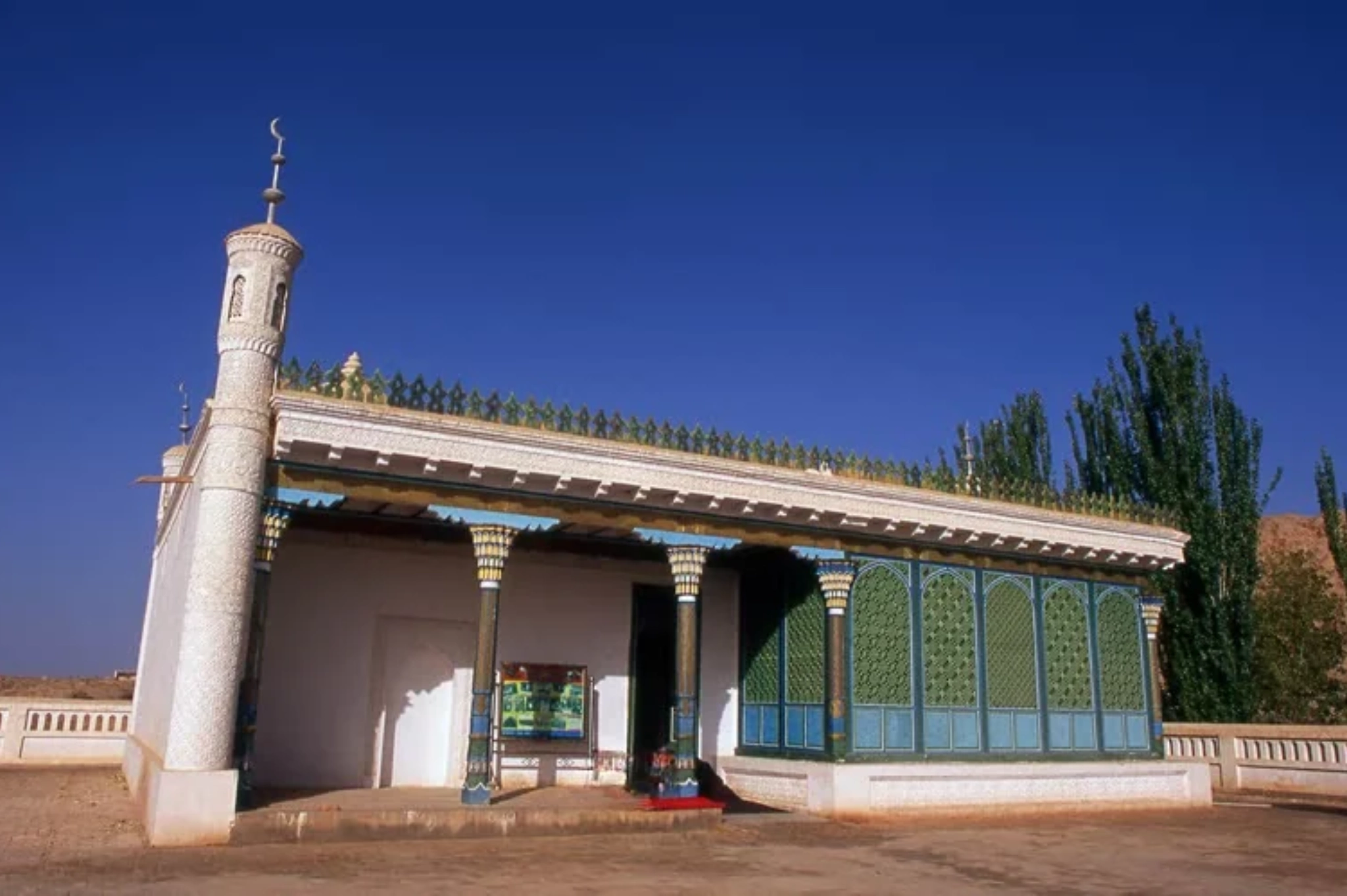
The Mausoleum at Opal
Mahmud al-Kashgari is believed to have died around 1102, at the remarkable age of 97 according to traditional accounts. He spent his final years in his home village of Opal, about 45 kilometers southwest of Kashgar, along the route leading toward the Pamirs and the Karakoram Highway. His mausoleum stands on a low hill above the village, reached by a long flight of steps and crowned with a domed tomb-chamber in the Central Asian Islamic style, its walls bright with turquoise and blue tile. Inside lies the cenotaph of the scholar, draped and revered; around it the complex has grown over the centuries into a place of pilgrimage and homage, with a small memorial museum displaying editions of the Dīwān, reproductions of the famous map, and the story of his life.
Below the tomb, villagers will point you to a sacred spring — the "Blessed Spring" — whose cool, clear water is woven into local legend and which keeps the hilltop green with poplars and fruit trees. Stand at the top of the steps on a bright day and the view runs out over the orchards of Opal toward the snow line of the mountains, the same horizon Mahmud would have known. It is a serene, dignified, deeply atmospheric spot — a world away from the bustle of Kashgar, and all the more affecting for it.
Why This Quiet Hill Matters
It is easy, on a fast Silk Road tour, to reduce Kashgar to a photogenic bazaar. The tomb at Opal is the antidote. It tells you that this corner of Xinjiang was, a thousand years ago, a place where people loved words enough to spend a lifetime saving them — where a nobleman gave up a comfortable life to walk the length of the Turkic world writing down its proverbs, and then carried the result to Baghdad to say, in effect, our language is a civilisation too. The Dīwān Lughāt al-Turk is still studied today as the foundation stone of Turkic linguistics, and the man who wrote it sleeps on a hill above an apricot village within sight of the Pamirs. For any traveller who wants to understand not just what Kashgar looks like but what it has meant, the half-hour drive to Opal is one of the most rewarding you can make in all of Xinjiang.
Practical Notes for Foreign Visitors
- Where it is: The Mausoleum of Mahmud al-Kashgari stands on a hill above Opal village, roughly 45 km southwest of Kashgar in the Kashgar Prefecture of southwestern Xinjiang, on the route toward the Pamirs and the Karakoram Highway.
- Getting there: Easiest as a half-day trip from Kashgar by hired car or on a guided tour — it pairs naturally with the drive toward Karakul Lake, Tashkurgan and the Karakoram Highway, or with a visit to Opal's own lively bazaar. There is no simple public-transport route for most foreign visitors, so a local driver or operator is strongly recommended.
- Pair it with Kashgar's own sites: Combine with the tomb of Yusuf Khass Hajib, the Id Kah Mosque, the Kashgar Old Town, and the Sunday Bazaar for a trip that moves from the living city to its intellectual roots.
- What you'll see: The hilltop domed mausoleum and cenotaph, a memorial museum with editions of the Dīwān and reproductions of the world map, the sacred spring, and sweeping views over the orchards toward the mountains. Allow an hour or two to take it in without rushing.
- Respect the site: This is a revered religious and cultural place. Dress modestly, keep your voice low inside the tomb chamber, ask before photographing worshippers, and follow any guidance about removing shoes or covering your head.
- Best seasons: Spring and autumn are the most pleasant around Kashgar, with mild days and the orchards in blossom or fruit. Summer is hot and dusty; winter is cold but clear and very quiet.
- Visas: Many nationalities — including the UK, Ireland, the US, Australia and New Zealand — can now enter China visa-free for up to 30 days; confirm the current rules for your passport and carry one valid for at least six months.
- Border-sensitive region: Kashgar sits near several international frontiers and the Opal road leads toward the Pamir border zone. Carry your passport at all times, expect checkpoints, and do not photograph military or border installations.
- Go with a guide: A knowledgeable local guide turns a quiet tomb into a vivid story — and smooths the logistics, language and permits that make travel in deep southern Xinjiang far easier.
A thousand years ago a man from this valley set out to catch his people's language before it slipped away, wrote it all down in a book for the ages, and drew the first map that put the Turkic world at its centre. He came home to this hill to die. Stand at the top of the steps at Opal, with the orchards below and the Pamirs ahead, and you are standing where the written history of an entire family of languages begins — one of the Silk Road's greatest stories, hidden in plain sight just outside Kashgar.