A Neighborhood That Defies Logic
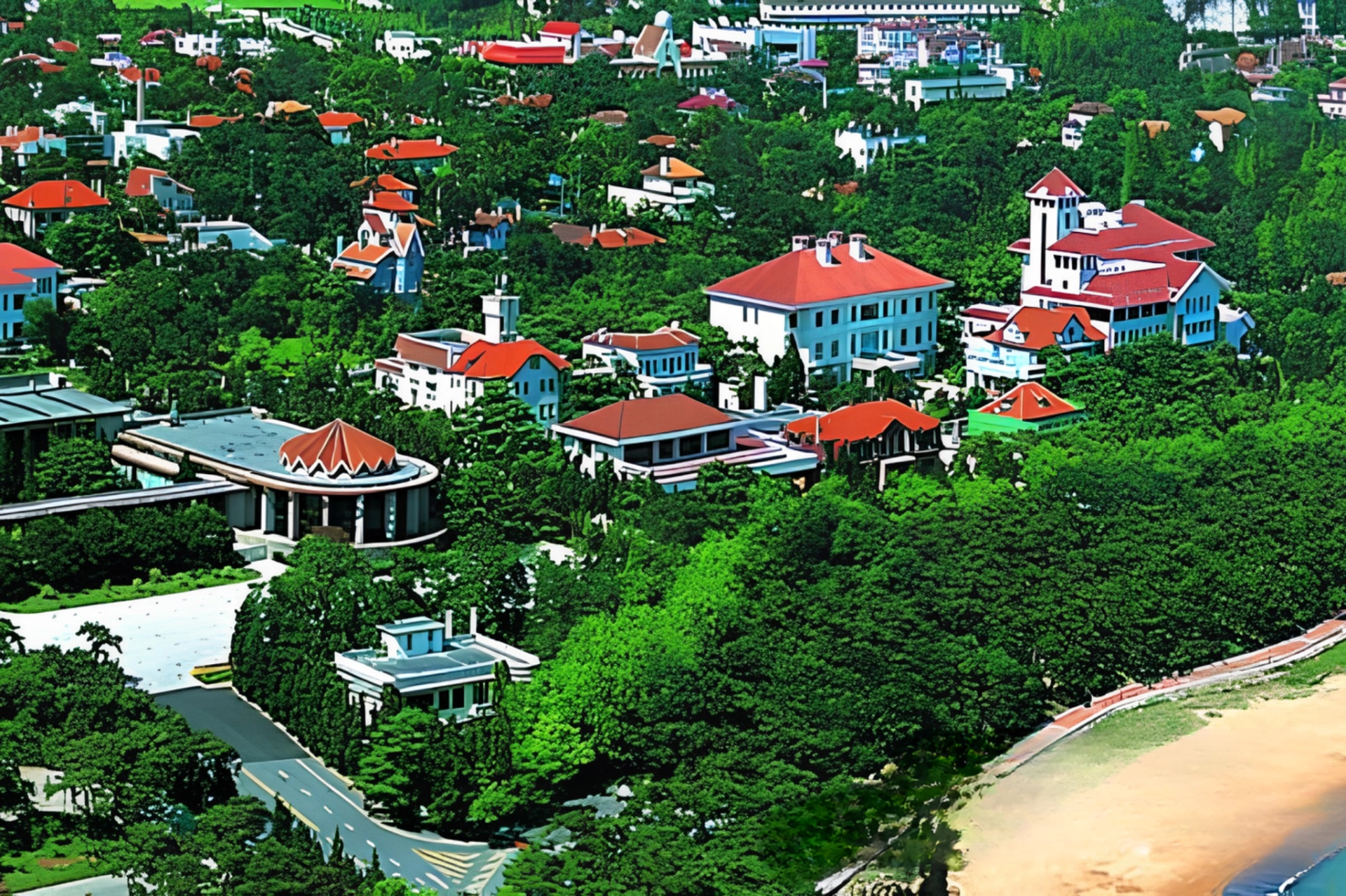
Most travelers arrive in Qingdao for the beer and beaches, but they stay for Badaguan (八大关). Developed primarily between 1903 and 1940, this 70-hectare historic district contains over 200 villas representing dozens of national architectural styles. It is a rare "UNESCO Creative City of Design" where German Romanticism, Russian dacha styles, French manors, and British Arts and Crafts homes coexist along a single coastline.
The Eight Streets: A Seasonal Symphony
Badaguan’s layout is governed by eight original streets, each planted with a different tree species to create a rotating canvas of color, the most spectacular being:
- Shanhaiguan Road (The Signature): Famous for Chinese flowering crabapples that bloom into a pink canopy every April.
- Juyongguan Road (The Pine Street): Offers deep year-round shade and a concentration of dark-wood Germanic and Nordic Romantic villas.
- Zijingguan Road (The French Quarter): Lined with crape myrtle, showcasing French-influenced architecture with elegant mansard roofs and wrought-iron balconies.
2026 Strategic Logistics for International Travelers
| Primary Attraction | The Flower House (花石樓): A 1930s granite tower with Art Deco and Greek Revival details (Admission ~¥15). |
| Best Photography | Morning Light (7:00–9:00 AM) provides soft, directional lighting that emphasizes the stone textures of the villas. |
| Accessibility | Most streets are level and paved, though individual villa gardens may involve stairs. |
| Avoid the Crowds | Visit on weekday mornings to bypass the dense wedding photography groups that congregate on weekends. |
The Architecture in Detail
Badaguan is an "Outdoor Museum" where the transition of global 20th-century styles is written in stone:
- German Romanticism: Look for steep pitched roofs, red tiles, and decorative gables from the early colonial period.
- Russian Dacha Style: Characterized by intricate wooden fretwork and elaborately carved eaves.
- Art Deco: Visible in the smooth, geometric curves of the Flower House, reflecting the modernization of the late 1930s.
FAQ
Q: Do I need a ticket to enter Badaguan in 2026?
A: Access to the Badaguan district and its eight streets is free. However, specific landmark buildings like the Flower House require a small admission fee (approx. ¥15) to enter the interior.
Q: When is the best time to see the blossoms in Badaguan?
A: Peak blossom season is late March to early May, specifically on Shanhaiguan Road, where the crabapple trees create a vibrant pink canopy.
Q: Is Badaguan near the beach?
A: Yes. The neighborhood slopes down to Huiquan Bay, and both Zhanshan Beach and the No. 2 Bathing Beach are within easy walking distance of the main villas.