—
The Giant Sleeping in Plain Sight
Zhangye has become famous in the last decade for one image: the striped, sherbet-coloured hills of the Danxia landform, glowing at sunset like something poured from a paint tin. Travellers fly in, photograph the rainbow rock, and fly out. Almost none of them realise that a short walk into Zhangye's old town leads to something just as remarkable, and far older — a nine-hundred-year-old wooden hall built around a reclining Buddha so vast that grown adults look like toys beside his hand.
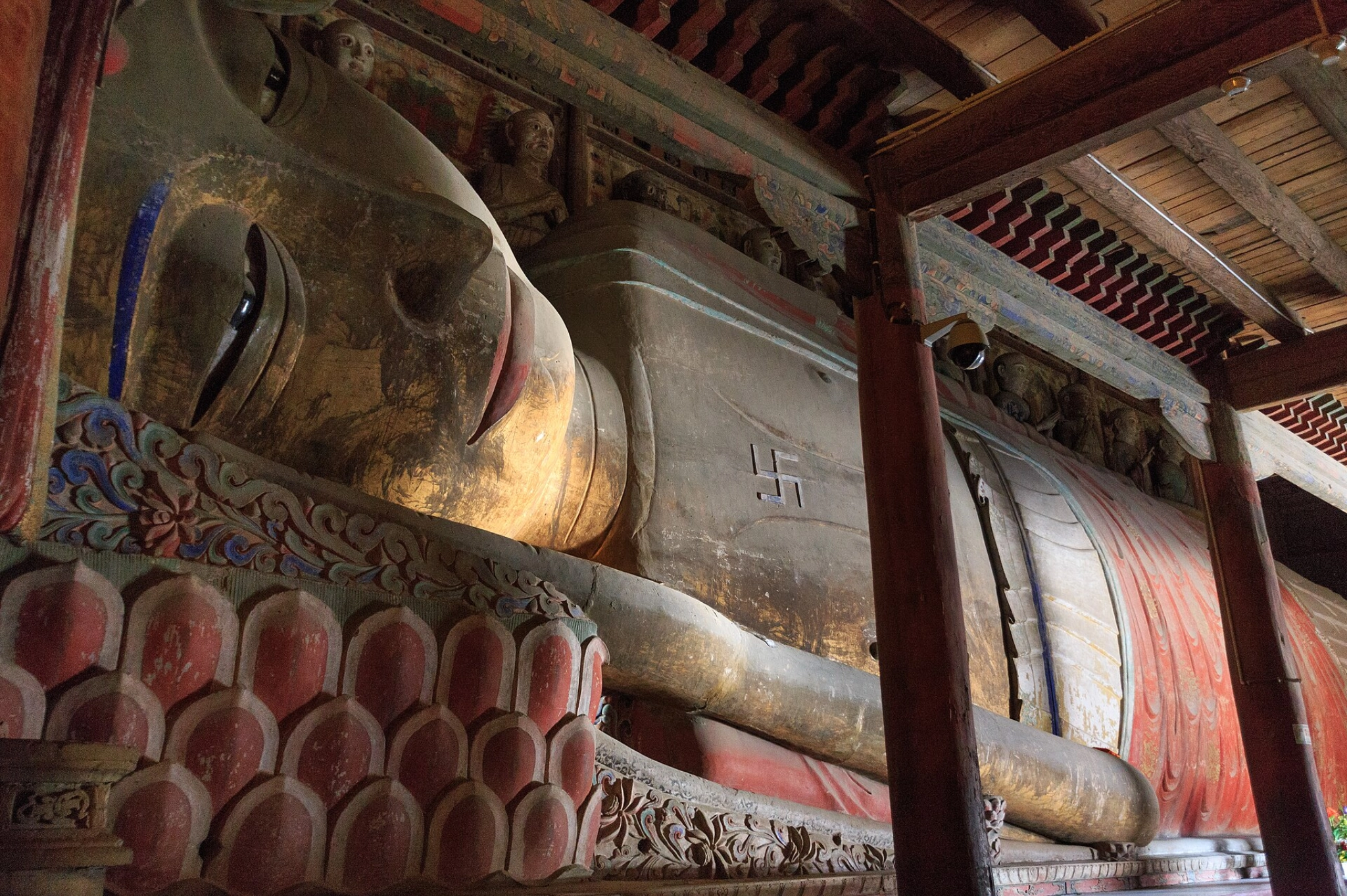
This is the Dafo Si, the Great Buddha Temple, and the statue at its heart is reputedly the largest reclining clay Buddha in all of China. At thirty-five metres long, he fills an entire hall from wall to wall, lying on his side in the posture of nirvana with a faint, knowing smile. To walk the length of him in the hushed half-light is one of the quietest, most moving experiences in all of Gansu — and one that the crowds outside almost entirely miss.
This guide tells you what he is, where he came from, and how to see him properly.
—
A Statue Born From a Legend
The story of how the Great Buddha Temple came to be is as extraordinary as the statue itself, and it is worth carrying in your mind as you stand before him.
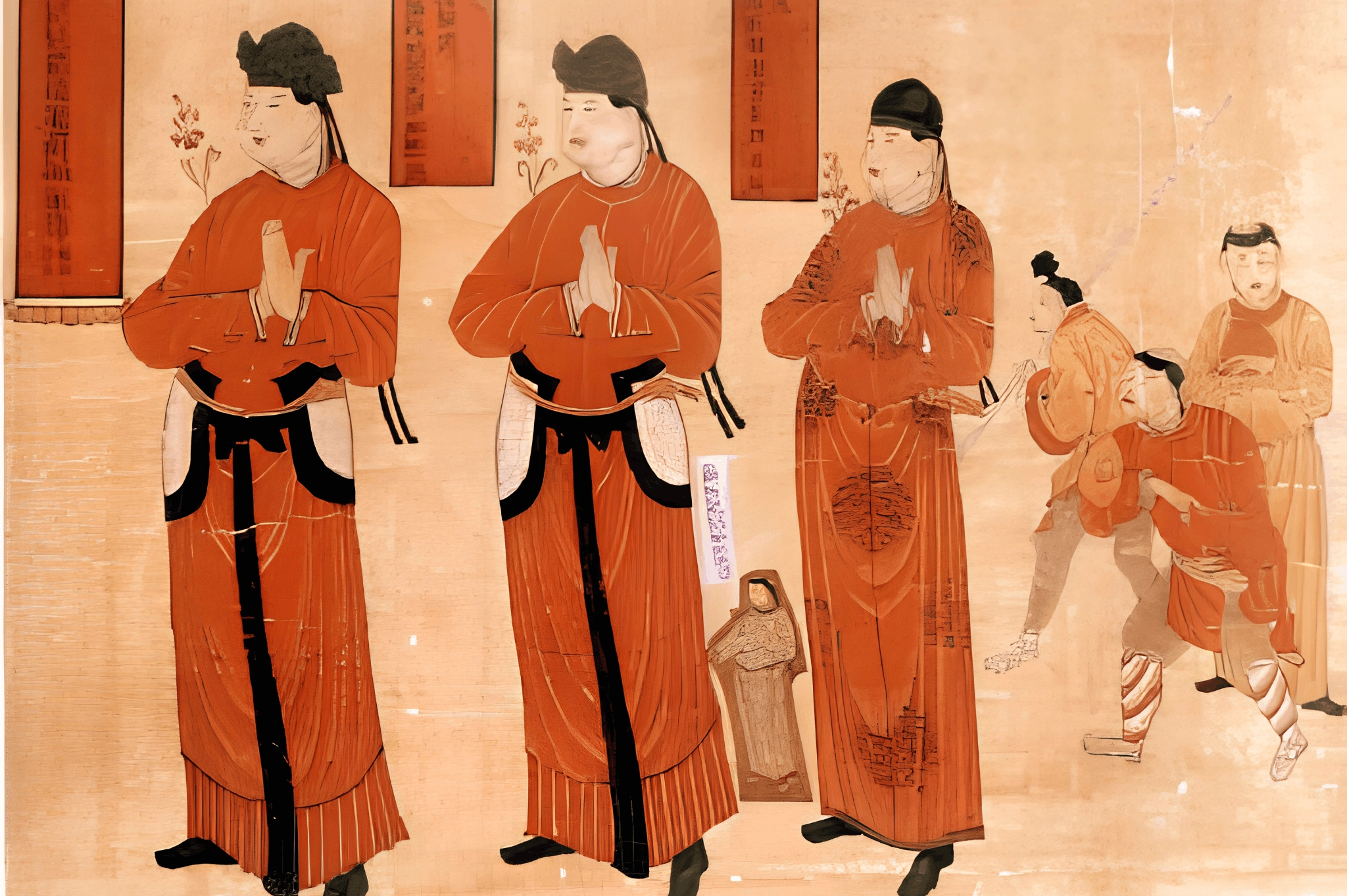
Around the year 1098, during the Western Xia dynasty — the Tangut-led kingdom that ruled this stretch of the Silk Road before the Mongol conquest — a monk named Sineng is said to have seen strange lights and heard heavenly music coming from a hillside at the foot of a nearby mountain. Investigating, he unearthed a hidden hoard that included a reclining Buddha image. Taking this as a sign of divine favour, he resolved to build a great temple worthy of the revelation. The temple that rose over the following years, and the colossal statue within it, are the result.
Over the centuries the temple has worn many names — the Kasyapa Tathagata Temple, the Baojue Temple, the Hongren Temple, and simply the Reclining Buddha Temple among them — each layer of naming a reminder of how many dynasties have prayed here. Founded around the turn of the twelfth century, the temple has stood through the fall of the Western Xia, the Mongol Yuan, the Ming and the Qing, and remains one of the very few Western Xia structures anywhere to survive largely intact.
—
The Buddha Himself: Scale, Craft and Meaning
The statue depicts Gautama Buddha at the moment of parinirvana — his final passing from the cycle of birth and death into ultimate release. He lies on his right side, head resting on his hand, eyes serenely half-closed. Ranged behind and around him stand his ten principal disciples and other figures, each rendered in expressive detail, so that the whole hall becomes a single frozen scene of mourning and transcendence.
The craftsmanship is a marvel of ancient engineering. The Buddha is not carved from stone but modelled in clay over a hollow wooden armature — a technique that allowed such immense scale without impossible weight. Every proportion is calculated for the viewer standing below: at thirty-five metres, the figure is long enough that a single ear measures around two metres and a person can, it is said, recline inside the space of one finger. Yet from the hall floor the whole reads as calm and harmonious rather than overwhelming, a testament to the anonymous masters who built him.
There is no son-et-lumière spectacle, no forest of selfie sticks. Visitors fall quiet, and the silence itself becomes part of the encounter.
—
A Hall That Is a Treasure in Its Own Right
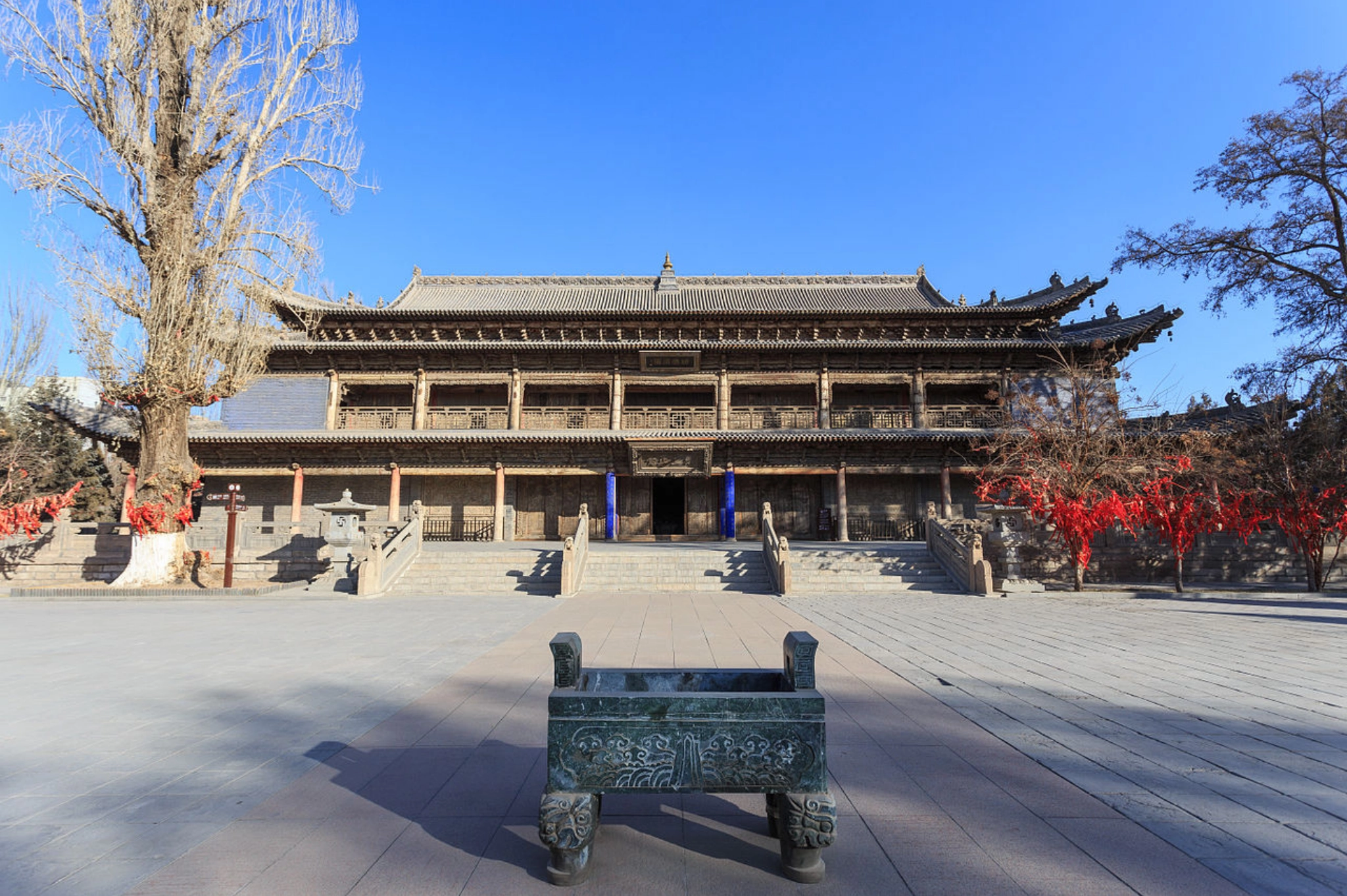
It would be easy to focus entirely on the statue and overlook the building that shelters it — which would be a mistake, because the main hall is itself one of the rarest surviving pieces of Western Xia architecture in China.
The great wooden hall that contains the reclining Buddha is roughly forty-eight metres long, twenty-four metres wide and thirty-three metres tall — dimensions dictated entirely by the giant it was built to house. Its timber frame, joined without nails in the traditional Chinese manner, has endured for the better part of a millennium, surviving earthquakes, dynastic wars and the slow erosion of the desert climate. Very few wooden structures from the Western Xia period exist anywhere in the world, and this is among the largest and best preserved. To stand inside is to occupy a genuine twelfth-century interior, not a modern reconstruction.
The wider temple complex, which was granted status as a major national historical and cultural site in 1996, also holds halls of Buddhist scripture and a small collection of relics and artefacts, including rare printed sutras — rewards for the visitor who lingers beyond the main hall.
—
How to Visit: A Practical Guide
The Great Buddha Temple sits conveniently within Zhangye's old town, an easy walk or short taxi ride from the city centre and its hotels — a welcome contrast to the far-flung desert sites elsewhere in Gansu. The temple reopened to strong visitor numbers after a major restoration project in the mid-2000s and is comfortably set up for tourists.
Because Zhangye is a major stop on the Hexi Corridor high-speed rail line between Lanzhou and Dunhuang, most foreign travellers arrive by train and spend one or two nights. The ideal itinerary pairs the two faces of Zhangye: devote a late afternoon to the Danxia Rainbow Mountains for the famous sunset colours, and reserve a calmer morning for the Great Buddha Temple, when the old-town streets are quiet and the hall is at its most contemplative.
Visiting the hall
Allow an hour to an hour and a half to do it justice. Dress modestly, as you would at any active place of worship; keep your voice low; and respect the photography restrictions inside the main hall. A guide — human or a good audio app — adds enormously here, because so much of the statue's meaning lies in details and legends you would otherwise walk straight past.
—
When to Go
Zhangye follows the same seasonal rhythm as the rest of the Hexi Corridor. Late spring and early autumn — May, June, September and October — bring the most comfortable temperatures and the best light on the nearby Danxia hills. Summer is the busiest season, warm and lively but crowded; the cool, dim interior of the Buddha hall can be a blessed escape from the midday heat. Winter is cold and quiet, and while the town is subdued, the temple's serenity is only deepened by the near-absence of other visitors.
—
The Bottom Line
Zhangye is worth the trip for its rainbow mountains alone — but to stop there is to miss the older, deeper wonder a few streets away. A giant has been sleeping in this old town for nine hundred years, modelled in clay by forgotten hands, sheltered by a wooden hall that has outlived four dynasties. Give him a morning. In a province full of grand landscapes, the thirty-five metres of stillness inside the Great Buddha Temple may be the moment from your Silk Road journey that stays with you the longest.