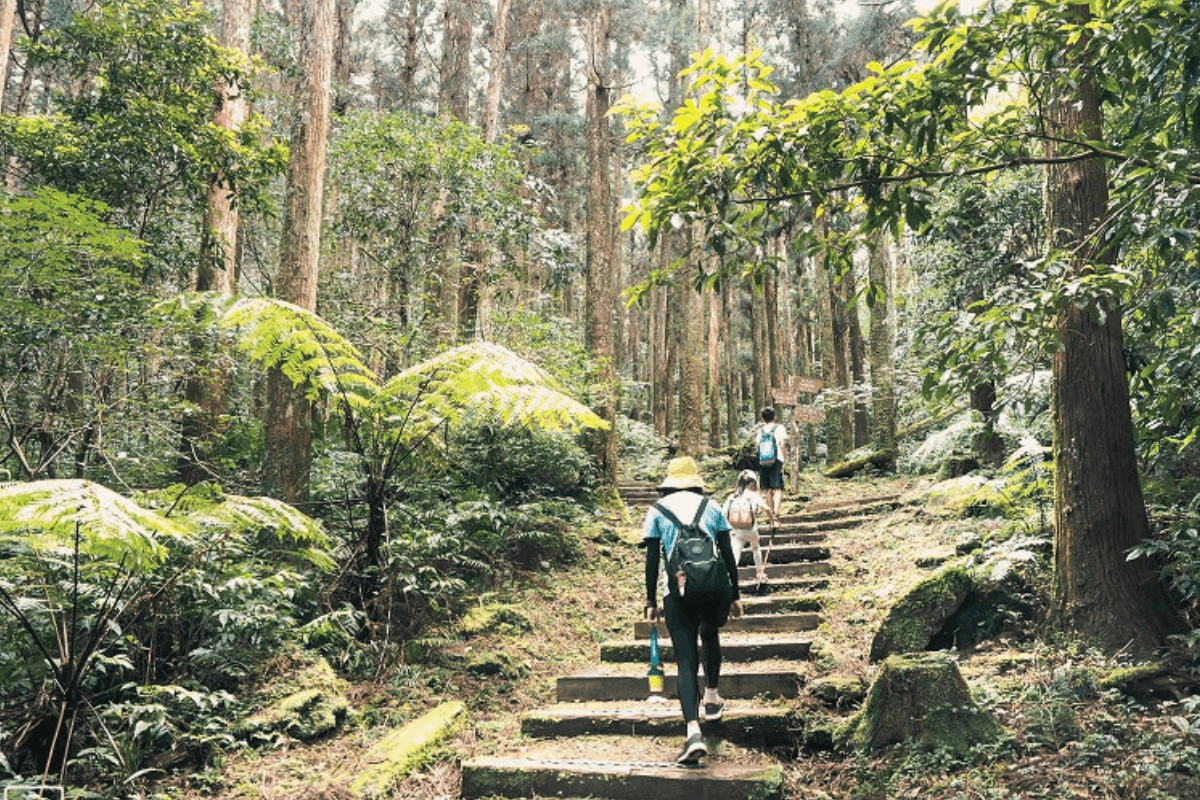

When a Western woman types a question into a search bar at 1 a.m. a week before booking a trip to northwest China, it usually sounds something like this: can I actually do this on my own?
Gansu — a long, thin province stretching along the old Silk Road from the Yellow River at Lanzhou to the desert at Dunhuang — is not Bangkok or Barcelona. It is remote, it is far less touristed by foreigners than Beijing or Xi'an, and the fear of the unknown does a lot of work in the dark. So here is the honest version, worry by worry, written for the woman who is 90 percent sold and needs the last 10 percent told to her straight.
The Headline: China Is One of the Safest Countries in the World for Solo Women — and Gansu Is No Exception

Start with the thing that matters most. Violent crime against tourists in China is very rare, street crime is low, and the country consistently ranks among the safest places a woman can travel alone. Solo female travellers routinely describe walking through Chinese cities late at night and feeling safer than they do at home.
Gansu, a quiet provincial backwater by Chinese standards, is if anything calmer than the big eastern megacities. You are far more likely to be approached — out of friendly curiosity, for a photo, to practise English — than to be threatened. That curiosity can be tiring, but it is almost never menacing. This is the baseline to carry with you: the ambient risk is low, and most of your mental energy is better spent on logistics than on fear.
Walking at Night and the Glorious Night-Market Culture
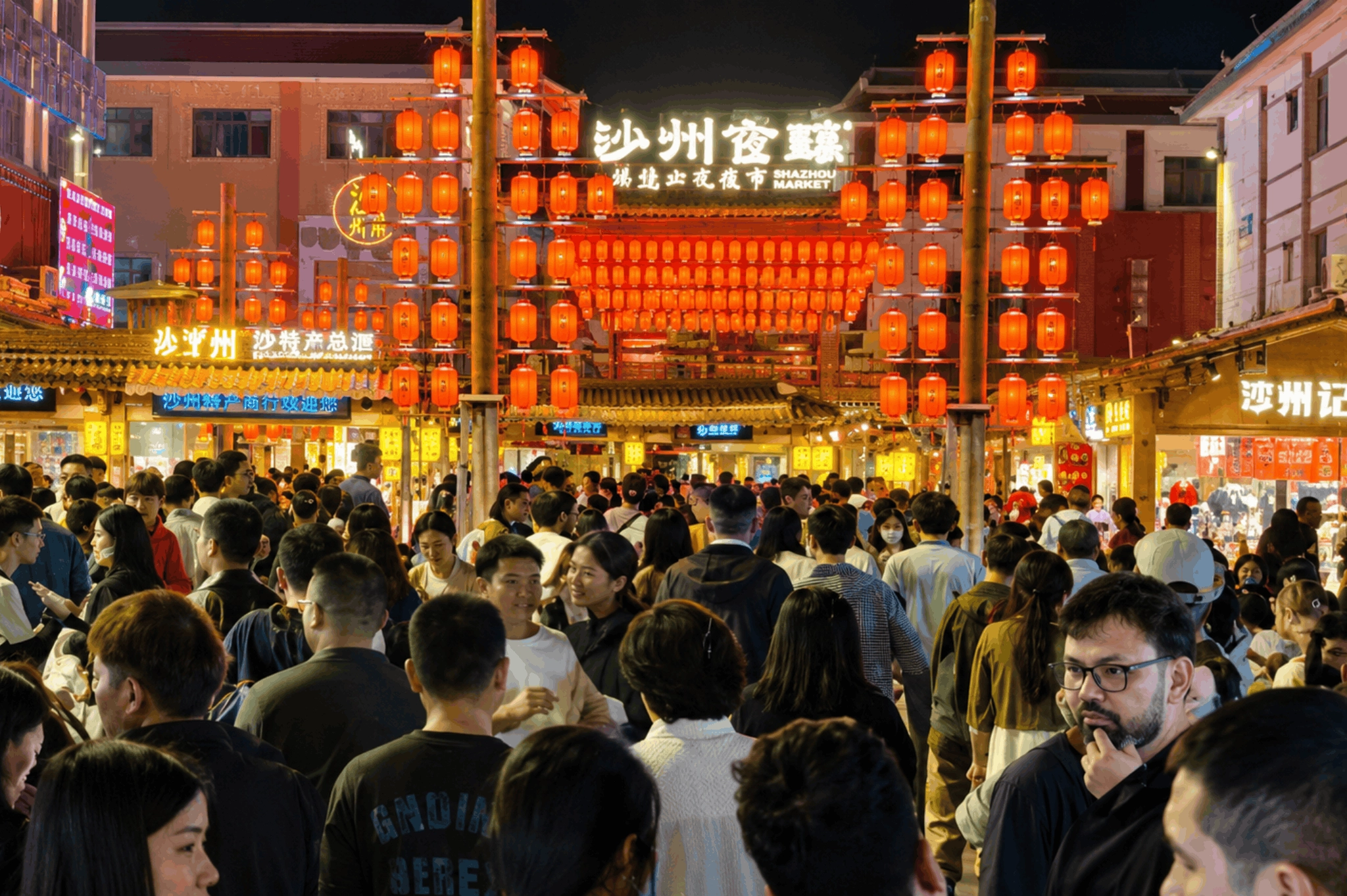
In most of the world, "don't walk alone at night" is standard solo-travel advice. In urban Gansu it barely applies in the way you expect. Chinese cities come alive after dark, and the night market is the beating heart of it.
Lanzhou's Zhengning Road and Dunhuang's Shazhou night market are packed with families, grandparents, students and couples until late, brightly lit, and heavily surveilled by the ubiquitous street cameras that are a fact of Chinese life. A woman eating grilled skewers alone at a plastic table at 10 p.m. is utterly unremarkable. Use ordinary city sense — stick to busy, lit streets, don't wander into unlit industrial edges, keep your phone and passport secure — but the default experience of a Gansu night is warm, crowded and safe, not something to be endured.
Long-Distance Trains, Sleeper Berths and the Overnight Haul

Gansu is huge, and you will spend real time on trains. The good news is that China's rail system is modern, punctual and woman-friendly. On the high-speed (G and D) trains that now link Lanzhou, Zhangye, Jiayuguan and Dunhuang, you are in a bright, busy, airline-style carriage for a few hours — nothing to think about.
For the occasional overnight, you have choices. Soft sleeper is a lockable four-berth compartment; hard sleeper is an open six-berth bay. Solo women travel in both constantly. If a mixed compartment ever feels off, train staff are generally willing to help rearrange, and the conductor holds your ticket/berth card so there is always an official presence. Keep valuables in your pillowcase or clipped to you while you sleep, as you would on any sleeper train anywhere, and you will be fine.
Taxis, DiDi and Getting Around After Dark

Skip the anxiety of flagging strange cars: download DiDi (China's Uber, available in English and inside the Alipay app), which logs your driver, route and trip in the app and lets you share your ride status. It removes the two classic solo-female taxi worries — being overcharged and having no record of who you're with — in one move.
For in-city hops, metered taxis in Lanzhou are cheap and generally honest, but DiDi is simply the lower-stress option, especially at night and especially when you don't speak the language. Keep your hotel's name saved in Chinese characters to show or send, since many drivers won't read pinyin.
Mobile Payment Means No Cash, No Haggling, No Fumbling Alone

One of the quiet reasons Gansu is easier for solo women than it was a decade ago: you barely handle money. Alipay and WeChat Pay, both now set up to link foreign Visa/Mastercard cards, run everything — trains, taxis, night-market skewers, museum tickets, convenience stores. You scan a QR code and go.
For a woman travelling alone this is more than convenience: it means no flashing a wallet of cash, no awkward haggling in a language you don't speak, no being visibly singled out as a foreigner counting unfamiliar notes. Set up mobile payment before you fly, carry a few hundred yuan in cash purely as backup, and you glide through the day.
Dress and Behaviour in Hui Muslim and Tibetan Areas

Gansu is strikingly diverse: the Hui Muslim heartland around Linxia and Lanzhou, and the Tibetan grasslands of Gannan around Xiahe and Labrang Monastery. Nothing you need to do here is onerous, but a little awareness earns a lot of goodwill.
In conservative Muslim districts and around mosques, modest clothing — shoulders and knees covered — is appreciated, though there is no legal dress code and you will see plenty of local women in ordinary modern clothes. At Tibetan monasteries, dress respectfully, walk clockwise around shrines and stupas, ask before photographing monks or people at prayer, and never touch religious objects or climb on mandala walls. None of this is about restriction; it is the ordinary courtesy of a guest, and in these regions a respectful solo woman is treated with real warmth.
Scams: Rare Here, and Easy to Sidestep
The scams that plague tourist-dense Beijing and Shanghai — the "tea ceremony" con, the art-student gallery hustle, rigged taxi meters — are far less common in low-key Gansu, where there simply aren't enough foreign tourists to sustain them.
The sensible rules still apply: be wary of a stranger who approaches in excellent English and steers you toward a specific teahouse, bar or shop; agree on prices before services; use DiDi and official ticket counters or apps. But the honest truth is that in Gansu your main "risk" is being invited to an over-generous family meal, not being fleeced. Treat friendliness as genuine — because here it overwhelmingly is — while keeping the one healthy reflex of not following a brand-new acquaintance to a second location you didn't choose.
The Language Barrier — and the Apps That Beat the Firewall
English is limited outside hotels and major sights, and this is the single biggest practical friction of solo travel in Gansu. It is entirely solvable.
Because Google services are blocked in China, do not rely on Google Translate unless you have a working VPN (install it before you arrive — it cannot be downloaded easily once you're inside the firewall). The robust alternatives: Apple Translate works offline for Chinese; Pleco is an excellent offline dictionary; Baidu Translate and Youdao work natively in China with camera/photo translation for menus and signs. Download offline Chinese language packs in advance. With a translation app and a screenshot of your destination in characters, a woman who speaks zero Mandarin can navigate Gansu comfortably alone.
Solo Dining — the Thing Nobody Warns You Will Love
Many solo travellers dread eating alone. In Gansu it becomes a highlight. Lanzhou beef noodles is a counter-service, point-and-eat, in-and-out affair where solo diners are the norm, not the exception. Night markets are built for grazing one skewer at a time.
Hotpot and larger sit-down dishes are the only format that assumes a group, and even there, smaller "one-person hotpot" formats are increasingly common in cities. Point at what looks good, use a translation app, and lean into it — eating alone at a bustling Gansu noodle counter is one of the most quietly confidence-building experiences the trip offers.
Practical Female Logistics: Pharmacies, Periods and Toilets
Pads are sold everywhere — supermarkets, convenience stores, pharmacies; tampons are far harder to find, so bring your own supply for the whole trip. Pharmacies are plentiful in cities and stock the basics; a translation app bridges the counter.
Public toilets are common but frequently squat-style and sometimes BYO-paper, so carry tissues and hand sanitiser as a permanent kit item. None of this is a safety issue — it is simply the small stuff that, prepared for in advance, lets a solo woman move through the province without a single awkward stall-door moment.
The One Real Logistical Trap: Foreigner-Registered Hotels
Here is the trap that catches independent travellers more than any safety threat ever will. By law, foreign guests in China must be registered with the local police, and this is normally done automatically by your hotel at check-in. But not every hotel is licensed to accept foreign passports — many smaller, cheaper or family-run guesthouses, especially in remote Gansu towns, simply cannot register you and will turn you away, occasionally late at night.
For a solo woman this is the scenario to plan out of existence: book accommodation that explicitly accepts foreign guests (international booking platforms filter for this), confirm "foreigner registration / 涉外" when in doubt, and never arrive in a small town at midnight assuming you'll find a bed. Get this one thing right and the rest of Gansu is remarkably smooth.
The Shortcut: A Safety Net Without Losing the Freedom
Everything above is doable entirely solo — thousands of women do exactly that each year. But if the language barrier, the hotel-registration rule and the sheer distances are the parts stealing your sleep, a part-guided or privately arranged Silk Road itinerary removes precisely those frictions while leaving you free to roam.
It means a pre-vetted foreigner-friendly hotel every night, train tickets booked before they sell out, a Mandarin-speaking point of contact if anything goes sideways, and someone who knows which night market is the good one — without handing over the spontaneity that made you want to travel alone in the first place. For a first trip to northwest China, it is the confidence layer, not a cage.
The Bottom Line
Gansu is one of the safest, warmest and most rewarding places a woman can travel alone. The real risks are small and ordinary; the real obstacles are logistical — language, hotel registration, distance — and every one of them has a clean solution you can set up before you board the plane. Come with a translation app, mobile payment, a foreigner-friendly hotel booking and a healthy, relaxed confidence, and the Silk Road opens up to you exactly as it has to solo travellers for two thousand years.
Emergency numbers in China: Police 110 · Ambulance 120 · Fire 119. Save your embassy's contact and your hotel's name in Chinese characters before you go.