—
The Dunhuang Most Tourists Never See
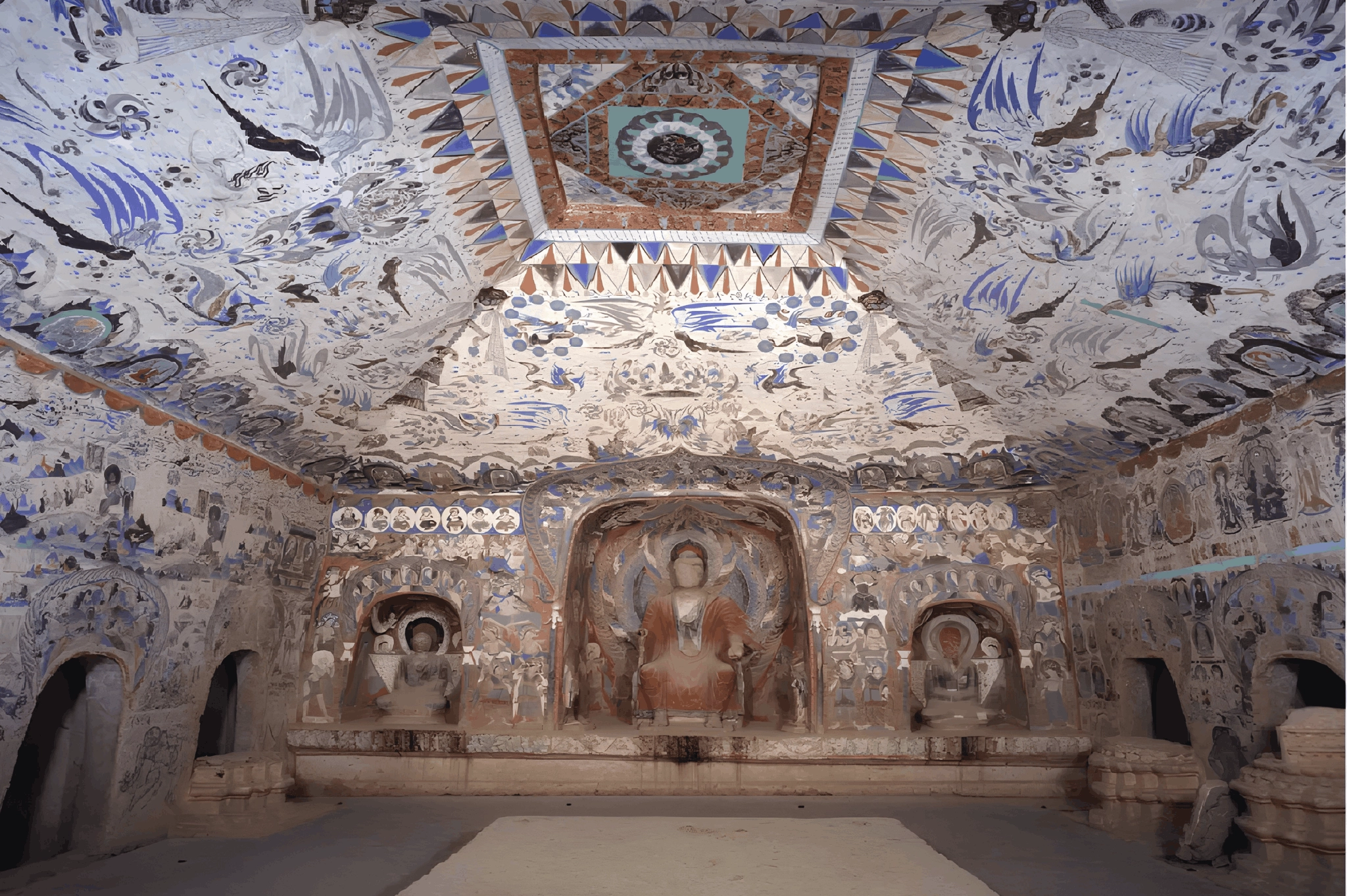
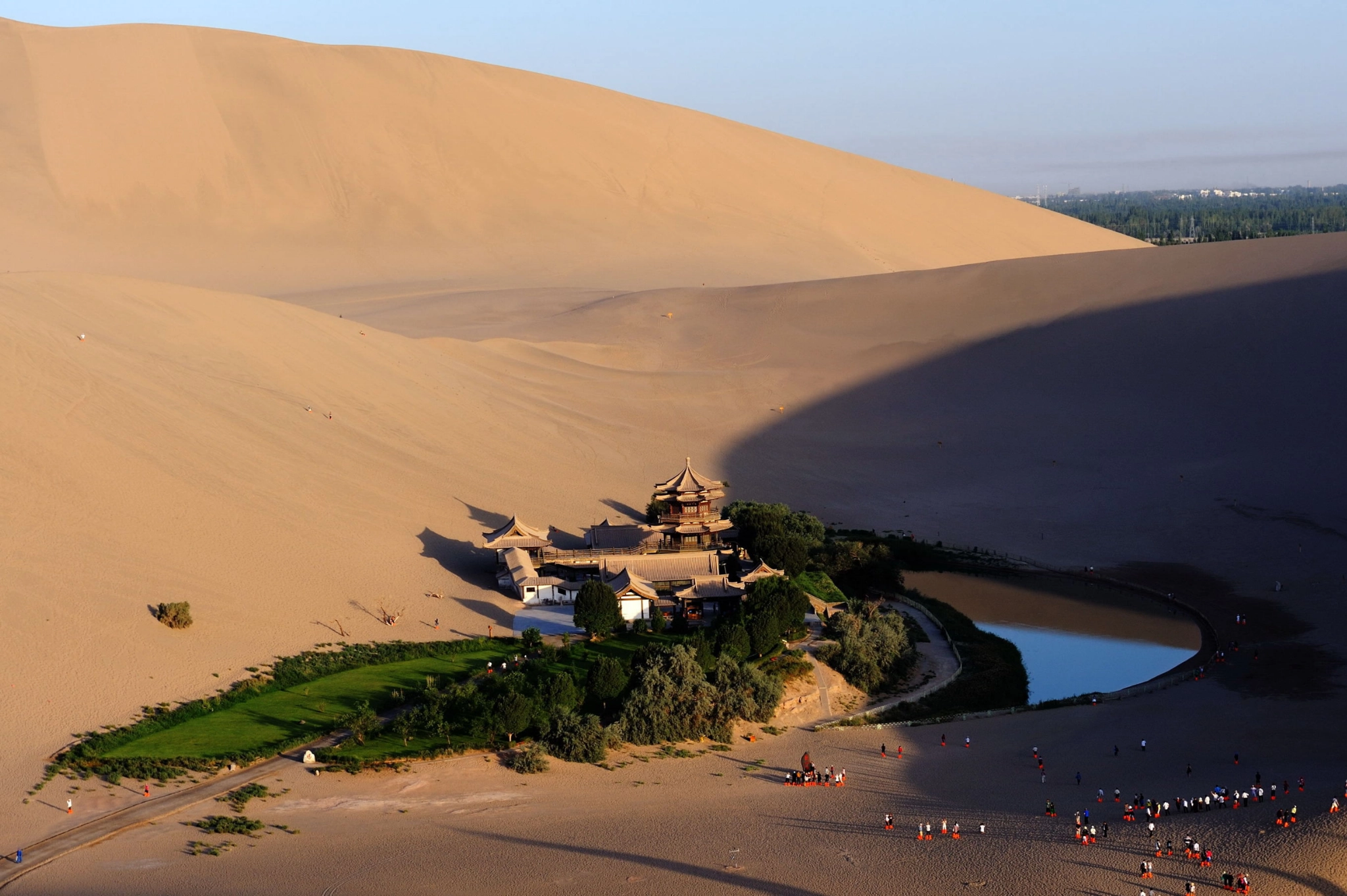
A lmost everyone who reaches Dunhuang comes for two things: the thousand-year Buddhist art of the Mogao Caves, and the postcard silhouette of a camel crossing the Mingsha singing sand dunes toward Crescent Lake. Both deserve their fame. But there is a second Dunhuang — a wilder, emptier, stranger one — that begins where the paved tourist trail ends and the Gobi takes over.
Drive roughly ninety kilometres northwest of the city, out past the last irrigated fields and into the open desert, and you enter the frontier that made the Silk Road possible. This is where the Han Dynasty drew the western edge of the Chinese world more than two thousand years ago. Three extraordinary sites sit out here within a single loop: the Yadan National Geopark, better known as the "Ghost City"; the Yumen Pass, or Jade Gate; and the weather-beaten ruins of the Han Great Wall. Together they form the classic "West Line" day trip from Dunhuang, and they are, for the traveller willing to make the journey, every bit as unforgettable as the caves.
This is your practical field guide to that frontier — what to see, why it matters, and how to do it well.
Wonder One
The Yadan "Ghost City"
A desert carved by wind
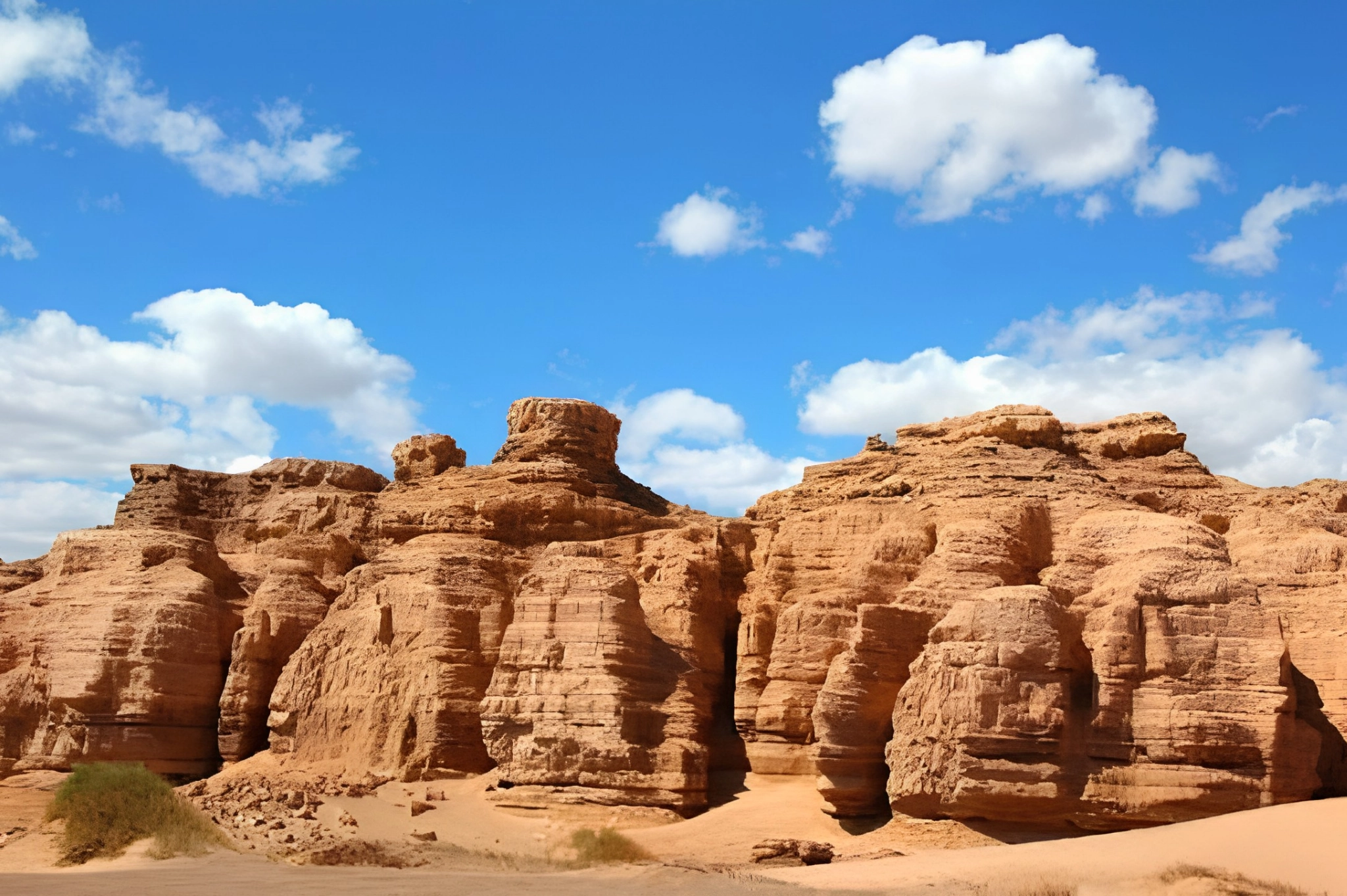
The Yadan National Geopark is the largest yardang landform yet discovered, and standing inside it feels like walking through the ruins of a city that was never built by human hands. "Yardang" is a geological term for landforms sculpted by relentless wind erosion, and over tens of thousands of years the gales that sweep this corner of the Gobi have shaved the soft clay-and-sandstone terrain into towering hulls, ridges and pillars.
The shapes are uncanny. Visitors and guides have given them names over the years — a fleet of ships in full sail, a sphinx, a peacock spreading its tail, a lone sentinel. The Chinese name, móguǐ chéng, translates as "Ghost City," and the reason becomes clear near dusk: when the wind rises and funnels between the formations, it produces a low, eerie howling, as though the desert itself were speaking. Ancient caravans, camped here on their way west, are said to have been terrified by the sound.
The geopark sits about 180 kilometres northwest of downtown Dunhuang, further out than the Jade Gate. Sunset is the prize hour: the low light turns the ochre formations to burning gold and rakes long shadows across the gravel plain. If you can time your visit so you are inside the park as the sun drops, you will understand why photographers travel across the world for this single hour.
Wonder Two
The Jade Gate Pass
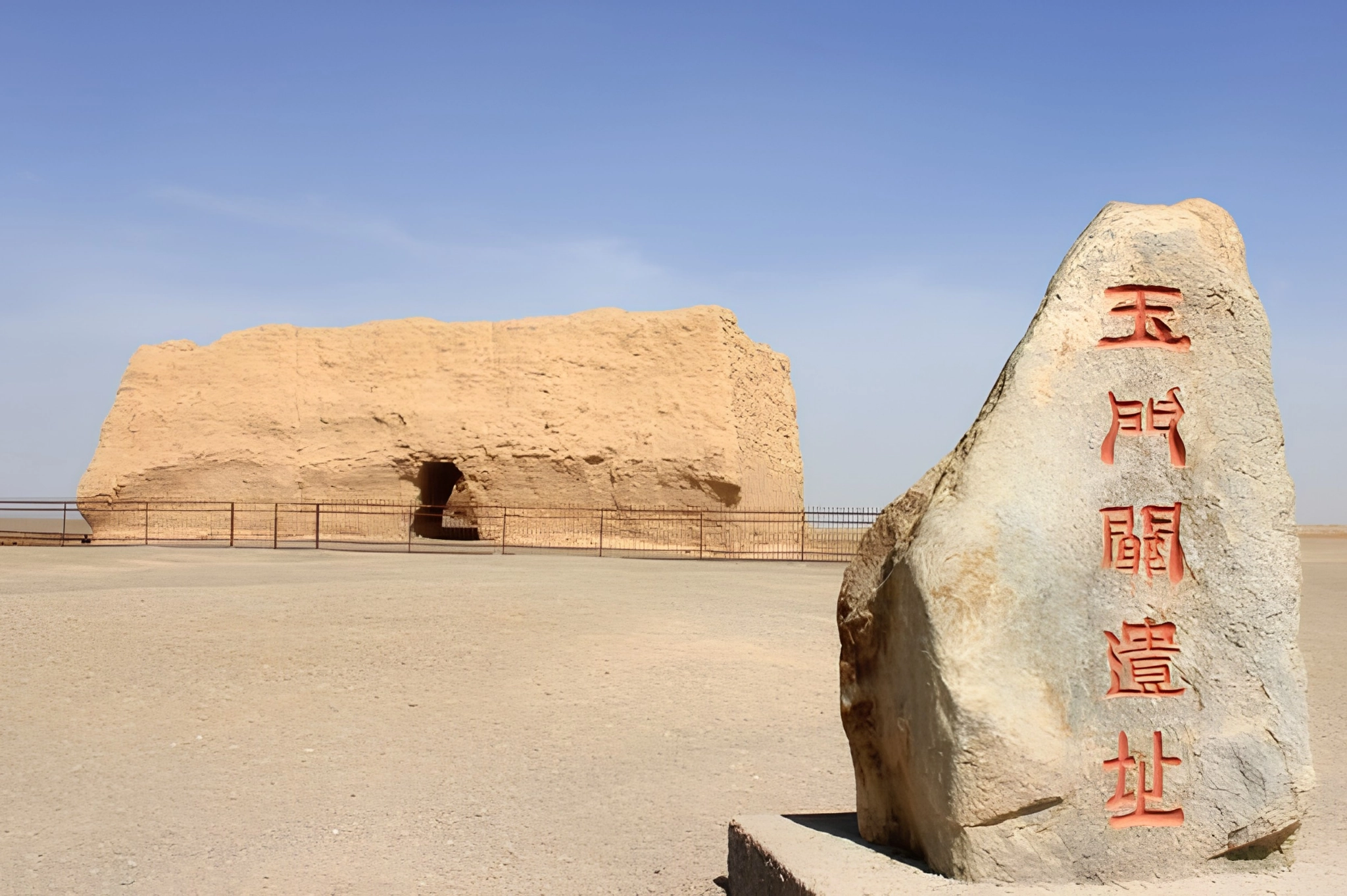
Gateway to the Western Regions
If the Ghost City is where the desert shows its power, the Yumen Pass — the Jade Gate — is where history condenses into a single ruined block of rammed earth.
Two thousand years ago, during the Han Dynasty, this was the official western gateway of the Chinese empire. The pass took its name from the jade that flowed east through it from the mountains of the western regions, part of the great two-way traffic of goods, faiths and ideas that we now call the Silk Road. To pass through the Jade Gate was to leave the known world of China proper and step into the vast unknown of Central Asia. Poets of the Tang Dynasty wrote of it with a mixture of awe and melancholy; for a soldier or merchant, the Jade Gate marked the last certain comfort before a brutal journey across the desert.
What survives today is the Small Fangpan Castle, a square fort of tamped yellow earth standing alone on the gravel flats, its walls still rising several metres against an enormous sky. There is little ornament and no reconstruction — and that is exactly the point. The power of the Jade Gate lies in its austerity. You stand where the boundary of an empire once ran, with nothing between you and the horizon, and the two thousand years since seem to collapse into the wind.
Wonder Three
The Han Great Wall
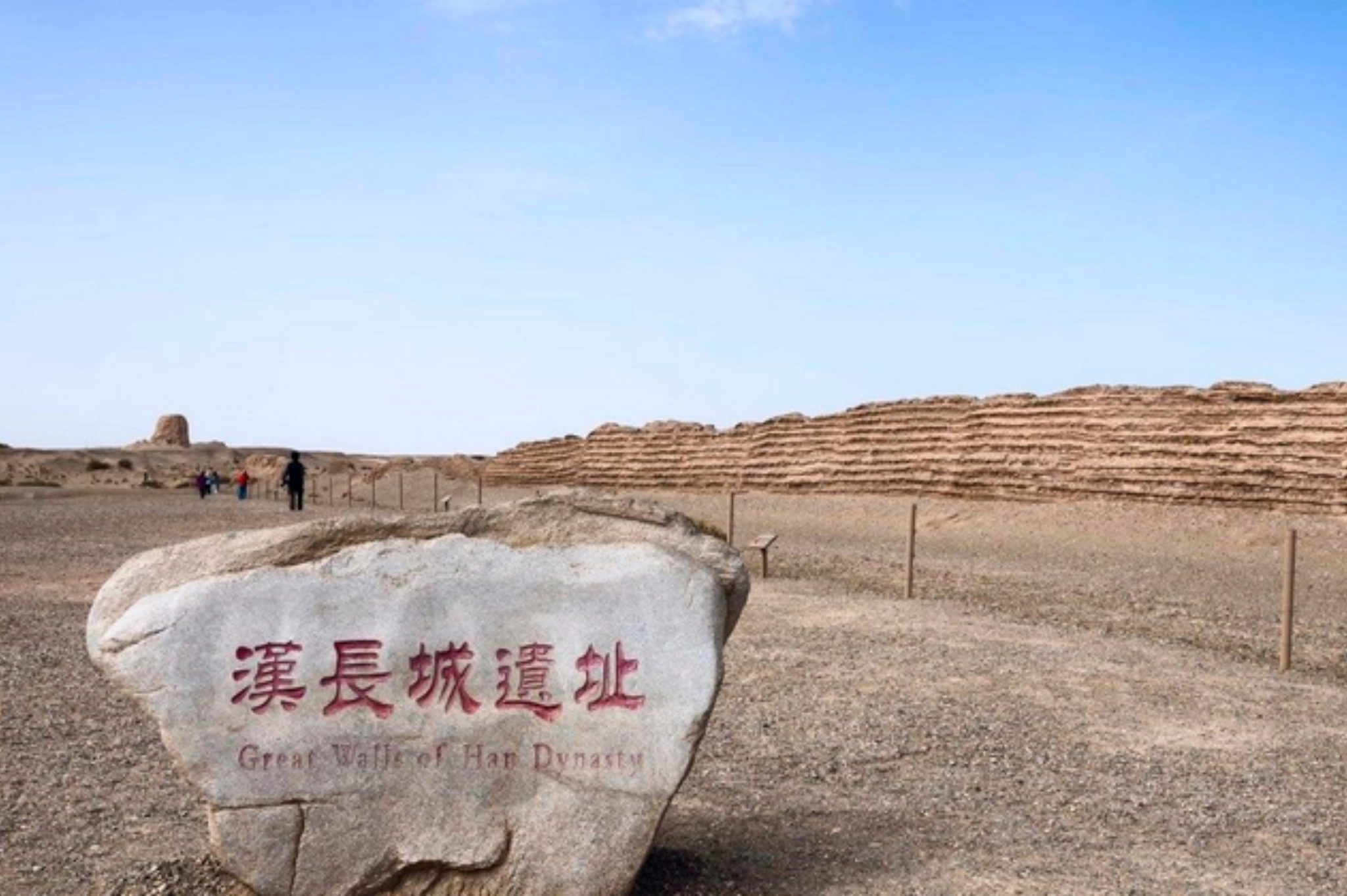
The wall that isn't stone
Say "Great Wall of China" and most people picture the grey stone battlements north of Beijing, snaking over green mountains. The Han Great Wall near Dunhuang looks nothing like that — and it is far older.
Built during the Han Dynasty roughly two millennia ago, this western stretch of the wall was constructed from whatever the desert offered: layers of local gravel and sand pressed between courses of reeds, tamarisk branches and other brushwood. It was a brilliant adaptation to a place with no quarries and no timber forests. Millennia of wind and sun have worn the ramparts down, but substantial sections still stand near the Jade Gate, their layered structure clearly visible — a striped cross-section of ancient engineering.
Nearby, archaeologists have also uncovered the remains of granaries and beacon towers, part of the signalling and supply network that kept this remote frontier garrisoned. Seeing the Han Wall alongside the more famous Ming-era fortress at Jiayuguan, further east in the corridor, gives you a rare sense of just how long China defended and managed this desert edge, and how differently each era went about it.
—
How to Do the West Line: A Practical Half-Day Plan
These three sites lie in the rural desert northwest of Dunhuang, and — this is the crucial detail — there is no public transport to reach them.
A typical loop runs like this. Set out from Dunhuang after lunch, drive out to the Jade Gate and the adjacent Han Great Wall ruins in the afternoon, then continue deeper into the desert to reach the Yadan Ghost City in time for sunset. Because the Ghost City is the furthest point and the most spectacular at golden hour, most sensible itineraries save it for last. You return to Dunhuang after dark. Allow the better part of a day; the driving distances alone are considerable, and the landscapes reward lingering rather than rushing.
What to pack for the desert
Bring more water than you think you need, sun protection, and a windproof layer even in summer — the Gobi turns cold and blustery the moment the sun dips. Fuel up on snacks before leaving town, because services out here are minimal to nonexistent. And carry cash as a backup alongside your mobile-payment app, since connectivity in the deep desert is unreliable.
—
When to Go, and What It Feels Like
Spring and autumn — roughly May to June and September to October — offer the kindest weather for the West Line, with clear skies and temperatures that make standing out in the open a pleasure rather than an endurance test. Summer is peak tourist season in Dunhuang and the sites are busiest then; the desert can climb well above 30°C by day, so an afternoon-into-sunset schedule that avoids the fiercest midday heat makes sense. Winter is bitterly cold and windswept, and while some sites reduce hours, the solitude can be extraordinary for those who come prepared.
However you time it, the West Line rewards a certain frame of mind. This is not a place of manicured gardens and gift shops. It is raw, ancient and enormous, and its beauty is the beauty of emptiness. Give it your patience and it will give you one of the most cinematic days of any Silk Road journey.
—
The Bottom Line
Dunhuang's caves and dunes may be the reason you come to Gansu, but the frontier beyond the city is the reason you will want to return. In a single unforgettable loop, the Yadan Ghost City, the Jade Gate Pass and the Han Great Wall let you stand at the literal edge of the ancient Chinese world — carved by wind, built of earth, and utterly unlike anything else on the Silk Road.
Carved by wind. Built of earth.
The edge of the ancient world.