A neo-Gothic chapel with a Latin inscription over the door, raised by French priests and Sichuan carpenters in a mountain valley an hour from the pandas — lost in ten seconds in 2008, and patiently rebuilt.
Key Points at a Glance
Bailu French Town, Pengzhou
Frequently Asked Questions
Bailu French Town, Pengzhou
A Gothic Seminary in the Sichuan Mountains: Bailu "French Town," the Church That Fell in 10 Seconds and Rose Again Near Chengdu
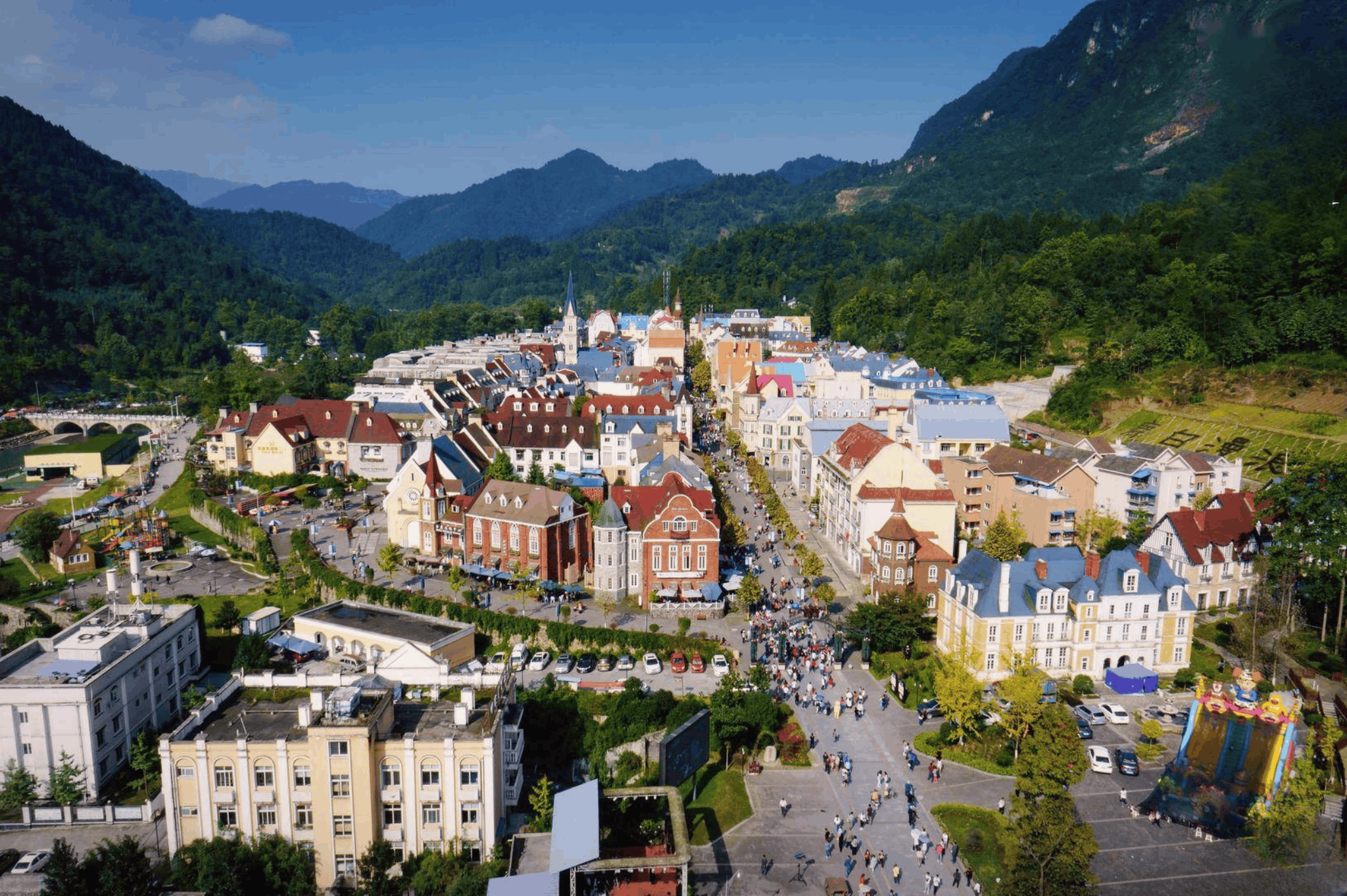
You expect pandas, teahouses and mala hotpot around Chengdu. You do not expect a neo-Gothic chapel with a Latin inscription over its door, standing alone in a green mountain valley where French priests once trained Chinese seminarians. Yet that is exactly what waits in Bailu (白鹿, "White Deer"), a small town in Pengzhou (彭州) at the foot of the Longmen Mountains northwest of Chengdu.
Bailu is one of the most surprising cross-cultural stories in Sichuan, and for Western travellers it raises an irresistible question: what is a French seminary doing here?
The Story: French Missionaries in Western Sichuan
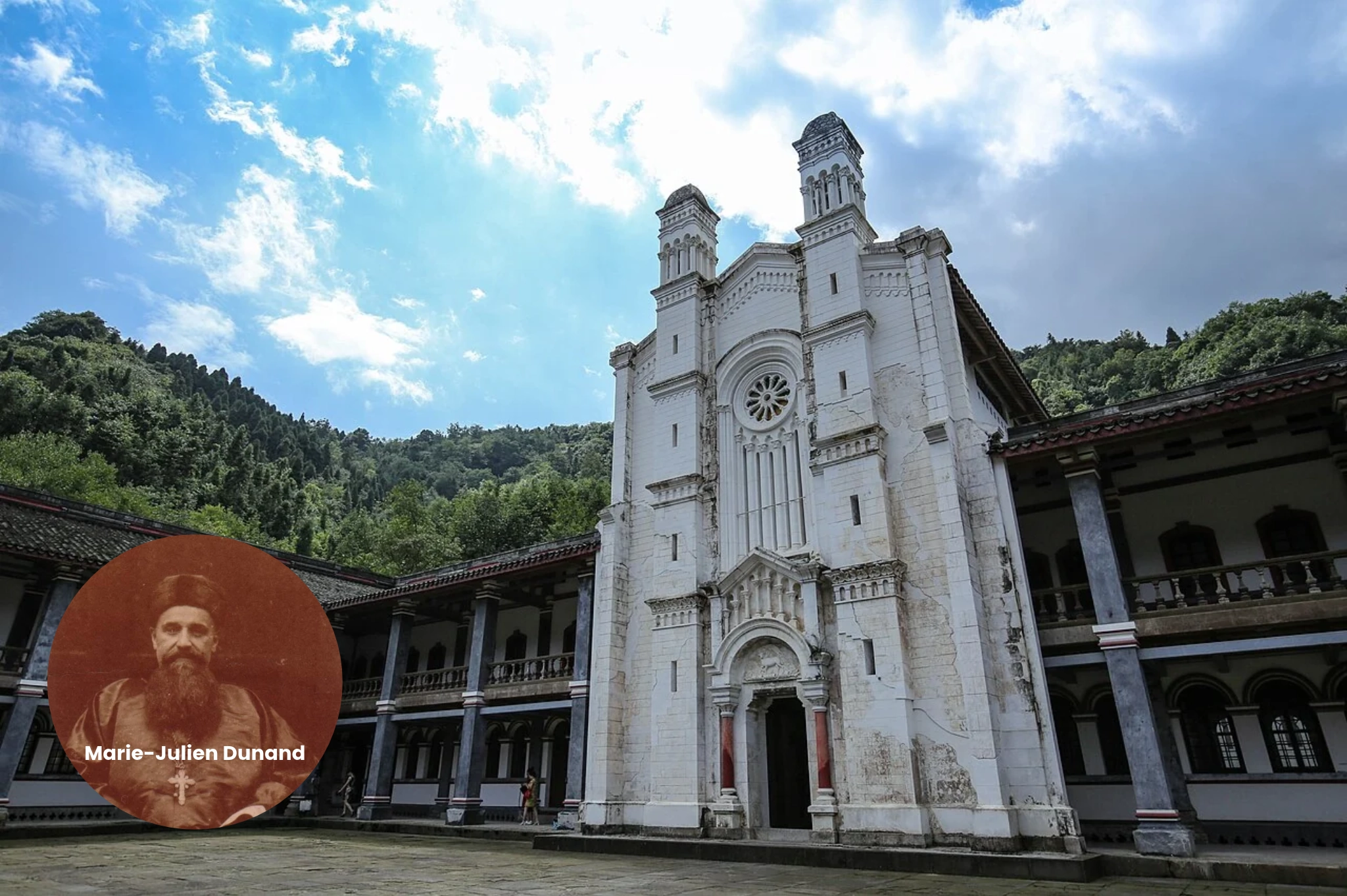
French Catholic missionaries were active in Sichuan from the 18th and 19th centuries. After an anti-missionary riot in Chengdu in 1895, Apostolic Vicar Marie-Julien Dunand planned a seminary in the quieter mountains away from the city. Construction, overseen by French priest Alexandre Perrodin, began in 1895 and was completed in 1908.
The result was the Annunciation Seminary, whose Latin name, Seminarium Annuntiationis, is still inscribed over the entrance. In Chinese it is called Lingbao Xiuyuan (領報修院) or, more commonly, Shang Shuyuan (上書院, the "Upper College"). French missionaries ran it from 1908 to 1949.
| Feature | Detail |
| Construction | 1895-1908 |
| Built by | French Catholic missionaries |
| Latin name | Seminarium Annuntiationis |
| Chinese names | Lingbao Xiuyuan / Shang Shuyuan |
| Footprint | About 10,440 m² ; central courtyard about 600 m² |
| Style | Neo-Gothic chapel, neo-Romanesque pillars, Chinese courtyard wings |
| Heritage status | National-level protected site since 2006 |
| 2008 earthquake | Most of the complex collapsed in roughly 8-10 seconds; no injuries reported |
| Reconstruction | About 2009-2016 |
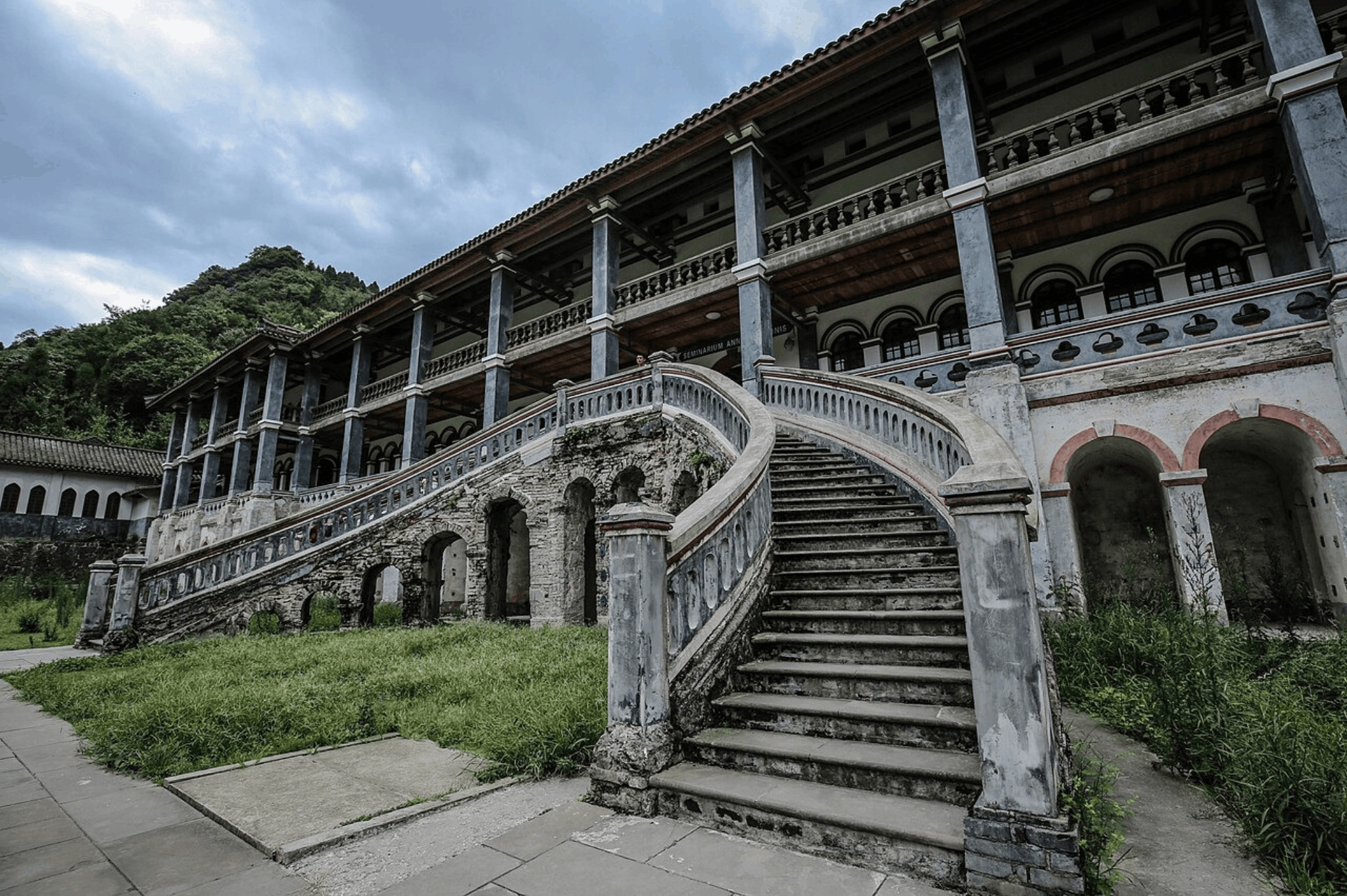
East Meets West in One Building
What makes the seminary fascinating is that it is not a pure European copy. Its walls used local brick with wooden beams and columns and a traditional Sichuan chuandou timber roof frame. The chapel was neo-Gothic with a marble exterior, while the four surrounding wings followed Chinese courtyard design. Local workers long said the marble and stained glass were shipped from France.
In other words, French priests and Sichuan carpenters built a Gothic chapel the only way the valley allowed: with Chinese timber, Chinese techniques and a lot of improvisation. It is a building that tells the story of two cultures negotiating with each other in stone and wood.
Ten Seconds on 12 May 2008
On 12 May 2008, the Wenchuan earthquake struck Sichuan. Pengzhou lies close to the fault zone, and most of the seminary collapsed within about 8 to 10 seconds. Remarkably, no one was reported injured.
China's National Cultural Heritage Administration and the Beijing Institute of Ancient Architecture led a reconstruction, reported to have run from 2009 to 2016. Because the original French blueprints had been lost, the team rebuilt the exterior, structure and floor plan to resemble the original, but with modern materials such as steel-reinforced walls and a steel chapel roof. Part of the chapel that had been buried by an earlier mudslide was preserved and incorporated.
Across the river in town, the Earthquake Heritage Park preserves ruins from 2008, including the remains of the old Sino-French bridge. Pair the two for the full story.
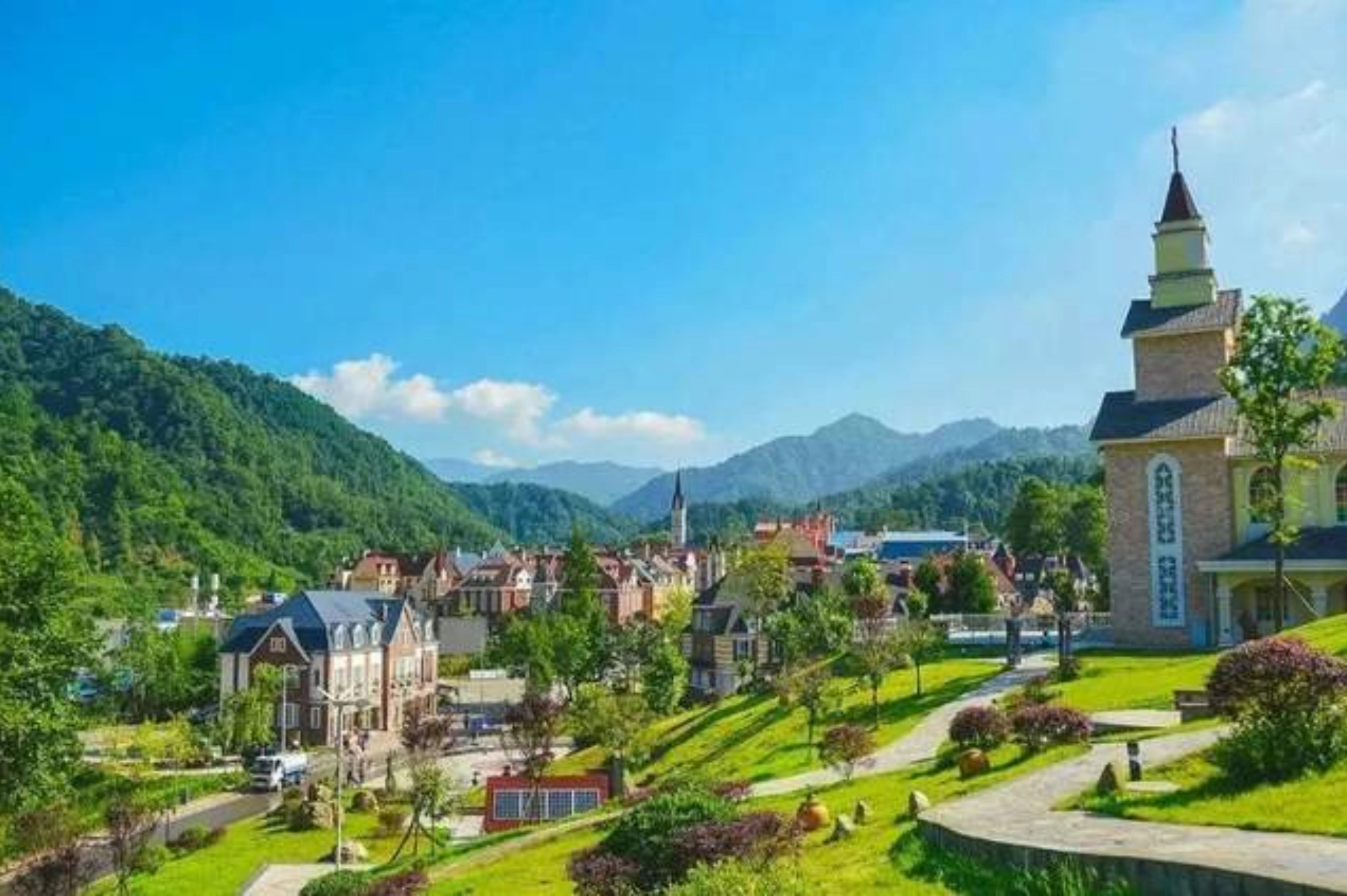
Bailu Town Today: Sino-French "Music Town"
After the earthquake, Bailu town was rebuilt in a European-inspired style that leans on its French heritage. Expect pastel facades, pointed spires, arched windows, vintage street lamps, cafés and craft shops. It markets itself as a "music town," with a Rose Music Square and a concert hall; visitor guides mention open-air performances, especially in the warmer months and on holidays.
Some academic writers point out that the "French town" label is a modern tourism brand built on a real religious history. Keep that in mind and you will enjoy both layers: a photogenic leisure town in the valley, and a genuine historic seminary up the hill.
Why Foreign Travellers Should Care
It is a story you will not find anywhere else in China. For European and North American visitors, seeing Latin, Gothic arches and Sichuan timber framing in one building is an unforgettable "how did this get here?" moment.
It is an easy escape from Chengdu, about 1 to 1.5 hours by car via the Chengpeng Expressway, or a short high-speed train ride to Pengzhou Station, followed by a taxi or tourist bus.
It is free (mostly). The town is open year-round with no entry fee; some concerts and attractions charge separately.
Winter suits it. November to February brings mountain mist and empty lanes, perfect for moody photos, then a hot bowl of local smoked duck (Jiuchi smoked duck is a Pengzhou speciality mentioned by visitors) to warm up.
Practical Tips
| Item | Detail |
| Distance | About 1-1.5 hours from central Chengdu by car |
| Transport | Train to Pengzhou Station, then taxi or tourist bus; or private car |
| Town entry | Free, open year-round |
| Seminary | Visitor reports say roughly 9:30-16:30, closed Mondays, with online (QR-code) reservation; check in advance |
| Seminary to town | About 3 km on a narrow mountain road |
| Time needed | 2-4 hours, or a relaxed half-day |
| Best time | Weekdays, late afternoon for soft light and fewer crowds |
Reservation tip: The QR-code booking system is usually in Chinese and tied to Chinese platforms. A guide or travel agency can book on your behalf.
Respect: The seminary is a heritage site with religious roots. Dress modestly, keep voices low in the chapel and follow posted photography rules.
A Half-Day Plan from Chengdu
- 9:00 Leave Chengdu by car or high-speed train.
- 10:30 Visit the Annunciation Seminary before tour groups arrive; walk the cloister and chapel.
- 12:00 Down to Bailu town for lunch and coffee on the European-style streets.
- 13:30 Earthquake Heritage Park and the old bridge ruins.
- 15:00 Return to Chengdu for an evening teahouse or Sichuan opera show.
The Bottom Line
Bailu is where Sichuan's story surprises you: French priests, Chinese carpenters, a Gothic chapel, an earthquake and a decade of rebuilding, all hidden in a quiet mountain valley an hour from the pandas. If you would like Bailu combined with Dujiangyan or Mount Qingcheng, our team can handle the seminary reservation, transport and a guide who knows the history behind the spires.