Forbidden City vs. National Palace Museum Taipei: One Collection, Two Museums
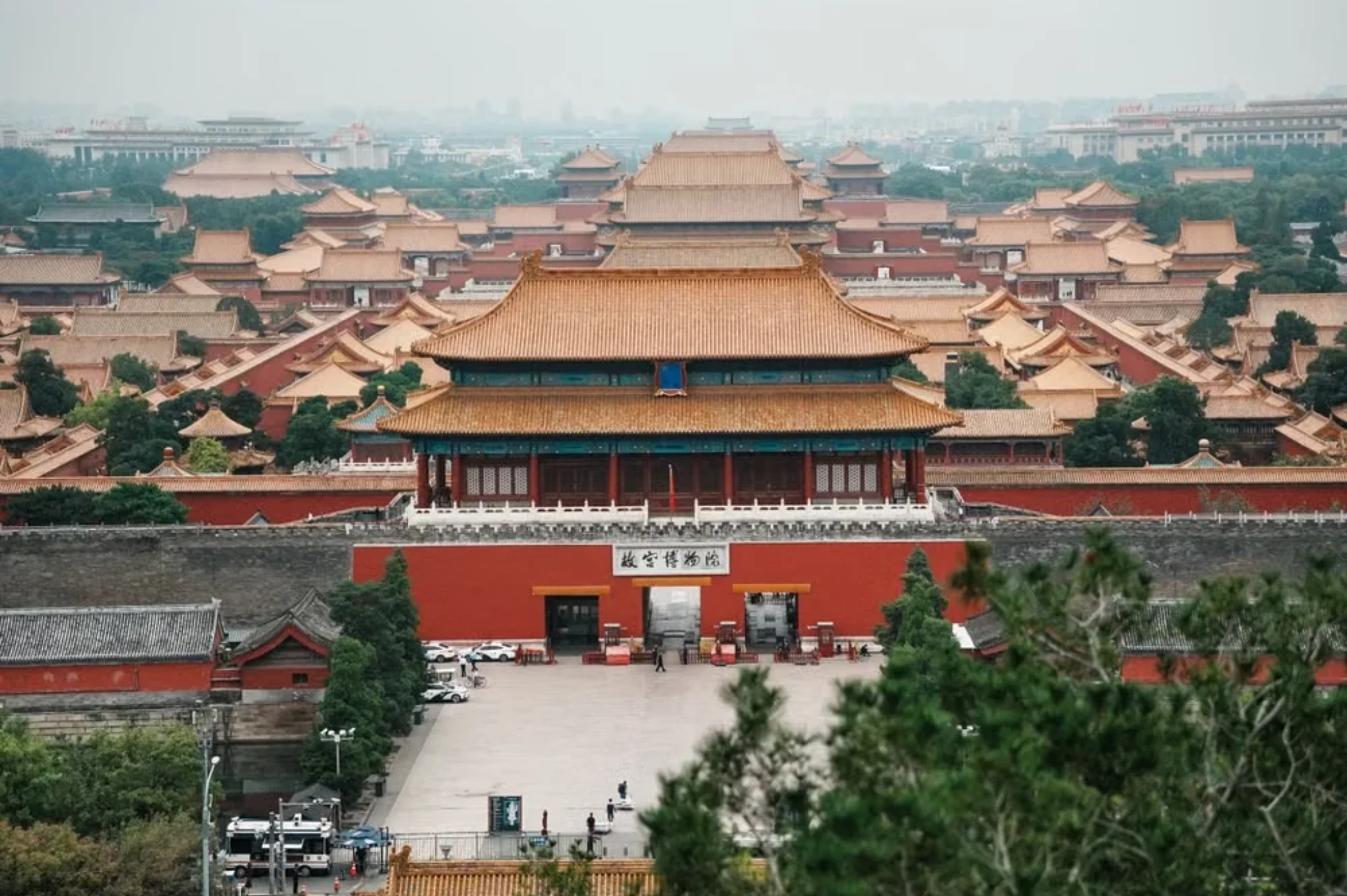
Forbidden CityBeijing
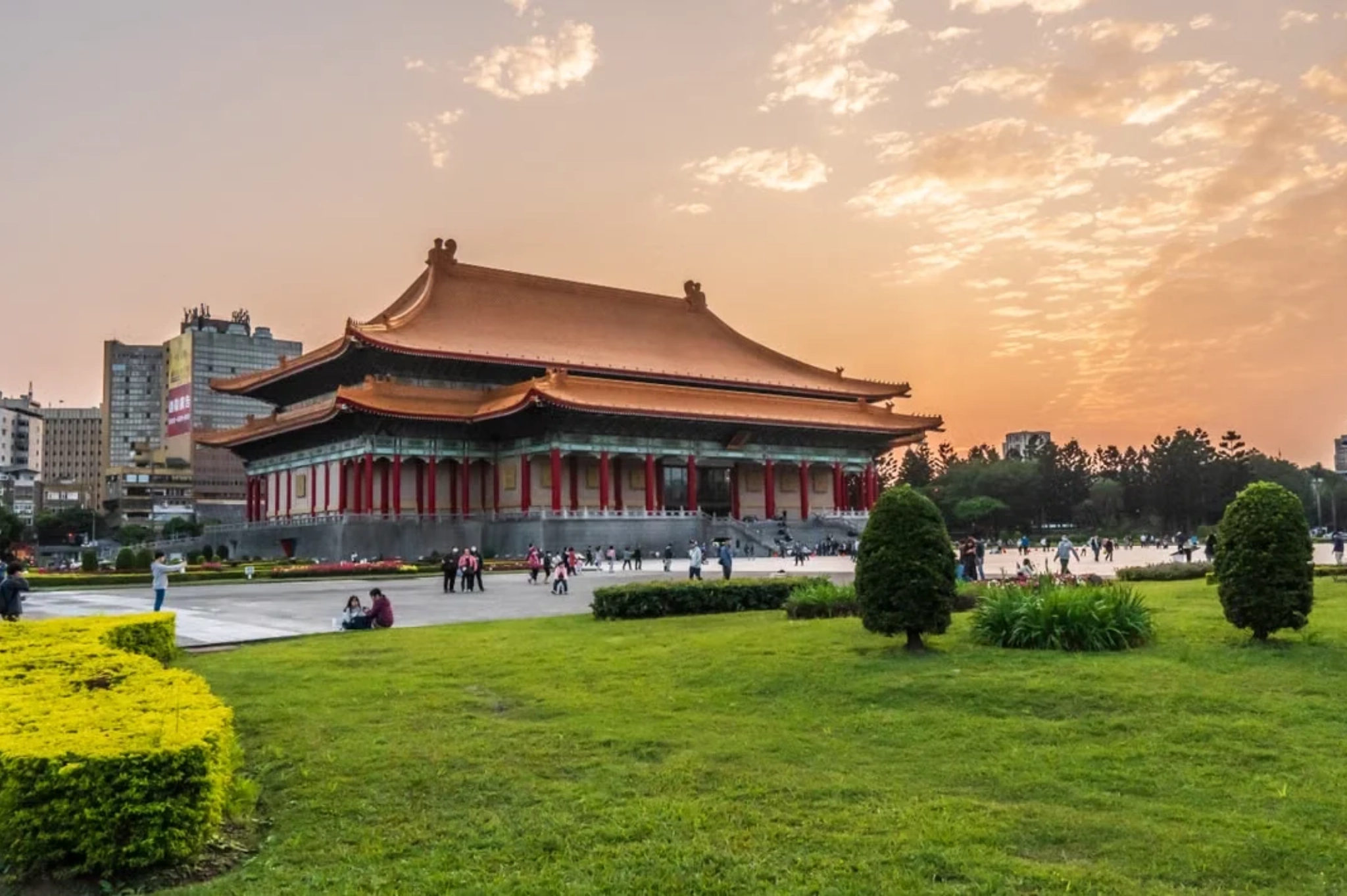
National Palace MuseumTaipei
‹›
Beijing · TaipeiOne Collection, Two MuseumsDrag the line to see the Forbidden City and the National Palace Museum side by side.
Two museums share the same name, the Palace Museum, and the same origin: the imperial art collection of China's last dynasties. One sits inside the Forbidden City in Beijing. The other stands on a green hillside in Taipei's Shilin district. They are not rivals or copies. They are two halves of one story, and once you know that story, visiting either one becomes far more rewarding.
This guide covers how one collection became two, what each museum does best, where they overlap, and which one (or both) you should put on your itinerary.
Key PointsThe Story in Six Lines
Short on time? Here is what you need to know before choosing.
1One collection, two museumsBoth share the name Palace Museum and the same origin: the imperial art collection of China's last dynasties.
2Beijing is the palace itselfThe Forbidden City, completed in 1420, with the larger collection of about 1.8 million objects.
3Taipei is a gallery of masterpiecesAbout 700,000 objects, including many of the finest paintings, calligraphy and jades.
42,972 crates crossed the StraitShipped to Taiwan in 1948–49, they became the core of the National Palace Museum in Taipei.
5Book Beijing in advanceEntry needs a timed online reservation linked to your passport. Closed on Mondays, except on national holidays.
6Best plan: see bothStart with the palace in Beijing, then fly to Taipei, about three and a half hours, to see its greatest treasures.
The Quick Answer
Beijing's Palace Museum is the palace itself. You walk through the Forbidden City, completed in 1420 and home to 24 Ming and Qing emperors. Its collection is the larger of the two, at roughly 1.8 million objects.
Taipei's National Palace Museum is a gallery of masterpieces. It holds about 700,000 objects, including many of the finest portable treasures of the imperial collection: calligraphy, painting, jade, bronzes and rare books.
At a GlanceBeijing vs. Taipei
BeijingPalace Museum
TaipeiNational Palace Museum
01Founded
Beijing1925
TaipeiOpened at Shilin site in 1965
02Setting
BeijingThe Forbidden City (UNESCO World Heritage, 1987)
TaipeiPurpose-built museum in Shilin, Taipei
03Collection size
BeijingAbout 1.8 million objects
TaipeiAbout 700,000 objects
04Signature strength
BeijingArchitecture, court life, ceramics, clocks
TaipeiPainting, calligraphy, jade, Song dynasty ceramics
05Visit style
BeijingOutdoor walking, 3–4 hours
TaipeiIndoor galleries, 2–3 hours
06Booking
BeijingTimed online reservation with passport required
TaipeiTickets on site or online
07Best for
BeijingFirst-time visitors to China, architecture lovers
TaipeiArt lovers, collectors, repeat visitors to Asia
Tap Beijing or Taipei to focus on one museum.
How One Collection Became Two
When the last emperor, Puyi, was expelled from the Forbidden City in 1924, the palace and its contents became a public museum the following year. Within a decade, war changed everything.
In 1933, with Japanese forces advancing into northern China, museum staff packed the most important objects into more than 13,000 crates and sent them south. For the next fifteen years, the collection traveled by train, truck, boat and on the backs of porters, moving between Shanghai, Nanjing and remote hiding places in Sichuan and Guizhou. Remarkably, very little was lost.
In 1948 and 1949, as the Chinese Civil War came to an end, 2,972 crates were shipped across the Taiwan Strait. That was only about a quarter of the crates that had left Beijing, but curators chose them with care, so they included a large share of the finest paintings, calligraphy and jades. Those objects became the core of the National Palace Museum in Taipei, which opened at its current site in 1965.
The rest of the collection eventually returned to Beijing, where the Forbidden City remained the setting it was built for.
What You'll See in Beijing
The Architecture Is the Main Exhibit
The Forbidden City is the largest surviving palace complex in the world. Walk the central axis from the Meridian Gate in the south, through the vast courtyard to the Hall of Supreme Harmony, and on to the private quarters of the Inner Court. Notice the yellow glazed roof tiles, a color reserved for the emperor, and the rows of small guardian figures on the roof ridges. The number of figures shows a building's rank.
Galleries Worth the Detour
Treasure Gallery: gold, jade and ceremonial objects from the Qing court.
Clock and Watch Gallery: mechanical clocks given by European envoys and made in imperial workshops.
Ceramics Gallery: housed in the Hall of Literary Glory, covering thousands of years of Chinese pottery.
Along the River During the Qingming Festival: Zhang Zeduan's 12th-century scroll is one of the most famous paintings in China. It is displayed only rarely, so treat a sighting as a bonus.
Beijing Tips
Book online in advance. Entry needs a timed reservation linked to your passport, and summer and holiday slots sell out.
The museum is closed on Mondays, except on national holidays.
You enter through the Meridian Gate in the south and exit through the Gate of Divine Prowess in the north. Plan your transport for the north exit.
After your visit, climb Jingshan Park, directly north, for the best view over the golden rooftops.
What You'll See in Taipei
The Famous Pieces
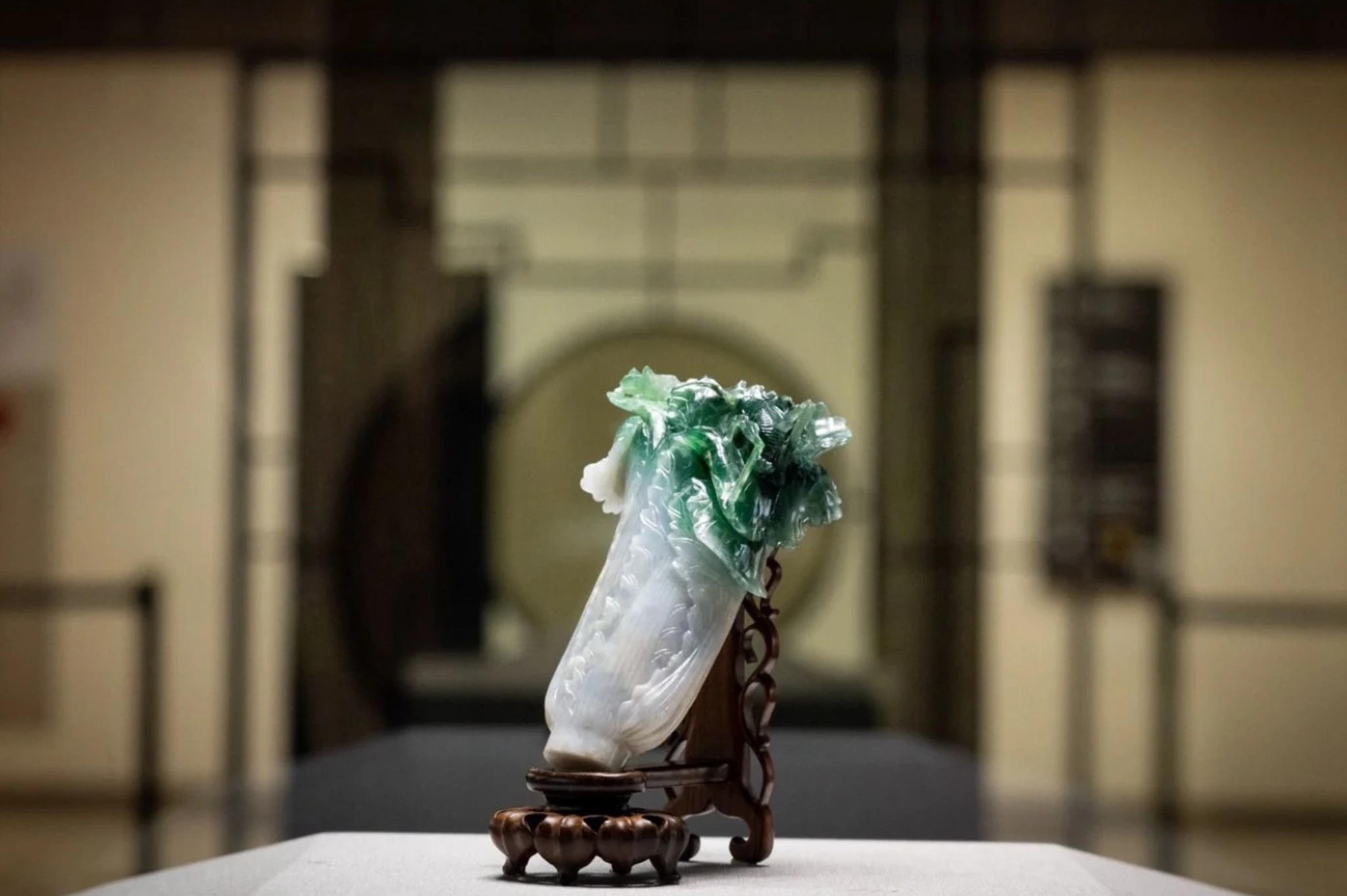
Jadeite Cabbage: a piece of jadeite carved into a bok choy, complete with two insects hidden in the leaves. It is the museum's most photographed object.
Meat-shaped Stone: a piece of jasper carved and dyed to look exactly like braised pork belly.
Mao Gong Ding: a Western Zhou bronze cauldron with an inscription of about 500 characters, one of the longest known on any ancient Chinese bronze.
Ru ware: pale blue-green Song dynasty ceramics. Fewer than 100 pieces are known to survive worldwide, and Taipei holds the largest group.
Song dynasty landscape painting: works such as Fan Kuan's Travelers among Mountains and Streams are among the world's most important Chinese paintings.
Rotation Rules
Fragile paintings and calligraphy go on display only for short periods, then rest in storage for years. Popular objects sometimes travel to the museum's Southern Branch in Chiayi, which opened in 2015 and focuses on wider Asian art. Check the official exhibition schedule before your visit if you have one piece in mind.
Taipei Tips
Arrive at opening time to see the Jadeite Cabbage without a crowd.
Visit the Zhishan Garden next door, a traditional Chinese garden.
Try the museum restaurant, which serves dishes inspired by the treasures, including a "meat-shaped stone" pork belly.
Where the Two Museums Overlap
The two collections share far more than a name.
The same collectors. Most objects passed through the hands of the same emperors, above all the Qianlong Emperor of the 18th century, who stamped his seals across hundreds of paintings in both museums.
The same categories. Both hold bronzes, ceramics, jade, painting, calligraphy, textiles and court documents.
The same conservation challenge. Both rotate fragile works, so no single visit shows you everything.
A painting split in two. Huang Gongwang's 14th-century landscape Dwelling in the Fuchun Mountains was cut in two after a fire in the 17th century. The longer section is in Taipei, while the shorter section is held by the Zhejiang Provincial Museum in Hangzhou. The two halves were shown together for the first time in Taipei in 2011, an event that drew huge crowds.
Your MatchWhich One Should You Visit?
If you are…
ChoosePick the one that sounds like you.
ChooseBeijingBeijing, for the palace and the scale.
ChooseTaipeiTaipei, for the density of masterpieces.
ChooseTaipeiTaipei is indoors and compact. Beijing involves 3–5 km of walking.
ChooseBeijing
ChooseBothBoth. Seeing the palace first and the its finest collection second gives a complete story of the artifacts.
A Two-Museum Route
Start in Beijing to understand the setting: the halls, courtyards and daily life of the court. Then fly to Taipei, about three and a half hours, and see the objects that once filled those halls. Visited in this order, the Jadeite Cabbage stops being just a famous carving. It becomes a piece of a palace you have already walked through.
Plan Your Visit
Whether you choose one Palace Museum or both, timing matters: reservations in Beijing, rotations in Taipei, and the weather for walking the Forbidden City. Spring (April–May) and autumn (September–October) offer the most comfortable conditions in both cities.
FAQFrequently Asked Questions01Why are Chinese imperial treasures in Taiwan?
In 1948–49, 2,972 crates of the imperial collection were shipped to Taiwan as the Chinese Civil War ended. They became the core of Taipei's National Palace Museum.
02Which is bigger, the Beijing or Taipei Palace Museum?
Beijing's Palace Museum holds about 1.8 million objects and includes the Forbidden City itself. Taipei's collection is about 700,000 objects but includes many of the finest paintings and jades.
03Is the Jadeite Cabbage in Beijing or Taipei?
The Jadeite Cabbage is in the National Palace Museum in Taipei. It occasionally rotates to the museum's Southern Branch in Chiayi.
04Do you need to book the Forbidden City in advance?
Yes. Entry requires a timed online reservation linked to your passport, and the museum is closed on Mondays except on national holidays.
05Is it worth visiting both Palace Museums?
Yes. Beijing shows the palace where the collection was used. Taipei shows many of its greatest masterpieces. Together they tell one complete story.
Cookie Policy
This website uses cookies to provide you with a better browsing experience. By clicking "Accept", you agree to our use of cookies.
Privacy Policy