A Hidden Ocean of Blue Above Taipei: Why You Can't Miss Zhuzihu in 2026
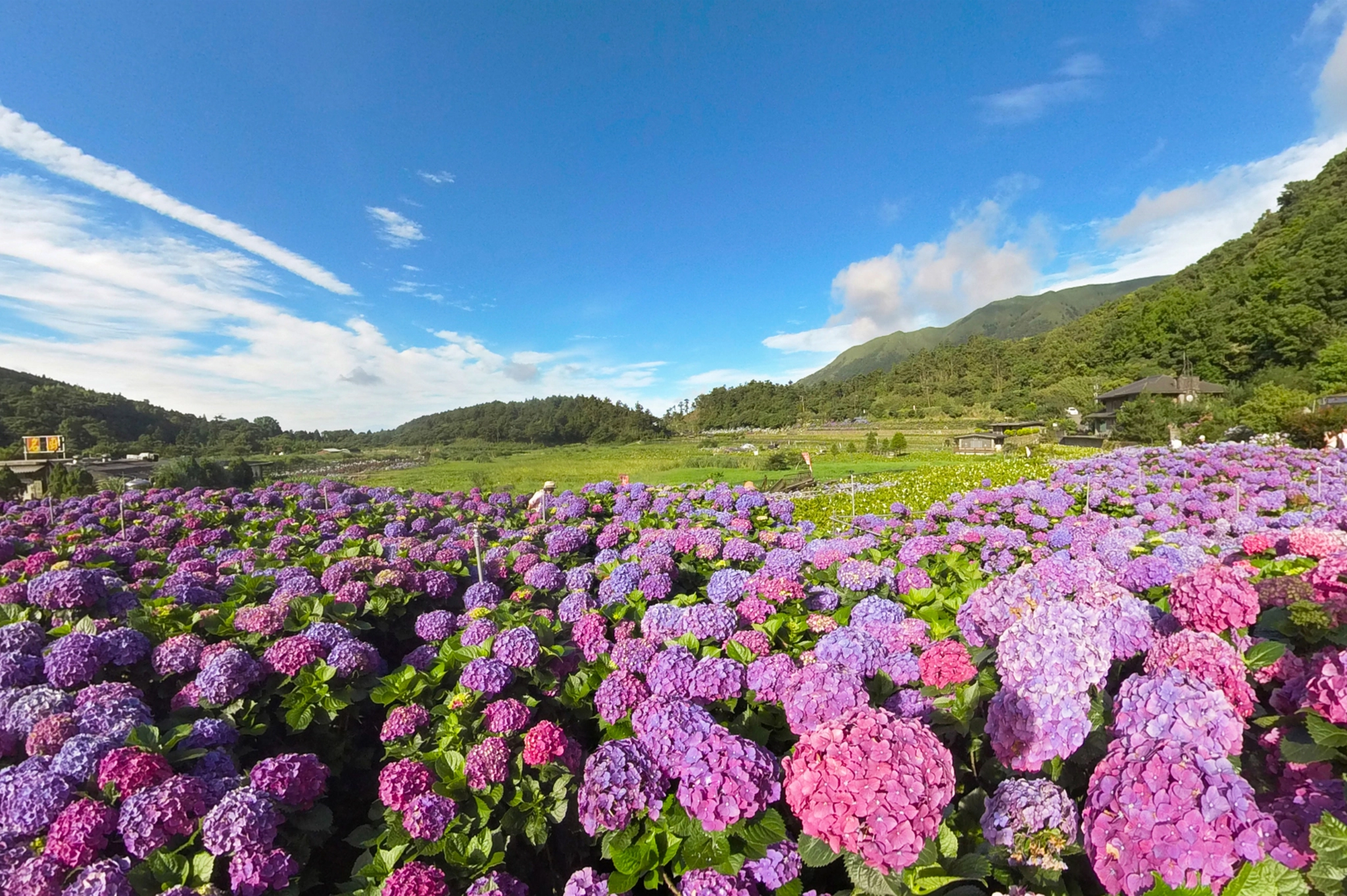
There is a stretch of road on Yangmingshan, about forty minutes by bus from Taipei Main Station, where the air drops five degrees, the traffic thins to almost nothing, and the bamboo gives way to terraced flower fields the color of a thunderstorm. Here, the valleys burst into vibrant hues—blues, lavenders, pinks, and a dusty mauve that evokes vintage charm.
This is Zhuzihu, literally "Bamboo Lake," and for roughly six weeks every year, from mid-May to late June, it becomes one of the most quietly beautiful places in northern Taiwan. For 2026, the official flower festival runs through June 22, 2026.
While the calla lilies that share these fields finish their run in late April, the hydrangeas open in massive waves right afterward. For years, this breathtaking alpine basin has remained a closely guarded domestic secret, filled with local couples and families, while remaining largely under the radar for international tourists. This stunning visual spectacle is undoubtedly the most rewarding hidden gem to add to your early summer Taiwan itinerary.
Geological Marvels & Transformation: From Volcanic Crater to Flower Valley
To understand the magic of Zhuzihu, you must first understand the mountain it sits on.
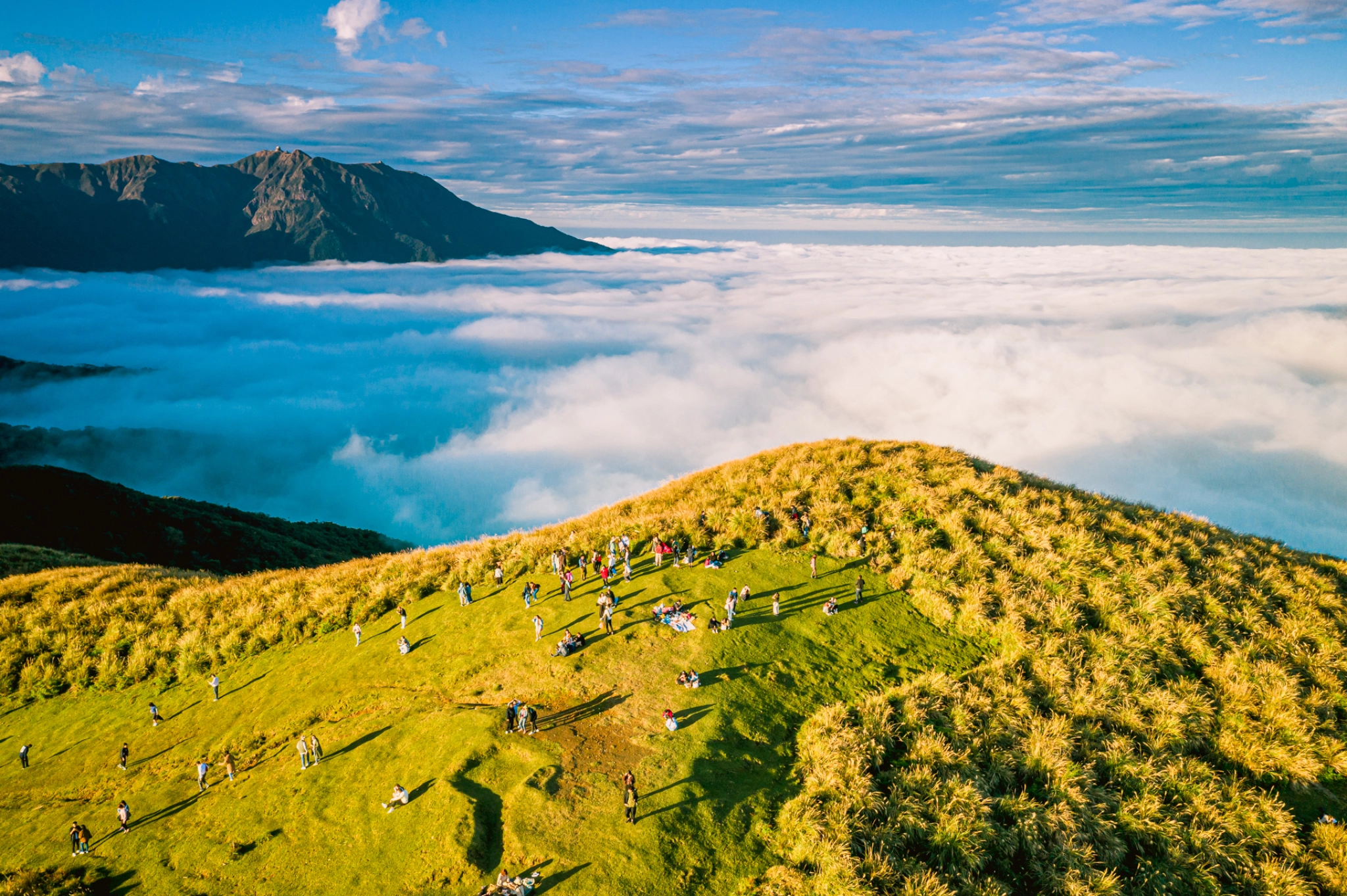
Yangmingshan is a dormant volcanic complex, and Zhuzihu is, geologically, a former crater lake. About 200,000 years ago, this area was open water; over time, volcanic sediment filled it in, leaving behind an elevated basin at 670 meters. This topography provides rich volcanic soil, abundant natural spring water, and a cool microclimate where summer temperatures rarely climb past the mid-twenties Celsius—even when lowland Taipei is melting at 36°C.
- Historical Roots: The Japanese colonial administration recognized the basin's agricultural potential in the 1920s and built the irrigation infrastructure that still runs through the fields today. For decades after the war, Zhuzihu served as Taipei's main supplier of high-altitude vegetables like cabbages, peppers, and daikon.
- The Flower Revolution: Calla lilies arrived in the 1970s, brought up the mountain by a farmer named Hai Fan-tsai, who believed the cool, wet climate would suit them perfectly. By the 1990s, Zhuzihu became the single largest producer of calla lilies in Taiwan. To extend the tourism season, farmers diversified into hydrangeas, carrying the floral abundance deep into summer.
- Current Landscape: Today, there are roughly thirty family-run flower farms in the basin. Most are open to the public on a U-pick basis, with stems priced reasonably between NT$100 and NT$300.
The Science Behind the Blooms: Why Hydrangeas Thrive on Yangmingshan
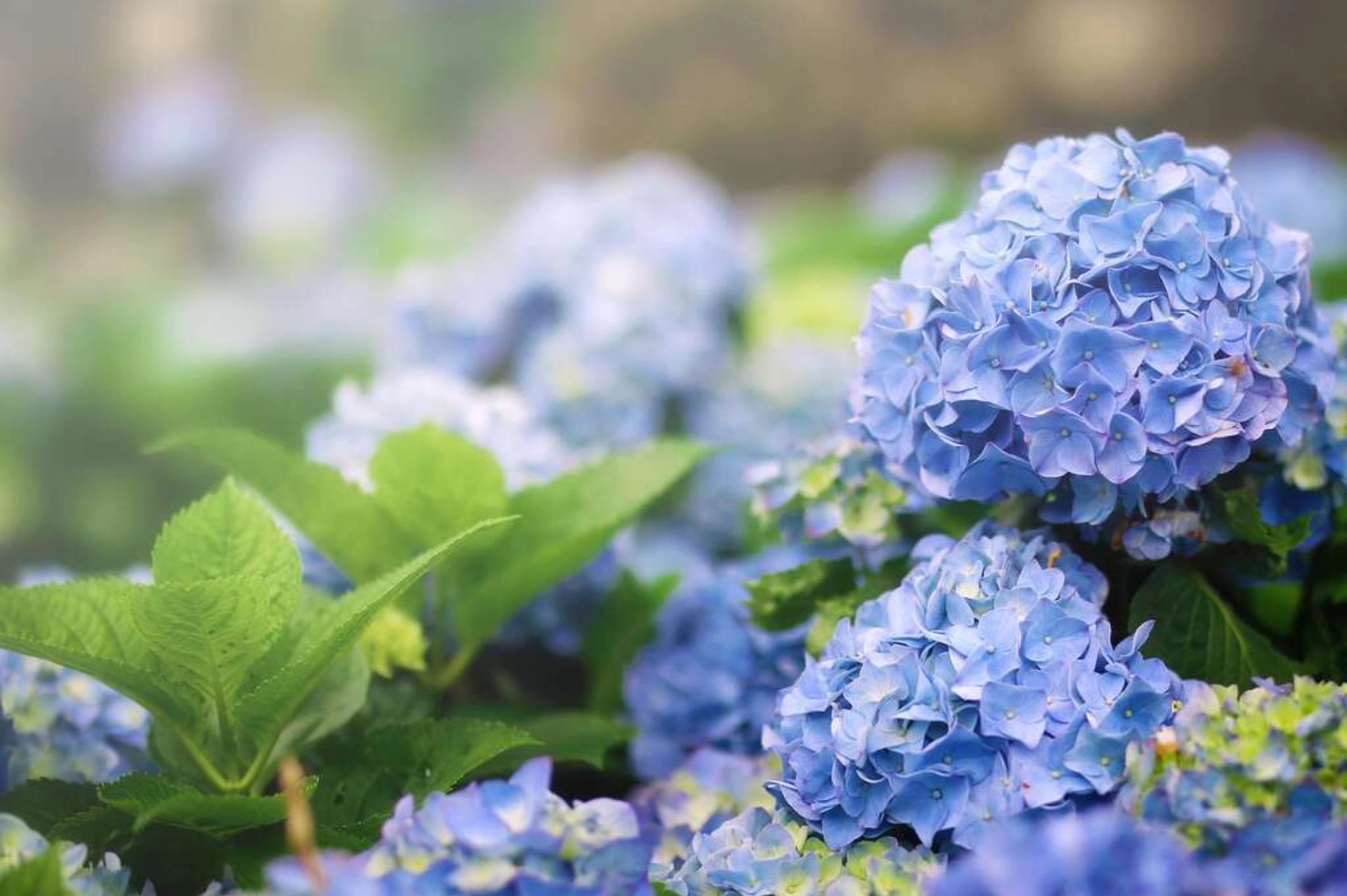
Hydrangeas are notoriously picky plants. They demand highly acidic soil, regular rainfall, and shade from harsh summer sun—three conditions that Yangmingshan delivers flawlessly.
- Acidic Volcanic Earth: The volcanic soil tilts strongly acidic, which is the scientific key to why Zhuzihu's blues are so incredibly deep and intense. Farmers can shift the same flower to pink by lifting the soil's pH with lime, utilizing chemistry to plant color-graded rows that read like a living paint chart.
- Constant Mountain Mist: Yangmingshan is one of the wettest places in Taiwan. The near-constant mist rolling in off the mountain provides continuous hydration, resulting in massive hydrangea heads the size of dinner plates on bushes that crowd shoulder-to-shoulder for hundreds of square meters.
- Vibrant Varieties: The varieties grown here are mostly Hydrangea macrophylla, the classic round mophead, alongside the lacecap normalis and a smaller amount of the pinker Hydrangea serrata. By mid-May, the early bushes are open; by the first week of June, the entire basin transforms into an alien sea of blue.
Navigating the Basin: Farm Guide & The Optimal Trail Routine
Most travelers arrive at Zhuzihu by bus—either taking route S9 (小9) from Beitou MRT Station or route 108 from the Yangmingshan terminal. Stepping off, you are greeted by country lanes lined with hand-painted farm signs. There is no official entrance or rigid crowd-control fencing; you simply wander past greenhouses and rice paddies as the fields reveal themselves one farm at a time.
Top Farm Picks
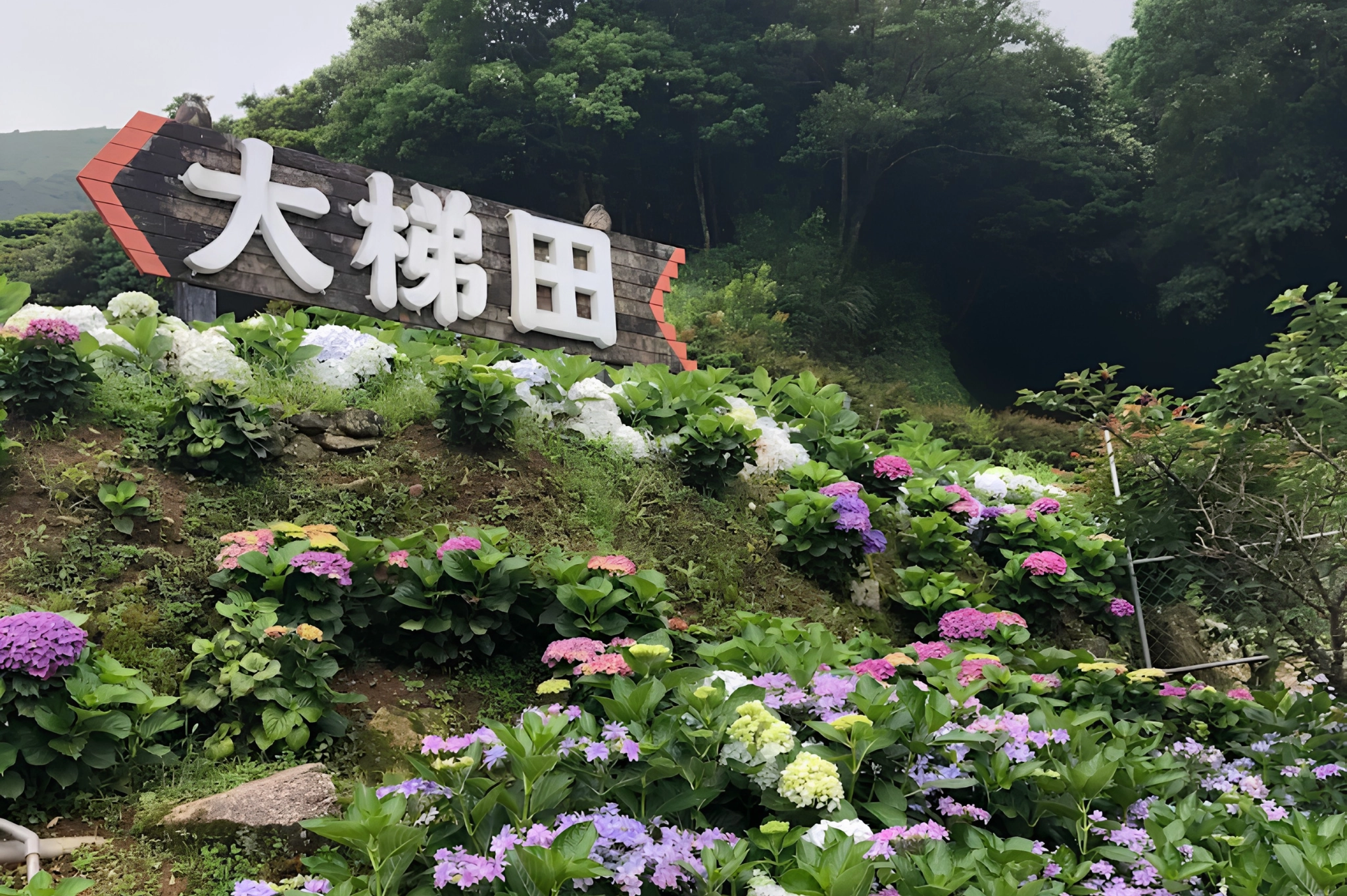
- Da Hu Tian (大梯田): Renowned for its dramatic, terraced hillside rows. The steep steps provide incredible depth, allowing you to take photos where you appear completely immersed in a wall of flowers.
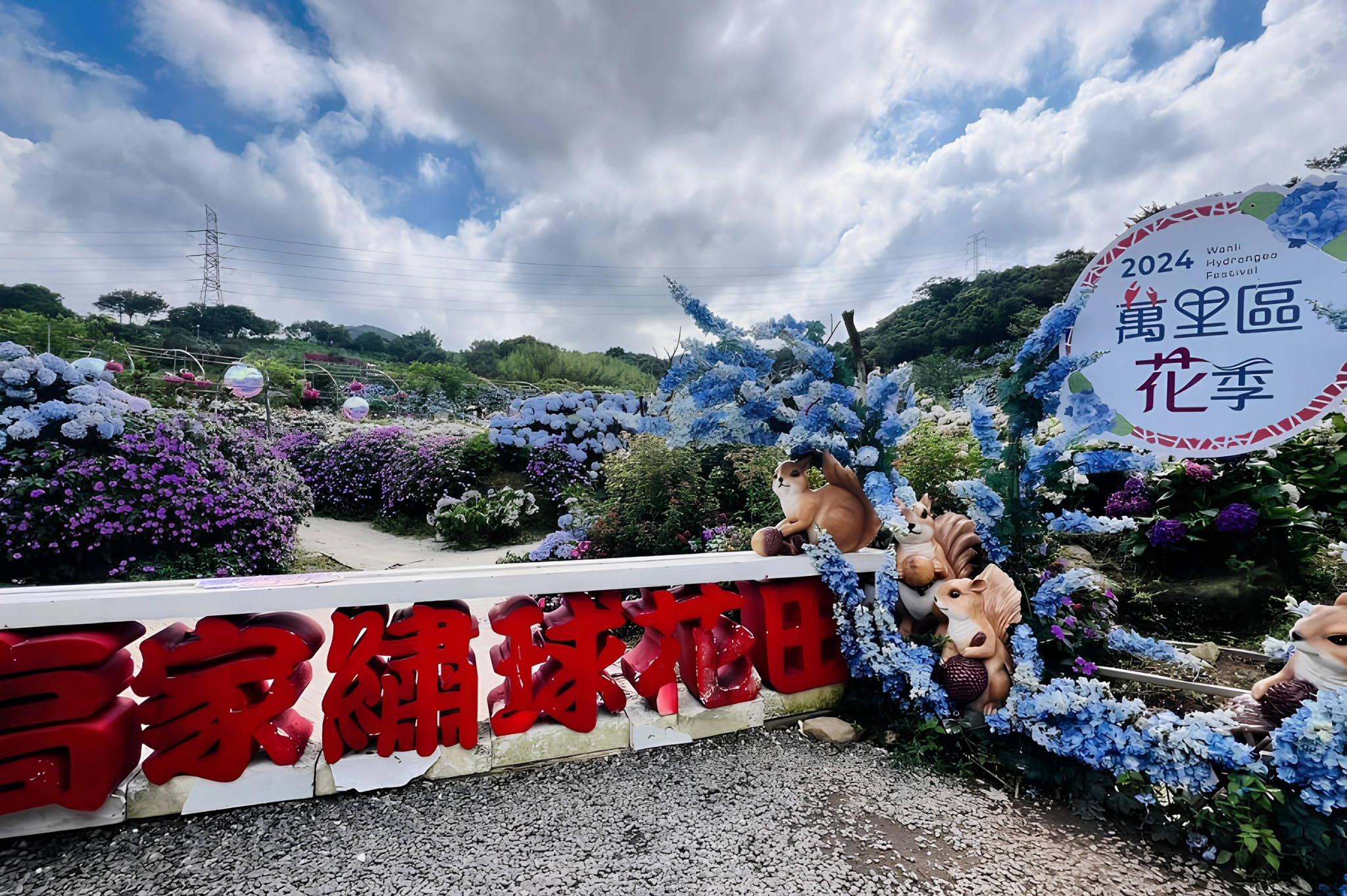
- Gao Jia Hydrangea Garden (高家繡球花田): A legendary local favorite featuring towering, dense hydrangea walls that match adult height, creating a labyrinthine floral maze.
The No-Backtracking Walking Route
If you prefer walking over entering individual paid enclosures, the loop around Zhuzihu Road and Dingzhonglu (or Dinghu Loop Trail) covers about three kilometers. It takes you smoothly past the basin's best vistas without requiring you to double back.
Gear & Photography Tips: The narrow paths can get muddy, so wear sturdy, waterproof footwear. Additionally, bring a real camera with a wide aperture if possible; standard smartphones often flatten the subtle color gradients and mist-laden lighting that make this landscape magical.
Volcanic Gastronomy: The Culinary Secrets Tourists Overlook
Beyond the floral views, the small restaurants run by local flower farms offer a spectacular culinary experience. Because of the mineral-rich volcanic soil and high altitude, the produce grown here tastes completely different from anything found in lowland Taipei.
- High-Mountain Cabbage (Gaoshan Gaolicai): Grown in cool mountain temperatures, this cabbage is so crisp and naturally sweet it tastes almost like a dessert.
- Mountain Yam (Shanyao):Wild volcanic yams are traditionally served grated raw with a touch of premium soy sauce and bonito flakes, offering a smooth, nutritious texture.
- One-Pot Chicken (一品鍋): The definitive local comfort food. Free-range chickens raised on the mountain are simmered in a clay pot with fresh morning-harvested greens, mountain herbs, ginger, and a splash of traditional rice wine. A steaming pot feeds 2–3 people perfectly and costs between NT$600 and NT$900.
- Tea Time at Zhuzihu (竹子湖蓬萊米故事館): Housed in a beautifully renovated 1930s Japanese rice-research station, this venue serves exquisite afternoon cream teas overlooking the fields. Their signature "hydrangeas jelly"—infused with tart rosella hibiscus—delivers a striking translucent violet aesthetic that matches the scenery beautifully.
The Ultimate Insider Pairing: Morning Flower Valley, Afternoon Volcanic Springs
The smartest itinerary strategy is pairing your Zhuzihu morning with the historic hot springs of Beitou on your way back down.
They share an interconnected geological soul: the very same dormant volcanic complex that enriches Zhuzihu's soil fuels the rich thermal waters flowing directly into Beitou's valley. Taking a bus south down the slopes brings you to the steaming, sulfur-scented paradise of Beitou in just over twenty minutes.
Spending your morning walking through cool, mist-covered mountain valleys followed by an afternoon sinking shoulder-deep into a 40°C acidic white-sulfur bath is an unmatched sensory experience. While there, visit the Beitou Hot Spring Museum to admire its beautifully preserved Japanese-era Roman bathhouse architecture (free admission), or head to the public Qinshui Park outdoor baths, which offer an authentic communal soak for just NT$40 (swimsuit required).
FAQ
Q1: When is the absolute peak "Golden Week" for the 2026 Zhuzihu Hydrangea Season?
A1: The prime viewing window falls between May 20 and June 10, 2026. While the official flower festival runs until June 22, hydrangeas are at their absolute best in terms of color saturation, hydration, and petal crispness during their first ten days of full bloom. By mid-June, early-blooming varieties can show slight browning around the edges due to summer sun, making late May the ideal time to visit.
Q2: How can international independent travelers beat the crowds and traffic on the mountain?
A2: The golden rule is simple: go early, and aim for weekdays. The narrow mountain roads are not built for heavy traffic; on weekends after 10:00 AM, gridlock sets in, and lines for the return bus can take over 90 minutes. Weekdays offer a dreamlike, empty valley experience. If you must go on a weekend, catch the earliest bus from Taipei or MRT Beitou Station by 7:30 AM to arrive just as the farm gates open at 8:30 AM.
Q3: If downtown Taipei is perfectly sunny, does it guarantee clear skies at Zhuzihu?
A3: Absolutely not. Yangmingshan's volcanic peaks generate an entirely independent microclimate. It is highly common for downtown Taipei to be clear while the mountain is cloaked in dense fog or light rain. Always check the Central Weather Administration's (CWA) dedicated mountain forecast instead of the general city report before setting out. Pack a quality waterproof outer layer and skip the umbrella, as strong mountain gusts can break them easily and they block paths.
Q4: Do the flower farms and local restaurants accept credit cards, mobile payments, or EasyCard?
A4: The vast majority of small, multi-generational flower farms and rural eateries remain strictly cash-only. Furthermore, ATMs around the main Yangmingshan transit terminal frequently run entirely out of cash during high-volume flower festival weekends. Please withdraw at least NT$2,000 in cash at a lowland MRT station store before boarding your bus to cover entry fees, dining, cutting flowers, or taxis. Lastly, respect the local farming culture: entry and stem prices are fixed, so please do not haggle.